

Fashion
Zalando expands its offering in Spain, introducing its beauty division to the market

Published
October 10, 2025
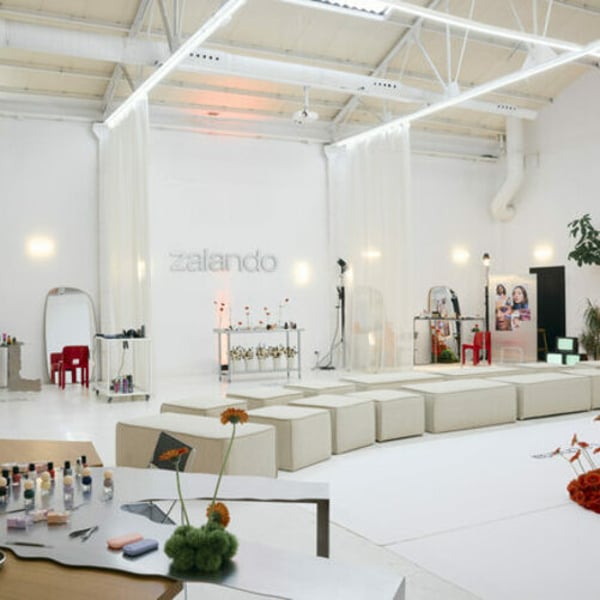
Zalando beauty has arrived in the Spanish market. The German online platform is expanding its offering in the country with what it describes as a “strategic” launch, making its beauty range available to local customers, including facial, body and hair care, nail care, make-up and fragrances.
With the addition of Spain, Zalando beauty is now available in 14 markets. The company, which only a few weeks ago launched in Portugal, aims to step up its Iberian expansion.
“This is a great opportunity for organic growth, in line with the strategy we are following to be a leading platform and destination for Spanish consumers in fashion and lifestyle,” said Eloisa Siclari, the company’s general manager for Southern Europe (Spain, Italy and Portugal), at the presentation of Zalando beauty in Madrid on Thursday.
“Spain is the 14th country in which we are launching this category. And we know from our experience in other markets that beauty builds customer loyalty, increases share of spend and boosts engagement with the platform. After 13 years of operating in the country, it was time for this launch. This is an opportunity to grow with customers, but also with the brands and partners we work with,” added the executive.
For its rollout in the country, Zalando beauty has opted to partner with local brands such as 3ina, a firm whose hallmarks include cruelty-free products, the use of colour and a keenly priced proposition.
“We are a German platform. But we say we want to be Spanish in Spain. And it’s not just a slogan; it’s a growth strategy. In other words, to be able to offer what is on-trend and what is in demand here, we need to work with local partners,” Siclari added.
“The Spanish market is very powerful in fashion, with very strong local pride and top-tier design talent. So being Spanish in Spain is also about quality. We don’t just look at the volume of brands we collaborate with; we focus on iconic, prestigious labels and cult products,” the Italian underlined.
Zalando’s work with brands is, according to the German company, a two-way street, not merely transactional.
“In B2B, our goal is to support brands; we want to be their partners at a strategic level, so that they grow internationally,” the company noted, referring to the visibility that brands get on the German e-commerce platform, which serves as a showcase for labels in markets beyond those in which they usually operate (the company is present in 26 countries, with a customer base of 52 million users, according to its figures).
From beauty as a gateway to exclusive agreements
According to Zalando’s internal figures, 70% of customers who purchase beauty items add fashion items to their basket.
“Therefore, beauty is an entry point for many consumers,” Siclari said.

But what barriers has the company encountered when launching its beauty division in the Spanish market?
“Exclusivity with some retailers is one of them,” said Virginie Duigou, head of beauty buying at Zalando, referring to the agreements that national and international brands may have with retail chains.
“How do we solve this? One thing we do is approach U.S. brands and say, ‘Hey, Zalando is here; we can help you in Europe, we’re strong in those markets.’ Many U.S. brands know how to handle distribution in the UK, but not in the rest of Europe, which is a very fragmented region. Another lever is to focus on product niches, as we do with Korean beauty,” Duigou explained.
The executive also pointed to the role that collaborations with beauty-focused content creators play in driving business growth, to foster consumer identification — especially among Generation Z.
“Obviously, it’s a very digital generation; 70% buy online or via apps, including beauty. They even buy colognes without smelling them!” she joked.
As part of the presentation of Zalando beauty in Spain, Duigou also outlined some of the trends set to shape the sector. “Minimalist routines, beauty-on-the-go products, make-up with built-in skincare and, in fragrances, the use of very creative bottles and gourmet scents — aromas that are almost edible,” she said.
Founded in 2008 and headquartered in Berlin, Zalando posted revenue of €2.835 billion in the second quarter of 2025 and net profit of €96.6 million in the period, according to its latest published figures.
This article is an automatic translation.
Click here to read the original article.
Copyright © 2025 FashionNetwork.com All rights reserved.









Published
December 1, 2025
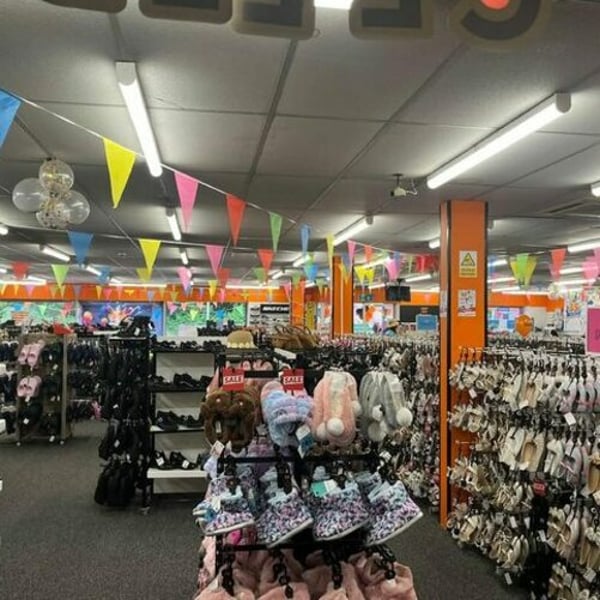
Modella Capital is fast becoming one of the most acquisitive businesses on the UK high street and the latest retailer in its sights is footwear chain Wynsors World of Shoes.
That’s according to Sky News, which said the investment firm is targeting a takeover of the privately owned footwear retailer and is currently in “advanced talks”.
Wynsors trades from around 50 standalone shops across the north of England and Modella is now “the likeliest buyer” of the business, with expectations of a deal before the end of the year.
Modella was recently in the news as the buyer of Claire’s UK business. It also recently bought the non-travel locations of WH Smith (now renamed TG Jones) and owns Hobbycraft and The Original Factory Shop too. It had earlier hoped to add Poundland to its portfolio but missed out on that one.
Wynsors has been looking to sell for around two months and accountancy firm RSM had been hired explore interest from prospective bidders, Sky News said.
The chain trades from around 50 standalone stores and 40 concessions. It sells brands including Adidas, Skechers, Hush Puppies, Clarks, Nike, kickers and more. And although its sells footwear for women, men and children, it focuses particularly on school shoes.
Copyright © 2025 FashionNetwork.com All rights reserved.
Published
December 1, 2025
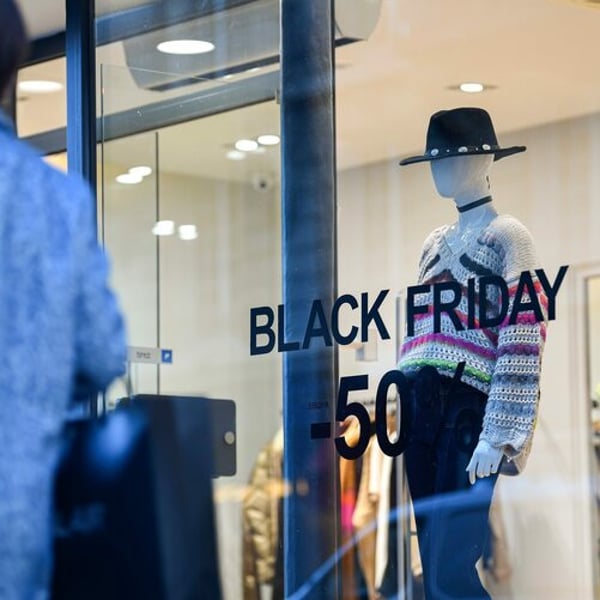
US Black Friday retail sales rose 4.1%, Mastercard SpendingPulse has revealed. But while online surged, in-store visitor traffic was down a separate report from RetailNext showed. That said, both reports showed a better result for apparel than for other sectors.
First, the Mastercard numbers. They exclude autos and are based on the payment cards giant measuring in-store and online retail sales across all payment types.
The company said this year’s event “tells a story of comfort, connection, and savvy shopping” as consumers prepared for meaningful moments with family and friends.
Spending growth on apparel was particularly strong both online and in-store, “suggesting shoppers refreshed wardrobes while leaning into value-driven choices and convenience”.
In fact, apparel climbed 5.7% (online 6.1%, in-store 5.4%), as “chilly temperatures and seasonal deals encouraged spending on new fashions”. Jewelry also rose 2.75% (online 4.2%), “as consumers opted for gifts that shine”.
Overall, e-commerce retail sales excluding autos jumped 10.4%, “as shoppers increasingly value speed and convenience”. In-store sales grew more modestly (1.7%) but “remain essential to consumers for tactile experiences”.
Mastercard also said the surge in online shopping “showcases how technology is transforming the way consumers pay. Shoppers are enjoying seamless checkout experiences across devices, from smartphones to connected home assistants, making holiday shopping faster, safer, and more intuitive than ever before”.
Which leads us on the that drop for in-store shopping traffic. RetailNext said initial data reveals an average of a 5.3% year-over-year decrease for foot traffic across Black Friday and Saturday.
Visitor numbers dropped 3.6% on Friday itself and a massive 8.6% on Saturday. By store type, apparel stores saw traffic down 2.3% across the two days with just a 0.7% drop on Friday and 5.3% on Saturday.
For footwear, the weekend, Friday and Saturday falls were 6%, 6% and 5.9%, respectively. For healthy & beauty they were drops of 4.7%, 2.1% and 9.6%, and for jewelry they were 3.6%, 2% and 6.6%.
“Black Friday 2025 didn’t kill the holiday; it changed how shoppers approached it,” said Joe Shasteen, Global Head of Advanced Analytics at RetailNext. “Foot traffic was down on Friday and on Saturday, but that wasn’t disinterest, it was intention. Shoppers showed they’re done with the impulse-driven, one-day frenzy. Prices, tariffs, and tighter budgets pushed people to shop with discipline, not adrenaline, and they responded by turning Black Friday into a value calculation”.
RetailNext said one of the clearest signals is the 3.6% drop on Black Friday, which was meaningfully better than the 6.2% decline seen from Sunday through Wednesday (23 November to 26 November). It shows that even in a cautious year, “shoppers are still willing to attend major promotional events; they’re simply being more selective about when those events are worth the trip”.
“Despite the declines, Black Friday again delivered the highest in-store traffic of any day this year, reaffirming its role as the anchor of the holiday shopping season, but the weekend’s performance was shaped more by real-world factors than waning interest,” added Shasteen. “Consumers are still willing to shop, they’re just demanding proof it’s worth leaving the house. Retailers who treated November as a month-long build, rather than a single-day spectacle, saw the strongest in-store performance.”
Copyright © 2025 FashionNetwork.com All rights reserved.
A review of the trade and sustainable development provisions of the ITA is under way.
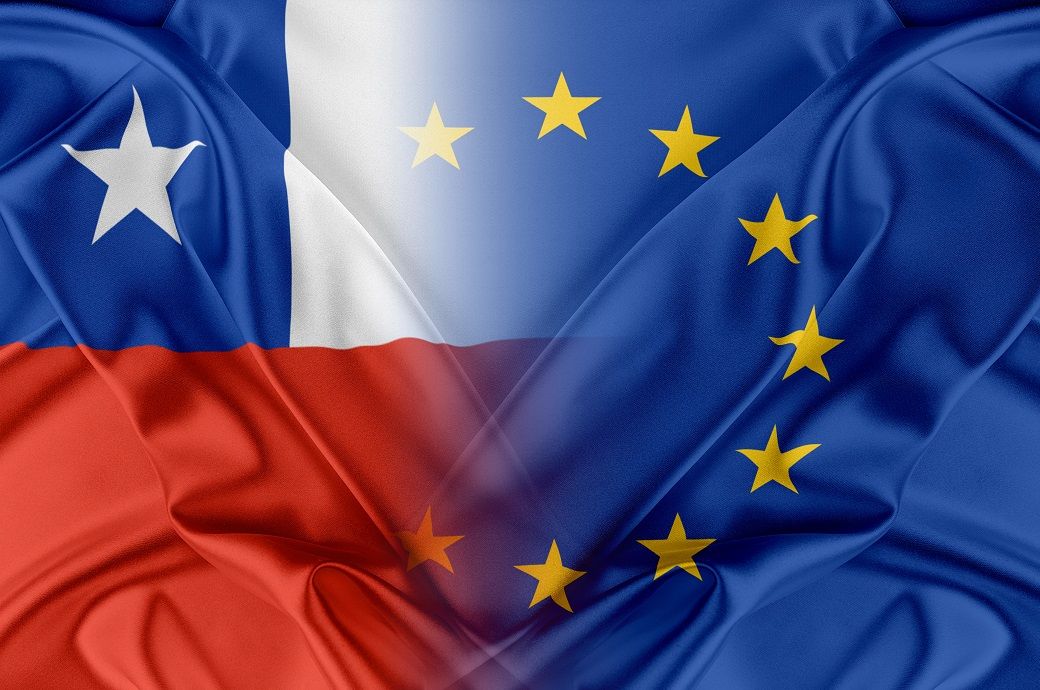
EU high representative for foreign affairs and security policy Kaja Kallas recently met Chilean Minister of Foreign Affairs Alberto van Klaveren. Both co-chaired the first EU-Chile Joint Council under the Advanced Framework Agreement in Brussels.
The EU and Chile are committed to deepening their trade and investment relations under the Interim Trade Agreement, which came into force on February 1 and will remain in force until the new Advanced Framework Agreement has been fully ratified.
Both sides will continue to cooperate on ensuring reliable and sustainable supply chains, including through diversification and support to strategic investments.
The first EU-Chile Trade Council meeting was held under the new ITA, according to an EU release.
The EU is Chile’s third-largest trade partner and the top source of foreign direct investment (FDI).
Both sides will continue to cooperate on ensuring reliable and sustainable supply chains, including through diversification and support to strategic investments, a joint statement issued said.
Chile welcomed the interest of the EU in establishing a dialogue with the member countries of the Comprehensive and Progressive Agreement for Trans-Pacific Partnership (CPTPP). Both parties affirm their ambition to translate this dialogue into a shared agenda.
Both sides remain committed to ensuring the effective implementation of the Advanced Framework Agreement, and to achieving its full ratification.
The provisional application of the EU-Chile Advanced Framework Agreement began on June 1, 2025.
Fibre2Fashion News Desk (DS)


Modella eyeing another acquisition, this time it’s the Wynsors footwear chain

Duchess Sophie risks security as she breaks protocol for tragic accident

British MP Tulip Siddiq handed two-year prison sentence in Bangladesh graft case

-

 Sports1 week ago
WATCH: Ronaldo scores spectacular bicycle kick
-

 Entertainment1 week ago
Welcome to Derry’ episode 5 delivers shocking twist
-

 Politics1 week ago
Washington and Kyiv Stress Any Peace Deal Must Fully Respect Ukraine’s Sovereignty
-
 Business1 week ago
Key economic data and trends that will shape Rachel Reeves’ Budget
-

 Tech6 days ago
Wake Up—the Best Black Friday Mattress Sales Are Here
-

 Politics1 week ago
53,000 Sikhs vote in Ottawa Khalistan Referendum amid Carney-Modi trade talks scrutiny
-

 Fashion1 week ago
Canada’s Lululemon unveils team Canada kit for Milano Cortina 2026
-

 Tech6 days ago
The Alienware Aurora Gaming Desktop Punches Above Its Weight