

Business
‘Zero faith’: If Trump’s tariffs are overturned, how easily will businesses get back billions in refunds? It could be a nightmare! – The Times of India

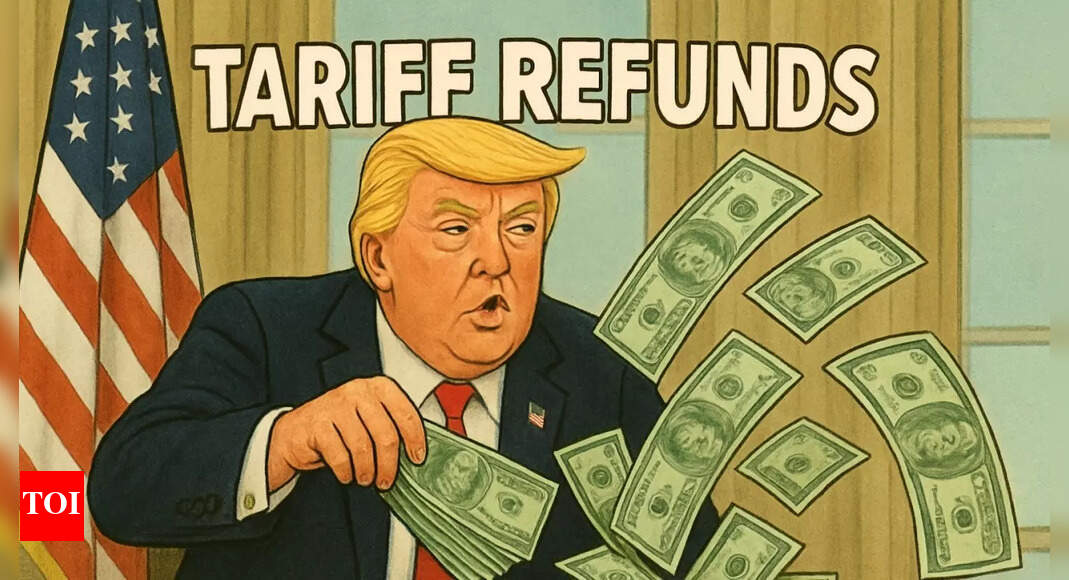
Donald Trump administration’s tariff collections – running into billions of dollars – is threatened in case the Supreme Court decides to strike down the US President’s tariff policies. Trump himself has warned that any decision against his tariff policies would spell disaster.Businesses, which have paid huge amounts in the last few months due to country-based tariffs, believe that getting back refunds in case the tariffs are deemed illegal by the Supreme Court, would be a nightmare.
Tariff refund nightmare
To begin with, this would create administrative challenges involving extensive refund processing. If these nation-specific tariffs are ruled unlawful, the United States might need to return most of the $165 billion in customs duties collected in the current fiscal year to the businesses that paid them, according to a Bloomberg report.However, obtaining refunds will be complicated; reimbursements typically come via paper cheques through a slow process, and whilst the government could expedite mass repayments, experts believe this is doubtful.“The customs authorities won’t simply distribute refunds to importers freely,” Lynlee Brown, global trade partner at EY was quoted as saying by Bloomberg.The uncertainty surrounding the potential refund process exemplifies the broader confusion that businesses and financial markets have experienced since the implementation of Trump’s tariff policies.Several importers have abandoned expectations of receiving reimbursements, even if the court rules in their favour.“I have zero faith we’d ever get anything. Just zero,” expressed Harley Sitner, who owns Peace Vans, a Seattle-based classic camper van repair and restoration business.
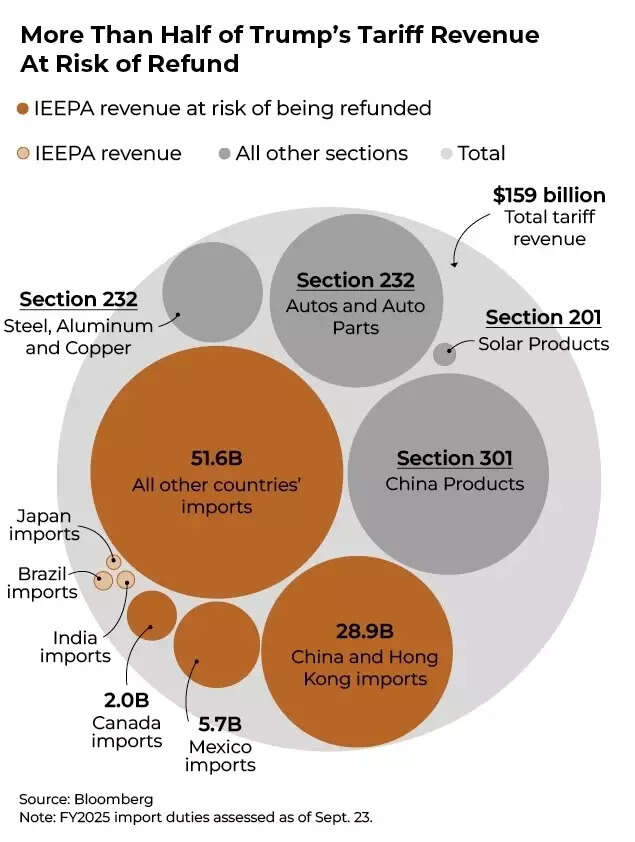
More than half of tariff revenue at risk of refund
Sitner told Bloomberg that the unpredictability of Trump’s trade policies is more problematic than the actual tariff payments, which he views as irretrievable expenses. Following unexpected tariff charges ranging from $221 to $17,000, sometimes arriving months after receiving goods, Sitner has discontinued importing international inventory.“Just yesterday we got a small shipment from Germany worth $2,324 and it came with a $1,164 tariff charge. We can’t back out,” Sitner stated.Various customs brokers report being approached by Wall Street organisations interested in purchasing rights to potential refunds, offering importers an opportunity to recover a portion of their possible entitlements.The significant increase in customs duties – a rise of $95 billion compared to the previous year – is primarily attributed to Trump’s import tariffs affecting multiple economies, which became effective in August, as analysed by Bloomberg Economics. Two lower judicial bodies have ruled that Trump lacked the authority to implement tariffs under the International Emergency Economic Powers Act.Should the Supreme Court uphold these earlier decisions, approximately 50% of the customs duties collected by the United States this year could be subject to refund. However, the process for businesses to reclaim these funds remains uncertain. Despite the government shutdown, tariff-related operations have largely continued uninterrupted.The United States Customs and Border Protection regularly processes refunds for importers in cases of overpayment or regulatory changes, with the Treasury Department issuing the payments. However, this reimbursement process is not automatically initiated.In line with statutory requirements, importers and their customs brokers must adhere to precise timelines and documentation procedures to maintain eligibility for refunds. Currently, the system predominantly relies on paper cheques for disbursement.Despite the Treasury’s directive from the Trump administration to discontinue cheque payments by September 30, the Customs and Border Protection (CBP) only initiated its first phase last Tuesday in what will be an extended implementation process. The system’s completion before any court decision appears unlikely without accelerated efforts.Tom Gould, a customs consultant from Seattle, suggests that potential refunds might result in “it’s possible that we’ll see millions and millions of paper checks being mailed out because each shipment, each customs entry, will have its own.”The process could be problematic. According to the Bloomberg report, due to regulatory requirements, customs refunds are exclusively sent to sanctioned domestic banks in dollars, requiring foreign importers to receive their refunds through international postal services or utilise a broker’s account within the United States.Worryingly, there has been a series of stolen cheque incidents in recent years. According to Gould, refund cheques were intercepted during postal delivery and traded on the dark web before being encashed.The administration possesses various options to expedite refunds, including automated processing of claims using existing system data. CBP has previously implemented refund rationalisation measures.Customs officials developed a framework to facilitate refund disbursement for items eligible under duty exemptions through the Generalised System of Preferences. Despite Congress allowing this programme to expire multiple times since the 1980s, it was subsequently renewed retroactively.Importers would input specific codes indicating GSP eligibility, even during programme inactivity. Gould suggested that the agency could similarly analyse internal data to identify IEEPA code-related tariff payments.Alternative procedures exist, though they might be complex. Legal experts indicate individual importers could be compelled to initiate separate legal proceedings to recover their funds.The authorities might require submission of protests or post-summary amendments, accompanied by comprehensive payment documentation and importer records, despite the government already possessing this information.EY’s Brown recommends importers maintain complete records from CBP’s Automated Commercial Environment platform, documenting entry dates and deadlines systematically to enhance refund possibilities.Despite potential simplified procedures by CBP, the complex nature of financial transactions within supply chains presents additional challenges.For shipments managed through commercial carriers like FedEx Corp. and United Parcel Service Inc., who handle documentation and tariff payments, CBP would direct refunds to the registered importer – the courier service rather than the goods’ owner.This arrangement could generate complications between the actual importers and courier services, creating another obstacle for businesses seeking reimbursement.
Tariff collections: Trump admin may not let go easily
Trump has valued the tariff income, declaring it has restored national wealth. He and his supporters have suggested various uses for these funds, including reducing national debt, supporting struggling agricultural sectors, and potentially distributing payment cheques to US citizens.This suggests the Trump administration will be reluctant to release these funds if the tariffs are invalidated, and they are likely to swiftly implement new levies using alternative legal frameworks should this occur. The Supreme Court is scheduled to review arguments in November regarding this matter.




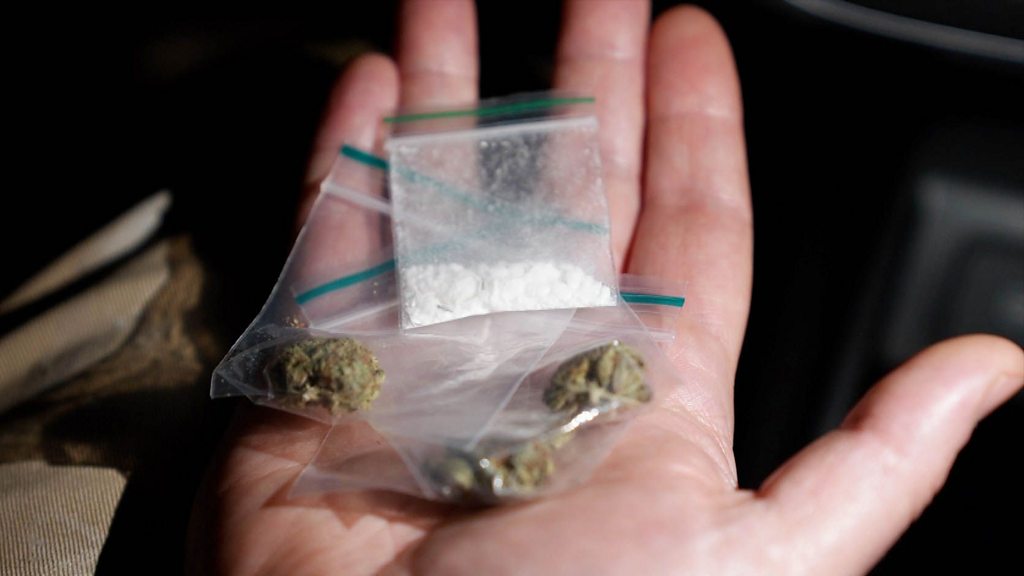
Across the UK, shopfronts are being exploited by criminal gangs pushing illegal drugs, experts say.
Source link
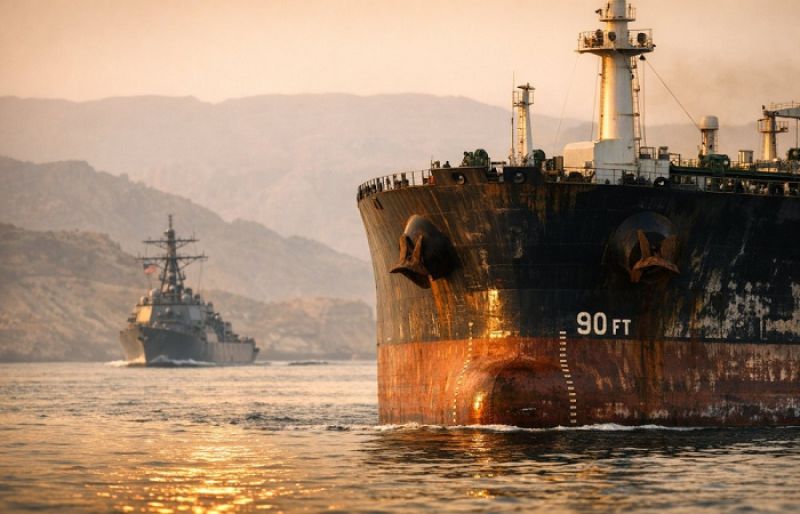
At around 8.25 am, the benchmark US oil contract, West Texas Intermediate (WTI) climbed 4.06% to US$96.73 per barrel.
International oil benchmark Brent North Sea crude rose 3.62% to US$105.63. Both eased back in the following minutes.
Oil prices have soared since Israel and the US attacked Iran on Feb 28, and they have kept inching up due to the uncertainty over whether war will resume.
As the clock ticked for a return to the war that has engulfed the region, US President Donald Trump had said Tuesday he would maintain the truce to allow more time for Pakistani-brokered peace talks.
Iran said it welcomed the efforts by Pakistan but made no other comment on Trump’s announcement.
Wall Street stocks gained ground following President Trump’s unilateral ceasefire extension in the Iran war.
All three major US stock indexes advanced, with tech shares helping to put the Nasdaq out front, while gold advanced and the dollar edged higher.
The S&P 500 and the Nasdaq reached record closing highs.
“Despite the energy shock and headlines that have inundated investors, the macroeconomy, corporate fundamentals, and consumer spending remain strong,” said Bill Merz, head of capital markets research at US Bank Wealth Management in Minneapolis.
“Investors are taking the stance that the Strait of Hormuz will open before too much damage is inflicted on the global economy.”
Iran’s Revolutionary Guards seized two vessels for maritime violations just hours after Trump agreed to extend the ceasefire until negotiations are concluded.
About a fifth of the world’s oil and liquefied natural gas (LNG) supplies normally pass through the strait.
US stocks, initially battered by the war, have since made a full recovery, with the S&P 500 and the Nasdaq having reached all-time closing highs in recent sessions.
But geopolitical uncertainty lingers, and a prolonged period of elevated oil prices remains a threat.
About two-thirds of the S&P 500 companies that have reported quarterly earnings since the beginning of April have voiced concerns about energy prices in their analyst conference calls, according to a Reuters review of transcripts.
“Anytime there’s a global event like the conflict in the Middle East, and it grabs so many headlines and captures attention, it will crop up in earnings commentary,” Merz added. “But we’re not seeing it significantly impact behaviour yet.”
First-quarter earnings season is well underway amid lofty expectations. Analysts currently estimate year-on-year S&P 500 earnings growth of 14.4% for the January-March period, according to the most recent LSEG data.
The Dow Jones Industrial Average rose 341.27 points, or 0.69%, to 49,490.52, the S&P 500 +gained 73.90 points, or 1.05%, to 7,137.91, and the Nasdaq Composite was up 397.60 points, or 1.64%, to 24,657.57.
European shares ended lower for the third straight session as the Middle East strife continued to weigh on markets and investors assessed a raft of corporate earnings.
Dozens of international firms have withdrawn guidance or signalled price hikes since the war began.
MSCI’s gauge of stocks across the globe rose 4.52 points, or 0.42%, to 1,070.98.
The pan-European STOXX 600 index fell 0.35%, while Europe’s broad FTSEurofirst 300 index fell 8.58 points, or 0.35%.
Emerging market stocks fell 9.41 points, or 0.58%, to 1,606.07. MSCI’s broadest index of Asia-Pacific shares outside Japan closed lower by 0.6%, to 822.27, while Japan’s Nikkei .N225 rose 236.69 points, or 0.40%, to 59,585.86.
The dollar rose amid lingering geopolitical worries.
The dollar index, which measures the greenback against a basket of currencies including the yen and the euro, rose 0.26% to 98.63, with the euro down 0.32% at $1.1704.
Against the Japanese yen, the dollar strengthened 0.12% to 159.56.
In cryptocurrencies, Bitcoin gained 4.13% to $78,866.74. Ethereum rose 3.48% to $2,398.37.
US Treasury yields increased, rangebound amid choppy trading.
The yield on benchmark US 10-year notes rose 1.2 basis points to 4.304%, from 4.292% late on Tuesday.
The 30-year bond yield rose 1.1 basis points to 4.9091% from 4.898% late on Tuesday.
The 2-year note yield, which typically moves in step with interest rate expectations for the Federal Reserve, rose 2.1 basis points to 3.8%, from 3.779% late on Tuesday.

Jenny Lennick’s colourful hair clips are sold across the US and around the world.
Source link


Canada forms new advisory committee to strengthen US trade relations
High street drug dealer sells cannabis to undercover reporter

Clearing Hormuz Strait mines could take six months: report

-

 Fashion1 week ago
France’s LVMH Q1 revenue falls 6%, shows resilience amid Iran war
-

 Entertainment1 week ago
Is Claude down? Here’s why users are seeing errors
-

 Tech1 week ago
The Deepfake Nudes Crisis in Schools Is Much Worse Than You Thought
-

 Sports1 week ago
PSL 11: Peshawar Zalmi win toss, opt to field first against Quetta Gladiators
-

 Tech1 week ago
Human-machine teaming dives underwater
-
 Business1 week ago
Standard Life buys rival in £2b deal to create savings giant
-
 Business1 week ago
BP sees ‘exceptional’ oil trading result as Iran war sends crude costs soaring
-

 Fashion1 week ago
What no one is saying about the 2026 apparel slowdown