

Fashion
10-yr strategy launched for Australian fashion & textile manufacturing


The ten-year strategy is the result of almost a year of industry consultation led by the AFC and R.M.Williams, including 14 national consultations with manufacturers, brands, educators and policymakers across the country. More than 300 stakeholders contributed to the process, generating over 1,000 proposed initiatives and nearly 900 votes on strategic priorities to shape the sector’s long-term manufacturing future.
The Australian Fashion Council and R.M.Williams have launched the National Manufacturing Strategy for Australian Fashion and Textiles 2026–2036, a ten-year roadmap to rebuild Australia’s textile, clothing and footwear manufacturing.
Developed through national industry consultations, it aims to strengthen domestic capability, advanced manufacturing and fibre value chains.
The strategy comes at a critical time for the industry. With 97 per cent of Australia’s clothing and textile products manufactured offshore, the sector remains vulnerable to ongoing global supply disruptions and trade volatility. Rather than compete against high-volume offshore manufacturing markets, the strategy is focussed on closing structural gaps and accelerating advanced manufacturing to scale the sector’s comparative advantage, aiming to position Australia to compete globally in premium, technology-enabled and traceable production, built on the country’s natural fibre strengths, AFC said in a press release.
Independent modelling by RMIT University and RPS projects that full implementation of the Strategy’s co-ordinated policy platform will grow TCF manufacturing value added from $2.6 billion to $2.9 billion by 2030/31, delivering a cumulative $1.4 billion economic dividend over five years. The Strategy is also projected to create more than 1,000 new skilled jobs and $864 million in additional wages, with approximately half of those jobs are projected to be filled by women.
“This Strategy sets out a clear roadmap for rebuilding a globally competitive Australian fashion and textile manufacturing sector. Australia already has exceptional design talent, advanced manufacturing capability and globally recognised brands. With the right coordination across industry, skills and procurement policy, we have a real opportunity to strengthen sovereign capability, create skilled jobs and position Australia as a leader in premium manufacturing,” said Marianne Perkovic, executive chair, Australian Fashion Council.
“Australia is the world’s largest exporter of greasy wool and a globally significant cotton producer. Yet we export raw fibre and import finished goods at multiples of the original value. Re-establishing fibre processing and spinning capability restores the missing link in our value chain,” Samantha Delgos, general manager, Australian Fashion Council said.
“R.M.Williams has manufactured in Adelaide for more than 90 years. We employ skilled craftspeople, invest in apprentices and continue to modernise production while competing globally. What’s needed now is to activate a flywheel: demand enables investment in skills, skills enable advanced manufacturing, and technology allows Australian manufacturers to scale while maintaining quality,” Tara Moses, chief operating officer, R.M.Williams.
The strategy will be led by the Australian Fashion Council and its progress will be evaluated through a two-stage assessment framework.
The first stage, the Implementation Review (to 2029), will assess progress in establishing the key foundations of the strategy, including procurement reform, national capability mapping, skills recognition pilots, shared manufacturing infrastructure, and governance arrangements to co-ordinate delivery. The second stage, the Strategic Outcomes Review (to 2036), will evaluate long-term progress toward the strategy’s goal of building a competitive, technology-enabled, and domestically anchored manufacturing sector supported by a sustainable workforce pipeline and a globally recognised market position.
Fibre2Fashion News Desk (RR)
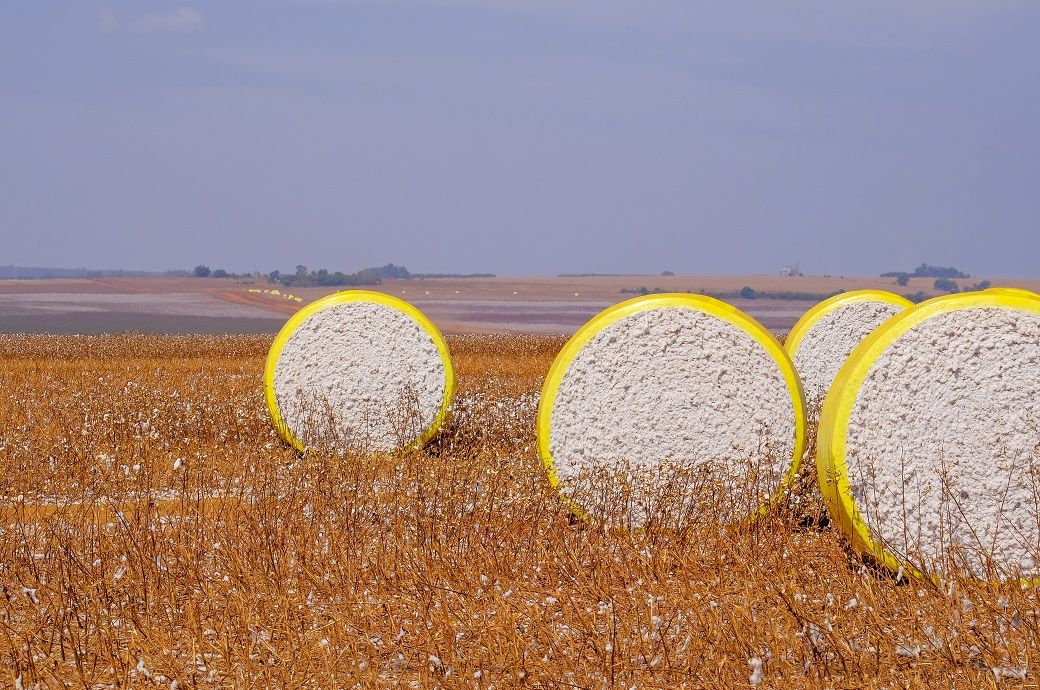
Net sales of Upland cotton for the 2025–26 marketing year declined to 123,300 RB (running bales each weighing 226.8 kg), down 24 per cent from the previous week and 35 per cent below the prior four-week average. The slowdown followed the previous week’s strong rebound, when sales had climbed to 162,900 RB.
US cotton export sales weakened in the week ended April 30, with both Upland and Pima cotton posting lower demand and shipments, according to USDA.
Upland sales fell 24 per cent week on week to 123,300 RB, while Pima sales declined 47 per cent to 11,500 RB. Asian markets, led by Pakistan, India, Vietnam, and Bangladesh, continued to dominate US cotton buying activity.
Pakistan emerged as the largest buyer during the latest reporting week with purchases of 38,800 RB, followed by India (27,200 RB), Vietnam (18,800 RB), Indonesia (14,400 RB), and Bangladesh (9,100 RB). Reduced demand from South Korea partly offset the gains. The data also showed active switching activity between Asian buyers, including volumes redirected from Vietnam and South Korea.
New crop Upland sales for the 2026–27 marketing year totalled 48,400 RB, led by Guatemala (35,200 RB) and Indonesia (19,000 RB), while reductions for Vietnam limited overall growth. This was lower than the previous week’s 105,700 RB, which had been driven by strong buying from Turkiye, China, and Guatemala.
Export shipments of Upland cotton also softened. Weekly exports fell to 327,500 RB, down 15 per cent from the previous week and 1 per cent below the prior four-week average. Vietnam remained the top destination with 135,000 RB, followed by Bangladesh (29,600 RB), Pakistan (29,100 RB), Turkiye (27,700 RB), and China (20,400 RB).
Pima cotton exports also lost momentum during the week. Net sales for the 2025–26 marketing year declined to 11,500 RB, down 47 per cent from the previous week and 35 per cent below the four-week average. India continued to dominate buying activity with purchases of 6,700 RB, followed by Egypt (1,800 RB), Italy (800 RB), Thailand (600 RB), and Pakistan (600 RB). New crop Pima sales for 2026–27 were limited to 1,300 RB, all destined for Egypt, compared to 11,500 RB in the previous week.
Pima export shipments totalled 14,800 RB, down 17 per cent week on week, although still 52 per cent above the four-week average. Vietnam remained the leading destination with 8,400 RB, followed by India (2,700 RB), China (2,200 RB), Bangladesh (500 RB), and Colombia (400 RB).
Overall, the latest USDA data indicate that US cotton export demand moderated after the previous week’s recovery, with Asian markets continuing to dominate buying activity. Vietnam, Pakistan, India, Bangladesh, and Turkiye remained the key drivers of Upland exports, while India retained its position as the leading buyer of US Pima cotton.
Fibre2Fashion News Desk (KUL)
Canada’s total apparel imports stood at $*.** billion in January-February ****, down from $*.** billion in the same period last year, indicating slightly softer demand. China’s exports declined sharply to $***.** million, reducing its share to **.** per cent from **.** per cent a year ago, a significant drop in a short span, according to *fashion.com/market-intelligence/texpro-textile-and-apparel/” target=”_blank”>sourcing intelligence tool TexPro.
In contrast, other Asian suppliers strengthened their positions. Bangladesh emerged as a key gainer, with shipments rising to $***.** million and its share increasing to **.** per cent. Vietnam also expanded its footprint, accounting for $***.** million and a **.** per cent share. Cambodia continued its upward trajectory, reaching $***.** million and **.** per cent share. India recorded a marginal increase to $**.** million, with its share improving to *.** per cent.

The company posted net sales of $130 million for the quarter ended March 29, 2026, down 11.3 per cent year on year (YoY) from $146.6 million. However, sales increased 7.1 per cent sequentially from the previous quarter.
US-based Unifi Inc has reported improved Q3 FY26 profitability despite an 11.3 per cent YoY decline in net sales to $130 million.
The gross profit rose to $9.1 million from a loss a year earlier, while net loss narrowed sharply to $2.3 million.
Adjusted EBIT turned positive at $4 million, supported by cost reductions, operational optimisation and stronger Repreve product sales.
Eddie Ingle, CEO at Unifi said the company’s operational and cost restructuring measures were beginning to translate into improved financial performance. “We are pleased to report that the impact of our team’s hard work is beginning to translate into improved financial performance, highlighted by improved gross profit and debt reduction,” added Ingle.
Gross margin returns to positive territory
The gross profit improved significantly to $9.1 million compared to a gross loss of $0.4 million in Q3 FY25. Gross margin rose to 7 per cent from negative 0.3 per cent a year earlier, supported by multi-year cost reduction efforts and operational optimisation, Unifi said in a press release.
Net loss narrowed sharply to $2.3 million, or $0.12 per diluted share, from $16.8 million, or $0.92 per diluted share, in the corresponding quarter last year. Adjusted net loss improved to $3.8 million from $13.9 million in Q3 FY25, while adjusted EBITDA turned positive at $4 million against a negative $4.9 million a year ago.
Revenue from Repreve fibre products reached $38.2 million during the quarter and accounted for 29 per cent of total net sales, up from $34.3 million and 28 per cent share in the second quarter of FY26.
Unifi also generated $8 million in cash from operating activities during the quarter and $24.4 million during the first nine months of FY26. Debt principal stood at $94.9 million, while net debt was reduced to $68.4 million as of March 29, 2026.
Selling, general and administrative (SG&A) expenses declined 9 per cent YoY to $11.2 million, driven by continued cost-saving initiatives.
“These results were driven by the actions we have taken over the past several quarters to realign our cost structure and optimise our operations and give us confidence that we can generate stronger profitability and cash flow from a lower revenue base moving forward,” said Ingle.
The Americas segment recorded the largest improvement in gross profit due to cost reductions, partially offset by lower sales. Meanwhile, the Brazil segment faced import pricing pressure, and the Asia segment was impacted by lower sales volumes.
Innovation and sustainability focus continue
During the quarter, Unifi published its ‘Sustainability Snapshot’ highlighting progress in textile-to-textile recycling and launched Luxel, a linen-inspired easy-care performance yarn.
Looking ahead, the company expects the fourth quarter of FY26 to benefit from responsive price increases linked to petrochemical-related inflation.
“As we enter the fourth quarter and look towards the remainder of calendar year 2026, we are encouraged by the momentum we are seeing across our businesses,” Ingle said.
“Our innovative beyond apparel business is continuing to gain traction, which should help support improved financial results,” he added.
Fibre2Fashion News Desk (SG)


CDF Munir to address Marka-e-Haq victory ceremony at GHQ tomorrow

Putin says army fighting ‘aggressive’ Nato-backed force in Victory Parade address

I Tried the Best Captioning Smart Glasses, and Only One Leads the Pack

-

 Politics6 days ago
Iran weighs US reply delivered via Pakistan as Trump signals opposition to deal terms
-

 Tech1 week ago
This Indigenous Language Survived Russian Occupation. Can It Survive YouTube?
-
 Fashion1 week ago
Canada’s Lululemon appoints Esi Eggleston Bracey to board of directors
-

 Fashion1 week ago
US’ J.Jill, Inc. appoints Kimberly Wallengren as CMO
-
 Business1 week ago
Government hikes jet fuel prices by 5% for international airlines – The Times of India
-

 Fashion1 week ago
US’ Gap partners with Victoria Beckham on timeless wardrobe essentials
-
 Business1 week ago
Apollo Sports Capital and Tom Dundon make landmark $225 million investment in pickleball
-

 Sports1 week ago
Drake Maye voices support for Patriots coach Mike Vrabel as off-field controversy continues to swirl