

Tech
3D-printed gyroidal solid oxide cells offer lighter, more compact energy solutions

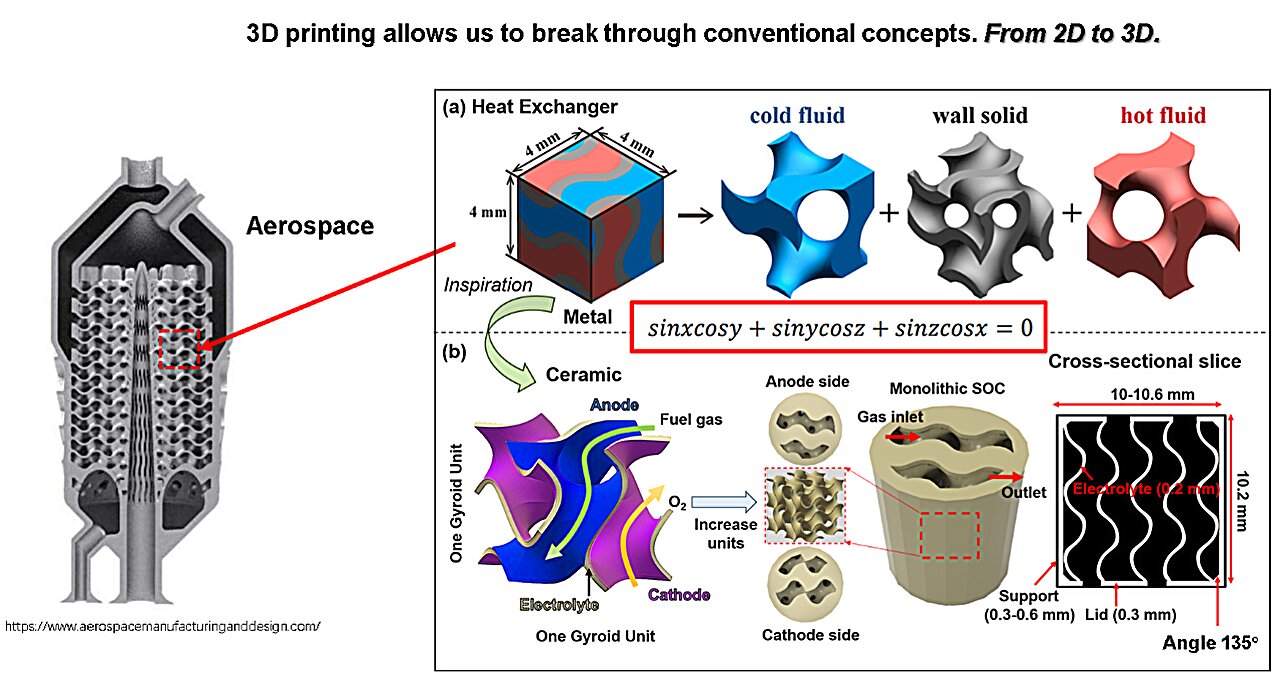
Over the past decades, energy engineers have been developing a wide range of new technologies that could power electronic devices, robots and electric vehicles more efficiently and reliably. These include solid oxide cells (SOCs), electrochemical devices that can operate in two different modes, as fuel cells or as electrolyzers.
Fuel cells are devices that can convert the energy in specific chemicals into electricity via chemical reactions. Electrolyzers, on the other hand, are technologies that can split water (H2O) or other molecules using electricity, to produce hydrogen (H2) or other desirable chemicals.
Most SOCs developed so far are two-dimensional (2D) and consist of flat structures with stacked layers of different materials. This 2D design, however, limits the extent to which the devices can be reduced in size while also increasing their weight, as it relies on metallic interconnects to enable the flow of energy and seal different components.
Researchers at the Technical University of Denmark recently designed new three-dimensional (3D) SOCs with a periodic surface structure known as a gyroid. These cells, outlined in a paper published in Nature Energy, can be fabricated using 3D printing, also known as additive manufacturing.
“The use of gyroid structures in heat exchangers has been shown to reduce weight, improve compactness, and increase efficiency,” Prof. Vincenzo Esposito, corresponding author of the paper, told Tech Xplore. “We replace the metal with an ion-conducting ceramic, thereby realizing the 3D-SOC concept. The 3D-SOC is well-suited for applications that demand lightweight construction, compactness, and stability, such as those in the aerospace and automotive industries.”

The monolithic gyrodial SOCs developed by Prof. Esposito and his colleagues have three primary components: a dense ceramic electrolyte, a porous fuel electrode and a porous oxygen electrode. Like other SOCs, they can operate in two different modes, namely as fuel cells or as electrolyzers.
“In the fuel cell (SOFC) mode, the cell generates electricity using fuel gases such as H₂, CH₄, and CO, normally called X to Power,” said Prof. Esposito. “In the electrolysis (SOEC) mode, it produces fuel gases and O₂ by electrolyzing H₂O or CO₂, called Power to X.”
To fabricate their 3D SOCs, the researchers first realized their monolithic ceramic frame, which includes an electrolyte, the sealing and support structure. This entire structure was manufactured using 3D printing technology.
Subsequently, they coated the fuel electrode and oxygen electrode on the electrolyte’s surfaces. Finally, they co-sintered the electrolyte, fuel electrode and oxygen electrode together, ultimately attaining a functioning monolithic gyroid SOC.
“Compared to conventional SOC stack technology, the 3D-SOC has an extremely simplified manufacturing process,” explained Dr. Zhipeng Zhou, lead author of the paper. “A conventional SOC stack requires the integration of numerous components, including single cells, metallic interconnects, and sealants. In contrast, the 3D-SOC can be fabricated using only 3D printing, coating, and co-sintering processes.”

In contrast with 2D SOCs, the 3D device developed by the researchers can be scaled up without the need for additional components, which in turn reduces its overall weight. In addition, the team’s new design enables greater space for the electrolyte, while minimizing the cell’s size and maximizing its compactness.
“The 3D-SOC is flexible and could be upscaled without metallic interconnects,” said Dr. Zhou. “The complete elimination of metallic interconnects significantly improved the stability of the SOC system and reduced its cost.”
The recent work by Prof. Esposito, Dr. Zhou and their colleagues opens new exciting possibilities for the fabrication of 3D SOCs. In the future, the devices they designed could be improved further and deployed in various settings, particularly within the aerospace and automotive industries.
“Some examples include NASA’s Mars program and Airbus’ SOFC aircraft (HYLENA | Airbus),” said Dr. Venkata Nadimpalli, corresponding author of the paper. “From a scientific perspective, the 3D-SOC features fundamentally different structures compared to conventional SOC designs. As a result, conclusions drawn from traditional SOCs may not apply to 3D-SOCs, due to their distinct gas distribution and heat transport properties.”
Prof. Esposito, Dr. Zhou and Dr. Nadimpalli hope that their study will soon inspire other research groups to design similar 3D SOCs that are compact, highly performing and more scalable.
Written for you by our author Ingrid Fadelli,
edited by Gaby Clark, and fact-checked and reviewed by Robert Egan—this article is the result of careful human work. We rely on readers like you to keep independent science journalism alive.
If this reporting matters to you,
please consider a donation (especially monthly).
You’ll get an ad-free account as a thank-you.
More information:
Zhipeng Zhou et al, Monolithic gyroidal solid oxide cells by additive manufacturing, Nature Energy (2025). DOI: 10.1038/s41560-025-01811-y.
© 2025 Science X Network
Citation:
3D-printed gyroidal solid oxide cells offer lighter, more compact energy solutions (2025, August 20)
retrieved 20 August 2025
from https://techxplore.com/news/2025-08-3d-gyroidal-solid-oxide-cells.html
This document is subject to copyright. Apart from any fair dealing for the purpose of private study or research, no
part may be reproduced without the written permission. The content is provided for information purposes only.









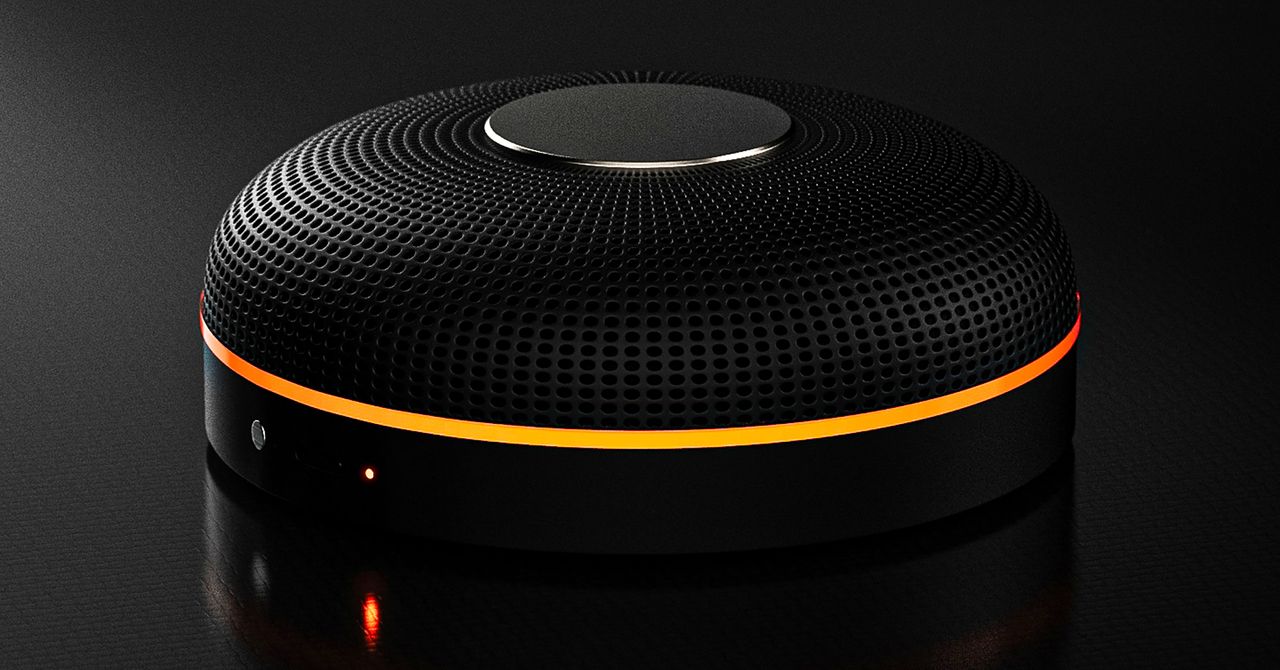
Deveillance also claims the Spectre can find nearby microphones by detecting radio frequencies (RF), but critics say finding a microphone via RF emissions is not effective unless the sensor is immediately beside it.
“If you could detect and recognize components via RF the way Spectre claims to, it would literally be transformative to technology,” Jordan wrote in a text to WIRED after he built a device to test detecting RF signatures in microphones. “You’d be able to do radio astronomy in Manhattan.”
Deveillance is also looking at ways to integrate nonlinear junction detection (NLJD), a very high-frequency radio signal used by security professionals to find hidden mics and bugs. NLJD detectors are expensive and used primarily in professional contexts like military operations.
Even if a device could detect a microphone’s exact location, objects around a room can change how the frequencies spread and interact. The emitted frequencies could also be a problem. There haven’t been adequate studies to show what effects ultrasonic frequencies have on the human ear, but some people and many pets can hear them and find them obnoxious or even painful. Baradari acknowledges that her team needs to do more testing to see how pets are affected.
“They simply cannot do this,” engineer and YouTuber Dave Jones (who runs the channel EEVblog) wrote in an email to WIRED. “They are using the classic trick of using wording to imply that it will detect every type of microphone, when all they are probably doing is scanning for Bluetooth audio devices. It’s totally lame.” Baradari reiterates that the Spectre uses a combination of RF and Bluetooth low energy to detect microphones.
WIRED asked Baradari to share any evidence of the Spectre’s effectiveness at identifying and blocking microphones in a person’s vicinity. Baradari shared a few short videoclips of people putting their phones to their ears listening to audioclips—which were presumably jammed by the Spectre—but these videos do little to prove that the device works.
Future Imperfect
Baradari has taken the critiques in stride, acknowledging that the tech is still in development. “I actually appreciate those comments, because they’re making me think and see more things as well,” Baradari says. “I do believe that with the ideas that we’re having and integrating into one device, these concerns can be addressed.”
People were quick to poke fun at the Spectre I online, calling the technology the cone of silence from Dune. Now, the Deveillance website reads, “Our goal is to make the cone of silence become reality.”
John Scott-Railton, a cybersecurity researcher at Citizen Lab, who is critical of the Spectre I, lauded the device’s virality as an indication of the real hunger for these kinds of gadgets to win back our privacy.
“The silver lining of this blowing up is that it is a Ring-like moment that highlights how quickly and intensely consumer attitudes have shifted around pervasive recording devices,” says Scott-Railton. “We need to be building products that do all the cool things that people want but that don’t have the massive privacy- and consent-violation undertow. You need device-level controls, and you need regulations of the companies that are doing this.”
Cooper Quintin, a senior staff technologist at the Electronic Frontier Foundation, echoed those sentiments, even if critics believe Deveillance’s efforts to be flawed.
“If this technology works, it could be a boon for many,” Quintin wrote in an email to WIRED. “It is nice to see a company creating something to protect privacy instead of working on new and creative ways to extract data from us.”
Portrait Light: You can change up the lighting in your portrait selfies after you take them by opening them up in Google Photos, tapping the Edit button, and heading to Actions > Portrait Light. This adds an artificial light you can place anywhere in the photo to brighten up your face and erase that 5 o’clock shadow. Use the slider at the bottom to tweak the strength of the light. It also works on older Portrait mode photos you may have captured. It works only on faces.
Health and Accessibility Features
Cough & Snore Detection (Tensor G2 and newer): On the Pixel 7 and newer, you can have your Pixel detect if you cough and snore when sleeping, provided you place your Pixel near your bed before you nod off. This will work only if you use Google’s Bedtime mode function, which you can turn on by heading to Settings > Digital Wellbeing & Parental Controls > Bedtime Mode.
Guided Frame (Tensor G2 and newer): For blind or low-vision people, the camera app can now help take a selfie with audio cues (it works with the front and rear cameras). You’ll need to enable TalkBack for this to work (Settings > Accessibility > TalkBack). Then open the camera app. It will automatically help you frame the shot.
Simple View: This mode makes the font size bigger, along with other elements on the screen, like widgets and quick-settings tiles. It also increases touch sensitivity, all of which hopefully makes it easier to see and use the screen. You can enable it by heading to Settings > Accessibility > Simple View.
Safety and Security Features
Theft Protection: This is a broader Android 15 feature, but essentially, Google’s algorithms can figure out if someone snatches your Pixel out of your hands. If they’re trying to get away, the device automatically locks. Additionally, with another device, you can use Remote Lock to lock your stolen Pixel with your phone number and a security answer. To toggle these features on, go to Settings > Security & privacy > Device unlock > Theft protection.
Identity Check: If your Pixel detects you’re in a new location, Identity Check will require your fingerprint or face authentication before you can make any changes to sensitive settings, offering extra peace of mind in case you lose your phone or if it’s stolen. You can enable this in Settings > Security & privacy > Device unlock > Theft protection > Identity Check.
Courtesy of Google
Private Space: Another Android 15 addition, Pixel phones finally have a feature that lets you hide and lock select apps. You can use a separate Google account, set a lock, and install any app to hide away. To set it all up, head to Settings > Security & privacy > Private space.
Satellite eSOS (Pixel 9 and Pixel 10 series, excluding Pixel 9a): Like Apple’s SOS feature on iPhones, you can now reach emergency contacts or emergency services even when you don’t have cell service or Wi-Fi connectivity. It’s not just available in the continental US, but also in Hawaii, Alaska, Canada, and even Europe.
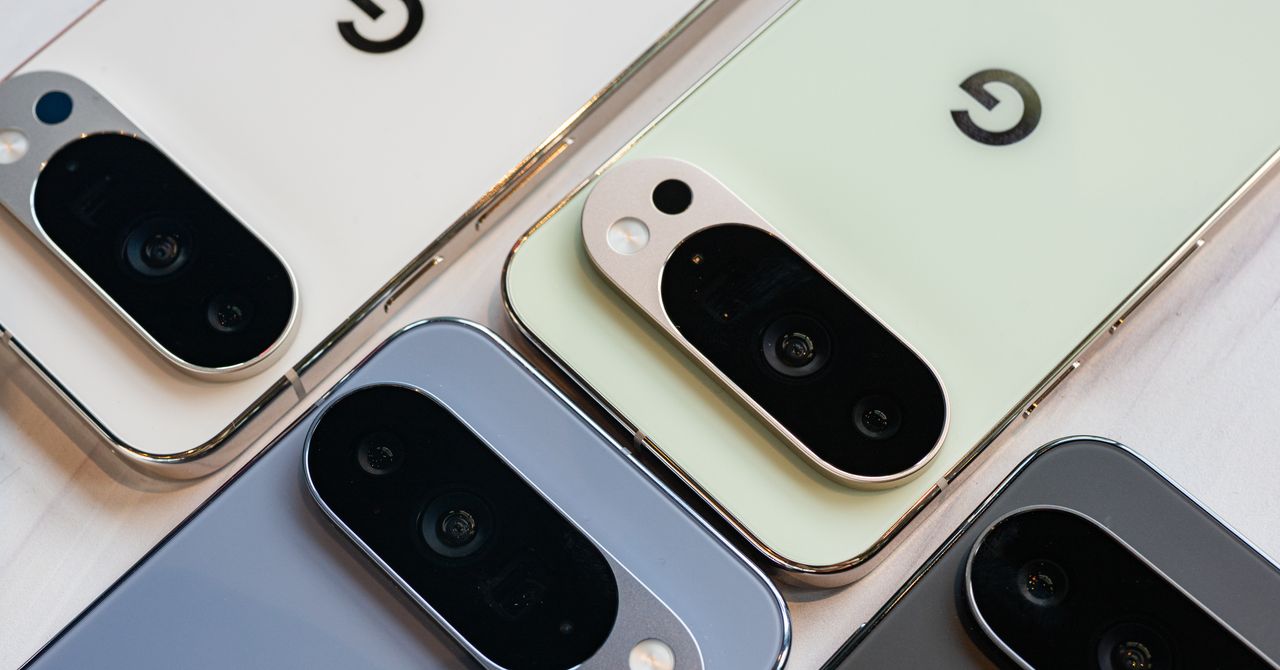
Portrait Light: You can change up the lighting in your portrait selfies after you take them by opening them up in Google Photos, tapping the Edit button, and heading to Actions > Portrait Light. This adds an artificial light you can place anywhere in the photo to brighten up your face and erase that 5 o’clock shadow. Use the slider at the bottom to tweak the strength of the light. It also works on older Portrait mode photos you may have captured. It works only on faces.
Health and Accessibility Features
Cough & Snore Detection (Tensor G2 and newer): On the Pixel 7 and newer, you can have your Pixel detect if you cough and snore when sleeping, provided you place your Pixel near your bed before you nod off. This will work only if you use Google’s Bedtime mode function, which you can turn on by heading to Settings > Digital Wellbeing & Parental Controls > Bedtime Mode.
Guided Frame (Tensor G2 and newer): For blind or low-vision people, the camera app can now help take a selfie with audio cues (it works with the front and rear cameras). You’ll need to enable TalkBack for this to work (Settings > Accessibility > TalkBack). Then open the camera app. It will automatically help you frame the shot.
Simple View: This mode makes the font size bigger, along with other elements on the screen, like widgets and quick-settings tiles. It also increases touch sensitivity, all of which hopefully makes it easier to see and use the screen. You can enable it by heading to Settings > Accessibility > Simple View.
Safety and Security Features
Theft Protection: This is a broader Android 15 feature, but essentially, Google’s algorithms can figure out if someone snatches your Pixel out of your hands. If they’re trying to get away, the device automatically locks. Additionally, with another device, you can use Remote Lock to lock your stolen Pixel with your phone number and a security answer. To toggle these features on, go to Settings > Security & privacy > Device unlock > Theft protection.
Identity Check: If your Pixel detects you’re in a new location, Identity Check will require your fingerprint or face authentication before you can make any changes to sensitive settings, offering extra peace of mind in case you lose your phone or if it’s stolen. You can enable this in Settings > Security & privacy > Device unlock > Theft protection > Identity Check.
Courtesy of Google
Private Space: Another Android 15 addition, Pixel phones finally have a feature that lets you hide and lock select apps. You can use a separate Google account, set a lock, and install any app to hide away. To set it all up, head to Settings > Security & privacy > Private space.
Satellite eSOS (Pixel 9 and Pixel 10 series, excluding Pixel 9a): Like Apple’s SOS feature on iPhones, you can now reach emergency contacts or emergency services even when you don’t have cell service or Wi-Fi connectivity. It’s not just available in the continental US, but also in Hawaii, Alaska, Canada, and even Europe.


Flipkart Layoffs 2026: Why Has E-Commerce Firm Sacked Around 500 Employees?

Nepal’s rapper-mayor Balendra Shah poised to become prime minister

US–Israel War With Iran Sends Shockwaves Through Global Business – SUCH TV

Attock Cement’s acquisition approved | The Express Tribune

India Us Trade Deal: Fresh look at India-US trade deal? May be ‘rebalanced’ if circumstances change, says Piyush Goyal – The Times of India

Policy easing drives Argentina’s garment import surge in 2025

-
Business1 week ago
Attock Cement’s acquisition approved | The Express Tribune
-
Business1 week ago
India Us Trade Deal: Fresh look at India-US trade deal? May be ‘rebalanced’ if circumstances change, says Piyush Goyal – The Times of India
-
 Fashion1 week ago
Policy easing drives Argentina’s garment import surge in 2025
-

 Sports1 week ago
LPGA legend shares her feelings about US women’s Olympic wins: ‘Gets me really emotional’
-

 Fashion1 week ago
South Korea’s Misto Holdings completes planned leadership transition
-

 Entertainment1 week ago
Bobby J. Brown, “The Wire” and “Law & Order: SUV” actor, dies of smoke inhalation after reported fire
-

 Fashion1 week ago
Texwin Spinning showcasing premium cotton yarn range at VIATT 2026
-

 Entertainment1 week ago
Pakistan’s semi-final qualification scenario after England defeat New Zealand