

Politics
48 hours of confusion in Afghanistan during internet blackout

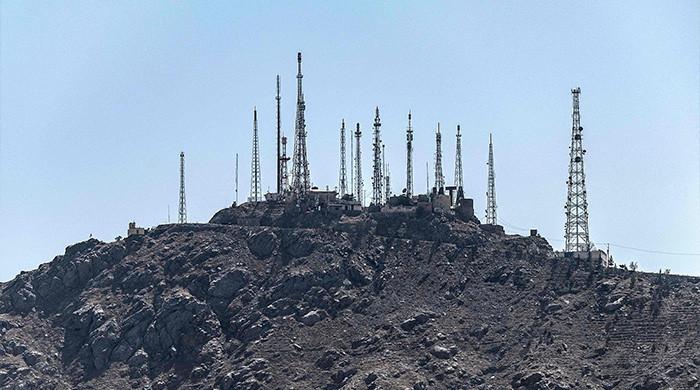
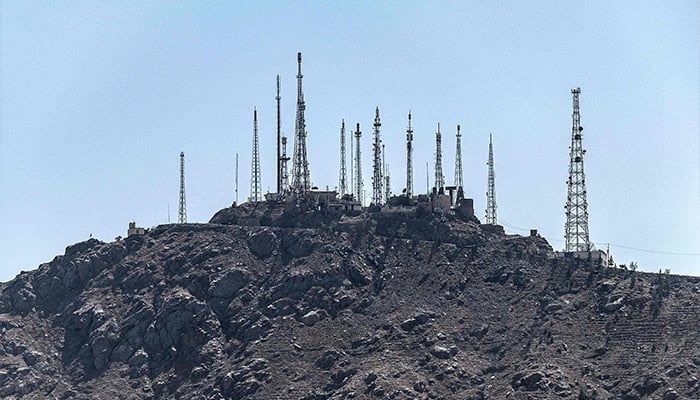
Paralysed banks, grounded planes and chaotic hospitals: for two days, life ground to a halt in Afghanistan after the Taliban unexpectedly cut off the internet and phone networks.
Authorities had for weeks been restricting broadband access in several provinces to prevent “vice” on the orders of the Taliban’s supreme leader.
But no one in Kabul was prepared for a nationwide shutdown.
Young Kabulis first travelled to high points in the mountainous capital, phones raised skyward, hoping to catch a signal. Then they tried buying SIM cards from different operators — before giving up.
For Afghanistan’s 48 million people, it became impossible to send news to their relatives or receive precious remittances from abroad to pay their bills.
Some residents of Herat and Kandahar travelled to border towns to pick up signal from neighbouring Iran and Pakistan.
But for the rest of the country, with no news from the outside world, rumours swelled to the rhythm of helicopters.
“The Americans are going to retake Bagram Air Base!” whispered the streets, after US president Donald Trump’s recent calls to have the US-built facility returned.
Others wondered, incorrectly, that the reclusive Supreme Leader Hibatullah Akhundzada and loyalists had replaced Interior Minister Sirajuddin Haqqani, who advocates a pragmatic approach to running the country.
As of Thursday, the Taliban authorities had still yet to comment on the shutdown.
‘A return to candlelight?’
Across the country, one of the poorest in the world, banking systems stopped functioning and the informal money exchange system used by much of the nation also broke down.
“Cash withdrawals, card payments, fund transfers — everything relies on the internet. We can’t do anything without it,” a private bank manager told AFP.
For Afghans, there was no choice but to survive on whatever cash they had on hand.
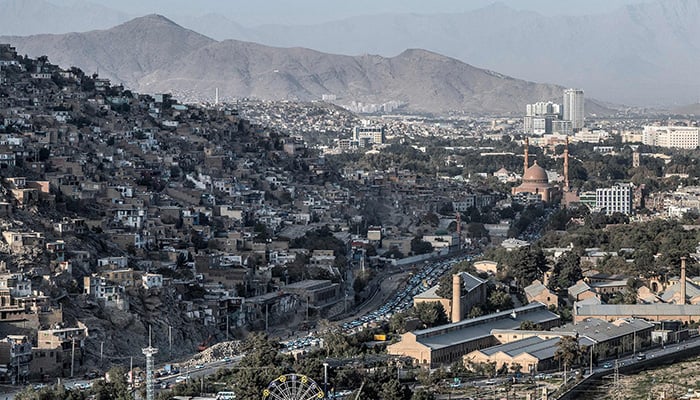
In the half-deserted streets, Taliban security personnel communicated via walkie-talkies.
“I’ve worked in security for 14 years and I’ve never seen anything like this,” he said on condition of anonymity.
“What next? Are we going to cut off the electricity and go back to candlelight?” added another civil servant, speaking on condition of anonymity.
Domestic and international flights were also grounded, but with no way to be warned, passengers continued to flock to airports.
Hospital emergency rooms lacked both staff and patients — as many Afghans were too frightened to travel.
Doctor Sultan Aamad Atef, Afghanistan’s only neurologist, saw a 30% drop in visits.
“Without online appointments, patients have to show up spontaneously and hope I can take them, or wait, sometimes for nothing,” he told AFP.
Wedding day drama
Overnight, two million Afghan women were deprived of online courses, according to the Malala Fund.
“I was so scared this would last and I wouldn’t be able to get my bachelor’s degree… studying remotely is all I have left,” a 20-year-old student told AFP on Wednesday.
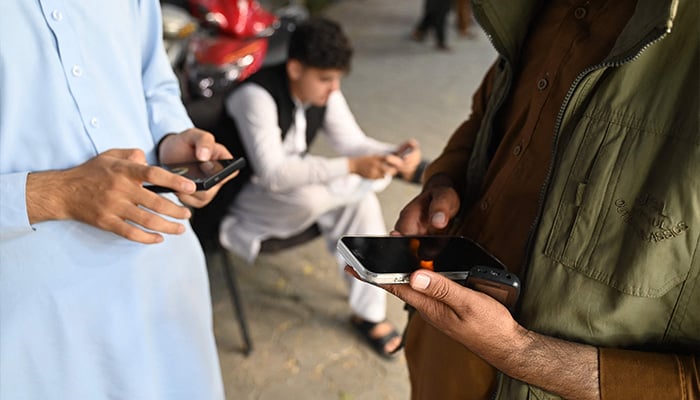
Her parents refused to send her younger brother to school without a mobile phone.
Restaurants without delivery services, the post office, travel agencies and shops all told AFP they had suffered heavy economic losses.
Weddings — often involving a lifetime of savings and up to 2,000 guests — became an “unmanageable situation”, a wedding hall boss in the capital Kabul told AFP.
“We plan weddings well in advance, but we can’t get any confirmation that the bride and groom, and their guests will even show up,” he told AFP, hours before the blackout ended on Wednesday night and the wedding went ahead.
“Ten years wouldn’t be enough to compensate for the economic losses of the last two days,” laments Khanzada Afghan, a grocery store manager in eastern Jalalabad, who sent his employees home.
- Judge finds Yoon guilty of obstructing justice and other crimes.
- Separate insurrection verdict is scheduled for February 19.
- Yoon faces another trial over alleged drone flights to North Korea.
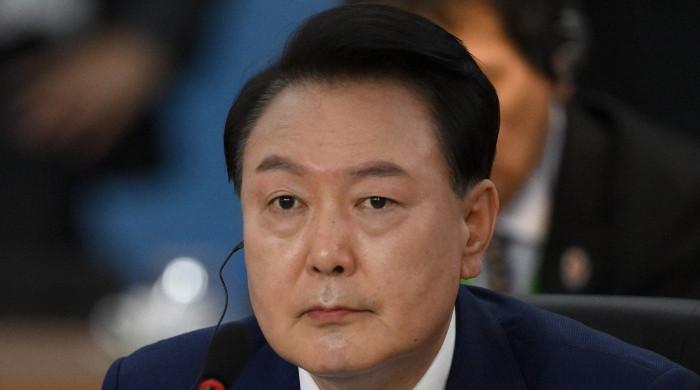
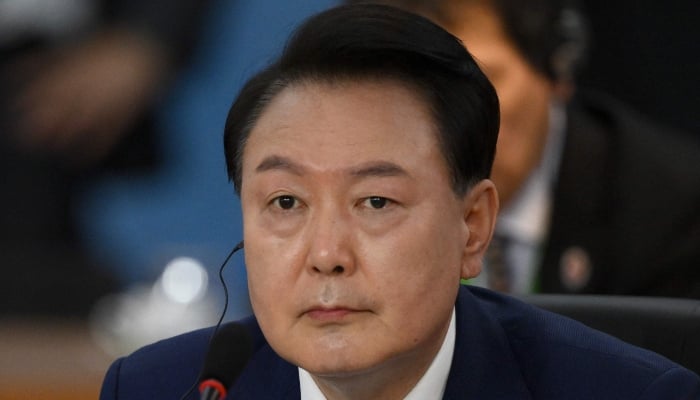
SEOUL: A South Korean judge sentenced former president Yoon Suk Yeol on Friday to five years in prison for obstructing justice and other crimes linked to his disastrous martial law declaration and in its chaotic aftermath.
It is the first in a series of verdicts for the disgraced ex-leader, whose brief suspension of civilian rule in South Korea on December 3, 2024 prompted massive protests and a showdown in parliament.
Now ousted from power, he faces multiple trials for actions taken during that debacle and in the turmoil that followed.
On Friday Judge Baek Dae-hyun at Seoul’s Central District Court said he found Yoon guilty of obstruction of justice by blocking investigators from detaining him.
Yoon was also found guilty of excluding cabinet members from a martial law planning meeting.
“Despite having a duty, above all others, to uphold the Constitution and observe the rule of law as president, the defendant instead displayed an attitude that disregarded the… Constitution,” Baek said.
“The defendant’s culpability is extremely grave,” he said.
But Yoon was not guilty of forging official documents due to lack of evidence, the judge said.
Yoon has seven days to appeal, he added.
Prosecutors had called for a 10-year prison term, while Yoon had insisted no law was broken.
Yoon defiant
It comes days after prosecutors in a separate case demanded Yoon be sentenced to death for his role as the “ringleader of an insurrection” in orchestrating the imposition of martial law.
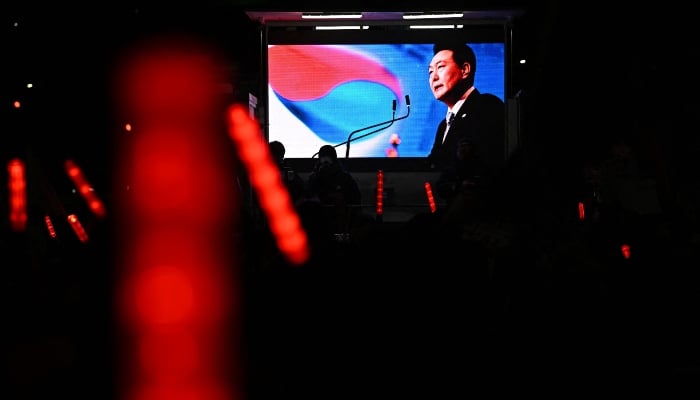
They argued Yoon deserved the severest possible punishment as he had shown “no remorse” for actions that threatened “constitutional order and democracy”.
If he is found guilty it is highly unlikely the sentence will actually be carried out, as South Korea has had an unofficial moratorium on executions since 1997.
Yoon was seen smiling in court as the prosecutors demanded the punishment.
And the former leader and top prosecutor has remained defiant, saying his martial law declaration was a lawful exercise of his presidential authority.
In closing remarks on Tuesday, he insisted the “exercise of a president’s constitutional emergency powers to protect the nation and uphold the constitutional order cannot be deemed an act of insurrection”.
He accused the then-opposition party of having imposed an “unconstitutional dictatorship” through their control of the legislature.
“There was no other option but to awaken the people, who are the sovereign.”
The court is scheduled to rule on the insurrection charges on February 19.
Yoon also faces a separate trial on charges of aiding the enemy, over allegations he ordered drone flights over North Korea to bolster his case for declaring martial law.
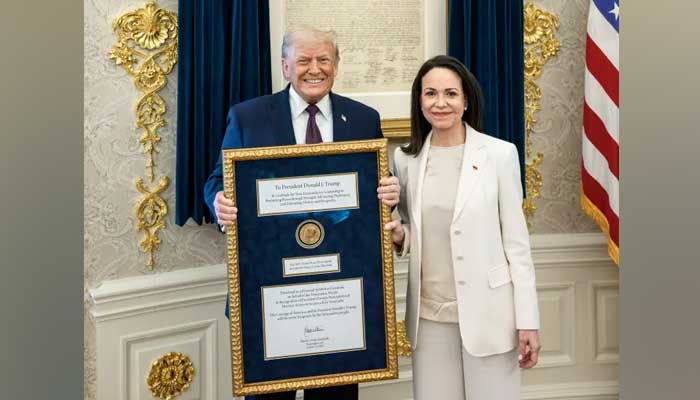
- Machado says meeting was ‘excellent,’ but did not elaborate.
- Encounter comes as Trump has praised Caracas’ interim leader.
- Trump has prioritised securing access to Venezuelan oil.
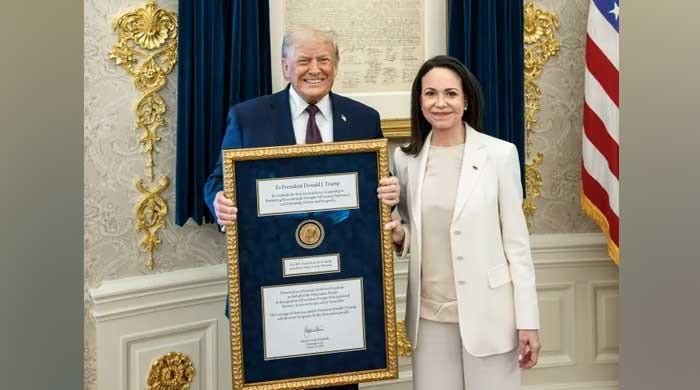
WASHINGTON: Venezuelan opposition leader Maria Corina Machado gave her Nobel Peace Prize medal to US President Donald Trump on Thursday during a White House meeting, as she tries to gain some influence over how the president shapes the South American country’s political future.
A White House official confirmed that Trump intends to keep the medal.
In a social media post on Thursday evening, Trump wrote: “Maria presented me with her Nobel Peace Prize for the work I have done. Such a wonderful gesture of mutual respect. Thank you Maria!”
Machado, who described the meeting as “excellent,” said the gift was in recognition of what she called his commitment to the freedom of the Venezuelan people.
Machado’s attempt to sway Trump came after he dismissed the idea of installing her as Venezuela’s leader to replace the deposed Nicolas Maduro. Trump openly campaigned for the prize before Machado was awarded it last month and complained bitterly when he was snubbed.
Though Machado gave Trump the gold medal that honorees receive with the prize, the honor remains hers; the Norwegian Nobel Institute has said the prize cannot be transferred, shared or revoked.
Asked on Wednesday if he wanted Machado to give him the prize, Trump told Reuters: “No, I didn’t say that. She won the Nobel Peace Prize.”
The Republican president long expressed interest in winning the prize and has at times linked it to diplomatic achievements.
The lunch meeting, which appeared to last slightly over an hour, marked the first time the two have met in person. Machado then met with more than a dozen senators, both Republican and Democratic, on Capitol Hill, where she has generally found more enthusiastic allies.
While the visit was ongoing, White House press secretary Karoline Leavitt said Trump had been looking forward to meeting Machado, but that he stood by his “realistic” assessment that she did not currently have the support needed to lead the country in the short term.
Machado, who fled Venezuela in a daring seaborne escape in December, is competing for Trump’s ear with members of Venezuela’s government and seeking to ensure she has a role in governing the nation going forward.
After the US captured Maduro in a snatch-and-grab operation this month, various opposition figures, members of Venezuela’s diaspora and politicians throughout the US and Latin America have expressed hope that Venezuela will begin the process of democratisation.
- Trump issues threat after ICE officer shot Venezuelan man.
- Says he may deploy military force in Minnesota.
- Minnesota leaders say ICE actions are ‘disgusting and intolerable.
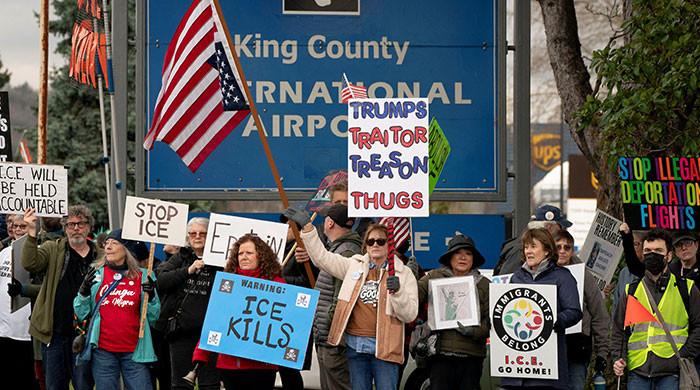
WASHINGTON: US President Donald Trump threatened on Thursday to invoke the Insurrection Act to deploy military forces in Minnesota after days of angry protests over a surge in immigration agents on the streets of Minneapolis.
Confrontations between residents and federal officers have become increasingly tense after an Immigration and Customs Enforcement agent fatally shot a US citizen, Renee Good, in a car eight days ago in Minneapolis, and the protests have spread to other cities. Trump’s latest threat came a few hours after an immigration officer shot a Venezuelan man who the government said was fleeing after agents tried to stop his vehicle in Minneapolis. The man was wounded in the leg.
“If the corrupt politicians of Minnesota don’t obey the law and stop the professional agitators and insurrectionists from attacking the Patriots of ICE, who are only trying to do their job, I will institute the INSURRECTION ACT,” Trump wrote on social media.
Trump, a Republican, has for weeks derided the state’s Democratic leaders and called people of Somali origin there “garbage” who should be “thrown out” of the country.
He has already sent nearly 3,000 federal officers into the Minneapolis area, who have carried guns through the city’s icy streets, wearing military-style camouflage gear and masks that hide their faces.
They have been met day and night by loud, often angry protests by residents, some blowing whistles or banging tambourines. On Wednesday night, crowds of nearby residents gathered near the area where the Venezuelan man was shot. Some shouted in protest, and federal officers ignited flash-bang grenades and released clouds of tear gas.
Later, after most of the residents had been dispersed, a small group vandalised a car they believed belonged to the federal officers, one person daubing it with red graffiti saying: “Hang Kristi Noem,” in reference to the Homeland Security secretary who oversees ICE.
Since the surge began, agents have arrested both immigrants and protesters, at times smashing windows and pulling people from their cars, and have been shouted at for stopping Black and Latino US citizens to demand identification.
‘Disgusting and intolerable’
The US Department of Homeland Security, which is overseeing Trump’s immigration crackdown, identified the man its officer shot as Julio Cesar Sosa-Celis. He had been allowed into the US by the administration of Trump’s predecessor, Joe Biden, in 2022 through the government’s humanitarian parole programme. The Trump administration has since revoked the parole granted to Venezuelans and others admitted under Biden.
In its statement, DHS called him a convicted criminal under Minnesota law after being caught driving without a licence and giving a false name to a police officer. Court records of those cases reviewed by Reuters show he was only convicted of “petty misdemeanours”, which Minnesota state law says do “not constitute a crime”, and for which the maximum punishment is a $300 fine.
According to the DHS account, federal officers tried to stop Sosa-Celis in his vehicle. He fled the scene in his vehicle, crashed into a parked car, and then ran away on foot, the DHS said.
One officer caught him and while the two were “in a struggle on the ground”, two other Venezuelan men came out of a nearby apartment and “attacked the law enforcement officer with a snow shovel and broom handle”, the statement said.
Sosa-Celis got loose and began hitting the officer with “a shovel or a broomstick”, and so the officer “fired defensive shots to defend his life”, the DHS statement said.
Reuters was not able to verify the account given by DHS. The men fled into the apartment and all three were arrested after officers went in, DHS said. Sosa-Celis and the officer were recovering in hospital from injuries, according to the department and city officials.
The Trump administration and Minnesota leaders have each blamed the other for stoking anger and violence.
In a late-night press conference, Mayor Jacob Frey called the ICE surge an invasion and said he had seen “conduct from ICE that is disgusting and is intolerable”.
“We cannot be at a place right now in America where we have two governmental entities that are literally fighting one another,” Frey said, calling for peace.
Trump supporters divided over immigration enforcement
The Insurrection Act of 1807 is a law allowing the president to deploy the military or federalise soldiers in a state’s National Guard to quell rebellion, an exception to laws that prohibit soldiers being used in civil or criminal law enforcement.
It has been used 30 times in US history, according to New York University’s Brennan Centre for Justice. The Supreme Court has ruled that the president alone can determine if the act’s conditions have been met.
Trump has already taken the unusual step of federalising National Guard soldiers to help with immigration law enforcement in Democrat-run cities over the objections of state governors, including in Los Angeles last year, which a judge ruled in December was unconstitutional.
Trump’s aggressive moves in Minnesota have divided his supporters: 59% of Republicans favoured a policy prioritising arrests by immigration officers even if people get hurt, while 39% said officers should focus on not harming people even if it means fewer arrests, according to a Reuters/Ipsos survey released on Thursday.
If Trump sends soldiers to Minnesota, he would almost certainly face legal challenges by the state. The Minnesota attorney general’s office has already sued the Trump administration this week, saying ICE agents were engaged in a “pattern of unlawful, violent conduct”, including racial profiling and forced entry into residents’ homes without warrants. The American Civil Liberties Union also filed a similar lawsuit against the Trump administration on Thursday.
At a brief hearing on Wednesday, Minnesota asked US District Judge Kate Menendez to issue a temporary order restraining the ICE surge.
Menendez ordered the Trump administration to respond by Monday, saying she would rule after that, calling the issues raised by Minnesota’s lawsuit “enormously important”.


Australia’s apparel imports fall, textiles rise in July-Nov 2025

Robert Downey Jr. hails Timothée Chalamet as ‘one of the greats’

VTL Group boosts output by 10% with Coats Digital’s GSDCost solution

-

 Politics1 week ago
UK says provided assistance in US-led tanker seizure
-

 Entertainment1 week ago
Does new US food pyramid put too much steak on your plate?
-

 Entertainment1 week ago
Why did Nick Reiner’s lawyer Alan Jackson withdraw from case?
-

 Sports5 days ago
Clock is ticking for Frank at Spurs, with dwindling evidence he deserves extra time
-
 Business1 week ago
Trump moves to ban home purchases by institutional investors
-
 Sports1 week ago
PGA of America CEO steps down after one year to take care of mother and mother-in-law
-

 Tech3 days ago
New Proposed Legislation Would Let Self-Driving Cars Operate in New York State
-
 Business1 week ago
Bulls dominate as KSE-100 breaks past 186,000 mark – SUCH TV