

Business
Startup founder Charlie Javice sentenced to 7 years in prison for defrauding JPMorgan Chase


US businesswoman Charlie Javice (L), founder of Frank, arrives for her sentencing hearing at federal court in Manhattan on Sept. 29, 2025, in New York City.
Timothy A. Clary | AFP | Getty Images
Charlie Javice, founder of a startup acquired by JPMorgan Chase in 2021 for $175 million, was sentenced to just over seven years in prison Monday for defrauding the bank by overstating how many customers the fintech firm had.
In March, a 12-person jury found Javice and her chief growth officer Olivier Amar guilty on three counts of fraud and one count of conspiracy to commit fraud. Prosecutors had sought a sentence of 12 years.
Javice, 33, cried as she delivered an emotional statement to the court Monday. Standing to address the judge, Javice said she felt profound remorse for her actions and asked for forgiveness from JPMorgan, employees of the startup, shareholders and investors.
At one point, Javice turned and directly addressed her family, sitting in the front row, to apologize and thank them for what she called unwavering support.
“I will spend my entire life regretting these errors,” Javice said.
“I’m asking with all of my heart for forgiveness,” she said. “I ask your Honor to temper justice with mercy … I will accept your judgment with dignity and humility.”
Judge Alvin Hellerstein told Javice her words were “very moving” and that the way she’s devoted her life is “highly commendable,” but that he couldn’t give her the forgiveness she sought.
“I sentence people not because they’re bad, but because they do bad things,” Hellerstein told Javice before delivering the 85-month prison sentence. “I don’t think you’ll be committing other crimes and that you’ll be devoting your life to service, but others have to be deterred.”
In addition to prison, Javice was sentenced to three years of supervision, along with $22.36 million in forfeiture and $287 million in restitution to JPMorgan. She will remain out on bail while she appeals the ruling.
JPM acquisition
JPMorgan bought the startup, called Frank, to help the biggest U.S. bank by assets market its financial products to students. Frank was a digital platform that helped students apply for financial aid. In September 2021, JPMorgan told CNBC in an exclusive interview on the deal that the fintech firm had served more than five million students since Javice founded it.
But months after the deal closed, JPMorgan discovered that Frank had fewer than 300,000 real customers; the rest were synthetic identities created by Javice with the help of a data scientist.
Javice was arrested in 2023 on charges that she defrauded JPMorgan in the deal. Details that emerged later showed that Frank employees expressed disbelief when Javice directed them to boost their customer roster before the acquisition.
The week before selling her company to JPMorgan, Javice directed an employee to fabricate millions of users. When the employee declined, Javice reassured him, according to testimony given earlier this year.
“She said: ‘Don’t worry. I don’t want to end up in an orange jumpsuit,'” the employee testified.
Not Theranos
On Monday, Javice’s attorney Ronald Sullivan argued for a lighter sentence for his client, making the case that Frank helped customers. He contrasted the case against that of Elizabeth Holmes of Theranos infamy, whose fraud he said had “dangerous medical consequences,” and who was sentenced to 135 months in prison.
“Ms. Javice’s sentence should be nowhere near Elizabeth Holmes,'” Sullivan told Judge Hellerstein.
Assistant U.S. Attorney Micah Fergenson disagreed, arguing that Javice’s crime was fueled by greed.
“JPMorgan didn’t get a functioning business, they acquired a crime scene,” Fergenson said.
A courtroom sketch of Charlie Javice at her sentencing at court on Sept. 29, 2025 in New York City.
Elizabeth Williams | CNBC
The episode was embarrassing for JPMorgan, which was thought to be one of the most sophisticated of corporate acquirers. Concerned about threats from fintech and big tech firms, the bank, led by CEO Jamie Dimon, went on a shopping spree of smaller fintech firms starting in 2020.
But JPMorgan, eager to edge out rivals bidding for the startup, failed to confirm that Frank actually had millions of customers before shelling out $175 million for the company.


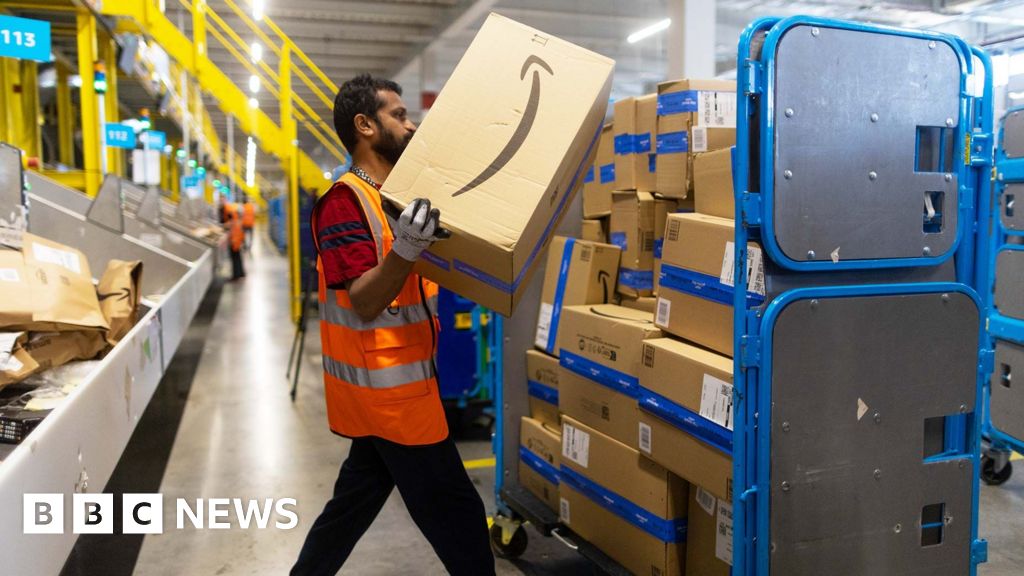
First, to be sure, Amazon isn’t without competitors in any of the segments it is in, including e-commerce. Major US retailers like Walmart and Target both have broad-based, rapidly-expanding online retail arms, and offer their own versions of Amazon’s Prime subscription service.
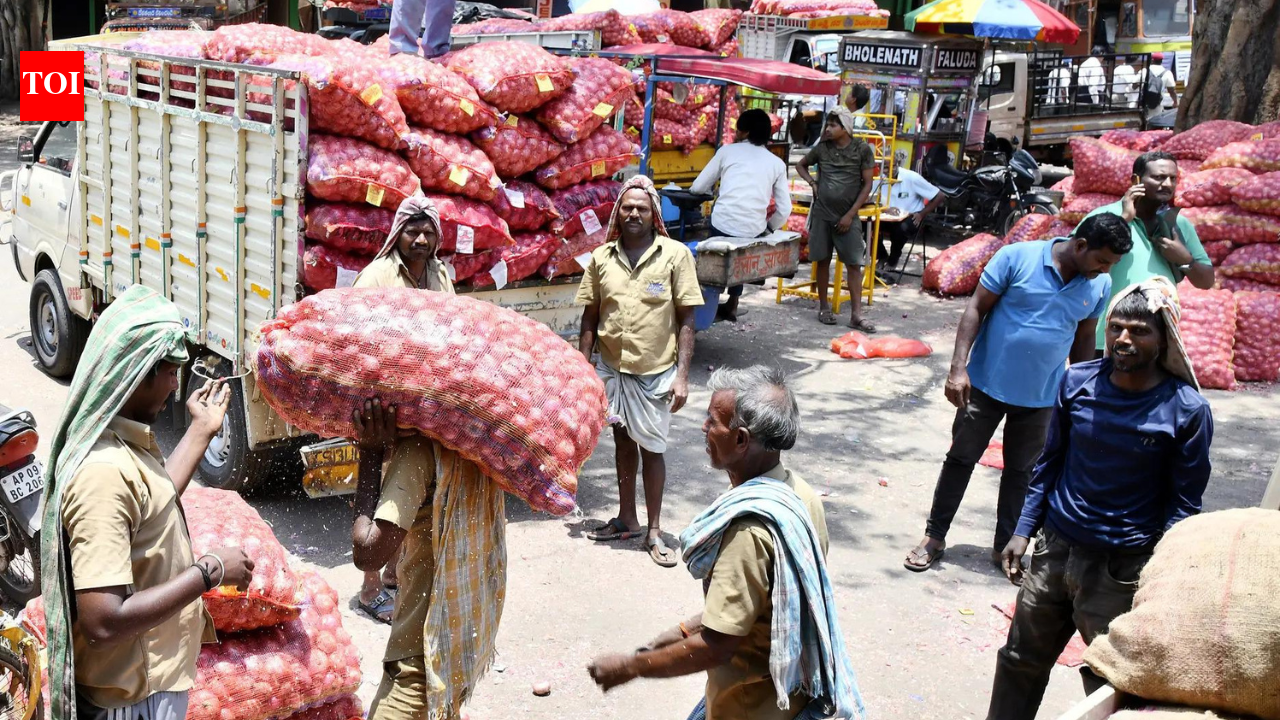
Rain clouds rolled over Maharashtra’s onion belt. Then came war winds from West Asia. Prices collapsed. Crops rotted. Farmers counted losses in rupees — and sold tears by the quintal. Across Nashik, Solapur and Chhatrapati Sambhajinagar, onion growers are reaping a bitter harvest this season as wholesale prices at agriculture produce market committees (APMCs) have crashed far below production costs.Prakash Galadhar, a farmer hailing from Paithan taluka in Chhatrapati Sambhajinagar, hauled 1,262kg of onions he had harvested to market last week. After deductions for labour, loading and transport, his final balance showed he owed the trader Re 1.In Satana APMC of Nashik district, farmer Jitendra Solanke brought 30 quintals hoping to recover at least part of his investment. Traders first offered Rs 50 a quintal. After he protested, rate climbed to Rs 175 a quintal — Rs 1.75 a kg.Still, numbers refused to add up. “I spent Rs 1,200 per quintal to grow crop. After sale, labour and transport charges, only Rs 500 remained. The loss mounted to Rs 36,000,” Solanke said.Inputs have become expensive — seeds, fertilisers, diesel, mechanised farming and labour costs have all risen sharply — while market prices have sunk into mud.“We sell onions at Rs 4 to Rs 5 per kg while production cost is over Rs 12,” said Bhausaheb Jagtap, a farmer from Pune district. “After paying everybody, nothing is left,” Jagtap said.Prices have been sliding since Feb this year. At Lasalgaon APMC in Nashik — country’s largest onion wholesale market and benchmark for national rates — the kitchen staple is currently selling between Rs 400 and Rs 1,600 a quintal. Nearly 80% of arrivals fetch less than Rs 800 a quintal.In Solapur APMC, arrivals on May 13 touched 14,756 quintals. Prices ranged from Rs 100 to Rs 1,700 a quintal, or Rs 1 to Rs 17 a kg. A year ago, onions sold there for Rs 2,500 to Rs 3,000 a quintal.Growers said break-even price stands near Rs 18 a kg. “Losses are massive because nearly 80% of onions are selling between Rs 400 and Rs 800 per quintal,” said Bharat Dighole, president of Maharashtra Onion Growers’ Association.Market experts blamed a perfect storm: bumper arrivals, weak domestic demand, export disruptions and rain-damaged produce flooding mandis.“Geopolitical tensions involving Iran, US and Israel disrupted export markets and reduced overseas demand,” said Vikas Singh, vice president of Horticulture Produce Exporters’ Association of India.Unseasonal rain between March 19 and 21 added another blow to the farmers. Showers lashed Nashik district just as summer onion harvest began, damaging ready crop and triggering rot during storage. “Only 30% of produce was grade-1 quality,” said Prakash Jadhav, head of onion department at Solapur APMC. “Rain damage and long storage hurt quality.”Farmers are demanding onions be brought under minimum support price, pegging at Rs 3,500 a quintal. Growers’ groups want Maharashtra govt to compensate farmers by Rs 1,500 a quintal for distress sales.(Inputs from Prasad Joshi)

India emerged as one of the fastest-growing steel markets as global steel prices rose across major regions in April and early May, according to a Goldman Sachs report. In its “Global Steel: The Steel Market Barometer – May Update”, Goldman Sachs said average hot rolled coil (HRC) prices increased across nearly all major markets in April, led by Brazil with a 10 per cent month-on-month rise, followed by Japan at 6.5 per cent and China at 2.9 per cent. “On a YTD basis, Brazil’s HRC steel price performance has been the strongest in our sample (+21%), followed by the US (+15%) with other regions also showing price increases from 6%-13%,” the report said, as quoted by ANI.India continued to show strong rise within this global uptrend, with crude steel production rising 11 per cent year-on-year in March, compared with 10 per cent year-to-date growth and 7 per cent in February, the report said. Meanwhile, long steel prices also firmed in April across key regions, with Brazil recording a 12 per cent rise in rebar prices, followed by Europe at 6.9 per cent and the Black Sea region at 6.1 per cent. On the supply side, China’s steel output continued to contract, falling 3.2 per cent year-on-year in the first two weeks of May. Commenting on the sector, Goldman Sachs said, “On the industry level, while the anti-involution effort and long-term capacity cut plan for the Chinese steel sector remain intact, we see delayed execution in 2026E in terms of both capacity and production discipline.” Region-wise trends showed mixed performance across major producers. Europe’s crude steel output rose 16 per cent month-on-month in March, though it remained lower year-on-year and on a year-to-date basis. In the US, average weekly steel production increased 3 per cent in April, while utilisation rates averaged 79.6 per cent. Goldman Sachs added that infrastructure activity in China remained resilient despite weakness in the property sector, while manufacturing improved and construction softened. It projected broadly stable steel prices across major global markets through 2026, with US prices expected to remain stronger than those in Europe, China and Brazil.


The border as lifeline

Bangladesh apparel reset: Compliance edge or energy trap?

Military jets’ crew members safely eject after Idaho air-show collision

-

 Entertainment5 days ago
Conan O’Brien hat tricks as Oscar host
-

 Tech1 week ago
Could Contact-Tracing Apps Help With the Hantavirus? Not Really
-

 Tech1 week ago
I Tried the Best Captioning Smart Glasses, and Only One Leads the Pack
-

 Fashion5 days ago
Italy’s Zegna Group’s Q1 growth boosted by strong organic performance
-

 Sports1 week ago
Bobby Cox, legendary Atlanta Braves manager who led 1995 World Series champions, dead at 84
-

 Entertainment1 week ago
Martin Short: Facing tragedy with joy
-

 Entertainment1 week ago
Tom Brady gets back at Kevin Hart during Netflix roast
-

 Entertainment1 week ago
Martha Stewart: How to make an omelet