

Business
Half of British adults gambled in last month – survey


Almost half of adults (48%) in Great Britain have gambled in the last four weeks, according to an annual survey by the industry regulator.
Some 2.7% of adults scored “8+” on the Problem Gambling Severity Index (PGSI) in 2024 – up from 2.5% the previous year – which is “statistically stable” compared to the year before, the Gambling Commission found.
The headline figure of those who gambled over the last month – which is the same as the previous year – falls to 28% when those who had only bought tickets for a lottery draw were excluded.
Overall, some 42% of adults who gambled in the past 12 months rated the last time they gambled positively, compared to 21% who rated it negatively.
The chance of winning “big money” was the main reason why people gambled (85%), followed by finding gambling to be fun (72%).
Andrew Rhodes, chief executive of the Gambling Commission, said: “The Gambling Survey for Great Britain is a key building block of the evidence base which helps government, industry and other partners understand both gambling behaviour and potential consequences from gambling.
“This year’s findings deepen our understanding of consequences from gambling and provide crucial insight into risk profiles among those who gamble most frequently. We strongly encourage operators to use this evidence to consider the risks within their own customer bases.
“Data and research, such as GSGB, is essential to helping us identify where our regulatory focus should be and informs our ongoing work to implement player protection recommendations from the Gambling Act Review White Paper.
“We have already introduced light-touch financial vulnerability checks on those spending £150 a month, reduced the intensity of all online games by banning autoplay and slowing game speed, and tightened age verification in premises.
“We’ve also banned potentially harmful marketing offers involving consumers having to carry out two or more types of gambling, such as betting and playing slots, and limited the number of times bonus funds must be re-staked before a consumer can withdraw winnings.
Will Prochaska, director of the Coalition to End Gambling Ads, said: “The Gambling Commission releases these statistics as if nothing is wrong. But there’s something very wrong when over a million people have a gambling problem and millions more are being harmed.
“Families up and down the country are being torn apart to deliver profits for big gambling corporations. If we’re serious about addressing this crisis, we must start by banning gambling advertising.”
A Betting and Gaming Council spokeswoman said: “More than 22 million adults in Britain enjoy a bet each month and as the Gambling Commission today shows, the vast majority of people do so without a problem.
“Our members take player protections incredibly seriously and have voluntarily contributed £170 million to research, education and treatment programmes over the past four years alone – in stark contrast to the illegal black market which has almost trebled in size since 2022 and actively targets vulnerable customers.
“The NHS APM Survey of June 2025 and the NHS health survey of 2021 both estimated problem gambling at 0.4% and the differences between this and the Gambling Commission’s rate appear to reflect different methodology rather than a rise in harm.”

The president also said the US will continue to blockade Iran’s ports until peace talks progress.
Source link
Business
High-Skilled Immigration: US tightens screws on high-skilled immigration: Denial rates surge across key visa categories – The Times of India

For Indian tech and medical professionals, researchers and even global achievers eyeing to work in the US, the path is becoming increasingly uncertain. New data shows that even the most elite immigration routes, once seen as relatively stable, are now facing sharply higher rejection rates, signalling a broader tightening of legal migration pathways.The US has significantly increased denial rates for high-skilled immigration categories in fiscal 2025 (year ending Sept 30, 2025), reflecting a policy-driven shift to restrict legal migration even for highly qualified professionals according to a new analysis by the National Foundation for American Policy (NFAP).“The latest data show that Trump administration officials intend to make it difficult for even the most highly skilled individuals from around the world to work in the US,” said Stuart Anderson, executive director of NFAP.A change of this magnitude indicates a crackdown on approvals, the analysis noted, pointing to a sharp rise in rejection rates despite no formal regulatory changes.
Green card routes for top talent see sharpest rise
The steepest increases are in employment-based green card categories used by highly accomplished professionals. The increase in denials occurred within a single year, despite no new regulations indicating a shift in adjudication standards.
- EB-1 (extraordinary ability): Denial rates nearly doubled from 25.6% in Q4 FY2024 to 46.6% in Q4 FY2025
- EB-2 National Interest Waiver (NIW): Denials rose from 38.8% in Q4 FY2024 to 64.3% in Q4 FY2025
Over a longer period, the trend is even sharper: NIW denial rates rose from 4.3% in FY2022 to 44.8% in FY2025, states the report.
Temporary work visas also tightening
Denial rates have also increased across key temporary work visa categories, particularly toward the end of FY2025:
- O-1 visas: Denial rates rose from 5.0% in Q4 FY2024 to 7.3% in Q4 FY2025 . These visas are meant for individuals with extraordinary ability in fields such as science, technology, arts, education, business or sports. It is typically used by top researchers, startup founders, artists and senior professionals with a strong record of achievement.
- L-1A visas: Denial rates increased from 8.0% in Q4 FY2024 to 9.6% in Q4 FY2025. These visas are used by multinational companies to transfer senior executives or managers from an overseas office to a US office. It is a key route for leadership mobility within global firms.
- L-1B visas: Denial rates rose from 8.1% in Q4 FY2024 to 9.2% in Q4 FY2025. These visas are also for intracompany transfers, but specifically for employees with specialised knowledge and are often used for technical experts and niche-skilled staff.
H-1B remains stable—but pressure persists
The H-1B visa, widely used by Indian IT professionals, has not seen a comparable increase in denial rates, the denial rates remained stable at around 2.0%–2.1% in FY2025. This is attributed to a 2020 legal settlement, which limits changes to adjudication standards without formal rulemaking.However, policy pressure continues through other measures. President Trump has signed an executive order mandating a $100,000 fee to petition for an H‑1B worker outside the US. Further, selection in the lottery for H-1B cap visas is linked to wages and there is a proposal to increase wages across all levels.
Backlogs and delays worsen the squeeze
For the Indian diaspora, these statistics are worrying. Between Q4 FY2024 and Q4 FY2025, backlogs rose across key immigration filings. Pending I-129 petitions—used by employers to sponsor non-immigrant workers such as H-1B, L-1 and O-1 visa holders — increased by more than 54,000. The backlog for I-140 petitions, which are employer-sponsored applications for employment-based green cards, rose by 58,400.At the final stage, delays also deepened: the backlog for I-485 applications—filed by individuals to adjust status to permanent residence (green card) within the US—continued to grow.
Bottom line
The data signals a clear shift: legal immigration pathways are narrowing over FY2025, particularly in the latter half of the fiscal year, driven by stricter adjudication rather than new laws.
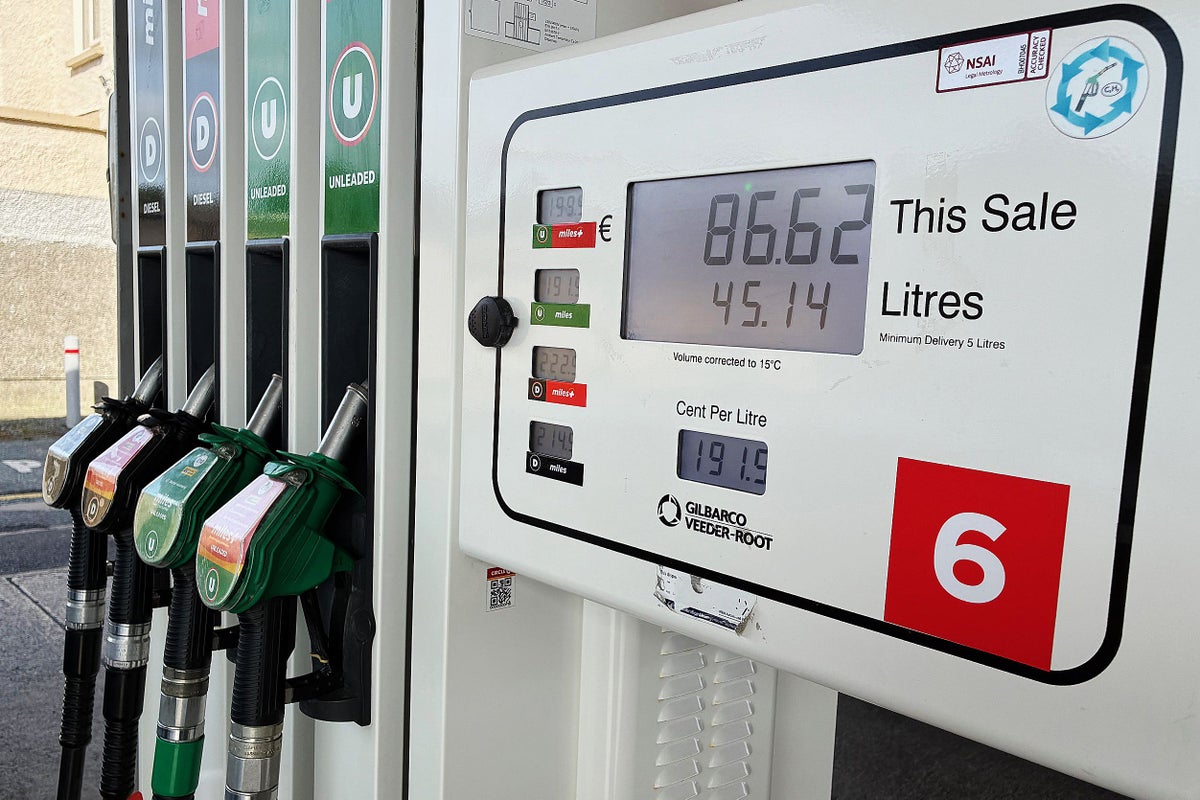
UK inflation lifted to its highest since December after a sharp jump in diesel and petrol prices caused by the conflict in the Middle East, according to official figures.
Chancellor Rachel Reeves said the Iran crisis was “not our war, but it is pushing up bills for families and businesses” as a result.
The rate of Consumer Prices Index (CPI) inflation increased to 3.3% in March from 3% in February, the Office for National Statistics said.
The increase was in line with predictions from economists.
Higher motor fuel was the main driver of the acceleration in inflation, increasing by 8.7% month-on-month – the largest increase since June 2022, shortly after the Russian invasion of Ukraine.
The ONS found that the average price of petrol rose by 8.6p per litre between February and March to 140.2p per litre. This marked the highest price since August 2024.
Diesel prices meanwhile increased by 17.6p per litre in March to an average of 158.7p per litre, the highest price since November 2023.
Office for National Statistics chief economist Grant Fitzner said: “Inflation climbed in March, largely due to increased fuel prices, which saw their largest increase for over three years.
“Air fares were another upward driver this month, alongside rising food prices.
“The only significant offset came from clothing costs, where prices rose by less than this time last year.”
The data revealed that the cost of air travel also increased significantly, with inflation of 14.5% compared with the same month last year.
The rise in air fares, which analysts have partly linked to the early timing of the Easter holidays, was the highest since July last year.
Meanwhile, food and non-alcoholic drink prices were up 3.7% year-on-year in March, accelerating from 3.3% inflation in the previous month.
This included another acceleration in the price of sweets and chocolates, which were up 10.6% year-on-year.
Elsewhere, clothing and footwear had a downward pressure on inflation, as prices dipped 0.8% for the month.
Sales and discounting activity pulled inflation in the category to its lowest level since March 2021.
The rise in the overall rate of inflation drives the UK further away from the 2% inflation target set by the Government and the Bank of England.
Ms Reeves said: “We’re acting to protect people from unfair price rises if they occur to bring down food prices at the till, and are boosting long-term energy security — building a stronger, more secure economy.”
James Smith, developed markets economist at ING, said: “The latest rise in UK headline CPI tells us virtually nothing about the scale and duration of the inflation wave to come.
“The Bank of England is still flying blind, with the conflict unresolved, but the limited amount of survey data available so far suggests little cause for alarm on inflation.”
Anna Leach, chief economist at the Institute of Directors, said: “As inflation has come in in line with revised expectations, and given yesterday’s labour market data which showed a fall in vacancies and further downward progress in wage growth, interest rates should hold at next week’s MPC (Monetary Policy Committee) meeting.
“But there remains tremendous uncertainty over the outlook for energy supply and prices.”

Oil prices fluctuate as Trump extends Iran war ceasefire

Chaos reigns in Asian Champions League after VAR intervenes over substitution

Italy’s inflation edges up to 1.7% in March: Istat

-

 Fashion6 days ago
France’s LVMH Q1 revenue falls 6%, shows resilience amid Iran war
-

 Entertainment7 days ago
Is Claude down? Here’s why users are seeing errors
-
 Business1 week ago
Delta Air Lines unveils first new Delta One suite in premium cabin arms race
-

 Fashion1 week ago
Asia claims largest share of markets on Kearney FDI Confidence Index
-

 Sports7 days ago
PSL 11: Peshawar Zalmi win toss, opt to field first against Quetta Gladiators
-

 Tech1 week ago
The Deepfake Nudes Crisis in Schools Is Much Worse Than You Thought
-

 Tech1 week ago
Bremont Is Sending a Watch to the Moon’s Surface
-

 Tech1 week ago
Human-machine teaming dives underwater