

Business
Tesla, GM lead record U.S. EV sales this year as federal incentives end


DETROIT – Tesla and General Motors are leading the U.S. automotive industry this year in record domestic sales of all-electric vehicles, as consumers hurried to buy EVs before up to $7,500 in federal incentives for each purchase ended in September.
New data provided to CNBC from Motor Intelligence shows U.S. sales of EVs, excluding hybrids, topped 1 million units through the first nine months of the year and set a new quarterly record of more than 438,000 units sold during the third quarter — achieving market share of 10.5% for the period.
That record market share is up from 7.4% during the second quarter and 7.6% during the first three months of the year, according to Motor Intelligence. Sales of all-electric models were estimated to be 1.3 million in 2024, with a roughly 8% market share.
U.S. EV industry leader Tesla, which does not report sales by region, is estimated to have retained its leadership position with a 43.1% market share through September, according to the data. That’s down from 49% to end last year, as competitors continue to release new EVs.
GM, which offers the most EV models in the U.S., has made significant gains this year. Motor Intelligence reported that the Detroit automaker went from an 8.7% market share to begin this year to 13.8% through the third quarter – topping Hyundai Motor, including Kia, at 8.6% through September.
The sales data comes two days after GM estimated it leads the U.S. industry in EV market share growth so far in 2025, with the lowest incentives of any major automaker. It sold 144,668 EVs through September, which still only represented 6.8% of its total U.S. sales.
“No one is in a stronger position for a changing U.S. market than GM,” Duncan Aldred, GM president of North America, said in a release. “We have the best lineup of ICE [internal combustion engine] and EV vehicles we’ve ever had. Our brands have grown market share with consistently strong pricing, and low incentives and inventory.”
Following Tesla, GM and Hyundai, Motor Intelligence data shows Ford Motor’s EV market share was 6.6% through the third quarter, followed by Volkswagen at 5.4%; Honda Motor at 4.6%; and BMW at 3.6%.
A Tesla Cybertruck and GMC Sierra Denali EV First Edition next to one another.
Michael Wayland | CNBC
Despite sales increasing each quarter of this year, EV startups Rivian Automotive and Lucid Group continue to have a relatively small EV market share. Lucid remains under 1%, while Rivian was at 3% through September.
Major automakers reported third-quarter results this week that were led by EV sales. The rush to buy electric cars came ahead of the federal incentives for those vehicles ending as a result of the Trump administration’s “One Big Beautiful Bill Act.”
Industry analysts and executives believe the incentives ending will create a boom-and-bust cycle for the sale of EVs in the U.S.
Ford CEO Jim Farley on Tuesday said he “wouldn’t be surprised” if sales of EVs fell from an industry market share of around 10% to 12% in September to 5% after the incentive program ends.
The end of EV credits for the U.S. comes as the country continues to trail other major automakers in the adoption of zero-emission vehicles. The International Energy Agency reports China continued to lead EV adoption globally last year, with sales of 6.4 million all-electric vehicles, not counting hybrids, followed by Europe at 2.2 million units.
— CNBC’s Phil LeBeau contributed to this report.





Business
Budget 2026 Should Support MSMEs, Critical Minerals For Boosting Trade Resilience: Deloitte
Last Updated:
Deloitte India urges FY27 Budget to boost MSME support and critical mineral security, job protection and advancing India’s global manufacturing and clean energy goals.



Budget 2026 Expectations.
Budget 2026: Deloitte India has pitched a sharper focus on MSME support and critical mineral security in the FY27 Union Budget, arguing that these measures are essential to strengthen India’s trade resilience and reduce external vulnerabilities amid rising global uncertainty.
In its Budget expectations note, Deloitte India said micro, small and medium enterprises play a pivotal role in the economy, accounting for nearly 46% of India’s exports and emerging as the second-largest employer after agriculture. According to the firm, easing financial and compliance-related pressures on MSMEs would help them cope with global volatility, sustain production and remain competitive in overseas markets.
The Union Budget 2026-27 will be tabled on Sunday, February 1.
“Strengthening MSMEs will safeguard jobs and drive inclusive economic growth, boost rural incomes and support India’s ambition to become a global manufacturing hub,” Deloitte said.
The firm recommended measures such as enhanced export credit availability, concessional financing and simplified digital compliance systems to reduce the regulatory burden on small businesses. It also called for comprehensive training programmes to improve last-mile competitiveness of MSMEs, particularly those linked to global value chains.
Deloitte further suggested targeted export incentives or enhanced duty drawback support for tariff-sensitive sectors such as ready-made garments, gems and jewellery, and leather, which are more vulnerable to global trade disruptions.
Highlighting the risks from an increasingly protectionist global environment, Deloitte Economist Rumki Majumdar said rising uncertainty from tariff hikes, changes in rules of origin and non-tariff barriers could disproportionately affect Indian exporters. While the direct impact of global trade frictions on GDP growth may be limited to 40-80 basis points, the spillover effects on MSMEs and employment could be far more severe.
“MSMEs contribute 30.1 per cent to GDP, account for 45.79 per cent of India’s exports and employ nearly 290 million people; disruptions in export markets or tightening trade rules pose serious risks to jobs and income stability,” Majumdar said.
Beyond MSMEs, Deloitte emphasised the need for a strategic push on critical minerals to secure supply chains and support India’s clean energy transition. It proposed setting up a dedicated critical minerals fund to finance overseas acquisitions and technology partnerships, ensuring long-term access to essential resources.
The firm also recommended deeper global collaboration with regions such as Africa, Australia and Latin America to secure upstream access to minerals, alongside joint research and development in mineral processing and recycling. In addition, it called for incentives to promote investments in renewable energy, green hydrogen and grid-scale energy storage.
Deloitte said expanded funding for exploration, extraction and processing of key critical minerals, including lithium, cobalt and rare earth magnets, would be crucial to reduce import dependence and strengthen India’s strategic and economic security in the years ahead.
 Click here to add News18 as your preferred news source on Google.
January 16, 2026, 15:02 IST
Read More

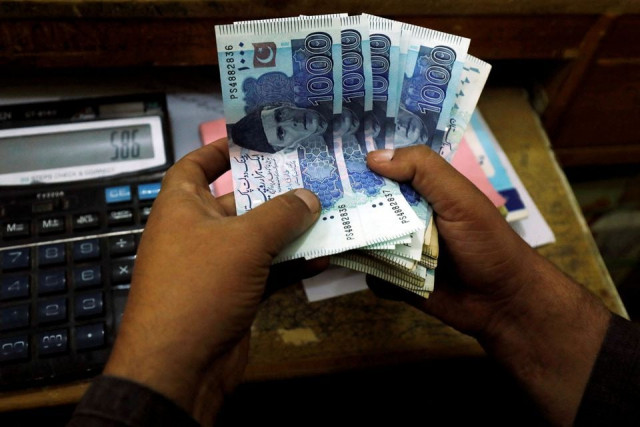
Pakistan Stock Exchange (PSX) on Friday staged a strong comeback, breaking the long bearish momentum as snowballing forex reserves have lifted investor sentiment.
During intraday trading, the PSX’s benchmark KSE-100 index gained a whopping 3,146.23 points to climb to 184,602.56 points, marking a positive change of 1.70%.
Out of 562 active companies, share prices of 375 advanced and of 67 declined while rates of 120 companies remained unchanged.
Economic analysts said the uptick offered some breathing space for the economy, even as the country continued to keep a close watch on external inflows and outflows.
Pakistan’s foreign exchange reserves inched up by $16 million over the past week, according to figures released by the State Bank of Pakistan.
The central bank said its official reserves rose from $16.0557 billion to $16.0718 billion, showing a modest gain during the week.
Overall, the country’s total reserves climbed to $21.2484 billion.
The State Bank also noted that commercial banks’ holdings went up by $5.6 million, reaching $5.1927 billion.
The central bank projects the FY26 current account deficit at 0–1% of GDP and sees reserves at $17.8 billion by June 2026 with planned official inflows.
A day earlier, the stock exchange dropped by over 1,100 points due to massive selling pressure.
The PSX had extended losses after recording an increase for a brief period as investors seemed cautious amid rising geopolitical tensions involving Iran.
During intraday trading, the KSE-100 index touched 183,717.53 due to strong buying in the early sessions before it turned bearish by losing 69.29 points to close at 182,500.52 points.
International officials have warned that US military intervention in Iran now appears likely and could take place within the next 24 hours amid sharply escalating tensions in the Middle East.
American, European and Israeli sources said preparations for possible action were under way as Washington began evacuating personnel from its major air base in Qatar.

NEW DELHI: People with job cards assigned under Mahatma Gandhi National Rural Guarantee Scheme will be able to get work without disruption when transition takes place to new rural employment framework under Viksit Bharat-Guarantee for Rozgar and Aajeevika Mission (Gramin) Act.Even though exact timeframe is not known yet, rural development ministry officials said the VB-G RAM G scheme will come into force in the coming financial year after the Centre frames and notifies the rules. After govt notifies the Act’s commencement date, states will get six months to make their schemes to enable implementation of the law.To ensure there is no disruption and job guarantee is upheld during transition from MGNREGA, it has been proposed to enable workers to use the same job cards issued under MGNREGA with Aadhaar-based eKYC.The officials said that as of now, around 75% of job cards have been verified with eKYC under the ongoing scheme. Moreover, ongoing projects under MGNREGA, if incomplete when the transition happens to the new scheme, would stay on course.Meanwhile, work is on to frame rules, lay out regulations on normative allocations, fund flow plan, IT framework, a national-level steering panel and social audits.Under the new law, focus will be on transparency to weed out leakages and duplicacy of work,the social audit system will be strengthened, and technology leveraged to create systems to establish work progress, timely wage payment and accountability through ‘e-measurement’ books, sources said. Demand for work will have to be entered on a digital platform. Officials made it clear the new law in no way interferes with demand-driven character of the scheme.

Budget 2026 Should Support MSMEs, Critical Minerals For Boosting Trade Resilience: Deloitte

Australia’s apparel imports fall, textiles rise in July-Nov 2025

Robert Downey Jr. hails Timothée Chalamet as ‘one of the greats’

-

 Politics1 week ago
UK says provided assistance in US-led tanker seizure
-

 Entertainment1 week ago
Does new US food pyramid put too much steak on your plate?
-

 Entertainment1 week ago
Why did Nick Reiner’s lawyer Alan Jackson withdraw from case?
-

 Sports5 days ago
Clock is ticking for Frank at Spurs, with dwindling evidence he deserves extra time
-
 Business1 week ago
Trump moves to ban home purchases by institutional investors
-

 Sports1 week ago
PGA of America CEO steps down after one year to take care of mother and mother-in-law
-

 Tech3 days ago
New Proposed Legislation Would Let Self-Driving Cars Operate in New York State
-
 Business1 week ago
Bulls dominate as KSE-100 breaks past 186,000 mark – SUCH TV