

Fashion
Chanel: Matthieu Blazy debuts with panache in Grand Palais

Published
October 6, 2025
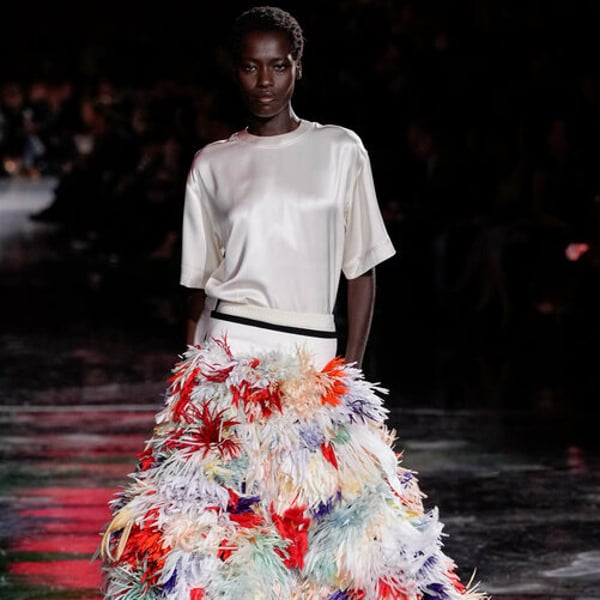
So, finally, the big one – fashion’s most anticipated debut at the richest fashion house in history – Matthieu Blazy’s opening show for Chanel, a bold, gutsy, ingenious, often beautiful and oddly risqué collection that was an undoubted hit.
The omens felt right as soon as one entered the Grand Palais, where Blazy had built a truly magnificent set. Like the great planets in the solar system; giant fabric balls with interior illumination, the sun 15-meters in diameter. The catwalk a lacquered lunar landscape suggesting molten rock and lava.
So epic was the staging, the 2,800 guests were encouraged to come an hour early to admire the space. The new universe of Chanel, before which the show began, unveiling a beguiling and intriguing collection.
Matthieu opened with suits, of course, but pants suits in gray flannel, in a quirky surprise, culled from pants that Coco borrowed from her great love, Boy Capel. Cut with mannish pants and officers’ mess jackets, they set the scene for a brave, often experimental display by Blazy.

He sent out dozens of Chanel suits or split suits. Many with a new wrap skirt made with pockets and cut at the knee and left frayed generally. Made in both classic and unexpected materials: lighter semi-sheer bouclé wool, airy plaids, windowpane checks or stiff denim, while the famed four-pocket jackets were all finished with filigrees of gold or contrasting trim.
Surprisingly, he showed multiple skirts slung so low, underwear peaked up two inches. It seems unlikely that many of the well-heeled VICs in the audience will actually wear that idea, but its chutzpah was very appealing.
Blazy played artfully with many codes, like conceptual double-sized camellia brooches or Coco’s love of pearls, though used in densely woven necklaces. And referenced Mademoiselle’s obsession with wheat by embroidering a golden sheaf into an organza top.
Even the little black dress, which Coco is credited with inventing, got a smart makeover – either finished with golden strings or ruched radically with side knots.

For evening, Matthieu went into overdrive: dense fabric flowers and petals used in flamenco skirts, even if some of which flapped alarmingly. While the lacquered surface alarmed some models, with one taking a shoe off right in front of a movie star posse in the front row – Tilda Swinton, Pedro Almodovar, Penelope Cruz, chatting animatedly beside a silent Kendall Jenner.
All presented to a massive mash-up of music created jointly by Chanel’s long-time DJ Michel Gaubert and Belgian sound architect Le Motel. It included Isao Tomita’s electronic track “Venus, the Bringer of Peace”, The Corrs plaintiff hit “Runway” and spoken snippets from TV series “Dawson’s Creek”.
At the finale, the collection won Blazy a prolonged standing ovation, ignited when the Ethiopian-Canadian Awar Odhiang in the final look began clapping and beseeching the audience to rise.

“Chanel is about love. The birth of modernity in fashion comes from a love story. This is what I find most beautiful. It has no time or space; this is an idea of freedom. The freedom worn and won by Gabrielle Chanel,” said Blazy.
Ironically, in a set that imitated the vacuum of outer space, the collection felt like a huge blast of fresh air into the lungs of the house of Chanel.
All told, very much a home-run hit show and pathbreaking collection that will be highly influential. And, one has to say, the most successful of the 15 designer debuts at important fashion houses in this unique series of fashion week.
One needs to recall, that the Franco-Belgian designer was an under-the-radar candidate for the biggest creative job in fashion. But after garnering rave reviews consistently in a three-year tenure at Italian luxury label Bottega Veneta, he nabbed the position. It is a major step-up in size. From a mid-sized provincial Italian house to Chanel — the world’s largest luxury fashion label with annual sales of around $20 billion.

Chanel’s uber-discreet family owners, Alain and Gérard Wertheimer, clearly would like another long low-term career for Blazy at the house.
He is only the fourth creative director in the brand’s storied history. Coco Chanel founded the brand in 1910 and led it until 1973 when she died in the Ritz; Karl Lagerfeld who ruled supreme from 1983 until his death in 2019. Virginie Viard – Karl’s key assistant, by contrast, only lasted five years until June 2024.
In an uber busy week, on the day of the show, the brand also announced two new ambassadors: Oscar winner Nicole Kidman and rising star Ayo Edebiri, the award-winning American actor, director, and screenwriter, known for her standout roles in hit series “The Bear”.
Kidman wore a white oversized shirt – Boy Capel-style – and duck-egg blue pants to the show, attending it with her daughters.

“From the unforgettable Baz Luhrmann film to her countless red carpet looks, Nicole has always been part of the history of the house. Free and ever-changing, she is for me the embodiment of the Chanel woman,” said Blazy.
Edebiri recently wore Blazy creations from Chanel at the Venice Film Festival and the New York Film Festival.
“Ayo is all strength, but at the same time, she is vulnerable enough to always put herself out there. She writes, she acts, she directs… Nothing can stop her,” insisted Blazy.
While tourists in Paris could not help noticing this week’s new giant billboard in front of the Paris Opera: a beautiful Chanel high jewelry necklace from its No. 5 collection.
Suddenly, the Chanel dream seems very alive and well again.
Copyright © 2025 FashionNetwork.com All rights reserved.







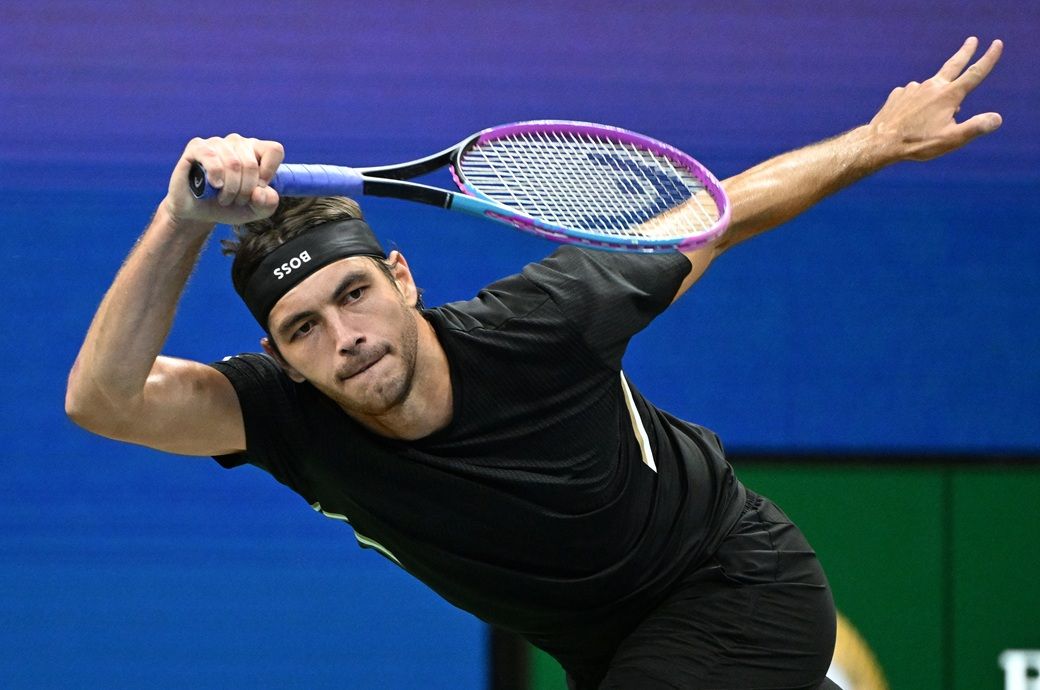
The partnership is rooted in a shared mindset: ambition, world-class performance, global relevance, and a bold confidence that defines both BOSS and the Australian Open. As a cornerstone of BOSS’s cultural strategy, the collaboration creates a powerful platform to connect with fans at scale, unlock new audiences, and showcase the full world of BOSS through its collections, ambassadors, and experiences.
BOSS will become Official Lifestyle Outfitter of the Australian Open from 2027, marking a key step in its sport and culture strategy.
The brand will dress up to 4,000 staff and elevate on- and off-court style through tailored looks, activations and merchandise, strengthening its global presence in tennis while redefining the tournament’s visual identity.
“We are absolutely excited to partner with the Australian Open, which is one of the most dynamic and globally followed sporting events worldwide,” stated Daniel Grieder, CEO of HUGO BOSS. “This collaboration is a natural fit for us, as it brings together two brands that share the same commitment to excellence, innovation, and creating extraordinary experiences. Tennis is part of BOSS’s DNA. The partnership therefore
marks an important step in our strategy to further drive the brand’s positioning at the intersection of sport, lifestyle, and global fan engagement.”
“The Australian Open has always been about more than just great tennis – it’s about atmosphere, innovation, and setting the benchmark for major sporting events worldwide,” Tennis Australia CEO Craig Tiley said. “BOSS is a global brand with impeccable credentials in sport and style, and together we will enhance how our tournament looks, feels, and connects with fans from around the world.”
In its new role as the tournament’s Official Lifestyle Outfitter, BOSS is set to transform the visual identity of the Australian Open like never before. Dressing up to 4,000 staff, officials, umpires, and ball kids, BOSS will make an unmistakable impact, setting its signature confident style from the very first moment. The result is a bold step change: a unified, elevated, and distinctly modern aesthetic that will be visible across every corner of Melbourne Park. A curated palette of refined shades, subtle nods to the brand’s tailoring expertise, and easy-wear silhouettes engineered for the Melbourne heat come together to signal a new era in tournament style – perfectly in tune with the fast-paced, high-energy spirit of the event.
BOSS branding will also be displayed around the venue, including inside the iconic Rod Laver Arena. Beyond the tournament’s courts, the collaboration will extend to exclusive replica teamwear, merchandise, and off-court capsules. Dedicated pop-up stores, immersive on-site fan activations, an elevated guest experience, and further special events will bring the BOSS attitude to every part of “The Happy Slam.” Online and in store, impactful storytelling and curated initiatives will also share the sunshine spirit of Melbourne with tennis fans around the globe.
In a powerful opening serve that ignites excitement and sets the tone for what’s to come, the brand has created bold visuals to accompany today’s announcement. Bridging the worlds of fashion and sport, the imagery reimagines tennis balls in tactile fabrics – from rich wool to soft alpaca – as a nod to BOSS’s roots in craft and tailoring.
The brand’s history in tennis dates back to the 1980s, when it embarked on a 15-year-long sponsorship of the Davis Cup, the world’s largest international team competition in men’s tennis. Most recently, BOSS has welcomed star players Taylor Fritz and Matteo Berrettini, as well as emerging talents Noma Noha Akugue and Ella Seidel, as brand ambassadors, and since 2022 has served as title sponsor of popular ATP 250 tournament the BOSS OPEN in Stuttgart. Through the Australian Open partnership, BOSS is cementing its presence in tennis at one of the world’s most prestigious tournaments and propelling its position as a leading global style authority at the intersection of sport and culture.
Note: The headline, insights, and image of this press release may have been refined by the Fibre2Fashion staff; the rest of the content remains unchanged.
Fibre2Fashion News Desk (JP)

Sovereign ratings in Southeast Asia are under risk due to the Middle East conflict. Fiscal and external metrics underpinning the ratings will be strained if the global energy market does not begin to normalise in the next few months, the credit rating agency noted.
Prolonged energy disruptions will raise fiscal and external pressures on Southeast Asian nations, according to S&P Global.
Indonesia is more vulnerable to weakening credit metrics if the war continues and energy prices remain high.
Vietnam’s strong economic growth, its booming export sector and relatively unencumbered government balance sheet will act as ballast against the energy market dislocation.
If the longer-term impact of the war is severe, the robust growth prospects of economies dependent on imported energy may also be impaired, weakening economic support for the ratings, it said.
Its base case assumes the war’s intensity will peak and the Strait of Hormuz’s effective closure will ease during April, but some disruptions are likely to persist for months.
A prolonged surge in the cost of energy imports—coupled with a loss of foreign exchange reserves—is one risk scenario that could materially weaken Vietnam’s external liquidity position, the credit rating agency said in a regulatory article.
And a sharp increase in the fiscal deficit, in the unlikely event that economic growth also decelerates abruptly, could also erode the government’s more favourable leverage profile, it noted.
If these scenarios persist beyond six months and the government is unable to mitigate the impact on credit metrics, they could erode Vietnam’s robust credit buffers at the current ratings level.
If the pressure on the economy causes capital outflows, the authorities may use foreign exchange reserves to support the exchange rate.
The budget deficit in the country could also widen if the energy disruption drags on. Outcomes will ultimately be tied to the duration of the conflict and the disruptions, it said
Meanwhile, the sovereign ratings on Indonesia (BBB/stable/A-2) are sensitive to weakening fiscal or external credit metrics resulting from the war.
Potential risks include higher energy prices raising budgetary subsidy payments, weighing on deficits; government interest payments rising if accelerating inflation fuels a further increase in market interest rates; and importing more expensive oil products widening the current account deficit (CAD).
The government’s response to the energy disruption may contain some of the damage to its fiscal performance, S&P Global Ratings noted. But, higher commodity prices could also boost government revenue. This helps to limit the increase in the size of the fiscal deficit and reduces upward pressures on the budgetary interest payment ratio.
Indonesian exports have grown this year, but the growth momentum is tempered by declining sales of energy products. With the sharp rebound in energy prices, Indonesian export growth could rise further to mitigate the increase in oil imports.
Overall, Indonesian credit metrics are likely to weaken marginally under the credit rating agency’s base case.
As a commodities exporter, Indonesia may see some mitigating developments offsetting some of the pressures on the sovereign ratings, particularly if there is a broad-based strengthening of commodities prices. This could help to turn around some of the worsening trend in the country’s credit metrics once the situation normalises.
Fibre2Fashion News Desk (DS)
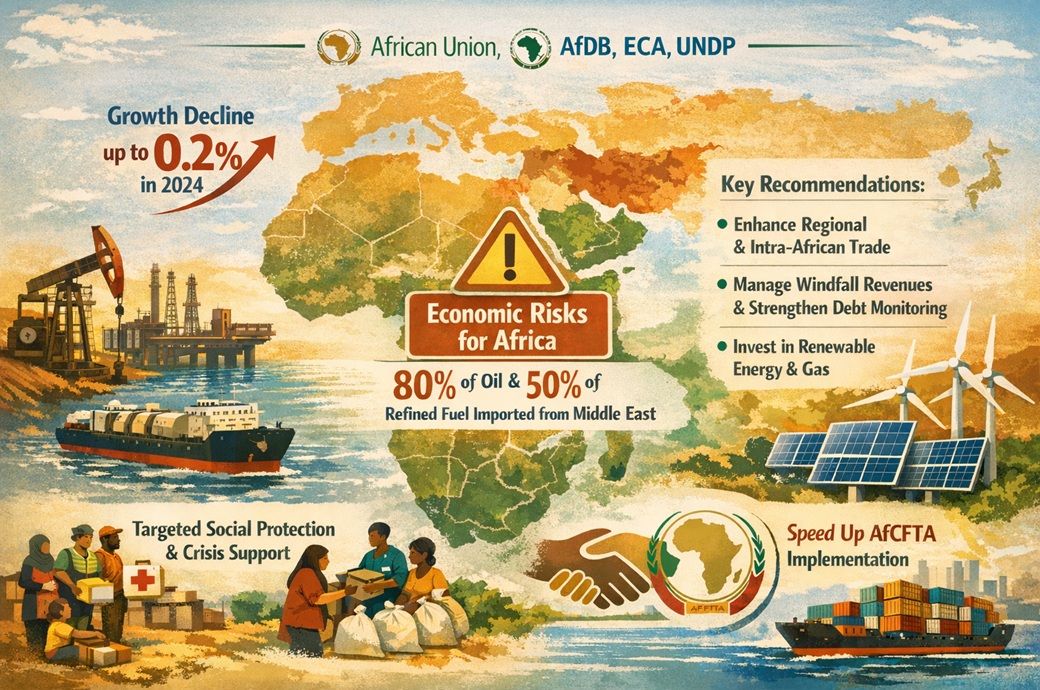
The report titled ‘Impacts of the Conflict in the Middle East on African Economies’, cautions that African economies, which were slowly recovering from the severe consequences of COVID-19, the Russia-Ukraine war and rising trade tariffs, could be among the most affected by the ongoing conflicts in the Middle East.
Growth in African countries is projected to decline by up to 0.2 per cent this year due to the Middle East crisis, according to a joint policy document by the African Union Commission, the African Development Bank Group, the UN Economic Commission for Africa and the UN Development Programme.
The main effects of the conflicts on Africa include surging prices of hydrocarbons, food products and fertilisers.
Kevin Urama, chief economist and vice president for economic governance and knowledge management at AfDB who presented the report on the sidelines of the Spring Meetings of the International Monetary Fund and the World Bank in Washington, DC, recently, urged African governments not to panic or take hasty decisions that could harm their fiscal balances.
The main effects of Middle Eastern conflicts on African economies include surging prices of hydrocarbons, food products and fertilisers, noted the report.
“Eighty per cent of the oil imported into Africa comes from this region, as well as 50 per cent of refined petroleum,” said ECA executive secretary Claver Gatete.
The report recommends, in particular, strategic inflation management to ensure short-term price stability expectations. It cautions oil-exporting countries to adopt strict fiscal discipline by managing windfall revenues prudently, while strengthening debt-monitoring, and using energy reserves strategically.
Where fiscal space allows, it advises that temporary and targeted social protection measures be deployed to shield the most vulnerable populations from the crisis, added the report.
However, the report urged governments to avoid broad-based subsidies that could worsen long-term fiscal deficits, and to diversify sources of energy, inputs and food supplies.
It also recommends that African governments strengthen regional and intra-African trade in oil and fertiliser markets to enhance resilience; and ensure smooth inter-institutional coordination to harmonise strategic monetary and fiscal policies.
At the same time, the report calls upon development partners, multilateral banks and development finance institutions to provide emergency support to African countries through crisis response measures and technical assistance.
It also recommends a speedy operationalisation of the African Continental Free Trade Area (AfCFTA), while strengthening large-scale domestic capital mobilisation.
The report also suggested Africa to diversify its energy mix by accelerating investments in renewable energy and the gas sector.
Fibre2Fashion News Desk (DS)


Val Ackerman, who guided Big East after team exodus, to retire

2026 NBA Draft Declarations Tracker: Florida’s Rueben Chinyelu Makes Decision

Lee Anderson, Zarah Sultana kicked out of UK Parliament for calling PM ‘liar’

-

 Fashion5 days ago
France’s LVMH Q1 revenue falls 6%, shows resilience amid Iran war
-

 Sports1 week ago
The case for Man United’s Fernandes as Premier League’s best
-

 Entertainment1 week ago
Palace left in shock as Prince William cancels grand ceremony
-
 Business1 week ago
UK could adopt EU single market rules under new legislation
-

 Entertainment5 days ago
Is Claude down? Here’s why users are seeing errors
-

 Fashion1 week ago
Energy emerges as biggest cost driver in textile margins
-
 Business1 week ago
Delta Air Lines unveils first new Delta One suite in premium cabin arms race
-

 Tech1 week ago
A Lot of Shops Won’t Fix Electric Bikes. Here’s Why