

Sports
Sister Jean, beloved Loyola-Chicago chaplain, dies

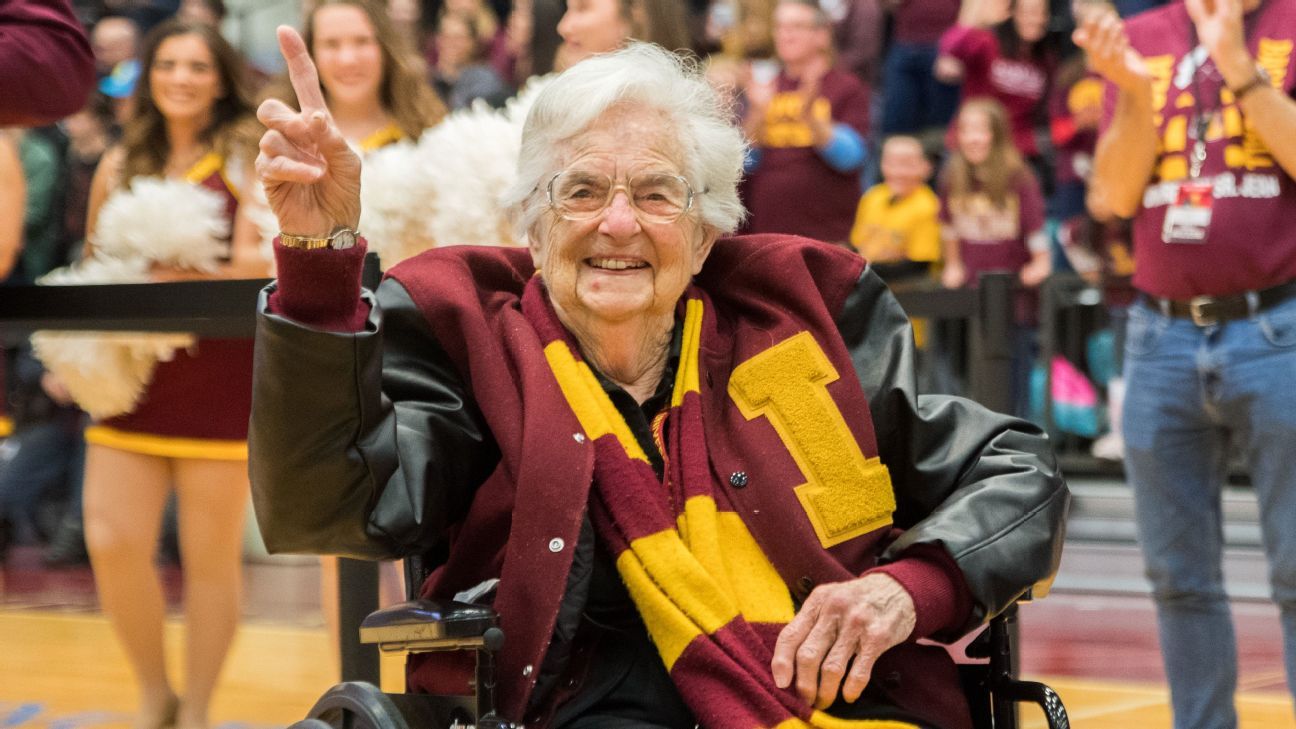
Sister Jean Dolores Schmidt, the beloved, longtime chaplain of the Loyola-Chicago men’s basketball team who became a folk hero during its Cinderella run to the Final Four in 2018, died Thursday, the school said.
She was 106.
“In many roles at Loyola over the course of more than 60 years, Sister Jean was an invaluable source of wisdom and grace for generations of students, faculty, and staff,” Loyola president Mark C. Reed said. “While we feel grief and a sense of loss, there is great joy in her legacy. Her presence was a profound blessing for our entire community, and her spirit abides in thousands of lives. In her honor, we can aspire to share with others the love and compassion Sister Jean shared with us.”
Sister Jean — born Dolores Bertha Schmidt on Aug. 21, 1919, then taking the name Sister Jean Dolores in 1937 — joined the staff at Loyola-Chicago in 1991. Three years later, she became part of the basketball team, first as an academic adviser before transitioning to chaplain. Health issues caused her to step down from her role in August.
She was the Ramblers’ No. 1 fan, and that was on display during the 2018 NCAA tournament when, as the No. 11 seeds, they went on an improbable run to the Final Four, ultimately losing to Michigan. Sister Jean, 98 at the time, was with them every step of the way, praying for the team — and its opponents — before each game and encouraging the Ramblers to play hard, play together and play smart.
And if they lost? She told them regularly not to sweat it; it just wasn’t meant to be.
“She’s an incredible person,” star Loyola-Chicago guard Clayton Custer said at the time.
Fans throughout college basketball, and beyond, agreed.
She became an international celebrity during the Ramblers’ run. Sister Jean bobbleheads and athletic apparel sold fast. She was the subject of countless national TV interviews. And there were even news conferences for her ahead of games. During the loss to Michigan at the Alamodome in San Antonio, T-shirts read “Win One for the Nun!” and a sign in the crowd encouraged the Wolverines to give obedience to “Jean’s Plan.”
Her fame didn’t wane in the years to come.
When she turned 100, Loyola-Chicago announced a scholarship fund and endowment in her honor to support students, and Illinois Gov. JB Pritzker proclaimed Aug. 21, 2019, “Sister Jean Day” across the state. When she turned 103, the Chicago train station plaza at the Loyola campus was renamed in her honor, with a large sign that read “Home of the World Famous Sister Jean!” to greet visitors there. And when she turned 105, she received a proclamation from President Joe Biden — who sent her flowers on at least one previous occasion.
Biden’s message, in part, told Sister Jean: “You have shown us all that yours is a life well lived.”
She remained close to the team, as well.
When Loyola-Chicago qualified for the NCAA tournament in 2021, a vaccinated Sister Jean was cleared to travel to Indianapolis, and before the Ramblers’ second-round game against top-seeded Illinois, she gave them a prayer and a scouting report.
“We have a great opportunity to convert rebounds as this team makes about 50% of layups and 30% of its 3 [pointers]. Our defense can take care of that,” she told the team.
It worked, as Loyola-Chicago upset the Illini to reach the Sweet 16.
“She still sends me an email after every single game,” former Loyola-Chicago coach Porter Moser once said. “There is no human like her.”
Born in San Francisco in 1919, Sister Jean grew up in a devoutly Catholic family. Her religious calling, she said, came at the age of 8. She was in third grade when she met a kind, joyful teacher who belonged to the Sisters of Charity of the Blessed Virgin Mary. Brimming with admiration, she would pray every day: “Dear God, help me understand what I should do, but please tell me I should become a BVM sister,” she recounted in her 2023 memoir.
“I guess God listened to me on that one,” she wrote.
She followed her calling to the order’s motherhouse in Dubuque, Iowa, where she made her vows. She went on to teach at Catholic schools in Chicago and Southern California, where she also coached girls’ basketball, before she ended at Mundelein College — on the Chicago lakefront — in the 1960s. The school became affiliated with Loyola in 1991, and Sister Jean was hired to help students with the transition.
In 1994, she was asked to help student basketball players boost their grades — “the booster shooter” she called herself — and later that year, she was named chaplain of the men’s team. The role, she wrote in her memoir, became “the most transformational and transcendent position” of her life.
“Sports are very important because they help develop life skills,” she said. “And during those life skills, you’re also talking about faith and purpose.”
The university said Sister Jean is survived by her sister-in-law, Jeanne Tidwell, and her niece, Jan Schmidt.
Information from The Associated Press was used in this report.
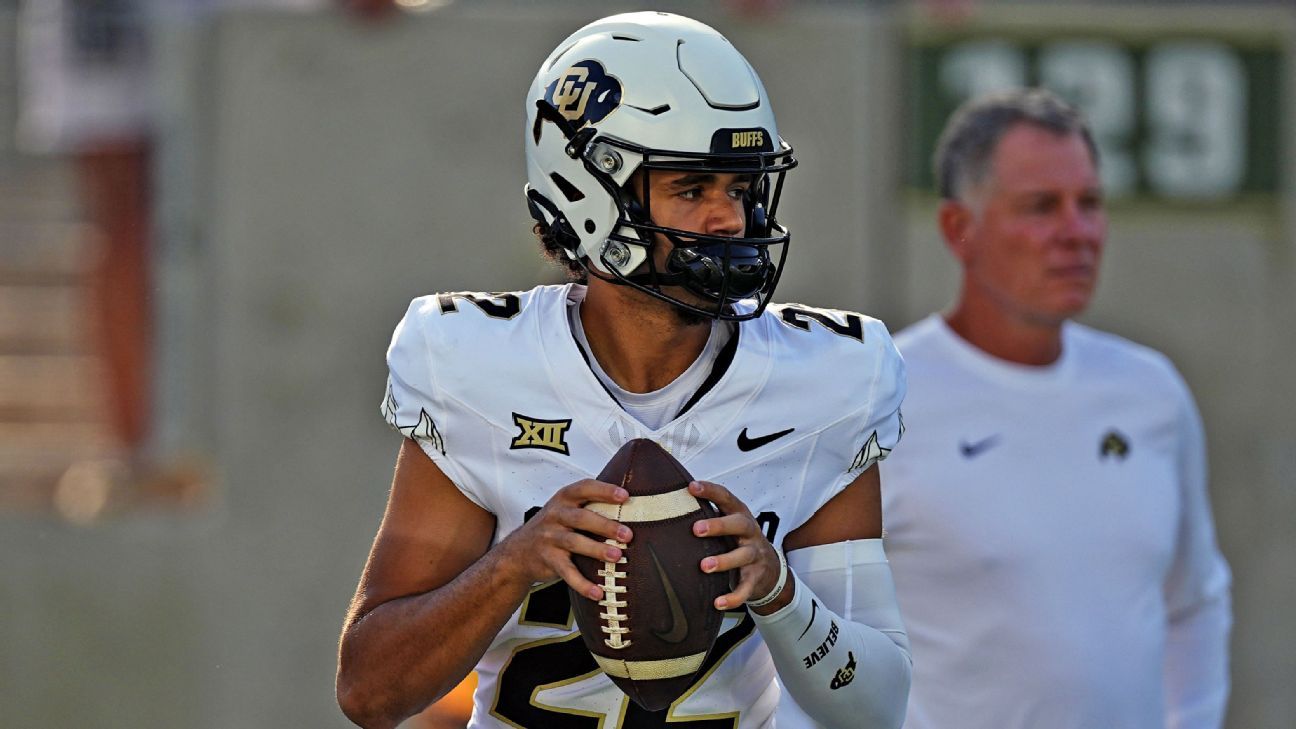
BOULDER, Colo. — The Colorado Buffaloes told stories Monday, like how Dominiq Ponder once jumped a 10-foot fence to let a rehabbing teammate into the hot tub. They chatted about his work ethic, too, and how he was in the quarterback room before sunrise.
It was a chance to reflect on their teammate who died early Sunday morning in a single-car crash. He was 23.
The players were given the option by coach Deion Sanders to skip the first day of spring practice Monday. But in an emergency meeting the night before — to grieve together and comfort one another — everyone agreed that taking the field was the best option.
Because that’s what Ponder would’ve wanted. He was on their minds at practice as they broke the huddle with the chant of “Dom.”
“Almost like a boost of energy, like he was there with us,” running back DeKalon Taylor said. “That’s what it felt like.”
“I couldn’t move,” Marion said. “I was speechless talking to Dom’s dad.”
Ponder was driving a 2023 Tesla when he lost control on a curve and hit a guardrail, according to the Colorado State Patrol. The car struck an electrical line pole and rolled down an embankment. Ponder was pronounced dead at the scene in Boulder County. Police said a preliminary investigation “shows that speed is suspected as a factor.”
“God please comfort the Ponder family, friends & Loved ones,” Sanders posted Sunday on X. “Dom was one of my favorites! He was Loved, Respected & a Born Leader. Let’s pray for all that knew him & had the opportunity to be in his presence. Lord you’re receiving a good 1.”
Sanders is expected to address the media on Friday.
“It’s sad not being able to protect him [Ponder] off the field,” offensive lineman Yahya Attia said Monday. “I still don’t really realize it — I don’t want to believe it yet.”
Same with Taylor, who said Ponder was just showing off his new tattoo to him Friday. It was surreal being at practice without Ponder.
“Heavy at first,” Taylor said. “But we all bought in. We had no choice but to go hard for him. Everybody was running around and doing their best. And if we did mess up, we messed up at full speed.”
Because that’s how Ponder operated — at full speed. The backup QB and special teams player was a leader who learned how to guide a team by watching the likes of Shedeur Sanders and Heisman Trophy winner Travis Hunter.
“[Teammates] saw how hard [Ponder] worked, how hard he wanted it, to prove that he could play at the collegiate level and be a college quarterback,” Marion said of Ponder, a transfer from Bethune-Cookman. “In an era where you have to force people to work hard, you had to tell Dom to stop working so hard. Just being around a kid like that, his energy was contagious as far as his work ethic.”
It was difficult for Marion being in the quarterbacks room at 5:30 a.m., knowing that Ponder was always there by that time.
“We’ll just save a spot for him in the room,” Marion said.
The practice Monday wasn’t so much for quality of work purposes, but a chance to simply be together.
“We didn’t coach with the same urgency, as far as screaming at guys and losing our mind,” Marion said. “We coached like you would coach your child.”
Defensive back Ben Finneseth became tight with Ponder since the 6-foot-5 sophomore from Opa-locka, Florida, transferred into the program. He visited Ponder and his family over spring break a year ago.
“Everything that we’re going to do moving forward is for him,” Finneseth said. “It was tough, meeting together [Sunday], everybody, and knowing what happened. Coach Prime asked us if we wanted to work [Monday].
“We decided, as a team, Dom wouldn’t miss the day. He wouldn’t miss the day of workouts. That’s what he would’ve wanted for us. He would have said, ‘Life’s got to move on. We’ve got championships to win and we still have goals, and the clocks are still rolling.'”
Finneseth shared the story about how a few weeks ago they were hanging out at his apartment complex and wanted to use the hot tub. Finneseth, who’s rehabbing his knee, didn’t have the key so Ponder hopped over the tall fence to get them inside.
“Always there for teammates,” Finneseth said. “Whatever we needed.”
Defensive back RJ Johnson felt the same way.
“That’s what we have to do this season,” Johnson said. “Play for Dom.”
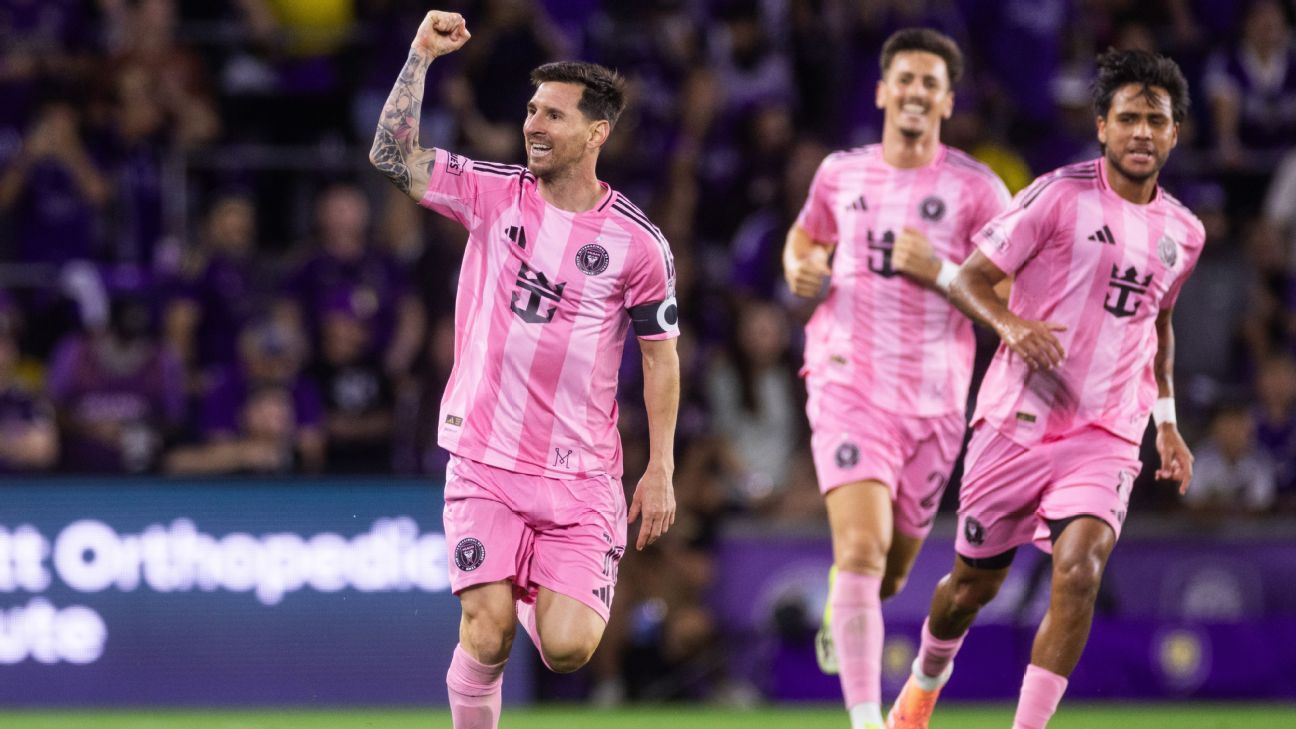
It’s Monday, MLS action is back, and it’s time for ESPN’s Power Rankings.
Who looks the strongest? Who’s in for a long year? Our writers studied the action from across Matchday 2 to come up with this week’s order. Let’s dive in.
– Messi tracker: Goals, assists, key moments in 2026 for Miami and Argentina
– Can Africa’s players make an impact in MLS the way they have in the NWSL?
– Why is Mexico star Chucky Lozano being paid $6m to not play in MLS?
Previous ranking: 1
After a statement win over Miami on opening weekend, LAFC claimed another three points in a 2-0 road win over the Houston Dynamo. Courtesy of long-range efforts from Mark Delgado and Stephen Eustáquio, this LAFC side showed just how many ways they can beat you.

Previous ranking: 4
If there was any doubt about which Canadian club was the best in MLS (there wasn’t), the Caps put it to rest on Saturday in a resounding 3-0 win over Toronto. With Thomas Müller‘s brace leading the charge, Vancouver looked every bit as good as the team that made MLS Cup last year.

Previous ranking: 3
San Diego cruised to a 2-0 home win over St. Louis to close out the weekend’s slate of games. Along the way, Anders Dreyer, who scored the opener, became the second-fastest player in MLS history to record 20 goals and 20 assists behind only Lionel Messi.

Previous ranking: 7
Now that was more like it from the defending champions. After stumbling out of the gates against LAFC last weekend, Miami secured a dominant 4-2 road win over Orlando City. Javier Mascherano is still searching for a few answers when it comes to his team’s positioning, but no matter: Miami’s talent won the day on Sunday.

Previous ranking: 2
Missing Sam Surridge due to illness and balancing Concacaf Champions Cup play, Nashville put in a quiet performance in a 0-0 draw with Dallas on Saturday. The talent is obvious, but B.J. Callaghan’s group is still learning to play together.

Previous ranking: 8
Though the Revs put up a much tougher fight than Orlando did on opening weekend, the new-look Red Bull New York still collected a 1-0 victory against New England. The game’s lone goal? It came by way of three teenagers in Matthew Dos Santos, who found Adri Mehmeti to play the ball to scorer Julian Hall.

Previous ranking: 6
In one of the more disappointing results of the weekend, a nearly full-strength Sounders team outside of Jordan Morris fell to a short-handed Real Salt Lake outfit by a 2-1 scoreline. Cristian Roldan, who scored Seattle’s only goal, was a bright spot in an otherwise uninspiring showing.

Previous ranking: 14
With a goal from Kelvin Yeboah, Minnesota earned a hard-fought 1-0 win over Cincinnati. Though there’s still work to be done for the players to adapt to new manager Cameron Knowles’ more patient style of play, there was clear progress shown on Saturday.

Previous ranking: 13
Timo Werner made his debut for the Quakes and wasted no time impacting the game. The German star nabbed the final assist in San Jose’s 2-0 win over Atlanta United, capping off a busy week that saw him participate in his very first training sessions with the Earthquakes.

Previous ranking: 5
In Evander‘s injury-induced absence, FC Cincinnati’s attack looked listless on the road in Minnesota. They fell 1-0 without creating consistent danger in the final third. The sooner their Brazilian star gets back, the better.

Previous ranking: 12
Thanks to a last-gasp winner from Tayvon Gray in the 99th minute, NYCFC finessed a 2-1 road win over the Philadelphia Union. In all, Pascal Jansen’s attack looked more well-rounded than it did on opening weekend against the LA Galaxy.

Previous ranking: 23
Though they’re still nowhere near full strength, Salt Lake impressed in a 2-1 win over Seattle. The youngsters showed out, with goal contributions coming from 18-year-olds Aiden Hezarkhani and Zavier Gozo. Plus, new DP attacker Morgan Guilavogui shone in his debut off the bench. Something is brewing in Utah.
0:35
Ariath Piol scores goal for Real Salt Lake
Ariath Piol scores in the 47′

Previous ranking: 18
While the Galaxy’s attack was tepid to start the season against NYCFC, it was anything but in a 3-0 win over Charlotte FC on Saturday. Gabriel Pec ripped the visitor’s left side to shreds and the Galaxy never looked back after nabbing three goals in the first 13 minutes.

Previous ranking: 21
After taking the lead in the first half through a devastating transition attack slotted home by Jonathan Bamba, the Fire added two more goals even after going down to 10 men. Jonathan Dean‘s red card didn’t seem to slow down Chicago in a 3-0 win over Montréal.

Previous ranking: 17
The bad news? Dallas dropped points at home to Nashville in a 0-0 draw. The good news? New attacking midfielder Joaquín Valiente made his MLS debut, playing the final 30 minutes of the match. The best version of Dallas will feature the 24-year-old in the starting lineup.

Previous ranking: 19
Striker Wessam Abou Ali had a chance to score the game-winner from the penalty spot against Sporting Kansas City, but had his shot saved in a game that ended 2-2. The Crew left points on the board, which may well come back to bite in a competitive Eastern Conference.

Previous ranking: 10
The Dynamo conceded two goals and were shown two red cards in a game to forget against LAFC. The 2-0 home loss serves as a reminder of where Houston sit in the Western Conference hierarchy, even after a jam-packed offseason.

Previous ranking: 11
Make that two consecutive defeats in MLS play to begin the Union’s Supporters’ Shield defense. While it looked like Indiana Vassilev‘s 89th-minute penalty against NYCFC would close out the scoring on Sunday, a 99th-minute concession turned a would-be draw into a 2-1 loss.

Previous ranking: 15
While they didn’t concede many clear-cut chances, St. Louis simply didn’t have the attacking firepower to go toe-to-toe with San Diego. Yoann Damet’s team fell 2-0 on Sunday and will continue searching for the first win of the club’s new era.

Previous ranking: 9
The Timbers were outshot and outcreated in a 2-0 road loss to the Rapids on Saturday. Plenty seems to be resting on DP David Da Costa to return and immediately elevate Phil Neville’s attacking setup.
Previous ranking: 22
New striker signing Christian Ramírez made the difference for Austin in a 1-0 home victory over D.C. United. After the veteran No. 9 was waived by the Galaxy, Austin signed him as a depth option late last week. That depth came in handy on Sunday.
Previous ranking: 16
After 13 minutes, Charlotte had conceded three goals to the LA Galaxy. That’s where the bleeding stopped, fortunately enough. Still, Charlotte looked sloppy in possession and sluggish out of possession. That Dean Smith benched both of his starting central midfielders at halftime tells the story of Charlotte’s 3-0 loss.

Previous ranking: 20
D.C. managed just three shots from inside the box in a dire 1-0 loss to Austin FC on Sunday. They would benefit from Louis Munteanu entering the starting lineup, but the 23-year-old DP came off the bench for the second-straight week instead.

Previous ranking: 27
They struggled against one Cascadia team on opening weekend, but Colorado looked much improved in a 2-0 win over the Portland Timbers on Saturday. With effective set-piece play and control in both attack and defense, it was a deserved victory for the Rapids.
1:13
Colorado Rapids vs. Portland Timbers – Game Highlights
Colorado Rapids vs. Portland Timbers – Game Highlights

Previous ranking: 24
Despite some promising attacking play from Marco Pašalić and Martín Ojeda that saw Orlando take a 2-0 lead over Miami, Oscar Pareja’s short-handed defense was simply too leaky. They shipped four unanswered goals in a 4-2 defeat.

Previous ranking: 26
Toronto FC fans will want to push the team’s 3-0 loss to Vancouver out of their minds as quickly as possible in favor of a happier piece of news: Josh Sargent is officially a Toronto player. The striker should quickly become the focal point of Robin Fraser’s attack.
Previous ranking: 25
Outside of new defensive midfielder Tomás Jacob, things look bleak for Atlanta. The attack was, once again, toothless while the defense looked gappy in a 2-0 loss to the San Jose Earthquakes. Tata Martino has his work cut out for him.

Previous ranking: 29
Kansas City needed a late penalty save from goalkeeper John Pulskamp to preserve a 2-2 home draw with Columbus, but you won’t catch them grumbling about a point. With a roster still heavily under construction, keeping on level terms with the Crew was nothing short of impressive.

Previous ranking: 28
The Revs looked downright toothless in a 1-0 loss to Red Bull New York. They posted just five shots, barely troubling Ethan Horvath despite having a nearly full-strength lineup at Marko Mitrović’s disposal. It’s early days, but it’s not too early to worry about New England.

Previous ranking: 30
There’s no more uninspiring club in MLS than CF Montréal, who lost 3-0 to the Chicago Fire. Up a man for most of the second half, Montréal managed to concede twice rather than work their way back into the match. This team isn’t going anywhere.
March is here, and you know what that means: The Madness is upon us.
What better way to get ready for the men’s NCAA tournament than warming up with a couple of weeks of conference tournament action?
Champ Week never disappoints. In 2024, we saw five bid thieves crash the Big Dance, while 51 of the 63 conference tournaments in 2023 and 2025 were won by Nos. 1 or 2 seeds. And while we can likely agree that past trends are not necessarily indicative of future results, it’s fun to analyze which conference tournaments have featured the most and least chaos in recent history.
Because the membership of many conferences has changed with realignment, the primary focus will be on results from the past five seasons, though some trends that go further back were too juicy to ignore.
Because there are many ways to characterize the volatility of a specific conference tournament, here is a sampling of the factors that were taken into consideration:
-
Average seed of the champion
-
Combined average seed of the finalists
-
How often the top-seeded teams lose their first game
-
How often a lower-seeded team makes a deep run
Now let’s break it down, starting with the conference tournaments that have been friendly to higher seeds in recent years.
Note: Conferences ordered under each category by tournament start date. Averages shown are since 2021, unless otherwise noted.

TOURNAMENTS THAT HAVE FAVORED HIGHER SEEDS

West Coast Conference
No conference tournament has been more predictable than the WCC — and that’s not just over the past five years.
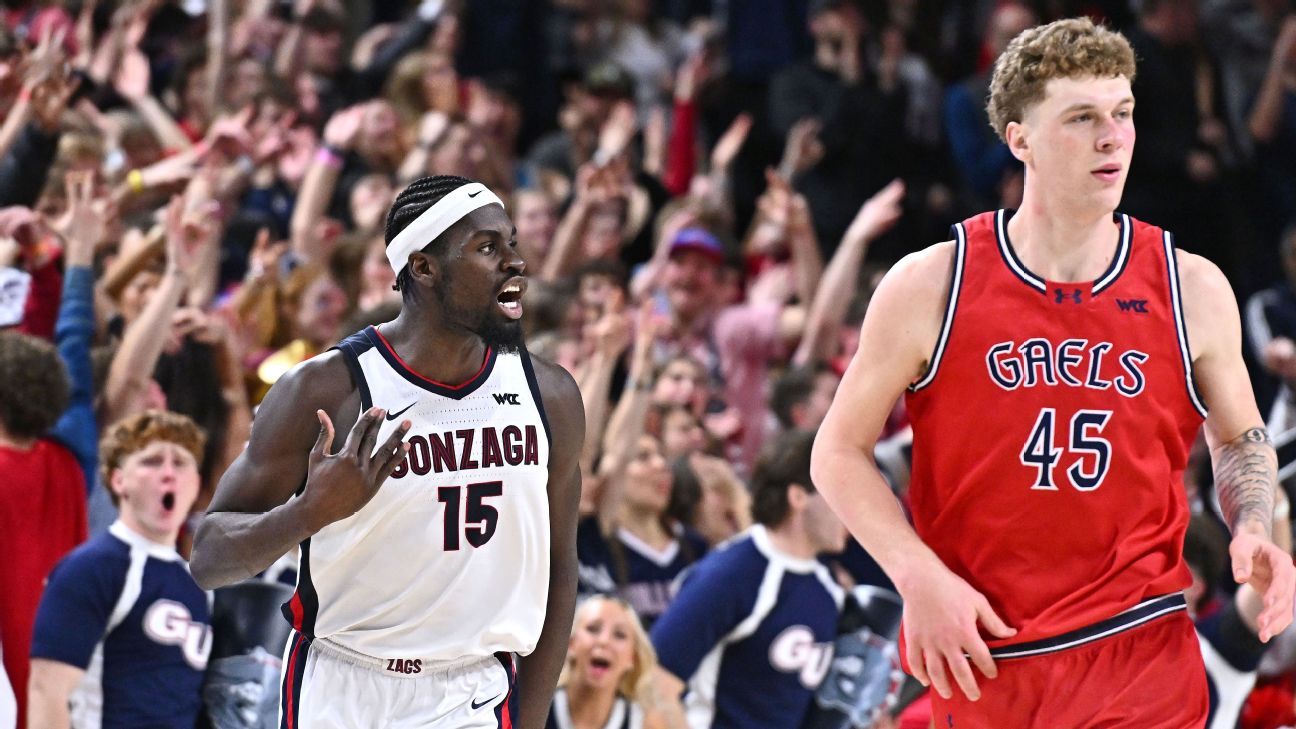
The top two seeds have met in the finals in 16 of the past 17 WCC tournaments. In 13 of those 16, it has been Gonzaga vs. Saint Mary’s. The only other team to make the finals in that span is BYU, which is no longer a conference member. (And by the way, the top two seeds in this year’s edition are Gonzaga and Saint Mary’s once again.)
Gonzaga, in its final season in the WCC before joining the new-look Pac-12 in 2026-27, has reached the championship game a ridiculous 28 consecutive years; the Bulldogs are always a No. 1 or 2 seed.
While the top two seeds have received a bye to the semis in 18 of the past 23 WCC tourneys, other leagues also reward their best teams this way without anywhere close to the same predictability.

Missouri Valley Conference
Despite a traditional bracket setup — there are no byes to the semis in Arch Madness — the top two seeds have faced off in the title game three straight times and in four of the past five years.
Drake has won the past three MVC tournaments, but the Bulldogs have their work cut out for them as this year’s 9-seed. They would have to beat the 1-seeded Belmont in the quarterfinals, which has been a near-impossibility in the MVC: The Nos. 1 and 2 seeds have lost in the quarters only once each in the past 27 tourneys — and it happened in the same year (2020).

America East
The higher seeds playing host has its benefits here: The championship game has been 1-vs.-2 or 1-vs.-3 in 10 of the past 11 seasons — including 2020, when the matchup was set before the tournament was cut short due to the COVID-19 pandemic.
The America East and Summit League have the longest current streaks of the No. 1 seed raising the trophy (four straight seasons).

Southland Conference
Since changing the format to give the top two seeds a bye to the semifinals in 2013, the Southland tournament hasn’t featured many surprises: At least one of the top two seeds has reached the championship game every year since.
The No. 1 seed has won in three straight years, and either the 1- or 2-seed has raised the trophy 10 of the past 13 tournaments. The most notable upset during this stretch came in 2022, when No. 4 seed Texas A&M-Corpus Christi (7-7 in Southland play) upset the top two seeds en route to the title.

Big 12
Four different programs have won the past four championships, but each have been Nos. 1 or 2 seeds, and only once in the past 10 tournaments has the runner-up been seeded fourth or worse.
Iowa State is the only school in Big 12 tournament history (since 1997) to win the title seeded lower than No. 3, and it has done it three times: twice as a No. 4 and once as a No. 5.

Ivy League
It’s important to note that only the Ivy’s top four teams qualify for the tournament, so the title game has been No. 1 vs. No. 2 in five of the past six seasons. The No. 2 seed had won five consecutive Ivy Madness titles until last year, when top-seeded Yale earned the conference’s auto-bid by beating — you guessed it — 2-seed Cornell.
Want more predictability? Yale has been a fixture, winning four of the past five tournaments and reaching the championship game six of the seven times the event has been held.
The tournament is hosted by a different league institution each year, and each of the past three times the host school qualified for the tourney, it won. This year’s host? Cornell, which will be the No. 4 seed.
TOURNAMENTS THAT HAVE FAVORED LOWER SEEDS

Sun Belt
The Sun Belt is the only conference in which the No. 1 seed has not made it to the championship game in the past five years (2019 is the last time it happened).
This is Year 2 of the most interesting bracket you’ll see during Champ Week, which takes place over seven days and was likely conceived to improve the chances of top seeds earning the automatic bid. That didn’t work last year, as the Nos. 1 and 2 seeds lost their first game. In fact, the 1-seed has lost its first game in the Sun Belt tourney an astounding four of the past five years.
This season, there was no clear top team in conference play. Troy went 12-6 to earn the No. 1 seed, but there was a remarkable six-way tie for second place at 11-7, so it wouldn’t be surprising at all if these trends continue.
An unintended consequence of the quirky Sun Belt bracket: No. 7 seed Arkansas State has to win five games to earn the automatic bid, while No. 2 seed Marshall has to win only two — despite the fact that both teams had the same record in Sun Belt play.
Metro Atlantic Athletic Conference
Not to be outdone by the ACC, the MAAC has been a free-for-all. At least one team seeded fourth or worse has reached the title game in eight straight tournaments. Last year, a 6-seed (Mount St. Mary’s) grabbed the auto-bid; in 2023, 11-seed Marist won three games to reach the finals; and in 2021, we had a rare 9-vs.-7 matchup in the championship game (Iona over Fairfield).
Of the 10 finalists from the past five years, eight different seeds have been represented. The No. 1 seed has struggled mightily, losing twice in the quarterfinals (2021 and 2022) and twice in the semifinals (2024 and 2025). It has been 10 years since the last title game between the top two seeds.

Coastal Athletic Association
It might seem like the CAA tournament has been chalky, with Nos. 1 and 2 seeds representing the past three champs, but the bigger picture is more complicated.
From 2012 to 2019, every team that reached the finals was seeded third or better. There were very few surprises and, more often than not, it was a 1-vs.-2 matchup for the title. Over the past five years, though, there has been plenty of variability: Only once has a No. 1 seed advanced to the championship, and at least one team seeded fourth or worse has made it. There was a 6-vs.-8 championship in 2021, No. 7 Stony Brook lost to top-seeded Charleston in overtime in 2024, and No. 12 Delaware won four games before falling just short of the title in 2025.

ACC
The ACC tournament has featured interesting results in recent years. You likely remember 10-seed NC State winning five games in five days to steal a bid in 2024. And the three years before that, teams seeded fourth (Duke), seventh (Virginia Tech) and fourth (Georgia Tech) emerged as surprise champions.
When you see lower-seeded champs like this, you might expect it’s because they faced another Cinderella type, but that has not been the case. In fact, the runner-up has been a No. 1 or No. 2 seed in five straight years. Last year was an outlier, as the top two seeds met in the title game for only the second time since 2012, with Duke defeating Louisville.
TOURNAMENTS WITH MIXED RESULTS

Patriot League
It’s a different structure in the Patriot League — the higher seed hosts each game throughout — but there are similarities to the SoCon for the eventual champs and runners-up.
The past five Patriot champions have been 1- or 2-seeds. Meanwhile, four of the past five losers in the title game were seeded fifth, sixth, sixth and ninth. Last year, 5-seed Navy knocked off 1-seed Bucknell in the semifinals. This year, the shoe is on the other foot: Navy will have the bull’s-eye as the No. 1 seed trying to earn its first NCAA tournament bid since 1998 after a dominant regular season (17-1).

Southern Conference
No conference screams “mixed results” like the SoCon.
When 6-seed Wofford won the 2025 championship game, it snapped a streak of seven straight years in which the No. 1 seed won the title (including 2020). Wofford was the sixth different program to win the tournament in as many years.
The SoCon tourney rarely lacks drama, as the average seed of the runner-up (5.6) is tied for the second highest in the past five years. Where things have gone sideways is in the 2-vs.-7 and 3-vs.-6 quarterfinal matchups:
-
The No. 7 seed has beaten the No. 2 seed in each of the past three years, and five of the past six.
-
No. 7 seeds have reached the championship game an incredible four times in those six years.
-
The No. 6 seed has beaten the No. 3 seed in four of the past six years.
MORE TRENDS
-
Atlantic 10 Conference (A-10): The past six titles have been won by the No. 1 or No. 6 seed (three each). Eight of the past 11 championships have been won by a team seeded third or worse. And No. 2 seeds have reached the title game in seven of the past 11 years but have no championships to show for it.
-
The No. 1 or No. 2 seed has won 13 of the past 14 Big Sky tournaments, but last year was the first time they both reached the final since 2016.
-
The Big Ten has gone 17 straight tournaments without a 1-vs.-2 matchup in the title game (the last was in 2007). The next-longest drought is eight straight (MAAC).
-
We have had four different Big West tournament champions in as many years. The last time a team seeded fifth or worse made it to the title game was 2015.
-
Conference USA (C-USA) and the Northeast Conference (NEC) have had a different school win their tournaments eight straight times, tying for the second-longest streak in the past 100 seasons of college basketball. Only the Southern Conference (nine straight from 1927 to 1935) had a longer run. There is no doubt that changes in conference membership have played a role for both.
-
Also in the NEC: A No. 3 seed (Saint Francis) won the tournament in what was the first time a 3-seed reached the title game since 2013. Last year also marked the first time the No. 2 seed didn’t lose in the championship game since 2019, snapping a streak of five straight years (including 2020, when the conference completed its tournament).
-
Ohio Valley Conference (OVC): The top two seeds get byes to the semifinals, but exactly one of them has lost its first game in three of the past four years — this year’s top two seeds are Tennessee State and Morehead State. The No. 1 seed has just one championship in the past five years.
-
The No. 1 seed in the Southwestern Athletic Conference (SWAC) has won the title only once in the past five years and has lost its first game in two of the past three years.


Justin Timberlake legally attacks Long Island over driving footage

The ‘European’ Jolla Phone Is an Anti-Big-Tech Smartphone

Chancellor Rachel Reeves urged to scrap fuel duty hike amid oil price fears

-
 Business6 days ago
Households set for lower energy bills amid price cap shake-up
-

 Politics5 days ago
What are Iran’s ballistic missile capabilities?
-

 Entertainment1 week ago
Talking minerals and megawatts
-

 Sports1 week ago
Eileen Gu comments on Alysa Liu’s historic gold medal
-
 Business6 days ago
Lucid widely misses earnings expectations, forecasts continued EV growth in 2026
-

 Sports5 days ago
Sri Lanka’s Shanaka says constant criticism has affected players’ mental health
-

 Tech6 days ago
Here’s What a Google Subpoena Response Looks Like, Courtesy of the Epstein Files
-
 Business6 days ago
Income Tax Draft Rules 2026: Key Changes On How And When Pan Card Will Be Required?