

Fashion
The 40th Festival de Hyères opened on Thursday, buoyed by palpable enthusiasm

Published
October 17, 2025
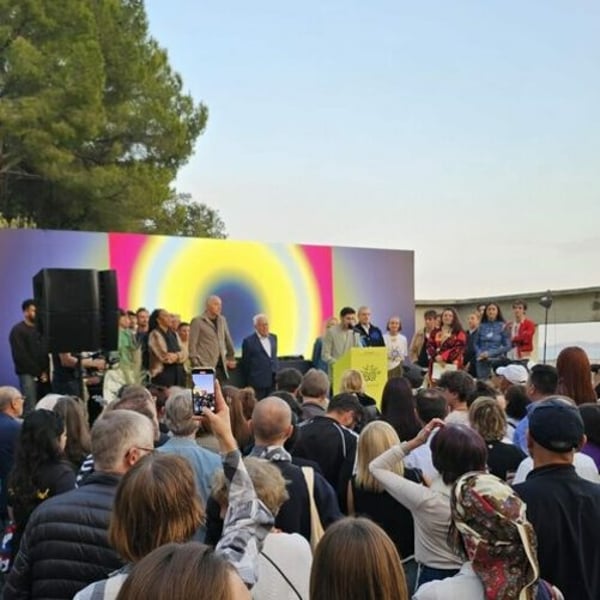
The atmosphere on the forecourt of Villa Noailles was effervescent, with a tightly packed crowd delighted to be back together again this year at the Hyères International Festival of Fashion, Photography and Accessories. Yet this must-attend event for fashion and emerging talent had been under threat from a severe budget crisis. In the crowd, there was palpable relief and a determination to do everything possible to make this 40th edition a success.
On the roof of the imposing rationalist building that hosts the event on the heights of Hyères, in the Var, a flag bearing a multicoloured sun flies. The flag was designed by Jean-Charles de Castelbajac, who is on the Fashion competition jury. He stands alongside the other juries and institutional representatives on the new stage set up in the garden for the opening ceremony, set against the backdrop of another large rainbow sun. This new arrangement, a departure from the usual ritual at the villa entrance, gently signals the transition.
“This sun represents what Villa Noailles is all about: dream, creation… It’s the sun that will celebrate this 40th edition,” declared Pascale Mussard, the institution’s president, the first to speak on Thursday evening, thanking “all the people who make the Festival possible”.
The mayor of Hyères, Jean-Pierre Giran, followed suit, thanking, not without a certain emotion, all those present. “There are many of you here, and that’s what matters most, demonstrating your commitment to this project of creativity, modernity and youth,” he told the audience.
“This Festival project is one of a kind, particularly in terms of its reach and longevity,” emphasises Hugo Lucchino, the new general manager of the Villa Noailles art centre, who oversees not only the renowned competition for young designers but also other events such as Design Parade.
Having taken up his post just a few days ago, he pays tribute to his predecessor, Jean-Pierre Blanc, the Festival’s emblematic founder. The mayor and Pascal Morand, executive president of the Fédération de la Haute Couture et de la Mode, also pay tribute.
Before declaring the Festival officially open, Lucchino also thanked, “for their unfailing support,” the partners who have all stepped up at this pivotal moment for Villa Noailles. These include local institutional partners and the French Ministry of Culture, as well as private sponsors such as Chanel, Le 19M, LVMH, Hermès, Supima, Kering, American Vintage and Première Classe, to name but a few.
Support for creativity
“I’m really happy, I feel there’s incredible energy. You can sense that everyone is fully on board. We all want it to continue, because it’s a great festival,” said designer Lutz Huelle, who was on the jury in 2015. “We’re witnessing a kind of ‘reset’. The fact that there’s no jury president this year, but only fashion professionals, is a good idea, because Hyères is, above all, a Festival for young designers and students.”
Mauro Grimaldi, a consultant in the luxury sector who has been attending the event for thirty years, reiterated how important it is to support events of this kind.
“All anyone talks about is money, but it’s crucial to support independent creativity, because the young talent it generates is what feeds the fashion industry. That’s why this is a key edition,” he concluded.
This article is an automatic translation.
Click here to read the original article.
Copyright © 2025 FashionNetwork.com All rights reserved.






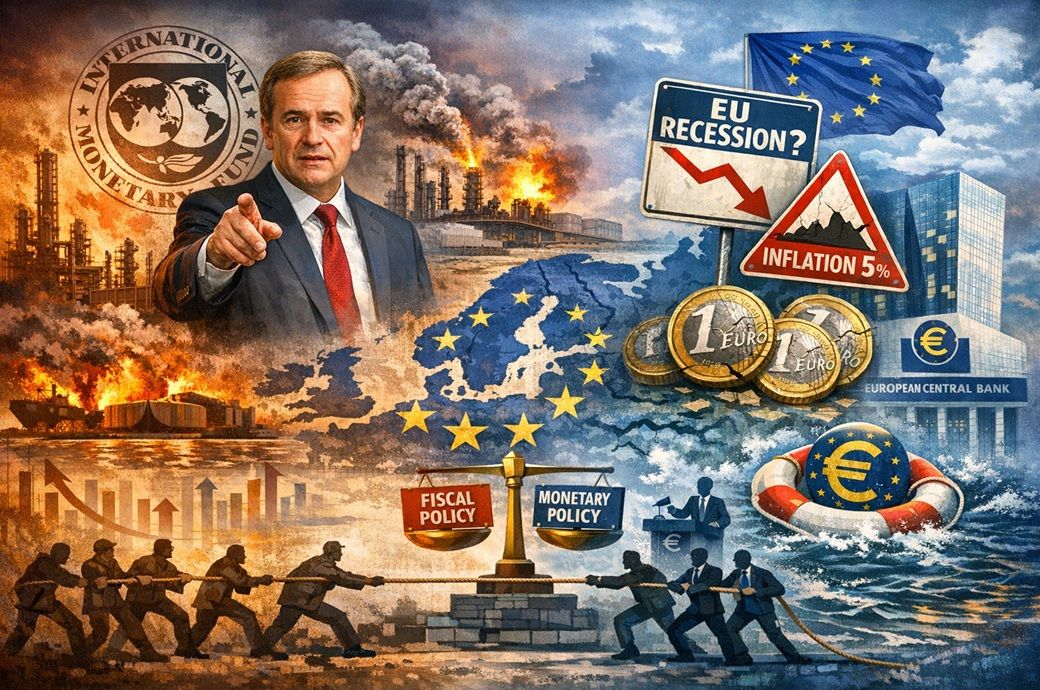
In a blog post, Alfred Kammer, director of the IMF’s European department, said his organisation sees growth slowing down in the continent. Initial data point already to weaker private investment and consumption.
The energy shock that has hit Europe due to the Middle East conflict, though smaller than in 2022, is weighing on growth and pushing inflation higher, an IMF expert recently cautioned.
IMF sees growth slowing down in the continent.
Initial data point already to weaker private investment and consumption.
Central banks must remain laser focused on keeping inflation expectations anchored, he wrote.
The outlook for euro area growth is projected at just 1.1 per cent in 2026, for the European Union it is 1.3 per cent; and this forecast comes with a high degree of uncertainty.
In a more severe scenario as described in the World Economic Outlook—a persistent supply shock compounded by tightening financial conditions—the EU could come close to recession with inflation approaching 5 per cent. No European country is spared, Kammer observed.
Policymakers face intense pressure—to act fast, visibly and for all, which results in policies that have more long-term downsides than short-term benefits, he wrote.
Targeted support is much more effective. Europe’s response to this shock should be shaped by two imperatives, he suggested. First, robust macroeconomic policy that is fit for a world with unpredictable and frequent shocks, and second, resilience built without wasting fiscal resources or getting in the way of markets.
The first imperative involves getting monetary and fiscal policy right. Central banks must remain laser focused on keeping inflation expectations anchored, the IMF expert wrote.
In the euro area, where inflation is close to target and medium-term expectations are broadly anchored, the European Central Bank has some scope to wait and observe the shock evolve before acting. IMF now expects a cumulative 50 basis point increase in the policy rate by the end of this year, maintaining a broadly neutral monetary stance in light of higher near-term inflation expectations, Kammer noted.
A rise in core inflation or increasing medium-term expectations would warrant a more restrictive stance, he wrote.
“Europe must reform under pressure. The current shock is not an argument for delay. It is all the more reason to push forward the reform agenda,” Kammer added.
Fibre2Fashion News Desk (DS)
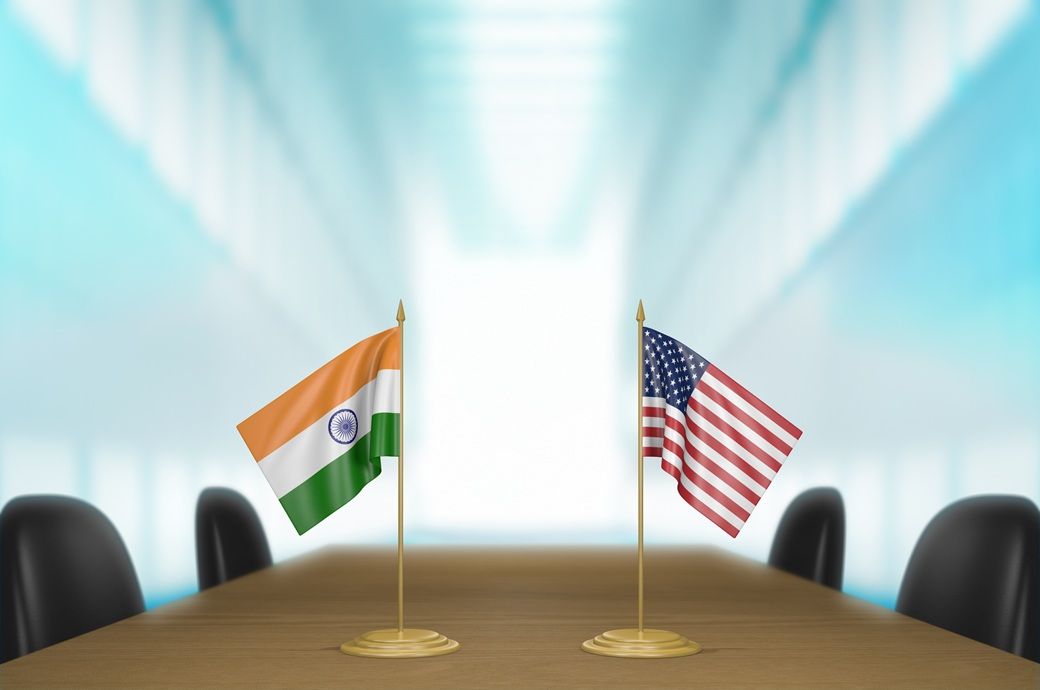
The text of the agreement was released on February 7.
India and the US will today resume talks on the first phase of their bilateral trade agreement in Washington, DC.
The three-day talks will discuss the situation that has evolved under the changed US tariff regime.
The two unilateral probes launched by the USTR against India may also be discussed at the meeting.
Darpan Jain, additional secretary in the department of commerce, is leading the Indian team.
Darpan Jain, additional secretary in the department of commerce, is leading the Indian team.
The three-day talks will discuss the situation that has evolved under the changed US tariff regime, according to Indian media reports.
Following the US Supreme Court decision against the sweeping tariffs imposed by President Donald Trump on several countries, the US administration imposed a 10-per cent tariff on all countries beginning February 24 for 150 days.
This led to a meeting between chief negotiators of both sides scheduled in February getting postponed to this month.
The two unilateral investigations launched by the US Trade Representative (USTR) against India may also be discussed at the meeting. India has rejected allegations made by the USTR in these two probes under its Section 301 of Trade Law and has called for termination of the probes as the initiation notice has failed to provide cogent rationale to substantiate the claims.
Fibre2Fashion News Desk (DS)
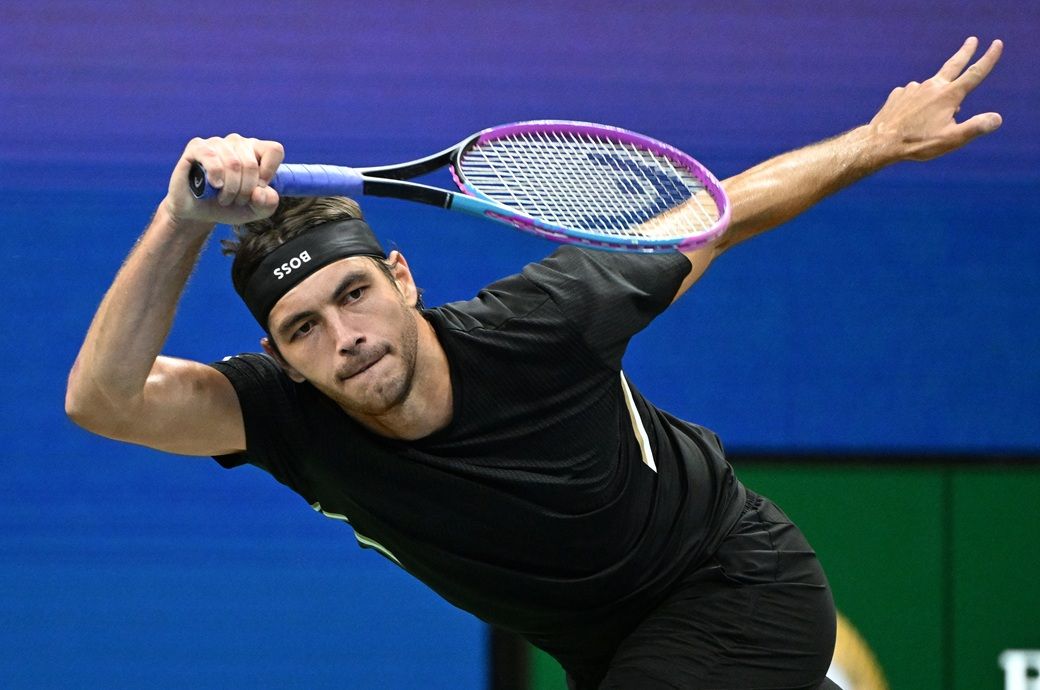
The partnership is rooted in a shared mindset: ambition, world-class performance, global relevance, and a bold confidence that defines both BOSS and the Australian Open. As a cornerstone of BOSS’s cultural strategy, the collaboration creates a powerful platform to connect with fans at scale, unlock new audiences, and showcase the full world of BOSS through its collections, ambassadors, and experiences.
BOSS will become Official Lifestyle Outfitter of the Australian Open from 2027, marking a key step in its sport and culture strategy.
The brand will dress up to 4,000 staff and elevate on- and off-court style through tailored looks, activations and merchandise, strengthening its global presence in tennis while redefining the tournament’s visual identity.
“We are absolutely excited to partner with the Australian Open, which is one of the most dynamic and globally followed sporting events worldwide,” stated Daniel Grieder, CEO of HUGO BOSS. “This collaboration is a natural fit for us, as it brings together two brands that share the same commitment to excellence, innovation, and creating extraordinary experiences. Tennis is part of BOSS’s DNA. The partnership therefore
marks an important step in our strategy to further drive the brand’s positioning at the intersection of sport, lifestyle, and global fan engagement.”
“The Australian Open has always been about more than just great tennis – it’s about atmosphere, innovation, and setting the benchmark for major sporting events worldwide,” Tennis Australia CEO Craig Tiley said. “BOSS is a global brand with impeccable credentials in sport and style, and together we will enhance how our tournament looks, feels, and connects with fans from around the world.”
In its new role as the tournament’s Official Lifestyle Outfitter, BOSS is set to transform the visual identity of the Australian Open like never before. Dressing up to 4,000 staff, officials, umpires, and ball kids, BOSS will make an unmistakable impact, setting its signature confident style from the very first moment. The result is a bold step change: a unified, elevated, and distinctly modern aesthetic that will be visible across every corner of Melbourne Park. A curated palette of refined shades, subtle nods to the brand’s tailoring expertise, and easy-wear silhouettes engineered for the Melbourne heat come together to signal a new era in tournament style – perfectly in tune with the fast-paced, high-energy spirit of the event.
BOSS branding will also be displayed around the venue, including inside the iconic Rod Laver Arena. Beyond the tournament’s courts, the collaboration will extend to exclusive replica teamwear, merchandise, and off-court capsules. Dedicated pop-up stores, immersive on-site fan activations, an elevated guest experience, and further special events will bring the BOSS attitude to every part of “The Happy Slam.” Online and in store, impactful storytelling and curated initiatives will also share the sunshine spirit of Melbourne with tennis fans around the globe.
In a powerful opening serve that ignites excitement and sets the tone for what’s to come, the brand has created bold visuals to accompany today’s announcement. Bridging the worlds of fashion and sport, the imagery reimagines tennis balls in tactile fabrics – from rich wool to soft alpaca – as a nod to BOSS’s roots in craft and tailoring.
The brand’s history in tennis dates back to the 1980s, when it embarked on a 15-year-long sponsorship of the Davis Cup, the world’s largest international team competition in men’s tennis. Most recently, BOSS has welcomed star players Taylor Fritz and Matteo Berrettini, as well as emerging talents Noma Noha Akugue and Ella Seidel, as brand ambassadors, and since 2022 has served as title sponsor of popular ATP 250 tournament the BOSS OPEN in Stuttgart. Through the Australian Open partnership, BOSS is cementing its presence in tennis at one of the world’s most prestigious tournaments and propelling its position as a leading global style authority at the intersection of sport and culture.
Note: The headline, insights, and image of this press release may have been refined by the Fibre2Fashion staff; the rest of the content remains unchanged.
Fibre2Fashion News Desk (JP)


War-linked energy shock pushing inflation higher in Europe: IMF expert

Scam messages offering ships safe transit through Hormuz, warns security firm
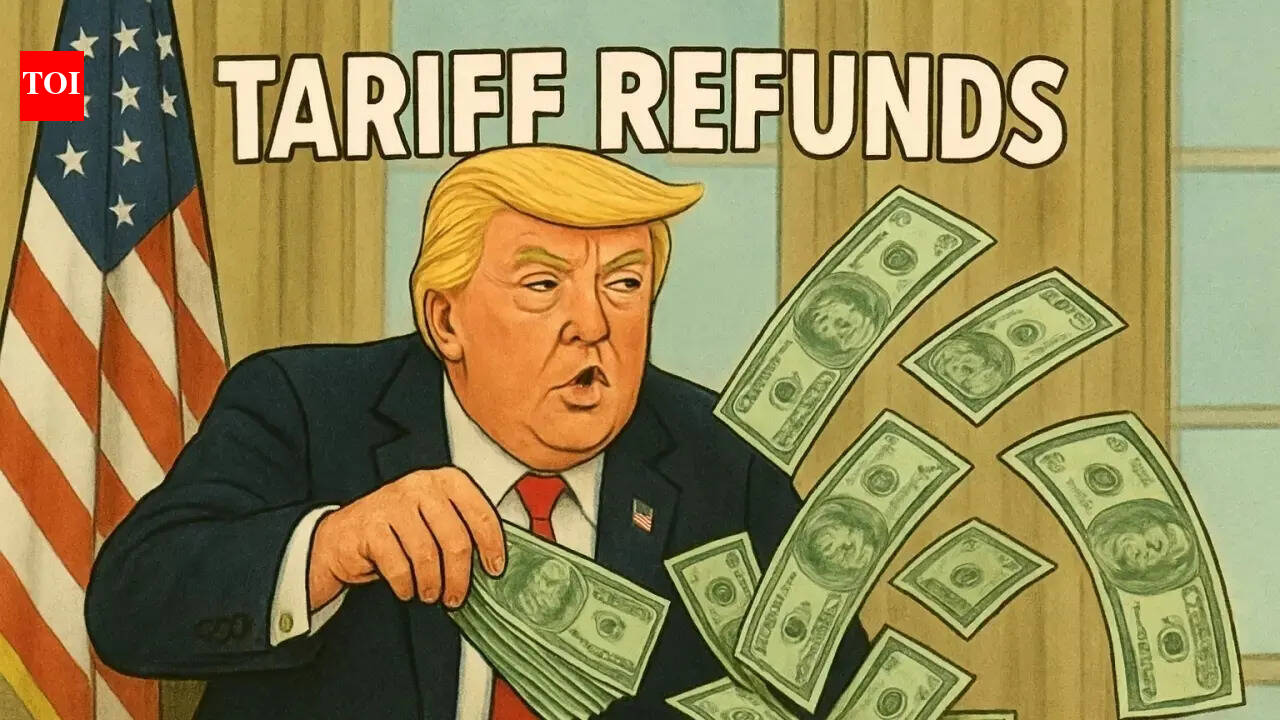
Billions to be paid! US starts refund process for Trump tariffs: Can Indian exporters claim? – The Times of India

-

 Fashion5 days ago
France’s LVMH Q1 revenue falls 6%, shows resilience amid Iran war
-

 Sports1 week ago
The case for Man United’s Fernandes as Premier League’s best
-

 Entertainment1 week ago
Palace left in shock as Prince William cancels grand ceremony
-
 Business1 week ago
UK could adopt EU single market rules under new legislation
-

 Entertainment6 days ago
Is Claude down? Here’s why users are seeing errors
-

 Fashion1 week ago
Energy emerges as biggest cost driver in textile margins
-
 Business1 week ago
Delta Air Lines unveils first new Delta One suite in premium cabin arms race
-

 Tech1 week ago
A Lot of Shops Won’t Fix Electric Bikes. Here’s Why