

Business
How to tell the health of a battery in a used EV

Chris BaraniukTechnology Reporter
 Corbis via Getty Images
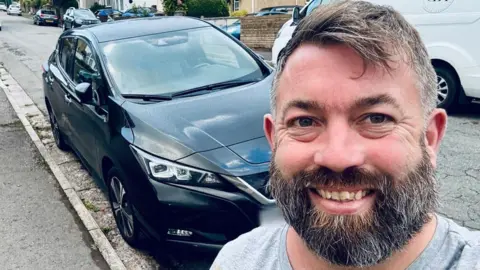
When Kerry Dunstan and his partner set out to buy a new electric car this summer, one of the questions they asked was, “How’s the battery?”.
They’d found a 2021 Nissan Leaf with just 29,000 miles on it, and the dealer told them the condition of the battery, or its state of health (SOH), was still around 93%.
The couple were sold. For £12,500, they got an EV with a big boot and plenty of room for passengers.
Though Mr Dunstan, a cabinetmaker who also owns a somewhat snazzier electric Volvo SUV, hasn’t quite fallen in love with the aging Leaf.
“I like sporty, jazzy cars – and it’s just a bit ‘meh’,” he says.
However, he adds the Leaf has performed exactly as expected during the three months they’ve owned it.
It used to be that age and mileage were the two headline details pored over by would-be buyers of second-hand cars. But as more people shift to electric, scrutinising the health of a car’s battery has become arguably even more important.
How has that battery been treated? Did the last owner regularly fast charge it to 100%, for example? That has the potential to shorten an EV battery’s lifespan.
This battery black box problem has put some consumers off buying a second-hand EV. But battery analytics firms say they can reveal the condition of an old EV’s battery with high accuracy. And industry experts say some EVs are lasting longer than many predicted.
Take Mr Dunstan’s Nissan Leaf. This is a model of EV built without the kind of sophisticated, liquid-based battery cooling system common to many other EVs. While Nissan has rectified this in the latest generation of Leafs, earlier models show a considerable shortening of their range year by year, according to data analysed by US insurance and research firm NimbleFins.
Mr Dunstan is unfazed. “I charge both my EVs to 100% and I put them on charge when I need to charge them – I don’t worry about it,” he says.

 Kerry Dunstan
For people in the market for a second-hand EV who are plagued by battery anxieties, however, Austria-based firm Aviloo says it has a solution. “We really can, completely independently, determine the state of health of a battery,” says chief product officer, Patrick Schabus.
Aviloo is one of several battery analytics businesses in the market. The company, which provides battery health certificates for major UK outlet British Car Auctions, offers two products.
There’s a premium test, where EV owners plug a data logging box roughly the size of a glasses case into their car so that it can monitor battery performance while they use the car over a few days, going from 100% charge down to 10%.
Or, they can opt for a quicker flash test, which uses a different box to suck up data from the car’s battery management software and then analyse it with the help of a computer model. “We can do this at a standstill in under two minutes,” says Mr Schabus.
The premium test observes battery discharge closely, picking up fluctuations in current or voltage, and can reveal extra detailed information about the health of individual cells in the battery, says Aviloo.
Marcus Berger, Aviloo’s chief executive, says his company’s analytics results sometimes diverge “substantially” from the battery SOH percentages produced by some cars’ own built-in analytics systems.
He challenges conventional wisdom that batteries with an SOH below 80% are too far gone: “An EV with a state of health below 80% can still be a great car… It just needs to be priced [appropriately].”
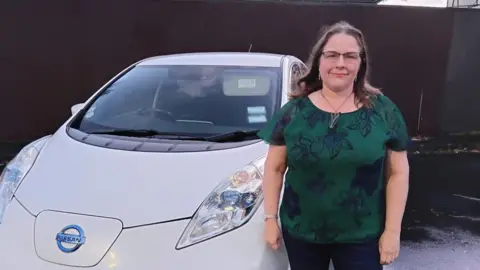
In New Zealand, EV owner Lucy Hawcroft, who works in a sustainability role for an infrastructure firm, bought a Nissan Leaf with her husband roughly three years ago. She recalls getting an SOH result of 95% or so from the dealership. But a year later an independent mechanic checked the SOH again for them.
“It dropped quite a bit,” she recalls. “My husband was a bit surprised, or concerned, about that.”
However, the car still has a range of around 160km (100 miles) when fully charged. The pair mostly use it for short journeys of up to 10km. Mrs Hawcroft says she has friends whose EVs have much bigger ranges, of around 400km: “That would be ideal.”
For David Smith, sales director at Cleevely Electric Vehicles in Cheltenham, being able to analyse used EVs’ batteries in detail is a deal-maker. Most customers ask for this information, he says. His company uses SOH reports from ClearWatt, another battery analytics firm.
“They’re completely independent. We can’t interfere with the reports,” he says. “Once customers have seen the report, that aids the sale nine times out of 10.”
Matt Cleevely, managing director at Cleevely Electric Vehicles, adds that it’s often possible to replace groups of cells or modules within a battery pack – far cheaper than installing a whole new battery.
 Lucy Crawford
As for how you should charge your own EV in order to best take care of its battery, Simona Onori at Stanford University says, “There is likely a sweet spot between frequent fast charging and avoiding it altogether.” However, she adds that, to her knowledge, this is not something that has yet been thoroughly studied.
Despite some consumers’ wariness, battery technology has noticeably improved in recent years, says Max Reid, head of battery costs at market research firm CRU. “The older batteries might last maybe 500 to 1,000 [charging] cycles,” he explains. “Now, it’s 10,000 cycles in some of these new EV cells coming out.”
Batteries that are no longer good enough for the EV they were designed for can still be useful, says Paul Chaundy at Second Life EV Batteries, in Dorset. For instance, some of his customers are businesses that use former EV batteries to store electricity at their premises. They might have, say, six electric forklifts but a grid connection only large enough for charging ports to supply two or three of the forklifts.
Regarding the varying methodologies car manufacturers use to generate SOH reports for their own vehicles, Mr Chaundy says, “We need more standards around that, I think.”
Tesco Pet Insurance, who provided the cover, says “the cost of claims is one of a number of factors that can affect the price of a policy at renewal” and also noted Tilly’s age had been reflected in the quote. It says the couple had a more comprehensive policy, which typically costs more than basic levels of cover, and that alternative options were presented to Fawcett and Neild.
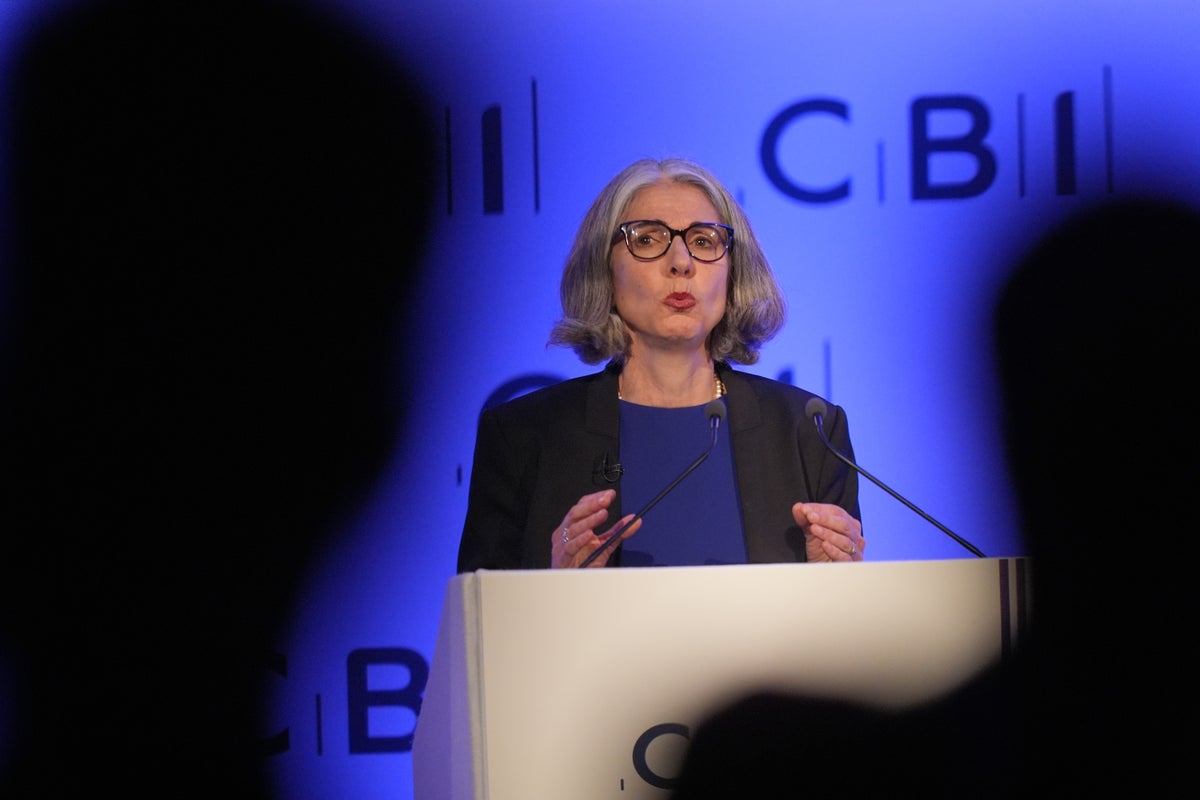
The UK must not “cut ourselves off” from trade opportunities in China despite security and business risks, the head of the Confederation for British Industry has warned.
CBI chief Rain Newton-Smith highlighted that British businesses see increased trade with Chinese firms as an opportunity to drive growth.
Her remarks came as business leaders were questioned by MPs on Parliament’s Business and Trade Select Committee regarding the UK’s economic relationship with China.
Last December, Prime Minister Sir Keir Starmer admitted China poses security threats to the UK but urged for greater business ties.
Ms Newton-Smith, chief executive of one of the UK’s largest business groups, was positive about the Government’s engagement with China.
“You can’t have a growth strategy without a strategy for China,” she said.
“China has the biggest contribution to global growth, is the third largest trading partner, and the world’s largest consumer market.
“The UK is second largest exporter of trade and services.
“We are mindful as all businesses are of security risks but it is really important that we have a strategy towards China.
“This Government has increased the economic engagement with China and including business within this does help us as a country.”
She added: “If we think about the future economy, there is a huge market in China and I think we mustn’t cut ourselves off from some of the opportunities there, even if in some areas there are difficult conversations and negotiations that need to be had.”
Peter Burnett, chief executive of the China-Britain Business Council, told the committee: “There are risks associated with technology advancement, AI, industrial development that they need to assess.
“Increasingly you will find them saying that they need to engage more in China to understand those risks and to develop some of the technologies along some of those risks themselves.”
Business
Trump says he’d be disappointed if Fed pick doesn’t cut rates; Warsh vows to be ‘independent actor’ – The Times of India
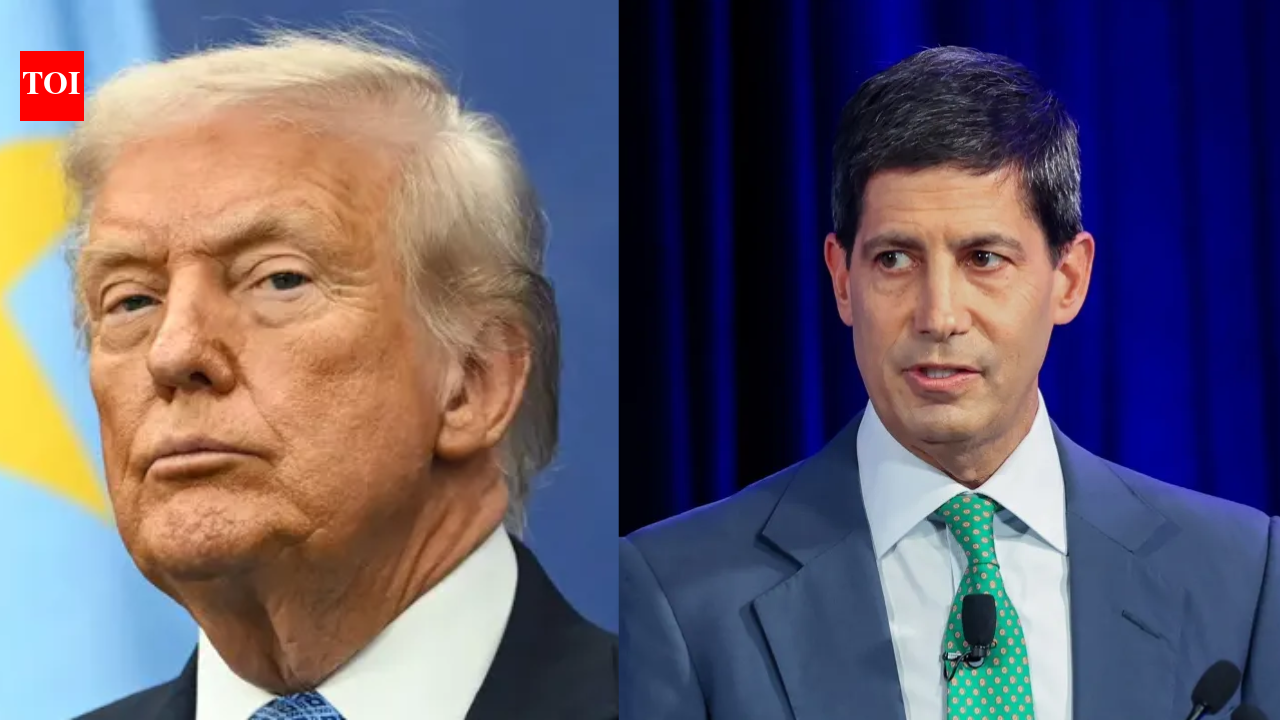
US President Donald Trump on Tuesday said he would be disappointed if his nominee for Federal Reserve chair, Kevin Warsh, does not cut interest rates right away after taking office if confirmed by the Senate. Trump, during an interview with CNBC’s “Squawk Box,” also said “we have to find out” about the construction costs of the new Federal Reserve building.Warsh, a former Federal Reserve official and financier, is currently facing Senate confirmation hearings where he has stressed his independence from political pressure.“The president never once asked me to commit to any particular interest rate decision, and nor would I agree to it if he had,” Kevin Warsh said under questioning by the Senate Banking Committee, as quoted by LA Times. “I will be an independent actor if confirmed as chair of the Federal Reserve.”Warsh told lawmakers that fighting inflation would be one of his main priorities if confirmed.“Congress tasked the Fed with the mission to ensure price stability, without excuse or equivocation, argument or anguish,” Warsh said. “Inflation is a choice, and the Fed must take responsibility for it.”The comments come as investors closely watch his confirmation hearing, with inflation remaining at 3.3% annually and global tensions, including the war in Iran pushing up gas prices, adding pressure on the economy. Higher inflation typically leads the Federal Reserve to keep interest rates steady or raise them rather than cut them, as rate changes affect mortgages, auto loans, and business borrowing.Democrats on the Senate Banking Committee accused Warsh of shifting his stance on interest rates over time, supporting higher rates under Democratic presidents and lower rates during Trump’s presidency.Warsh, if confirmed, would take over at a time when inflation pressures make it difficult for the Federal Reserve to cut rates, even as Trump continues to push for lower borrowing costs. Trump has repeatedly urged rate cuts and has long clashed with current Fed chair Jerome Powell over monetary policy. Powell has also been the subject of a Department of Justice criminal probe after refusing Trump’s requests for faster rate cuts. Trump told CNBC that he does not plan to pressure the Justice Department to end that probe.


Trump repeats call for Congress to rein in college sports
I was left with an £8,000 vet bill when my insurer cancelled my pet policy

Reese Witherspoon breaks silence after AI support controversy

-

 Fashion6 days ago
France’s LVMH Q1 revenue falls 6%, shows resilience amid Iran war
-

 Sports1 week ago
The case for Man United’s Fernandes as Premier League’s best
-

 Entertainment1 week ago
Palace left in shock as Prince William cancels grand ceremony
-
 Business1 week ago
UK could adopt EU single market rules under new legislation
-

 Entertainment6 days ago
Is Claude down? Here’s why users are seeing errors
-

 Fashion1 week ago
Energy emerges as biggest cost driver in textile margins
-
 Business1 week ago
Delta Air Lines unveils first new Delta One suite in premium cabin arms race
-
 Fashion1 week ago
Asia claims largest share of markets on Kearney FDI Confidence Index