

Fashion
Advent International considering $2 billion sale of Parfums de Marly business, FT reports


By
Reuters
Published
October 22, 2025
Private equity firm Advent International is in early discussions to potentially sell its Parfums de Marly business as soon as next year at a likely valuation of more than $2 billion, the Financial Times reported on Wednesday.
The Boston-based investor is yet to hire bankers or make a final call on a potential divestment, FT said, citing people familiar with the matter.
The Paris-headquartered company, which owns the Initio Parfums Privés brand of fragrances, could draw bids from fellow buyout investors and fragrance peers, it added.
Reuters could not immediately verify the report. Advent International and Parfums de Marly did not immediately respond to Reuters’ requests for comments.
The potential exit follows a wave of consolidation in fragrances, which have outpaced the wider beauty industry. Earlier this week, Kering agreed to offload its beauty operations to L’Oreal in a 4 billion euros ($4.66 billion) deal that hands the French cosmetics leader the Creed fragrance line and 50-year licenses for Gucci, Bottega Veneta and Balenciaga scents.
Last month, Coty kicked off a strategic review of its consumer beauty unit, including brands CoverGirl and Rimmel, to sharpen its emphasis on premium perfumes.
© Thomson Reuters 2025 All rights reserved.











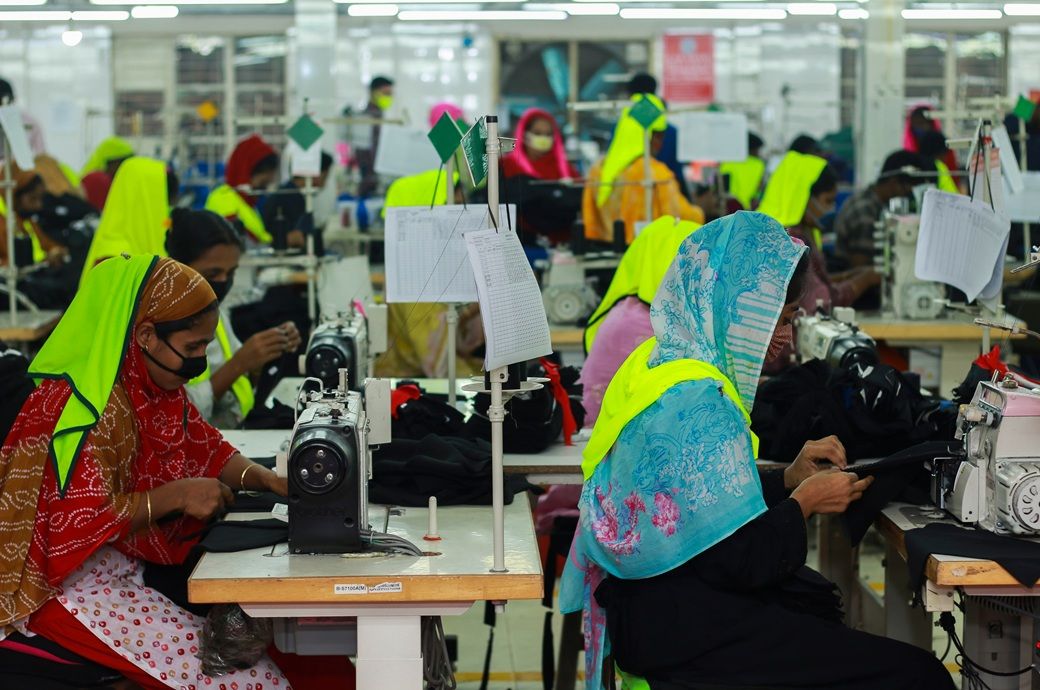
The call came at a national consultation in Dhaka on the draft Bangladesh National Strategy on Circular Economy for the sector.
Bangladesh government officials, industry leaders and sustainability experts recently called for finalising a national circular economy strategy for the textile and RMG sector as that is essential to protect competitiveness in the global apparel market.
They emphasised the need to embed circular practices across the entire value chain while improving transparency and building institutional capacity.
The event was organised by the United Nations Industrial Development Organisation (UNIDO) and the country’s Ministry of Commerce, in collaboration with Chatham House, under the Switch to Circular Economy Value Chains (SWITCH2CE) project, co-funded by the European Union (EU) and Finland.
SWITCH2CE project partner Chatham House worked with two leading national research organisations in Bangladesh to conduct two policy level research, and lessons from the pilot projects outlined future steps to foster a national circular textile strategy for Bangladesh, a release from SWITCH2CE said.
Through SWITCH2CE, technical support has been provided by Chatham House and a diverse network of partners, including international brands, research institutions, and financing organisations, working alongside local industry actors and technology providers.
Participants emphasised the need to embed circular practices across the entire value chain—from design and production to waste recycling—while improving transparency and building institutional capacity.
They emphasised policy recommendations to formalise and scale circular approaches across the entire value chain—from design and production to textile waste recycling—while improving traceability and building institutional and financial capacity.
Discussions also addressed challenges in blended fiber recycling, transparent supply chains, and the need for coordinated efforts to build a sustainable textile ecosystem by adopting a national circular strategy.
Fibre2Fashion News Desk (DS)
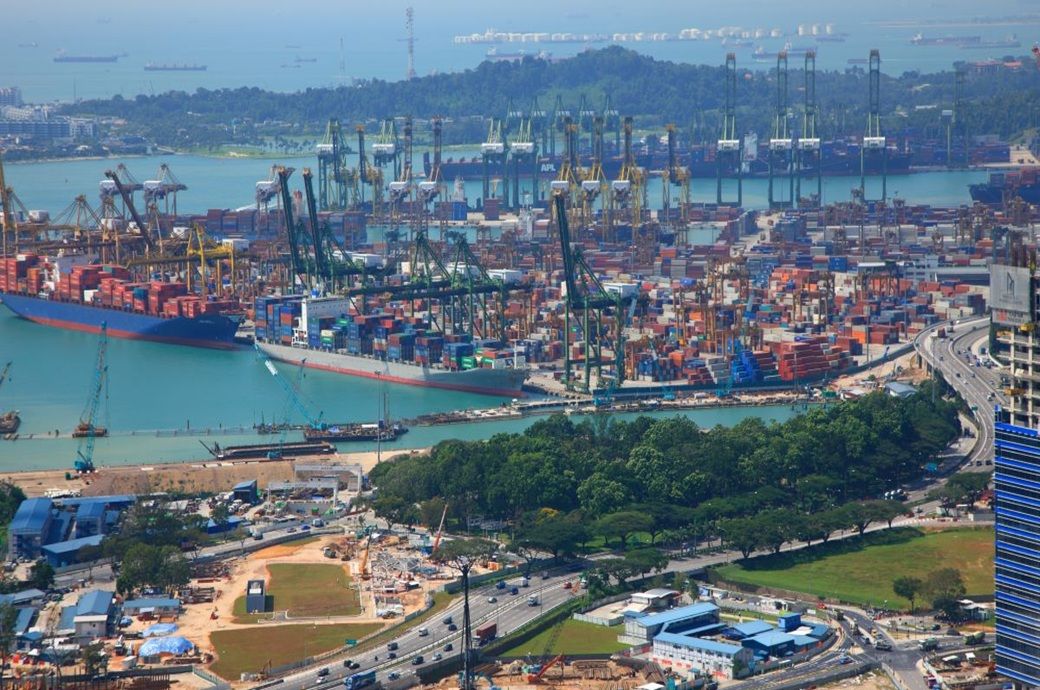
Singapore, one of the world’s most connected and efficient port hubs, offers a platform for testing and deploying innovations in areas such as cleaner fuels and digital technologies. UNCTAD complements this with global reach, policy expertise and hands-on support to developing countries.
UNCTAD and the Maritime and Port Authority of Singapore have launched a partnership to support the transition toward more sustainable, resilient and inclusive maritime transport systems.
They will promote adoption of alternative fuels and digital solutions across ports and shipping networks.
Efforts will focus on approaches that can be adapted to different national contexts.
Under the agreement, the partners will promote adoption of alternative fuels and digital solutions across ports and shipping networks. Efforts will focus on approaches that can be adapted to different national contexts, alongside knowledge-sharing in sustainable finance, digital innovation and workforce development.
“This partnership brings together Singapore’s operational excellence and UNCTAD’s global development expertise,” said Pedro Manuel Moreno, acting secretary general of UNCTAD.
“It will help accelerate a maritime transition that is not only greener and more efficient, but also resilient and inclusive—while contributing to global discussions at the UN Global Supply Chain Forum 2026,” he noted.
As pressure mounts to decarbonise ports, they face a complex balancing act: reducing emissions while keeping trade flowing efficiently and competitively, according to the UNCTAD, which recently said that challenge is turning more urgent as global supply chains navigate renewed uncertainty.
Recent tensions affecting key maritime chokepoints, including the Strait of Hormuz, have highlighted the risks of continued reliance on fossil fuels in global shipping. Volatility in energy markets and disruptions to shipping routes are reinforcing the case for alternative fuels and more resilient port infrastructure, UNCTAD said in a release.
A central priority of the partnership is ensuring that the maritime transition is inclusive.
Developing countries, many of which depend heavily on maritime trade, often face constraints in financing, technology and skills. The initiative will support these countries through training, advisory services and institutional strengthening.
Building on UNCTAD’s long-standing work with port communities, the partnership aims at improving port performance, strengthening connectivity and enhancing preparedness for disruptions.
The initiative will also contribute to preparations for the 2nd UN Global Supply Chain Forum taking place in late 2026, where policymakers, industry leaders and international organizations will address the future of trade logistics and resilience.
Fibre2Fashion News Desk (DS)
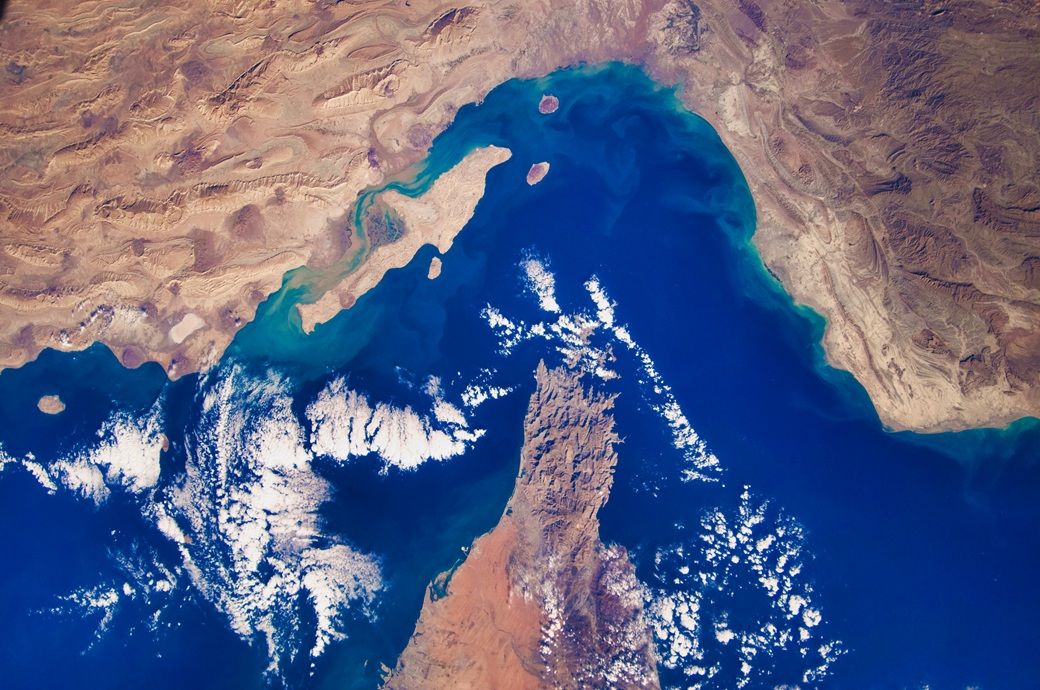
Describing the closure of the vital shipping route as a ‘structural rupture’ in global energy trade, the ERIA issue paper said member countries of the Association of Southeast Asian Nations (ASEAN), including Cambodia, are particularly exposed due to their heavy reliance on imported energy.
The Strait of Hormuz disruption is a systemic shock threatening Southeast Asia’s energy security and economic stability, a report by Economic Research Institute for ASEAN and East Asia said.
Flagging cascading impacts across key sectors beyond energy markets, it cautioned that these combined pressures could lead to slower economic growth, rising inflation and financial instability across the region.
The ASEAN region imports about two-thirds of its crude oil, with some like Cambodia, Singapore and the Philippines almost entirely dependent on external supplies. This dependence, combined with concentrated sourcing from the Middle East, makes ASEAN highly vulnerable to prolonged supply disruptions, the report noted.
Flagging cascading impacts across key sectors beyond energy markets, it cautioned that these combined pressures could lead to slower economic growth, rising inflation and financial instability across the region.
Higher import bills are expected to widen current account deficits, while currency volatility and capital outflows may further strain economies, it said.
The situation also poses risks to migrant workers in the Middle East, potentially affecting remittances that many ASEAN households depend on, it observed.
As fragmented national responses are insufficient to address such a complex crisis, ERIA called for stronger regional coordination, arguing that unilateral actions like stockpiling or subsidy policies could worsen supply shortages and increase competition among countries.
To strengthen resilience, the report outlined several strategic recommendations. These include developing indigenous energy resources such as biofuels, expanding regional energy trade and enhancing infrastructure through initiatives like the ASEAN Power Grid and Trans-ASEAN Gas Pipeline.
It also called for the creation of shared strategic reserves and coordinated stockpiling mechanisms to ensure more stable access to energy during crises.
ERIA also stressed on the importance of diversifying supply sources, accelerating renewable energy deployment and improving energy efficiency.
The Hormuz disruption is a ‘stress test’ for ASEAN’s economic and energy systems, and long-term resilience will depend on deeper regional integration, coordinated policymaking and a shift towards a more secure and diversified energy architecture, the report concluded.
Fibre2Fashion News Desk (DS)


‘I had £20,000 stolen and had to fight a 13-month fraud reporting rule to get it back’

King Charles and the Trumps unite at White House for a historic tea meeting

This M5 MacBook Air Discount Has Renewed My Faith in Cheap Laptops for 2026

-

 Sports1 week ago
NCAA men’s gymnastics championship: All-time winners list
-

 Sports1 week ago
WWE WrestleMania 42 Night 2: Live match results and analysis
-

 Fashion1 week ago
UK’s Sosandar returns to profitability amid robust FY26 performance
-

 Politics7 days ago
UK’s Starmer seeks to deflect blame over Mandelson appointment
-

 Entertainment1 week ago
Lee Anderson, Zarah Sultana kicked out of UK Parliament for calling PM ‘liar’
-
 Business1 week ago
No fuel shortage: Govt assures 100% domestic LPG, PNG, CNG supply amid Hormuz energy crunch – The Times of India
-
 Business1 week ago
How Trump’s psychedelics executive order could unlock stalled cannabis reform
-
 Business1 week ago
Exercise to test response to offshore energy threat involving vessels and drones