

Fashion
Middle East IPO boom fades amid competition from global markets


By
Bloomberg
Published
December 9, 2025
After four blockbuster years, the Middle East’s initial public offering boom is losing steam as valuations come under scrutiny and listings roar back in the US and Asia. In recent months, the Gulf’s listing volumes have fallen to their lowest since the pandemic, investors have become markedly more selective, and the region’s once-reliable first-day pop has faded.
The change in sentiment was on show this week as Saudi Arabia’s EFSIM Facilities Management canceled plans for an up to $89 million listing on the kingdom’s main exchange. Saudi Arabia’s sovereign wealth fund has also slowed work on several planned first-time share sales, Bloomberg News has reported. Those moves come as the benchmark Tadawul index has dropped nearly 12% this year.
The Gulf had been a rare bright spot in recent years, buoyed by government privatisations and a push to deepen local capital markets. But lower oil prices have started to cloud the Middle East’s growth outlook, particularly in Saudi Arabia. Meanwhile, as IPO activity fired back up elsewhere, a region that thrived in a global listings drought suddenly faced competition.
The most striking shift this year was the sharp drop in IPO volumes across the Gulf, with regional listing proceeds more than halving from $13 billion to under $6 billion in 2025. In the UAE, listings slowed dramatically after the soft debuts of Lulu Retail Holdings PLC and Talabat Holding PLC late last year left investors more cautious. Dubai-based online classifieds platform Dubizzle Ltd. postponed its first-time share sale, a rare example of a pulled deal in the country. Oman, which had briefly outpaced London in IPO volumes in 2024, also saw activity dry up.
In Saudi Arabia, the EFSIM deal was pulled in part due to generally weaker market demand, people familiar with the matter said. Still, the kingdom’s IPO proceeds held steady compared to last year at roughly $4 billion, helping the kingdom reclaim its title as the Gulf’s busiest listing venue. But most deals came from the private sector as the government eased off on large privatisations.
“Government IPOs are large tickets, this year the market was not for this,” said Mostafa Gad, head of investment banking at EFG Hermes, one of the leading arranger of share sales in the Gulf. “Postponing the big ones was a very wise idea.”
The shift in sentiment was evident in deal size as well. Last year produced three IPOs nearing $2 billion after strong orderbooks allowed Talabat and Lulu to upsize their offerings late in the process, even though that enthusiasm didn’t carry into trading. In 2025, there was just one billion-dollar deal from low-cost carrier Flynas, and only four transactions topped $500 million.
Investors pushed toward smaller, simpler stories with clearer financials, “Anything above $500 million starts to get difficult,” said Gad, “People are not willing to navigate through a lot of complexity.”
If UAE IPOs slowed, follow-ons filled the gap. Secondary share sales in the emirates climbed toward $5 billion, overtaking IPO proceeds for the first time. Much of that activity came from Abu Dhabi government-backed shareholders trimming stakes to boost free floats, liquidity and index weightings.
Even Qatar, which has largely missed the Gulf-wide share sale boom, saw rare activity: Ooredoo’s multi-million-dollar stake sale by Abu Dhabi Investment Authority became the country’s most significant ECM event in years. Saudi follow-on volumes were more muted than last year, which was dominated by the government’s $12 billion sell-down in oil major Aramco.
Another defining shift came in performance. The 30% plus first-day jumps that had become a feature of Gulf listings started to crack in late 2024 and evaporated in 2025. In Saudi Arabia, the average listing gain turned negative, and only two of the kingdom’s ten largest IPOs now trade above offer. Broader market weakness didn’t help – Saudi equities were among the worst performers in emerging markets this year, dragged down by softer oil prices and concerns that this could dampen government spending.
Demand has also suffered in recent listings. Riyadh developer Al Ramz’s institutional investor books were only 11 times covered earlier this month, a far cry from the triple-digit oversubscription levels that were the norm months ago.
IPOs in the UAE fared better, but signs of fatigue appeared there too. Even contractor Alec Holdings PJSC – state-backed and the kind of deal that historically delivered a strong debut – traded tepidly on day one and is up a modest 3%. Dubai and Abu Dhabi’s main stock indices overall performed relatively well, but instant double-digit listing gains were no longer a given.
For some, that’s a welcome correction. “Everyone will adjust to the idea that not all IPOs will perform 30–40% on day one,” Gad said. “We’re becoming a mature market.”












The apparel climate story has moved out of the ESG report and into the cost sheet. In ****–****, climate risk is showing up as cotton quality loss, import dependence, energy volatility, cooling capex, carbon-price exposure and mandatory textile-waste fees. For brands and suppliers, the question is no longer whether climate action is ‘responsible’. It is whether delay will make product margins uncompetitive.
The latest data makes the shift visible. Textile Exchange says global fibre production reached *** million tonnes in **** and could hit *** million tonnes by **** if business continues as usual. Polyester alone now makes up ** per cent of global fibre output, with ** per cent still fossil-based. That scale gives apparel a low-cost material engine, but it also ties the sector to fossil energy, petrochemical volatility and future carbon accounting.

Caprolactam (CPL) prices initially held near $*.**–*.**/kg with minimal movement, while nylon chips saw uptick to ~$*.***/kg (+*.* per cent WoW) driven by short-term restocking. Nylon filament yarn (DTY **D/**F) prices remained stable at ~$*.**–*.**/kg, supported by existing inventory and steady downstream textile operations.
By the second week (April * to April **), benzene stabilised, but caprolactam began to weaken to ~$*.**–*.**/kg (−*.* per cent WoW), signalling the start of broader chain pressure. Nylon chips responded with a mild correction to ~$*.***/kg (−* per cent WoW), while filament yarn prices continued to hold steady due to inventory buffers and ongoing execution of prior textile orders. In the third week (Apr **–**), caprolactam stable to ~$*.*/kg, and chips followed to ~$*.***/kg (Stable WoW).
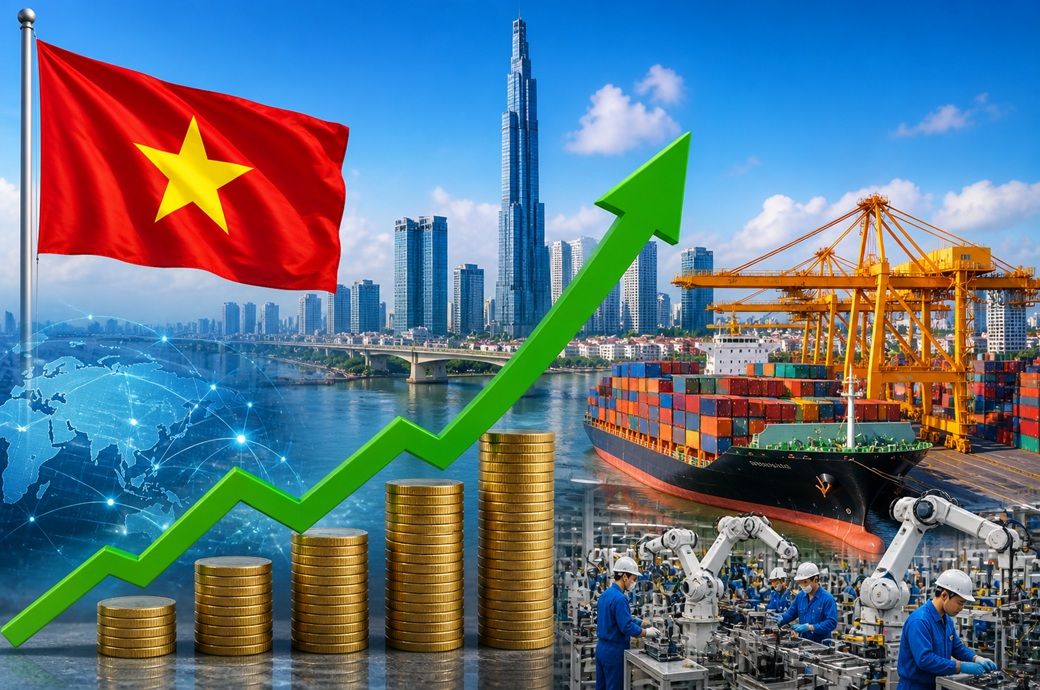
Total registered FDI, including newly registered and adjusted capital, along with foreign investors’ contributions and share purchases, reached $18.24 billion as of April 27, up 32 per cent year on year (YoY), according to the Ministry of Finance’s National Statistics Office (NSO).
Vietnam attracted $18.24 billion in FDI in January–April 2026, up 32 per cent, driven by manufacturing and processing.
Realised FDI hit a five-year high, signalling continued capacity expansion.
Trade surged to $344.17 billion, supported by strong US demand and rising imports from Asia, highlighting deeper global supply chain integration and export momentum.
A total of 1,249 new projects were licensed with combined registered capital of $12.15 billion, reflecting a 3.7 per cent annual increase in project numbers and a 2.2-fold rise in value. Manufacturing and processing dominated, attracting $8.12 billion, or 66.8 per cent of total newly registered capital.
Realised FDI in the January–April period was estimated at $7.40 billion, up 9.8 per cent YoY and marking the highest level for the period in the past five years. Of this, the manufacturing and processing sector disbursed $6.12 billion, accounting for 82.7 per cent. Meanwhile, 316 existing projects registered additional capital of $3.13 billion, representing a sharp 51 per cent decline compared to the same period last year. Combining newly registered and adjusted capital, total FDI into manufacturing and processing reached $10.49 billion, or 68.6 per cent of the total.
Foreign investors carried out 976 capital contribution and share purchase transactions worth $2.96 billion, up 61.9 per cent YoY. Among these, 325 deals increased enterprises’ charter capital by $445.13 million, while 651 share acquisitions without capital increases totalled $2.51 billion. Wholesale and retail trade led these investments, capturing $1.89 billion, or 63.9 per cent.
Among 53 countries and territories with newly licensed projects, Singapore was the largest investor with $6.05 billion, accounting for 49.8 per cent of the total. It was followed by the Republic of Korea with $4.08 billion (33.6 per cent), China with $524.1 million (4.3 per cent), Japan with $462 million (3.8 per cent), Hong Kong (China) with $329.2 million (2.7 per cent), and the Netherlands with $318.5 million (2.6 per cent).
On the trade front, Vietnam’s total trade with the rest of the world was estimated at $344.17 billion in the first four months of 2026, a significant increase from $277.21 billion in the same period last year, the NSO said. In April alone, trade volume reached an estimated $94.32 billion, rising 8 per cent from March and 26.7 per cent YoY.
The United States remained the largest importer of Vietnamese goods, with imports valued at $53.9 billion, while China continued as the top supplier with $69 billion. Imports from traditional markets also surged, with South Korea and ASEAN recording growth rates of 57.8 per cent and 44.3 per cent, respectively.
Fibre2Fashion News Desk (MS)

Long-term borrowing costs in UK reach 28-year high amid rising inflation

Jimmy Kimmel roasts Donald, Melanie Trump even after warning

Telehealth Abortion Is Still Possible Without Mifepristone

-

 Tech1 week ago
A Brain Implant for Depression Is About to Be Tested in Humans
-

 Sports1 week ago
Pro wrestling star Steph De Lander reveals how colleague’s advice helped lead her to title triumph at ACW
-

 Tech1 week ago
Almost 90% of women leave tech industry within 10 years | Computer Weekly
-
 Business1 week ago
‘I had £20,000 stolen and had to fight a 13-month fraud reporting rule to get it back’
-

 Entertainment1 week ago
Norway joins Type 26 Frigate Programme to boost NATO naval power
-
 Business6 days ago
PSX plunges over 4,800 points | The Express Tribune
-

 Entertainment1 week ago
Melania Trump says ABC should ‘take a stand’ on late-night host Kimmel
-

 Tech1 week ago
This Ambitious Laptop Doesn’t Leave Much Room for Your Hands