

Politics
Inside India’s RSS, the legion of Hindu ultranationalists

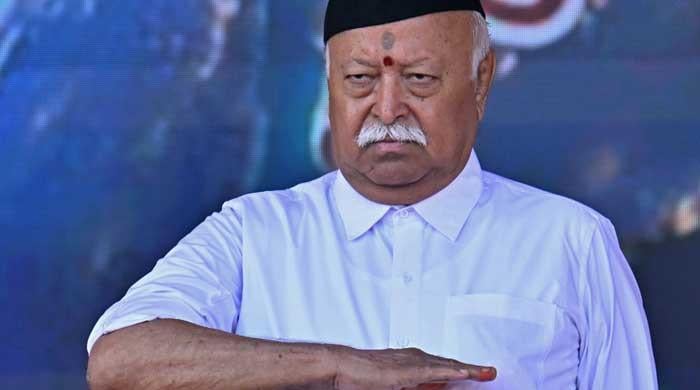
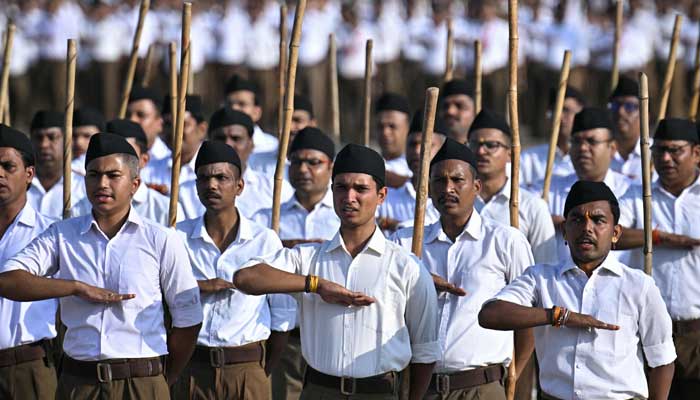
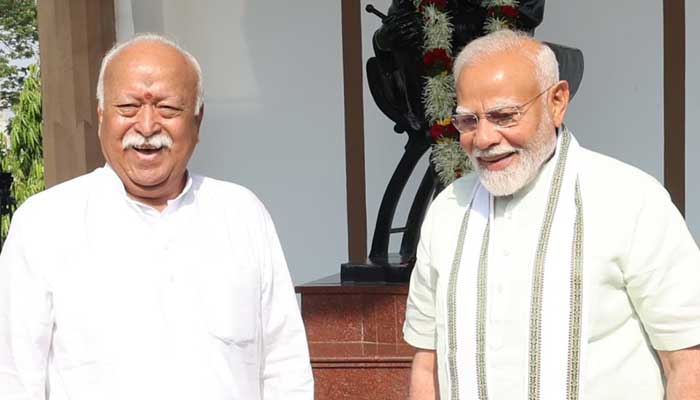
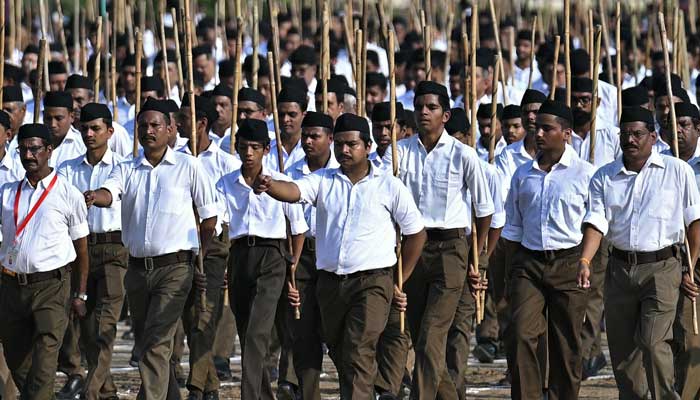
NAGPUR: Brandishing bamboo sticks and chanting patriotic hymns, thousands of uniformed men parade in central India, a striking show of strength by the country’s millions-strong Hindu ultranationalist group.
The Rashtriya Swayamsevak Sangh — the National Volunteer Organisation, or RSS — marked its 100th anniversary this month with a grand ceremony at its headquarters in Nagpur.
AFP was one of a handful of foreign media outlets granted rare access to the group, which forms the ideological and organisational backbone of Prime Minister Narendra Modi’s Bharatiya Janata Party (BJP), in power since 2014.
Like the 75-year-old prime minister, critics accuse it of eroding the rights of India’s Muslim minority and undermining the secular constitution.
At the parade, RSS volunteers in white shirts, brown trousers and black hats marched, boxed and stretched in time to shrill whistles and barked orders.
“Forever I bow to thee, loving Motherland! Motherland of us Hindus!” they sang, in a scene that evoked paramilitary drills of the past.
“May my life […] be laid down in thy cause!”
‘Proud’
Hindus make up around 80% of India’s 1.4 billion people.
Founded in 1925, the RSS calls itself “the world’s largest organisation”, though it does not give membership figures.
At the heart of its vision is “Hindutva” — the belief that Hindus represent not only a religious group but are India’s true national identity.
“They are willing to fight against those who will come in their way […] that means minorities, Muslims, Sikhs, Christians and other Hindus who do not subscribe to the idea,” historian Mridula Mukherjee said.
RSS chief Mohan Bhagwat uses softer language, saying that minorities were accepted but that they “should not cause division”.
Anant Pophali, 53, said three generations of his family had been involved with the group. “The RSS made me proud to be an Indian,” the insurance company worker said.
Bloody origins
The RSS was formed during the imperial rule of the British. But it diverged sharply from that of independence efforts by Mahatma Gandhi and the Congress Party, whose leader Jawaharlal Nehru considered them “fascist by nature”.
Mukherjee said archives showed “a link between the RSS and fascist movements in Europe”.
“They have said, very clearly, that the way the Nazis were treating the Jews should be the way our own minorities should be treated,” she told AFP.
The RSS does not comment directly on such parallels, but Bhagwat insisted that “today we are more acceptable”.
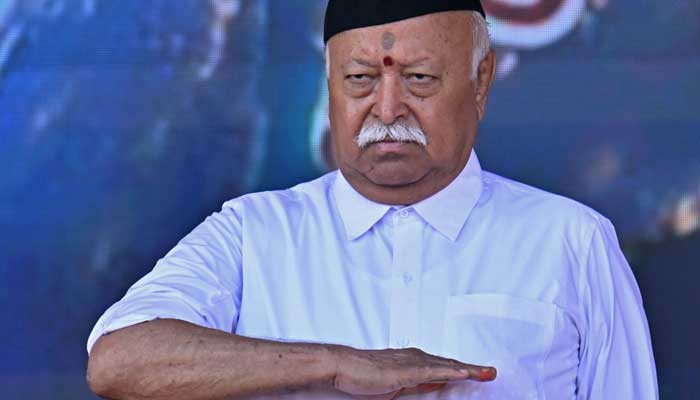
The RSS was an armed Hindu militia during the bloody 1947 partition of India and the creation of Muslim-majority Pakistan.
Hindu extremists blamed Gandhi for breaking India apart. A former RSS member assassinated him in 1948, and the group was banned for nearly two years.
But the RSS rebuilt quietly, focusing on local units known as “shakhas” to recruit. Today, it claims 83,000 of them nationwide, as well as over 50,000 schools and 120,000 social welfare projects.
At a shakha in Nagpur, Alhad Sadachar, 49, said the unit was “meant to develop togetherness”.
“You can get a lot of good energy, a lot of good values, like helping those in need”, he said.
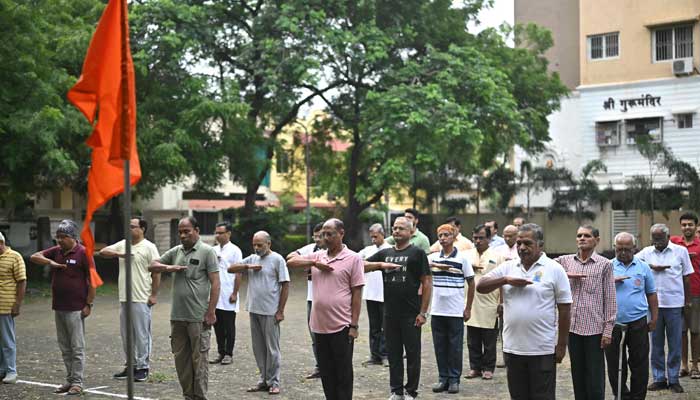
At a shaka that AFP was allowed to attend, dozens of members — many middle-aged or elderly, and not in uniform — gathered for an hour of calisthenics and song.
But in a show of symbolism, they congregated beneath a saffron flag — the colour of Hinduism — rather than India’s tricolour.
‘A country that is one’
The RSS remains deeply political. The group re-emerged in the late 1980s, spearheading a movement that ended with a violent mob demolishing a centuries-old mosque in Ayodhya — now replaced by a gleaming temple to the Hindu god Rama.
“That was the turning point,” said Mukherjee, the historian, adding that the RSS was “able to create a mass mobilisation on religious issues, that became at its heart clearly anti-Muslim”.
The group helped deliver Modi’s BJP party an electoral landslide in 2014.
Since then, Modi — a former RSS “pracharak”, or organiser — has pursued policies that critics say marginalise India’s estimated 220 million Muslims, 15% of the population.
“There has been a clear increase in terms of violence, lynching and hate speech since Modi has taken over,” said Raqib Hameed Naik, director of the US-based Centre for the Study of Organised Hate.
RSS leaders deny it has participated in atrocities. “Those allegations are baseless,” Bhagwat said.
“Atrocities were never done by the RSS. And if it happens anyway, I condemn that.”
Under Modi, it has expanded its reach.”The RSS has been able to stir Indian society in a direction that is more nationalistic, less liberal in a Western sense,” said Swapan Dasgupta, a former nationalist parliamentarian.
But volunteer Vyankatesh Somalwar, 44, said the group only pushed “good values”.
“The most important thing is to contribute to your country,” he said. “A country that is one, above all.”
- Trump calls “Project Freedom” humanitarian gesture for stranded ships.
- Iran chokes off major flows of oil, gas and fertiliser to world economy.
- Over 900 commercial vessels present in Gulf, says maritime intel firm.
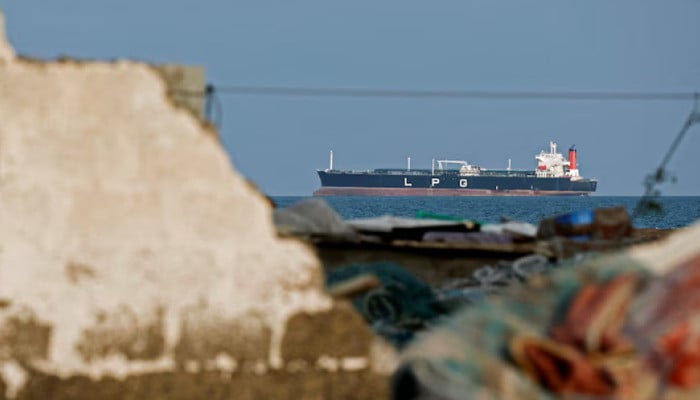
Iran warned on Monday that it would consider any US attempt to interfere in the Strait of Hormuz a breach of the Mideast ceasefire, as President Donald Trump said the United States would begin escorting ships through the blocked waterway.
Negotiations between the two countries have been deadlocked since a ceasefire came into effect on April 8, and Iran’s stranglehold on the strategic strait following US-Israeli attacks on Tehran has been a main point of contention.
Trump said Sunday the new maritime operation, which he dubbed “Project Freedom,” was a “humanitarian” gesture for crews aboard the many ships swept up in the blockade and which may be running low on food and other crucial supplies.
“We will use best efforts to get their Ships and Crews safely out of the Strait. In all cases, they said they will not be returning until the area becomes safe for navigation,” Trump said in a Truth Social post, noting operations would begin on Monday.
In response, the head of the Iranian parliament’s national security commission said: “Any American interference in the new maritime regime of the Strait of Hormuz will be considered a violation of the ceasefire.”
By blocking the Strait of Hormuz, Iran has choked off major flows of oil, gas and fertiliser to the world economy, while the United States has imposed a counter-blockade on Iranian ports.
Trump, in his post, said he was “fully aware that my Representatives are having very positive discussions with the Country of Iran, and that these discussions could lead to something very positive for all.”
He made no direct mention of what Tehran described as a 14-point plan “focused on ending the war.”
US Central Command said it would use guided-missile destroyers, over 100 land and sea-based aircraft, multi-domain unmanned platforms and 15,000 service members in the Hormuz effort.
As of April 29, more than 900 commercial vessels were located in the Gulf, according to maritime intelligence firm AXSMarine.
‘Impossible operation’
US news website Axios, citing two sources briefed on the proposal, reported that Iran set “a one-month deadline for negotiations on a deal to reopen the strait,” dissolve the US naval blockade and end the war.
Earlier Sunday, the Revolutionary Guards sought to put the onus back on Trump, saying he must choose between “an impossible operation or a bad deal with the Islamic Republic of Iran.”
Washington’s European allies are concerned that the longer the strait remains closed, the more their economies will suffer, and German Foreign Minister Johann Wadephul demanded that it be reopened.
In a call with his Iranian counterpart Abbas Araghchi, Wadephul stressed that Germany supported a negotiated solution but that “Iran must completely and verifiably renounce nuclear weapons and immediately open the Strait of Hormuz.”
Oil prices are currently about 50% above pre-conflict levels, largely due to the supply snarls in the strait.
‘Suffocating the regime’
The US president, who spent the weekend at his Mar-a-Lago resort in Florida, declined on Sunday to specify what could trigger new American military action.
But in his post he said that “if in any way, this Humanitarian (ship-guiding) process is interfered with, that interference will, unfortunately, have to be dealt with forcefully.”
Treasury Secretary Scott Bessent said the US naval blockade was only part of a broader economic embargo.
“We are suffocating the regime, and they are not able to pay their soldiers. This is a real economic blockade, and it is in all parts of government,” he told Fox News.
In yet more bellicose rhetoric, Mohsen Rezaei, a military adviser to Iran’s Supreme Leader Ayatollah Mojtaba Khamenei, said Iranian forces would sink US ships.
“The US is the only pirate in the world that possesses aircraft carriers. Our ability to confront pirates is no less than our ability to sink warships. Prepare to face a graveyard of your carriers and forces,” he posted on X.
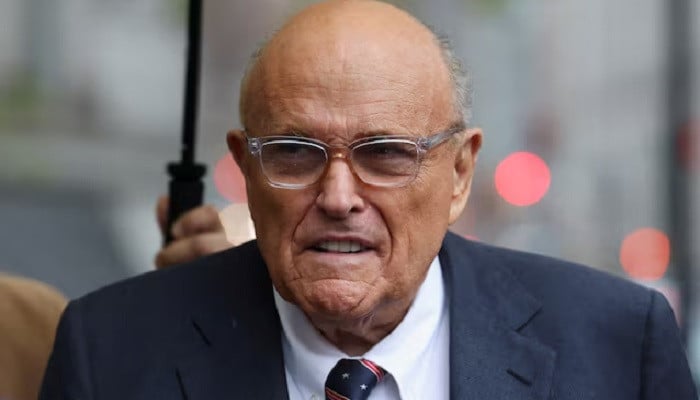
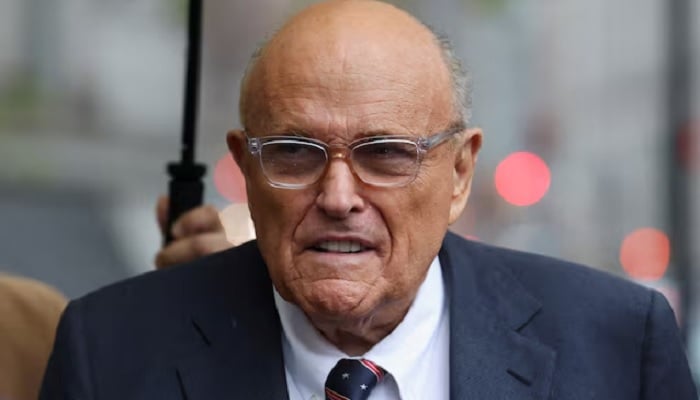
Former New York City Mayor Rudy Giuliani has been hospitalised and is in “critical but stable condition,” his spokesperson said on Sunday.
The spokesperson, Ted Goodman, did not immediately provide more details about Giuliani’s condition or how long he has been hospitalised.
“Mayor Giuliani is a fighter who has faced every challenge in his life with unwavering strength, and he’s fighting with that same strength now,” Goodman said in a statement. “We do ask that you join us in prayer for America’s Mayor Rudy Giuliani.”
Giuliani, 81, garnered acclaim for his response to the September 11, 2001, al Qaeda attack on New York City, earning the nickname “America’s Mayor.”
Giuliani worked as an attorney for President Donald Trump in his failed efforts to overturn the results of the 2020 election, an effort that led to criminal charges against Giuliani in two US states and a defamation lawsuit from election workers. Giuliani has denied wrongdoing in the criminal cases.
Trump, in a social media post, called Giuliani the “Best Mayor in the History of New York City” and said he had been mistreated by Democrats.
Giuliani was previously hospitalised last year following a car crash in New Hampshire.
- Merz says withdrawal not linked to his criticism of US’s Iran policy.
- Pentagon to cut 5,000 troops from Germany, raising concerns.
- Biden-era missile deployment plan also seen as abandoned.
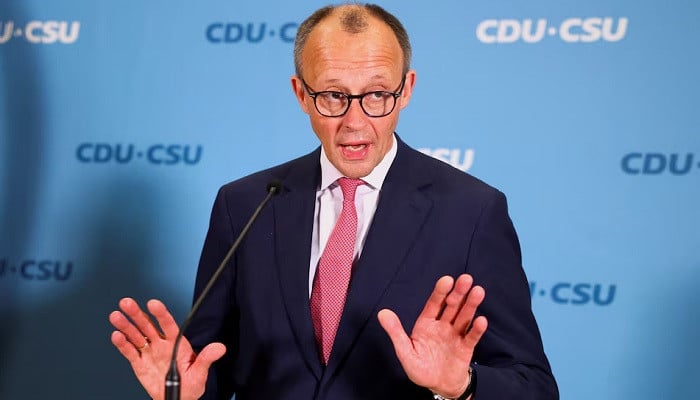
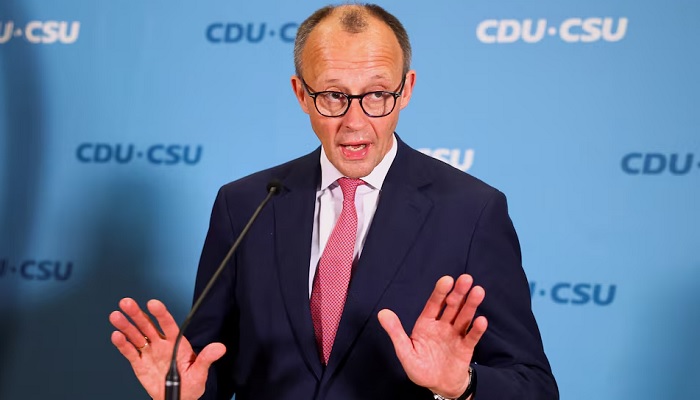
German Chancellor Friedrich Merz said he must accept that President Donald Trump does not share his opinions in order to work with the United States within Nato, but stressed there was no link between their rift and a planned troop drawdown.
Merz dismissed suggestions that his criticism of US war planning in Iran had sparked Washington’s Friday announcement that the US would reduce its military presence in Germany, its largest European base, by 5,000 soldiers, and repeated his commitment to the transatlantic alliance.
Merz had questioned whether Trump had an exit plan for the Middle East and said the US was being “embarrassed” in talks with Iran. Trump later called Merz an “ineffectual” leader.
“I have to accept that the American president has a different view on these issues than we do. But that does not change the fact that I remain convinced that the Americans are important partners for us,” Merz told public broadcaster ARD in an interview due to be aired later on Sunday.
Asked whether US plans to reduce its troop presence in Germany had anything to do with the spat between the two leaders, Merz said, “There is no connection.”
Trump called for a reduced US military presence in Germany already during his first term and has repeatedly called on Europeans to take greater responsibility for their own security.
Friday’s announcement is also seen as a cancellation of a plan under Joe Biden’s administration to deploy a US battalion with long-range Tomahawk missiles to Germany.
This is a blow to Berlin, which had pushed for the move as a powerful deterrent against Russia, while the Europeans develop such weapons of their own.
Merz said Trump had never committed to this plan and that it was unlikely the US would give up such weapons systems, adding, “If I’m not mistaken, the Americans don’t have themselves enough at the moment.”


US GDP grows 2% in Q1 2026, driven by investment & exports

Australian wool prices edge higher, quality gap weighs on market

Kim Kardashian delights fans with pregnancy pic ahead of Met Gala: ‘Loading’

-

 Tech7 days ago
A Brain Implant for Depression Is About to Be Tested in Humans
-

 Tech1 week ago
Almost 90% of women leave tech industry within 10 years | Computer Weekly
-
 Business1 week ago
Pakistan’s oil market is fuelling the crisis | The Express Tribune
-
 Business6 days ago
‘I had £20,000 stolen and had to fight a 13-month fraud reporting rule to get it back’
-

 Sports6 days ago
Pro wrestling star Steph De Lander reveals how colleague’s advice helped lead her to title triumph at ACW
-

 Entertainment7 days ago
Norway joins Type 26 Frigate Programme to boost NATO naval power
-

 Entertainment7 days ago
Melania Trump says ABC should ‘take a stand’ on late-night host Kimmel
-

 Tech6 days ago
This Ambitious Laptop Doesn’t Leave Much Room for Your Hands