

Fashion
China’s logistics sector grows 6.2% in Q1 2026


From January to March, the country’s total social logistics value reached ¥96.4 trillion (~$14 trillion), marking a year on year (YoY) increase of 6.2 per cent at comparable prices. The growth rate was 1.1 per cent points higher than the full-year level in 2025 and 0.5 per cent points above Q1 2025.
China’s logistics sector recorded steady growth in Q1 2026, with total social logistics value rising 6.2 per cent year on year (YoY) to ¥96.4 trillion (~$14 trillion).
Industrial activity remained the key driver, while online retail and consumption trends supported demand.
Authorities aim to enhance supply chains and accelerate digital, green transformation.
The industrial sector emerged as the primary growth driver, with the value of industrial goods logistics rising 5.8 per cent year on year (YoY). It contributed over 80 per cent of the increase in total social logistics value during the period. Within this, manufacturing accounted for more than 80 per cent of overall logistics demand, as reported by Chinese media.
Logistics demand linked to consumption also showed steady expansion. Online retail sales rose 7.5 per cent year on year (YoY) in the first three months, accounting for 24.8 per cent of total retail sales of consumer goods, reflecting the continued rise of new consumption patterns.
“Supported by the recovery in springtime consumption and policies aimed at boosting spending, demand for consumer-related logistics has expanded steadily, with the sector’s resilience continuing to strengthen,” said Liu Yuhang, director of the China Logistics Information Center.
Looking ahead, Liu noted that efforts will focus on optimising urban rural delivery networks and accelerating the development of a modern supply chain system. He also emphasised the need to closely track changes in transport and oil prices, while advancing the sector’s digital, intelligent, and green transformation.
Fibre2Fashion News Desk (JP)













With an annual footfall of almost 7.8 million visitors across the two outlets, these acquisitions highlight Frasers Group’s position as both a landlord and retailer, supporting global brands’ outlet strategies while delivering strong value and brand choice to UK consumers.
- York Designer Outlet (250,000 sq. ft), located just outside York city centre, is home to 120 leading UK and international brands and welcomes 4.3 million visitors annually.
- East Midlands Designer Outlet (170,000 sq. ft), positioned near the M1 motorway, offers over 65 designer brands and has a footfall of 3.5 million visitors annually.
These acquisitions demonstrate Frasers Group’s continued commitment to the outlet sector, enhancing the Group’s property portfolio mix as it delivers against its Elevation Strategy.
Frasers Group plc has acquired York Designer Outlet and East Midlands Designer Outlet, adding over 400,000 sq. ft of retail space across 185+ brands.
With a combined 7.8 million annual footfall, the move strengthens its dual role as landlord and retailer, supports global outlet strategies, and accelerates its Elevation Strategy to grow UK market share and brand ecosystem.
Michael Murray, Chief Executive Officer at Frasers Group, said: “These strategic acquisitions reinforce our vision, leveraging strong partnerships with leading global brands to unlock mutual value – supporting their outlet strategies while driving growth. Today, we own over one-fifth of the UK outlet market and have a clear ambition to grow our share further.”
Note: The headline, insights, and image of this press release may have been refined by the Fibre2Fashion staff; the rest of the content remains unchanged.
Fibre2Fashion News Desk (RM)

A ‘supply shock’ is apparent in the economy, it noted.
Other high-frequency indicators point to a degree of supply-side moderation in March, while demand-side indicators remain reasonably resilient.
The Middle East crisis has weighed on India’s industrial performance in early FY27, with softening business sentiment and e-way bill growth declining, the department of economic affairs said.
A ‘supply shock’ is apparent in the economy, it noted.
Though the crisis has slightly dampened bankers’ optimism regarding loan demand and terms for the Q1 FY27, financial instability is not a threat, it said.
Rising wholesale prices indicate emerging cost-push pressures that could transmit to consumer inflation if supply disruptions persist, said the report.
Though the crisis has slightly dampened bankers’ optimism regarding loan demand and terms for the first quarter (Q1) of FY27, financial instability is not a threat, it noted.
An accompanying demand compression is a serious concern, given high prices, rising inflation, and a reduced pace of economic activity, it added.
Fibre2Fashion News Desk (DS)
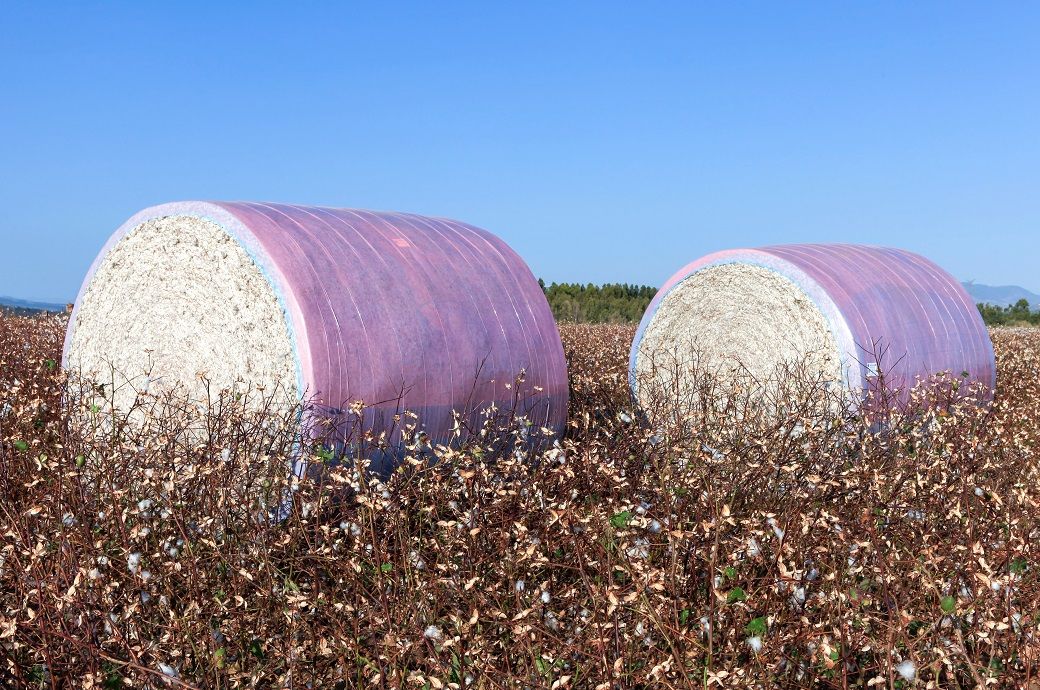
The demand was led by Vietnam (55,600 RB), Pakistan (33,300 RB), Honduras (29,700 RB), Bangladesh (20,900 RB), and India (9,800 RB), while cancellations from China, Japan, Ecuador, and Switzerland capped gains. Export sales for 2026–27 surged to 105,700 RB, driven mainly by Türkiye, China, and Guatemala.
US Upland cotton sales rebounded to 162,900 RB, led by strong demand from Vietnam, Pakistan and Honduras.
Shipments surged to 384,600 RB, signalling improved offtake from key Asian markets.
Pima sales declined week on week but remained above the four-week average, with steady exports.
Overall, demand recovery in Upland and stable Pima momentum reflect improving export fundamentals.
Export shipments of Upland cotton increased sharply to 384,600 RB, up 30 per cent week on week and 18 per cent above the four-week average. Key destinations included Vietnam (155,000 RB), Pakistan (38,500 RB), Türkiye (37,300 RB), India (34,500 RB), and Bangladesh (26,100 RB), reflecting improved offtake from major Asian buyers.
In contrast, Pima cotton sales declined from the previous week’s high. Net sales for 2025–26 fell to 21,900 RB, down 40 per cent week on week, but still 35 per cent above the four-week average. India (7,200 RB), Vietnam (4,800 RB), China (2,600 RB), and Egypt (2,200 RB) were the key buyers. New crop sales for 2026–27 reached 11,500 RB, primarily to India and Egypt.
Pima exports totalled 17,800 RB, rising significantly from both the previous week and the recent average, with shipments mainly to India, China, Pakistan, Peru, and Türkiye.
Overall, the latest data signal a rebound in Upland cotton demand and shipments after the previous week’s weakness, while Pima cotton eased from its recent peak but maintained healthy export momentum.
Fibre2Fashion News Desk (KUL)


Govt to compensate One Constitution Avenue apartment owners at price originally paid

Frasers Group acquires two major UK designer outlets

Gold price prediction today: Where are gold prices headed? Key levels to watch out for May 4, 2026 week – The Times of India

-

 Tech7 days ago
A Brain Implant for Depression Is About to Be Tested in Humans
-

 Tech1 week ago
Almost 90% of women leave tech industry within 10 years | Computer Weekly
-
 Business1 week ago
Pakistan’s oil market is fuelling the crisis | The Express Tribune
-
 Business6 days ago
‘I had £20,000 stolen and had to fight a 13-month fraud reporting rule to get it back’
-

 Sports6 days ago
Pro wrestling star Steph De Lander reveals how colleague’s advice helped lead her to title triumph at ACW
-

 Entertainment6 days ago
Norway joins Type 26 Frigate Programme to boost NATO naval power
-

 Entertainment7 days ago
Melania Trump says ABC should ‘take a stand’ on late-night host Kimmel
-

 Tech6 days ago
This Ambitious Laptop Doesn’t Leave Much Room for Your Hands