

Fashion
AI, design and trends to drive Heimtextil 2026 forward

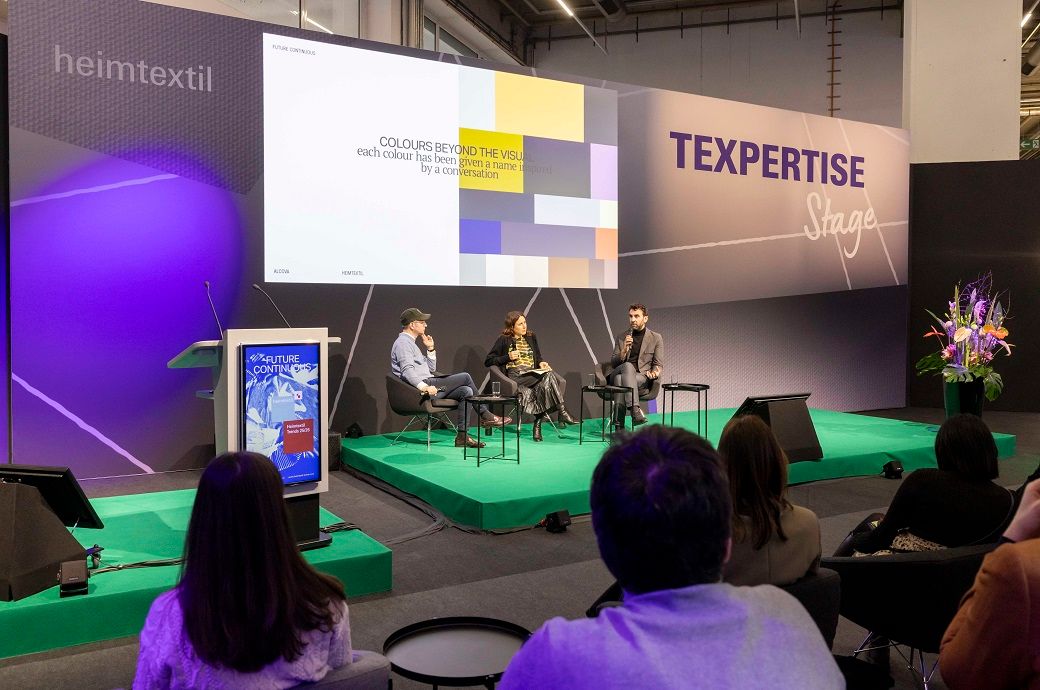
Global challenges, economic uncertainty and a strained consumer climate challenge the textile industry. At the same time, digital technologies such as AI rapidly change markets and business models. Heimtextil reflects these transformations and provides inspiration and guidance in a complex market environment. In 2026, the world’s leading trade fair will launch a new hall concept that optimally combines product groups and covers the entire spectrum of textile and non-textile interior design. “In challenging times, Heimtextil offers the industry a stability. Heimtextil translates social movements into tangible business opportunities. Together with the industry, it continuously evolves in line with market needs – in terms of content, strategy and structure. With the new hall layout, we create a business tool that increases visibility, strengthens synergies, brings supply and demand together in a targeted manner and opens up new markets. This enables strong leads, new business potential and industry exchange,” says Olaf Schmidt, Vice President Textiles and Textile Technology. The hands-on content program on the Texpertise Stage in Hall 6.0 also provides clear answers and practical tools for future business success – featuring expert insights ranging from customer engagement and differentiation to AI-driven design.
Heimtextil 2026 positions itself as a stabilising force in uncertain times, merging craftsmanship with AI innovation under the theme ‘Lead the Change’.
With 3,100 exhibitors from 65 nations, it unveils a new hall layout, trend arena, and immersive design experiences that redefine sustainability, creativity, and the future of home textiles.
Between tradition and AI: Heimtextil Trends 26/27
They are the heart and the key source of inspiration: Heimtextil Trends 26/27 reveal where the industry is heading. In 2026, the curated Trend Arena will find a new home in Hall 6.1 – surrounded by the segments Bed, Bath & Living and Textile Design. Together with the design platform Alcova Milano, a visionary hotspot emerges that showcases progressive megatrends for retail, industry and contract business. Under the motto ‘Craft is a verb’, Heimtextil Trends 26/27 connect traditional craftsmanship with AI-driven technologies. The interplay of high-tech and handcraft gives rise to new impulses – from natural influences and handmade materials to AI-generated colours.
Textile interior design of the future: ‘among-all’ by Patricia Urquiola
World-renowned architect and designer Patricia Urquiola sets new standards in textile interior design: with her immersive installation ‘among-all’ in Hall 3.0, she creates a textile
experience for all the senses, combining aesthetics, comfort, functionality and sustainability. The installation demonstrates how AI-driven design addresses individual human needs and enables innovative spatial concepts for design, retail and hospitality. ‘among-all’ highlights the emotional and visual power of textiles and invites visitors to be inspired, pause and connect.
Hotspot for holistic interior design
In Hall 3.0, Heimtextil brings together essential interior design product segments – from wallpaper and carpets to curtains, privacy screens and sun protection. The area Interior Design Concepts: Windows, Wall & Floor opens up textile and non-textile solutions for future-oriented interior design to interior designers, architects, decorators, and planners. Key players such as Forest Group, Höpke, Linder, Marburger Tapetenfabrik, Paulig, Sarlas, Tanriverdi, The Wallfashion House and York Wallcoverings will present their latest collections here. The DecoTeam and its members will once again create a creative joint presentation, complemented by the Design Lounge powered by DecoTeam. Participating brands include A.S. Création Tapeten, Brink & Campman, Haro, Kadeco, and Kobe.
Sleep & Meet: New brand area for specialist bed and mattress retailers
Together with the German Mattress Industry Association (Fachverband Matratzen-Industrie e.V.), Heimtextil strengthens the Smart Bedding segment with the new Sleep & Meet area in Hall 4.0. Here, leading brands from the mattress sector will showcase their portfolios together – including Auping Germany, Bettwaren Stendebach, Dormiente, Ergomed, EuroComfort Group with Badenia, Brinkhaus and Lück, Femira, Frankenstolz, Hüsler Nest, Rummel Matratzen and Schwarzwald Schlafsysteme. Sleep & Meet connects bedding retailers, hospitality and volume buyers with relevant companies and business contacts in an exclusive setting – supporting new product range strategies and consumer developments.
Strong offering for the international contract business
With Interior.Architecture.Hospitality, Heimtextil 2026 presents an extensive programme for architecture, interior design, hospitality and the healthcare sector. The Interior.Architecture.Hospitality LIBRARY in Hall 3.1 showcases a curated selection of functional textiles – complemented by a talk spot for professional exchange, exclusive formats and product innovations. Heimtextil brings together manufacturers, planners and decision-makers and demonstrates how textiles can open up differentiation and business potential in hospitality, healthcare, office and retail design.
Rising demand: expanded range for the carpet and flooring industry
The Carpets & Rugs segment continues to grow and will extend across four hall levels (11.0, 11.1, 12.0 and 3.0). It will be complemented by the new product group Flooring & Equipment, featuring non-textile floor coverings. Together, the two segments form the central hub for the global carpet and flooring industry on the exhibition grounds – accompanied by a tailored content programme. Buyers benefit from greater variety, new synergies and relevant business contacts.
From fibre to end product: the widest variety of decorative and upholstery fabrics
In Halls 3.1 and 4.1, Heimtextil 2026 showacses the world’s largest range of upholstery and decorative fabrics as well as European weaving mills – from high-quality decorative fabrics, upholstery and contract fabrics to genuine and imitation leather. International manufacturers such as Dickson Constant Sunbrella (France), Edmund Bell (Great Britain), Manuel Revert (Spain), Vanelli Tekstil (Turkey) and Vescom Velvets (Netherlands) will be there. The preliminary stage offer Fibres & Yarns creates additional synergies for manufacturers, weaving mills and design. Industry leaders such as Angles Textil (Spain), Indorama Ventures Fibers (Germany) and Korteks Mensucat (Turkey) round off the range along the textile value chain.
Quality meets volume: Europe’s largest stage for home textiles in every dimension
Heimtextil combines exclusive quality products with high-volume private label solutions, covering order quantities of every scale. In 2026, the Global Home (Halls 8.0, 9.1, 10.1, 10.3) and Global Home Excellence (Halls 9.0, 10.2) sections will be optimally positioned. International producers and country pavilions, including those from China, India, Pakistan, Taiwan and Vietnam, will present solutions for global demand and benefit from high visibility and short distances. International manufacturers also bring a strong private label offering in the mattress segment to Frankfurt – underlining Heimtextil’s relevance as a global sourcing platform. Through its strategic connection to Carpets & Rugs, Heimtextil connects complementary product ranges and unlocks new business opportunities for retailers, manufacturers and volume suppliers.
Heimtextil will take place from 13 to 16 January 2026.
Note: The headline, insights, and image of this press release may have been refined by the Fibre2Fashion staff; the rest of the content remains unchanged.
Fibre2Fashion News Desk (MS)










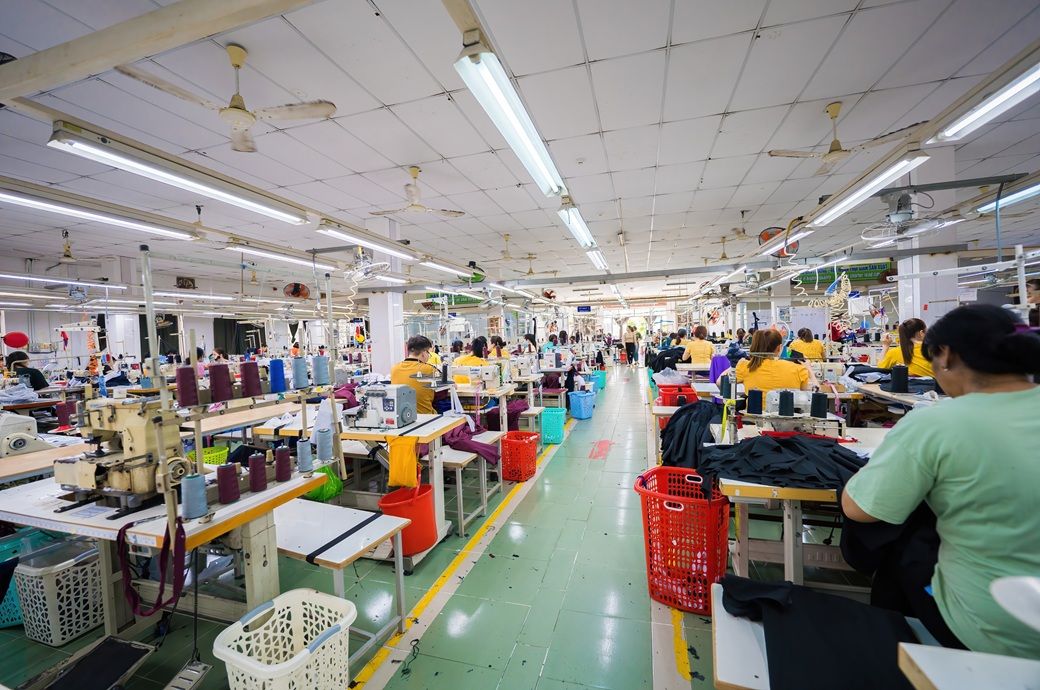
With sustainability benchmarks rising, companies are rethinking how they produce and deliver, pivoting toward greener, more circular models that reduce waste, emissions, and resource use.
The stakes are high. In 2025, Vietnam’s exports to the EU reportedly reached $56.2 billion, up 10.1 per cent year on year, underscoring how pivotal Europe is for the country’s manufacturing base.
Vietnam’s textile and footwear exporters are accelerating sustainability efforts as stricter EU regulations reshape market access requirements.
Rising compliance pressure from measures such as CBAM and ESPR is pushing manufacturers toward circular production, cleaner technologies and greater supply-chain transparency, though limited green finance remains a major challenge for smaller firms.
The EU market, nevertheless, comes with its own challenges as access to this market increasingly depends on meeting strict environmental and product-design requirements.
The EU is rolling out an ambitious sustainability agenda, including the Carbon Border Adjustment Mechanism (CBAM) and the Ecodesign for Sustainable Products Regulation (ESPR). Together, these measures are changing what global suppliers must document, design, and decarbonise.
ESPR shifts expectations toward durability, repairability, and recyclability, while pushing manufacturers to reduce products’ overall environmental footprint. Supply chains are also expected to become more transparent through Digital Product Passports, and practices such as destroying unsold goods being phased out gradually.
For Vietnam’s exporters, compliance is becoming a baseline requirement to keep EU orders and remain competitive.
Recognising this, both the Government and industry players are stepping up. Vietnam’s long-term development strategy for textiles and footwear, which stretches to 2030 with a vision toward 2035, places sustainability at its core. The plan charts a path toward efficient, environmentally responsible growth anchored in a circular economy, where materials are reused, waste is minimised, and production cycles are closed rather than linear.
Crucially, it also provides a legal backbone to help businesses align with global sustainability trends.
On the ground, change is already underway. Textile and apparel manufacturers are investing in renewable energy, upgrading machinery, and fine-tuning production processes to cut emissions and resource use. These shifts are not just about compliance; they are about future-proofing operations in a market where green credentials increasingly determine who wins contracts.
However, the transition has not been entirely seamless. A key barrier seems to be access to green finance, especially for small and medium-sized enterprises. Large firms can more readily fund clean technologies and certification, while smaller suppliers often struggle to fund the shift, risking exclusion from high-value export markets if they cannot keep pace.
There is also a growing recognition that policy support needs to go further. As Vietnam leans into a circular economy, industry voices are calling for a more cohesive and comprehensive framework, one that not only sets clear standards for circular products but also actively incentivises recycling, cleaner production, and sustainable innovation.
Without this, progress risks being uneven, with smaller firms left behind.
Momentum is, nevertheless, building as manufacturers and policymakers push for better-aligned standards and support mechanisms. The goal is to narrow the gap between sustainability ambition and day-to-day implementation across the sector.
The aim is clear: create an ecosystem where businesses of all sizes can invest in circular solutions, strengthen their export capabilities, and meet the EU’s exacting standards head-on.
Fibre2Fashion News Desk (DR)

The increase was driven primarily by higher reinvested earnings and intra-company loans, indicating continued engagement by existing investors with Bangladesh.
Reinvested earnings rose by 318.25 per cent, from $103.79 million in 2024 to $434.10 million in 2025, while intra-company loans increased by 25.68 per cent, from $621.96 million to $781.68 million.
Bangladesh’s net FDI inflows increased by 39.36 per cent last year to $1,770.42 million compared with $1,270.39 million in 2024, the Bangladesh Bank said.
The increase was driven primarily by higher reinvested earnings and intra-company loans.
Reinvested earnings rose by 318.25 per cent, from $103.79 million in 2024 to $434.10 million in 2025, while intra-company loans rose by 25.68 per cent.
Equity capital remained broadly stable, rising by 1.84 per cent, from $544.64 million to $554.64 million in 2025, a release from Bangladesh Investment Development Authority said.
Greenfield project announcements declined by 16 per cent in 2025.
Fibre2Fashion News Desk (DS)


EU green mandates and the Vietnam T&A industry

After provinces, Centre lifts austerity-driven business-hour curbs until May 31

Vietnam’s flat apparel exports hide the real trade signal

-

 Entertainment5 days ago
Conan O’Brien hat tricks as Oscar host
-

 Tech1 week ago
Could Contact-Tracing Apps Help With the Hantavirus? Not Really
-

 Fashion5 days ago
Italy’s Zegna Group’s Q1 growth boosted by strong organic performance
-

 Sports1 week ago
Bobby Cox, legendary Atlanta Braves manager who led 1995 World Series champions, dead at 84
-

 Entertainment1 week ago
Martin Short: Facing tragedy with joy
-

 Entertainment1 week ago
Tom Brady gets back at Kevin Hart during Netflix roast
-

 Entertainment1 week ago
Martha Stewart: How to make an omelet
-

 Sports1 week ago
Jacob Fatu unleashes vicious assault on Roman Reigns after World Heavyweight Championship loss at WWE Backlash