

Politics
Afghanistan’s water crisis goes regional

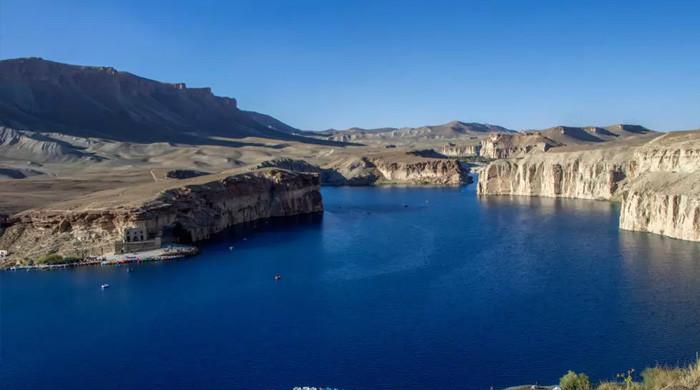
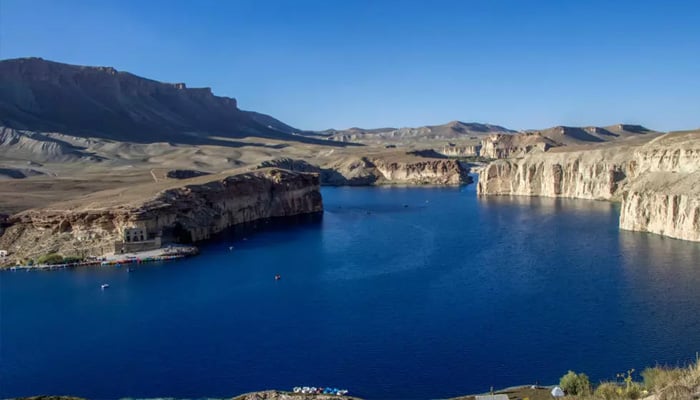
Over four decades of war, Afghanistan wielded limited control over five major river basins that flow across its borders into downstream neighbouring nations.
But as Taliban authorities swept to power and tightened their grip on the country, they have pushed for Afghanistan’s water sovereignty, launching infrastructure projects to harness precious resources in the arid territory.
Dams and canals have sparked tensions with neighbouring states, testing the Taliban government’s efforts to build strong regional ties, as they remain largely isolated on the global stage since their 2021 takeover.
At the same time, the region is facing the shared impacts of climate change intensifying water scarcity, as temperatures rise and precipitation patterns shift, threatening glaciers and snowpack that feed the country’s rivers.
Here are key points about Afghanistan’s transboundary water challenges:
Central Asian states to the north
Afghanistan is emerging as a new player in often fraught negotiations on the use of the Amu Darya, one of two key rivers crucial for crops in water-stressed Central Asia, where water sharing relies on fragile accords since Soviet times.
Central Asian states have expressed concern over the Qosh Tepa mega canal project that could divert up to 21% of the Amu Darya’s total flow to irrigate 560,000 hectares of land across Afghanistan’s arid north, and further deplete the Aral Sea.
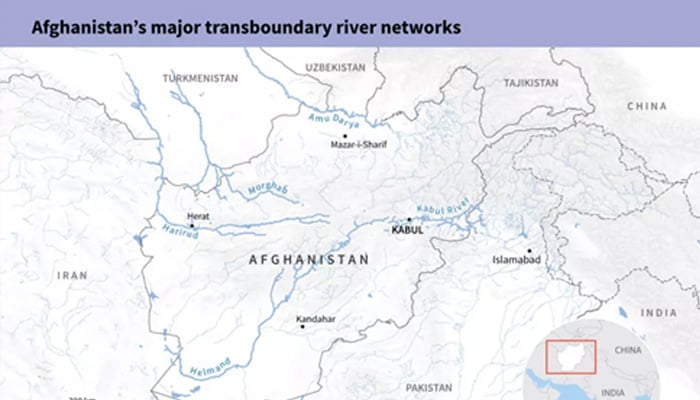
Uzbekistan and Turkmenistan are likely to face the biggest impact, both joined by Kazakhstan in voicing alarm, even as they deepen diplomatic ties with the Taliban authorities — officially recognised so far by only Russia.
“No matter how friendly the tone is now,” water governance expert Mohd Faizee warned, “at some point there will be consequences for Uzbekistan and Turkmenistan when the canal starts operating”.
Taliban officials have denied that the project will have a major impact on the Amu Darya’s water levels and pledged it will improve food security in a country heavily dependent on climate-vulnerable agriculture and facing one of the world’s worst humanitarian crises.
“There is an abundance of water, especially when the Amu Darya floods and glacial meltwater flows into it” in the warmer months, said project manager Sayed Zabihullah Miri, during a visit to the canal works in Faryab province, where diggers carved into a drought-ridden plain dotted with camels and locusts.
Iran to the west
Iran is the only country with which Afghanistan has a formal water sharing treaty, agreed in 1973 over the Helmand river, which traverses Taliban heartland territory, but the accord was never fully implemented.
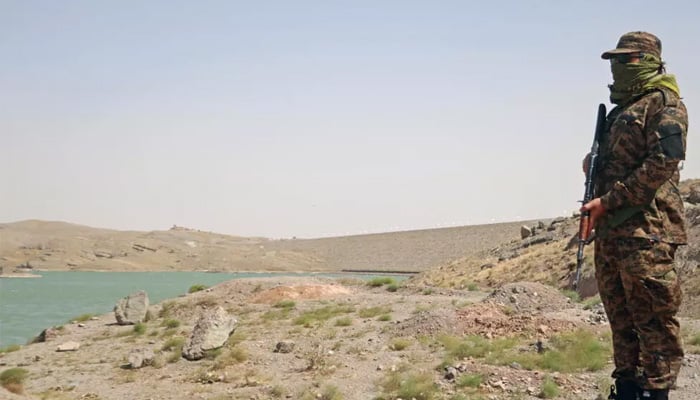
Longstanding tensions over the river’s resources have spiked over dams in southern Afghanistan, particularly in periods of drought, which are likely to increase as climate shocks hit the region’s water cycle.
Iran, facing pressure in its parched southeastern region, has repeatedly demanded that Afghanistan respect its rights, charging that upstream dams restrict the Helmand’s flow into a border lake.
The Taliban authorities insist there is not enough water to release more to Iran, blaming the impact of climate pressures on the whole region.
They also argue long-term poor water management has meant Afghanistan has not gotten its full share, according to an Afghanistan Analysts Network report by water resources management expert Assem Mayar.
Iran and Afghanistan have no formal agreement over their other shared river basin, the Harirud, which also flows into Turkmenistan and is often combined into a single basin with the Morghab river.
While infrastructure exists on the Afghan portions of the basin, some has not been fully utilised, Faizee said.
But that could change, he added, as the end of conflict in Afghanistan means infrastructure works don’t incur vast security costs on top of construction budgets, lifting a barrier to development of projects such as the Pashdan dam inaugurated in August on the Harirud.
Pakistan to the east
Water resources have not topped the agenda in consistently fraught relations between Afghanistan and Pakistan.
Afghanistan’s Kabul river basin, which encompasses tributaries to the greater Indus basin and feeds the capital and largest city, is shared with Pakistan.
The countries, however, have no formal cooperation mechanism.
With the Afghan capital wracked by a severe water crisis, the Taliban authorities have sought to revitalise old projects and start new ones to tackle the problem, risking fresh tensions with Pakistan.
But the lack of funds and technical capacity means the Taliban authorities’ large water infrastructure projects across the country could take many years to come to fruition — time that could be good for diplomacy, but bad for ordinary Afghans.
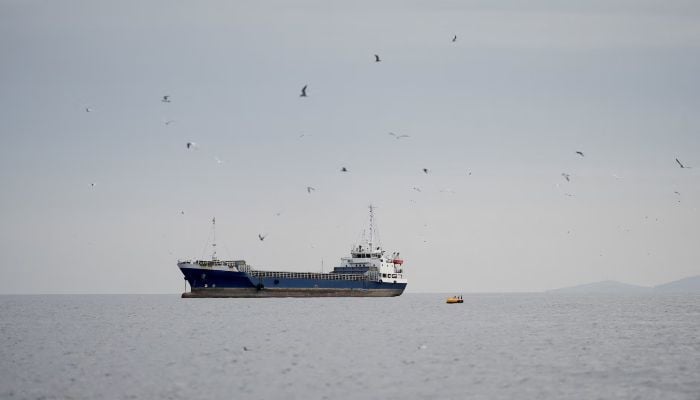
ATHENS: Fraudulent messages promising safe passage through the Strait of Hormuz in exchange for cryptocurrency have been sent to some shipping companies whose vessels are stranded west of the waterway, Greek maritime risk management firm MARISKS has warned.
The US has maintained its blockade of Iranian ports, while Iran has lifted and then re-imposed its blockade of the Strait of Hormuz, through which roughly a fifth of the world’s oil and liquefied natural gas passed before war broke out in the Middle East.
Amid ceasefire talks, Tehran, which controls the chokepoint, has proposed tolls on vessels to safely transit.
MARISKS on Monday issued an alert warning shipowners that unknown actors, claiming to represent Iranian authorities, had sent some shipping companies a message demanding transit fees in cryptocurrencies, Bitcoin or Tether, for “clearance”.
“These specific messages are a scam,” the firm said, adding the message was not sent by Iranian authorities.
There was no immediate comment from Tehran.
Hundreds of ships and about 20,000 seafarers remain stranded in the Gulf.
On April 18, when Iran briefly opened the strait subject to checks, ships tried to pass but at least two of them, including a tanker, reported that Iranian boats had fired shots at them, forcing the vessels to turn around.
MARISKS said that it believed that at least one of the vessels, which tried to exit the strait on Saturday and was hit by gunfire, was a victim of the fraud.
Reuters was not able to verify the information or track companies that had received the message.
“After providing the documents and assessing your eligibility by the Iranian Security Services, we will be able to determine the fee to be paid in cryptocurrency (BTC or USDT). Only then will your vessel be able to transit the strait unimpeded at the pre-agreed time,” said the message cited by MARISKS.
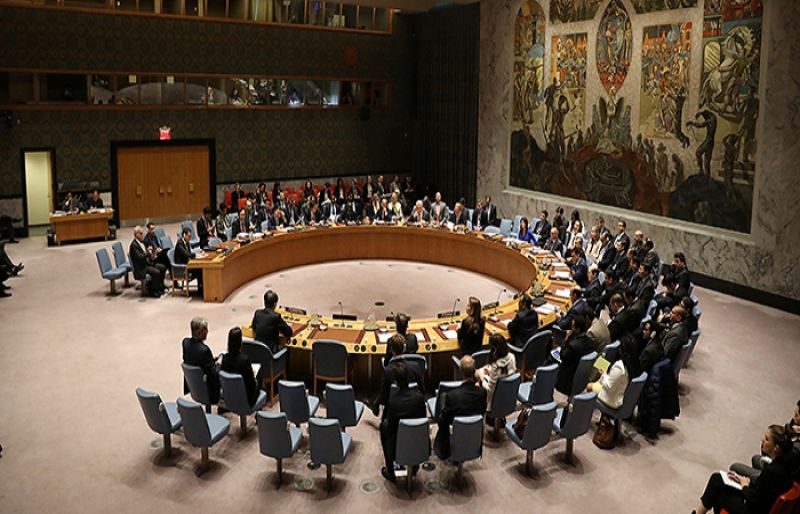
The UN Security Council on Monday condemned the recent killing of a French peacekeeper in Lebanon, whose death France has blamed on Hezbollah.
The Frenchman was killed and three others wounded when their unit was ambushed on Saturday as it headed to a UN Interim Force in Lebanon (UNIFIL) outpost cut off from the fighting between Hezbollah and Israel.
“The members of the Security Council condemned in the strongest terms the attack…(and) reaffirmed their full support for UNIFIL” a statement from the UN body said.
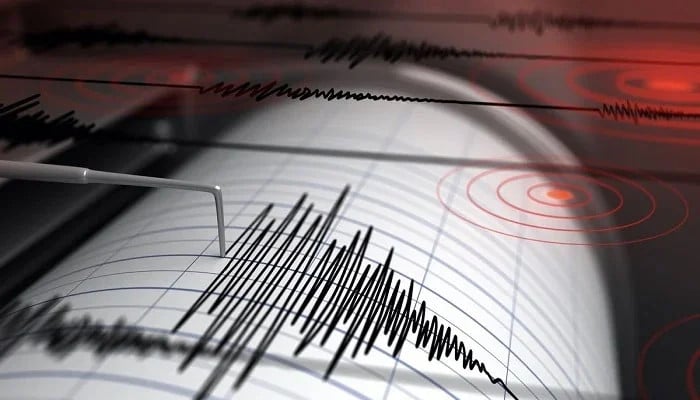
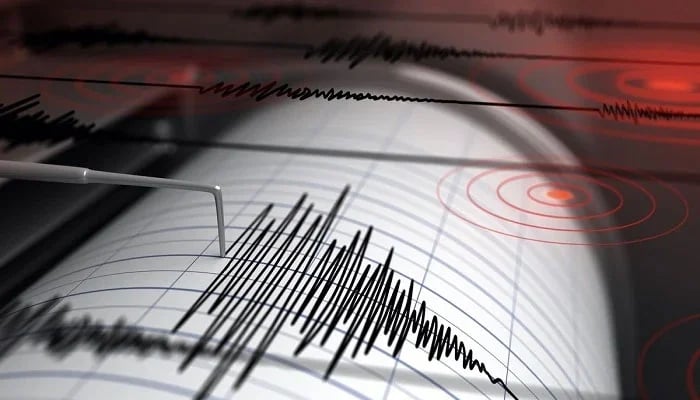
TOKYO: At least six people were reported injured on Tuesday, a day after a powerful quake rattled northern Japan, but there appeared to be no major damage from the tremor that also triggered tsunami waves up to 80 centimetres (31 inches).
However, the Japan Meteorological Agency (JMA) also warned of an increased risk of a megaquake — a tremor with a magnitude of 8.0 or stronger — hours after Monday’s 7.7 magnitude quake in Pacific waters off northern Iwate prefecture.
The jolt was so intense that it shook large buildings in the capital Tokyo, hundreds of kilometres from the epicentre.
Six people were reported injured by 8am (2300 GMT Monday), two seriously, the Fire and Disaster Management Agency (FDMA) said in a statement.
There were no reported fire outbreaks or damage to important facilities, it said.
Japan issued a warning for tsunami waves of up to three metres (10 feet) but it was lifted hours after an 80-centimetre (31-inch) wave hit a port in Kuji in Iwate, one among a series of small waves that hit elsewhere in northern Japan.
The JMA said that “the likelihood of a new, huge earthquake occurring is relatively higher than during normal times”.
Municipalities in the affected region issued non-compulsory evacuation directives to more than 182,000 residents, the FDMA said.
Japan is one of the world’s most seismically active countries, sitting on top of four major tectonic plates along the western edge of the Pacific “Ring of Fire”.
The archipelago, home to around 125 million people, typically experiences around 1,500 jolts every year and accounts for about 18 percent of the world´s earthquakes.
The vast majority are mild, although the damage they cause varies according to their location and the depth below the Earth´s surface at which they strike.
Japan is haunted by the memory of a massive 9.0 magnitude undersea quake in 2011, which triggered a tsunami that killed or left missing around 18,500 people and caused a devastating meltdown at the Fukushima nuclear plant.


Spike in petrol thefts after Iran war pushed up fuel prices

War-linked energy shock pushing inflation higher in Europe: IMF expert

Scam messages offering ships safe transit through Hormuz, warns security firm

-

 Fashion5 days ago
France’s LVMH Q1 revenue falls 6%, shows resilience amid Iran war
-

 Sports1 week ago
The case for Man United’s Fernandes as Premier League’s best
-

 Entertainment1 week ago
Palace left in shock as Prince William cancels grand ceremony
-
 Business1 week ago
UK could adopt EU single market rules under new legislation
-

 Entertainment6 days ago
Is Claude down? Here’s why users are seeing errors
-

 Fashion1 week ago
Energy emerges as biggest cost driver in textile margins
-
 Business1 week ago
Delta Air Lines unveils first new Delta One suite in premium cabin arms race
-

 Tech1 week ago
A Lot of Shops Won’t Fix Electric Bikes. Here’s Why