

Tech
Coats Digital launches AI-powered GSDQuest for garment costing


GSDQuest leverages advanced artificial intelligence to analyse product images and automatically identify garment design and construction elements. Using Coats Digital’s proprietary QED Library, it instantly generates a standardised Bill of Labour, removing the need for time-consuming manual input. This breakthrough accelerates costing from hours to mere seconds while delivering unprecedented accuracy and consistency.
Coats Digital has launched GSDQuest, an AI-powered tool that transforms garment costing by generating a standardised Bill of Labour in seconds from product images.
Built on the proven GSDCost methodology, it leverages AI and the QED Library for accurate SMV analysis, enabling fair benchmarking, faster decisions, and smarter, more sustainable supply chain collaboration.
Crucially, GSDQuest is designed to be accessible and user-friendly for all professionals — not just certified GSD practitioners. For the first time, anyone in the supply chain can benefit from the power of GSDCost’s award-winning, scientifically grounded SMV garment analysis, instantly and effortlessly.
Building on the proven scientific methodology of GSDCost, which uses internationally recognised standard motion codes and Standard Minute Values (SMVs), GSDQuest ensures that all costing outputs are grounded in robust, data-driven time-motion science. This scientific foundation supports fair and transparent benchmarking across brands and manufacturers, enabling more precise cost prediction, fact-based negotiation, and sustainable supply chain collaboration.
Jonathan McCormack, Senior Engineering Director, Coats Digital, said: “GSDQuest represents a significant leap forward for the apparel industry. By combining AI-powered image analysis with our trusted QED Library, we are automating the complex and traditionally manual process of garment costing with advanced next-gen technology. And for the first time, this power is in the hands of any user, regardless of technical background. GSDQuest can be applied at any stage of the product lifecycle — from initial design through to production approvals — and is built with multi-modal AI that can make presumptive analyses from both visible and hidden design information. It works across images, PDFs, tech packs and more — and can analyse multiple garments at once. This not only drastically reduces lead times but also enhances accuracy and standardisation, empowering brands and manufacturers to respond effectively to increasingly volatile market conditions.”
Traditional costing often requires technical and costing teams to spend hours analysing design features and building operation-level estimates using internal libraries. GSDQuest eliminates these repetitive tasks and transforms costing into a strategic, intelligent process.
Key features of GSDQuest include:
- Automatic recognition of garment features from multiple product images
- Integration with the QED Library for construction method mapping
- Instant generation of standardised Bill of Labour
- Detection of hidden design elements for comprehensive costing
- Scalability across product categories and vendor networks
- Upcoming API integration for seamless workflow embedding
Kunal Kapur, Managing Director, Coats Digital, said: “The fashion industry is at a tipping point. Legacy processes can no longer keep pace with the speed, complexity and cost pressures brands and manufacturers face. GSDQuest represents a game-changing shift — replacing guesswork and manual effort with intelligent automation, scientific consistency and real-time accuracy. It’s part of our mission to harness AI to solve fashion’s biggest challenges — helping our customers work faster, more fairly, and more sustainably. The result is better decisions, stronger partnerships, and a smarter supply chain for all.”
As well as manufacturers, GSDQuest is designed for use by brands, costing teams, technical and sourcing professionals, to support early costing, sample evaluation, and final approvals. Its seamless integration into tech pack creation and design workflows is expected to significantly enhance global supply chain efficiency and collaboration.
GSDCost is the global standard for establishing accurate, sustainable garment manufacturing methods and Standard Minute Values (SMVs). Grounded in time-motion science, it provides a robust, data-driven foundation for precise cost benchmarking and fair wage practices. GSDCost enables manufacturers to define operations using internationally accepted motion codes, ensuring consistency, transparency, and compliance across complex supply chains.
Note: The headline, insights, and image of this press release may have been refined by the Fibre2Fashion staff; the rest of the content remains unchanged.
Fibre2Fashion News Desk (HU)







 "EPFO, India Post Launch FREE Doorstep Digital Life Certificate For EPS Pensioners — How To Book Home Visit")
 "Indias Private Equity Market Rebounds 44% In Q4 2025: Report")
The war with Iran and ensuing blockade in the Strait of Hormuz, a critical shipping lane, has spiked oil prices and sent governments scrabbling for their reserves. How high will prices go, and how bad could it get?
On Friday night, United Airlines CEO Scott Kirby published a memo to his employees showing that his very fuel-dependent business is prepping for a very long fallout. “Our plans assume oil goes to $175/barrel and doesn’t get back down to $100/barrel until the end of 2027,” he wrote.
Jet fuel accounts for between a quarter and a third of airlines’ operating costs. Prices have doubled from $70 a barrel since the war started four weeks ago, threatening to seriously cut into airlines’ profitability. Kirby said that his airline has a strategy: United will cut some 5 percent of its planned flight schedule during the second and third quarters of this year, with trims coming especially in off-peak periods like red-eyes and less popular travel days: Tuesdays, Wednesdays, and Saturdays.
“Honestly, I think there’s a good chance it won’t be that bad,” Kirby wrote in the memo, “but … there isn’t much downside for us to prepare for that outcome.”
United’s moves are significant for not only the travel industry but the wider global economy, analysts say. If it all plays out the way Kirby predicts, “this would be incredibly unwelcome news to everyone who is not in the oil refining business,” says Jason Miller, a professor of supply chain management at Michigan State University’s Eli Broad College of Business.
Airlines might be a particularly notable canary in the economic coal mine because their business leans even more heavily on oil prices, and especially refined oil prices, than most. Air transportation ranks just below asphalt paving as the US industry that spends the greatest share of its non-labor costs on refined petroleum products, Miller has calculated. Kirby’s predictions, while dire, are in line with what others in the commodity market are predicting, Miller says.
“Economically, this energy shock is hitting at the worst time possible,” Miller says. Add its effects to a sluggish job market and a global economy shaken by the US’s erratic tariff regime, and economists start to think about recession. The Iran war and the ensuing energy crisis “have played out longer than many expected it to,” Miller says. Kirby’s memo is an acknowledgment that “Hormuz may not be open for business very quickly.”
The effects of the fuel price spikes are already affecting the travel industry. Last week, American Airlines CEO Robert Isom said the company had spent an additional $400 million on fuel. Airlines have reported strong demand in the past weeks, with United’s Kirby noting in his memo that the past 10 weeks had seen the airline take in the most revenue on bookings ever. But it remains to be seen whether lots of people are actually enthusiastic about travel, or flyers spooked about geopolitics and fears of high ticket prices moved early to lock in their plans before oil costs got higher. Isom noted that, if oil prices remain high, “we’re certainly going to be nimble in terms of capacity, to make sure that supply and demand stay in balance.”
How bad it could get for airlines—and its passengers—depends not just on how long oil prices stay elevated, but how long the businesses’ questions about the crisis remain unanswered.
“If we stay in this uncertainty for a long time, this is adding to the complexity,” says Ahmed Abdelghany, who studies airline operations as a professor in Embry-Riddle Aeronautical University’s College of Business. “The longer it goes, the more problematic to the airlines that remain.”
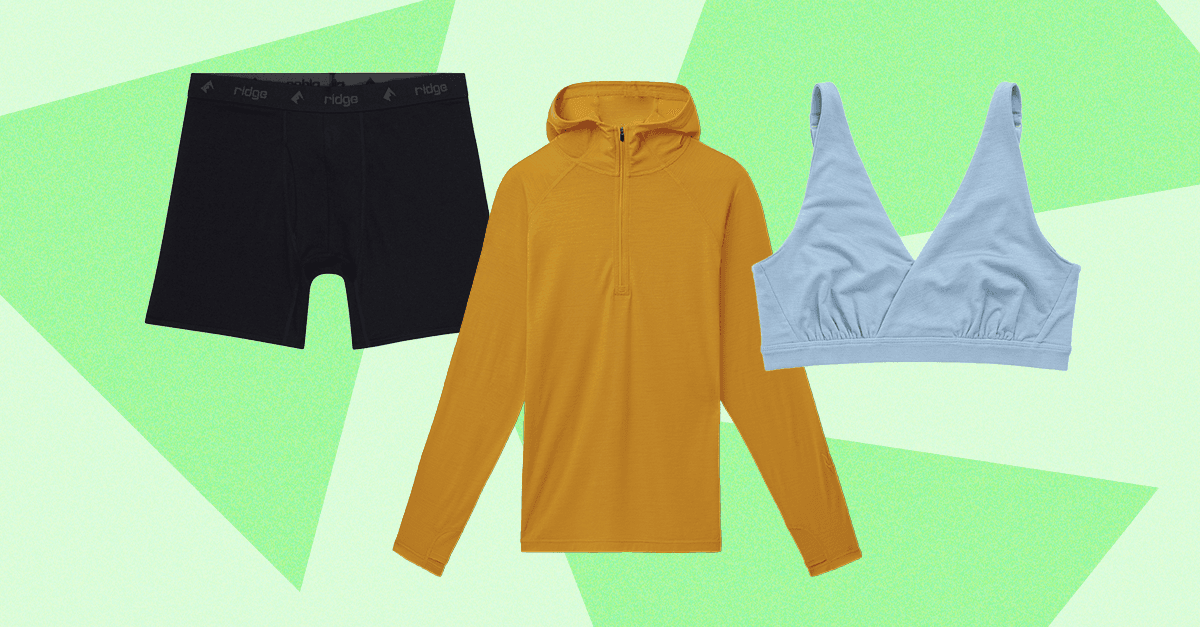
Merino wool is a super fiber. The best merino wool clothing somehow manages to be comfortable in 95-degree heat, and merino base layers keep you warm well below freezing. Unlike synthetic fibers derived from petroleum, merino wool is natural and renewable.
Merino wool’s versatility means there’s a bewildering array of blends and options to choose from. Here are our favorite merino wool products that we’ve tested by wearing and washing (usually in cold water, and hung to dry, although we do machine dry them just to see what happens) over the course of months and even years in some cases. Once you’re done here, don’t forget to check out the rest of our apparel guides, like the Best Merino Wool T-Shirts, Best Base Layers, Best Puffer Jackets, Best Hoodies, and Best Hiking Boots.
Updated April 2026: We’ve changed out top pick boxers to Wool & Prince, added more hoodies, and the Ibex women’s Goat short sleeve. We also updated prices and links throughout.
Table of Contents
Why Is Merino Wool So Great?
Merino wool is great because you’re stealing a sheep’s ability to keep itself warm or cool based on the temperatures it’s in, a process often referred to as thermoregulation. If you’ve only ever worn the sort of itchy wool sweaters your proverbial grandmother supposedly made, you might wonder what all the fuss is. The answer is that Merino sheep have thinner, softer wool, which has evolved to keep them comfortable across a wide range of temperatures and is comfortable to wear next to your skin. Wool is sustainable, too.
One sheep can produce 4 to 5 pounds of wool per year. That’s because the sheep that make merino wool drink only the purest alpine waters and study the art of comfort under the tutelage of those stuck-up Pashmina goats, who, let’s face it, might know a thing or two about wonderfully pillowy softness. Just kidding. Merino sheep do have that softer wool though, and merino wool is a remarkable fabric that’s become the cornerstone of my wardrobe.
Merino wool comes in different weights, which you will frequently see listed as “200 gsm” or something similar. (The “gsm” refers to grams per square meter, sometimes listed as g/m.) What’s important is the scale and where your garment falls on it. At the low end, you have T-shirts and underwear, which are typically 150 gsm, though we have seen some as low as 120 gsm. Generally, anything below 200 gsm will be a good base layer or T-shirt. From 200 to 300 gsm are your mid-layers, and anything above 300 is a heavier garment.
If you’re more familiar with synthetic ratings like those often used on fleece, know that, in my experience, about 120–160 gsm wool corresponds to 100-weight fleece, 160–200 gsm wool roughly matches 200-weight fleece and 200+ wool is like 300-weight fleece. In every instance, the wool is warmer because it’s better at trapping heat, especially in the wind. (That said, there are reasons to go with fleece at times, like how incredibly lightweight it can be.)
Nuyarn is a merino wool/synthetic hybrid weave, wherein merino wool is wrapped around a nylon core for warmth, lightness, and extra durability. The idea is to get the temperature regulation benefits of merino, but to add some of the longevity of nylon. In my experience, Nuyarn mostly works. It’s our top pick for base layers, though I find it less necessary in more casual garments, where I prefer 100 percent wool.
How to Care for Merino Wool
Most merino products will have care instructions. Most likely it will be to wash cold and lay flat to dry. The latter is important, as hanging wool to dry will stretch it out (because of the water weight). While most merino labels say the garment can be machine washed, my experience has been that hand-washing merino will extend its life. This is particularly true of very lightweight (150 gsm) merino base layers and T-shirts. The exception is Minus33’s Microweight Raglan short sleeve T-shirt, which is machine-washable and dryer-friendly. Having done both to mine for over a year, I can vouch that it does indeed hold up.
I’ve never had a problem storing merino in my closet between wears, but for long-term storage, I recommend you take precautions against moths, which are notorious for eating holes in wool. I have lost merino garments to moths.
If you don’t want to smell like mothballs, there are better solutions. I make sure to wash and thoroughly dry whatever I am storing, then I seal it in a compression bag, like this. Another option is to put your merino garment in a cotton bag or otherwise wrap it in cotton and then put it in a plastic bin. It’s very important to make sure that the garment is completely dry before using any of these storage methods, otherwise your wool will smell musty and moldy. Other options include storing your garment in a cedar chest, which is a good natural deterrent for moths, or use moth traps or lavender sachets, which will repel the moths.
100 Percent Merino vs. Blends
Should you buy 100 percent merino or should you go for a blend? The answer is … it depends. On the garment in question, the use case, and your preferences. Probably the best way to find out is to try several and see what you like. One advantage to blends is that they’re stretchy, which makes them better for active pursuits like hiking, rock climbing, and the like. I like 100 percent merino for heavier mid-layers like hoodies or jackets, but I prefer blends for lighter layers. My experience has been that the closer I get to my skin, the more blend I want, with Nuyarn being my top pick for base layers.
There are also some alpaca blends out there that are also wonderfully soft (I love everything I’ve tried from Paka and Arms of Andes). If you’re one of the rare people who do find merino itchy, you might be allergic to lanolin, which is the skin oil produced by sheep. Alpacas don’t make lanolin, and the fibers are thinner and finer than merino. That makes alpaca warmer and softer, but it’s also more expensive.
Merino vs. Synthetic Fibers
Which is better? The answer again is … it depends (sorry). But usually merino. By synthetics, I generally mean polyester, nylon, polypropylene, rayon, or blends of these and other fabrics—everything but cotton, wool, and linen.
Synthetics generally win for wicking away sweat, which means they tend to feel drier. They also tend to dry faster, so when it comes to things like socks and underwear, even most “merino” options are often more than 50 percent synthetic. Synthetics are just better at handling moisture. How much this matters depends on a host of personal factors. For example, I feel weird and almost clammy in anything synthetic, so I don’t really care how much moisture it wicks away.
The downside to that moisture wicking is that synthetics retain odor. There are some chemical treatments that can help, but I’ve never tried anything synthetic that was as odor-resistant as merino wool.
Another difference is breathability. Synthetics are passable in this department, but it’s where merino really excels. If you’re hot and are hiking up an exposed slope toward an open pass and then dropping down into the cool of a forest, merino is your friend, because the breathability means less sweat to cool you when you get out of the sun. Again, how much this matters depends on your body.
The final factor worth thinking about is durability. In some cases, synthetics will last longer than pure merino, particularly in scenarios where abrasion is a major source of wear. To my mind, this is just another reason to choose a merino blend rather than going all the way to synthetics, but it’s something to think about if you do a lot of off-trail hiking or rock climbing—any activity where your clothes are going to take a beating.
Base Layers
To really see how remarkable merino wool is, start at the bottom, with the clothes next to your skin. Merino really shines as a base layer. It’s warmer for the weight, wicks moisture well, and unlike synthetic fabrics, merino stays stink-free for days of wear. Be sure to read our layering guide for more on how to put it all together and stay comfortable in any weather. We also have a separate guide to the best base layers if you want know all your options, but here are our top merino picks from that guide.
Best Lightweight Base Layer
The Ibex Woolies Pro Tech base layer crew is the best lightweight merino base layer we’ve tested. If you want a hard-wearing shirt, this it it. Woolies are Nuyarn (see above), which is 85 percent merino wool and 15 percent nylon—the merino wool is wrapped around a nylon core, which increases the warmth while being lighter (5 oz for the men’s large) and more durable. This is my top pick for all things technical. It’s what I bring hiking, backpacking, and it’s reviews editor Adrienne So’s pick for running, climbing and other high-aerobic activities when it’s cold. I also love the Woolies Pro Tech Bottoms ($115), which are what I bring backpacking in all but the warmest of weather. There’s also a quarter zip version of the shirt if you prefer.
Aside from comfort and warmth, a bit part of the reason we recommend Woolies is that they last. Ibex is what passes for a heritage company in this space; the company was founded in 1997 and has been cranking out merino garment for a long time. Adrienne’s parents bought her two sets of Ibex base layers in 2001 that she still wears today, in the year of our Lord 2025. Properly cared for, Woolies will keep you comfortable warm for years to come.
Best Heavyweight Base Layer

SmartWool
Merino Classic Long-Sleeve
When I want something a bit warmer than the lightweight Woolies above, I reach for Smartwool’s Classic long sleeve base layer. These may be the most popular merino shirts around, and for good reason: They’re very comfortable, tending to the looser side, feature heavy duty seams that don’t rub, and sit off the shoulder for more comfort when wearing a pack. At 87 percent merino wool (blended with nylon), these are also very durable while remaining lightweight (10.3 oz for a men’s large). This Smartwool shirt, along with the matching pants ($125), are great for chilly winter days.
-SOURCE-Unbound.jpg)
Courtesy of Unbound Merino
Unbound Merino
Long-Sleeve Merino Crew
The picks above all have what my wife calls “that sporty look,” which the industry refers to as “technical.” This 100 percent merino shirt from Unbound is the opposite: it just looks like a long sleeve shirt. It’s incredibly soft and while it does pill a bit if you run it through the dryer (don’t), it’s proved itself plenty durable—I’ve been wearing it constantly for over a year now and it still looks like it did when I got it. It’s the long-sleeve, base layer twin to our favorite T-shirt (see below). It’s on the thin side for a base layer, which makes it perfect for those cool weather mornings in the shoulder seasons. It’s versatile too; it can be used as a base layer, but it also works as a T-shirt when it’s not too chilly. Fit runs true to size, and if the one you want is sold out, be patient; Unbound frequently updates its stock.
There are so many! Here’s a few more to consider, but really, go read the base layer guide.

Turtle Fur
Merino Pipe Dream Neck Gaiter
Don’t forget your neck. I live in this Turtle Fur gaiter during the winter and I also use the lighter, superfine version for hiking at elevation in the summer to keep the sun off my neck without resorting to sunscreen. It’s wonderfully soft, not overly tight, and never smells.
Merino Mid Layers
Fleece has its place, but I rarely wear it these days. I prefer merino for my mid layers. It’s better at helping your body regulate its temperature. The one place fleece still wins for me is backpacking. It’s almost always lighter for comparable warmth, at least in mid layers.
-Offwhite-Background-SOURCE-Ibex.jpg)
Like the Northern Lights or the McRib, the thickest Ibex wool hoodie appears irregularly and with some fanfare. The Mammoth Hoodie is indeed a big, furry beast of a garment—it’s basically the weight of the classic American Giant hoodie but made of 85 percent wool cut with 15 percent nylon for added warmth and stretch. Ibex says it’s the warmest hoodie they’ve ever made, and in my week of testing, I’ve used it in place of a jacket in mid-30s temps. It has an athletic cut with zippered pockets and thumb holes. I do wear a stocking hat with it in the cold because the scuba hood is meant to fit under a helmet which means it’s too small to provide enough warmth for my large shaved head on its own. —Martin Cizmar

When you have multiple keyboards installed, you can manage them on iOS by opening Settings, then choosing General > Keyboard > Keyboards. To swap between keyboards you’ve installed, tap and hold the globe icon that appears in the lower left corner of all your keyboards.
On Android, you can find your keyboards via System > Keyboard > On-screen keyboard from Settings. To switch between them, tap and hold on the globe icon that appears in the lower right corner whenever a keyboard is on the screen.
The Best Phone Keyboards to Try
Gboard (Android, iOS) is a good option to start with here. It’s preinstalled by default on Pixel phones, but it’s also an excellent keyboard pick for iPhones and Android phones not made by Google. It’s fast and clean, works really well for GIFs, emoji, and stickers, and supports glide typing (where you swipe over letters to form words rather than tapping on each individual letter).
Then there’s SwiftKey (Android, iOS), which is developed by Microsoft. As you might expect, there’s Copilot AI integration built right in, so if you’re stuck for something to say, you can use generative AI to do your writing for you. SwiftKey will also learn your writing style as you go, meaning autocorrections and suggestions get more accurate over time.
Typewise (Android, iOS) demonstrates how third-party keyboards can be a little out of the ordinary. It offers an unusual layout that makes use of hexagonal letter and character tiles, and which Typewise says can seriously speed up your typing speed. There’s also support for multiple languages, AI integrations, and custom gestures.
You may be familiar with Grammarly from the web and the desktop (and from the recent news about its missteps), but the grammar and spell checker service is also available as a keyboard on iOS and as a keyboard extension on Android. As well as checking on your writing, Grammarly puts AI front and center: You can get writing suggestions from a prompt, for example, or change the tone of an existing message with a couple of taps.
If you’re interested in customization options above everything else, then consider Mister Keyboard for iOS. It’s stacked with ways to tweak the look and layout of your iPhone’s keyboard, and to access features like emoji and the clipboard. Either pick one of the preset themes, or take pixel-by-pixel control over the keyboard.
Mister Keyboard isn’t available for Android, but there is theming support in Futo Keyboard for Android. It also includes smart autocorrect and text editing tools, and prides itself on its privacy. The keyboard app doesn’t ask for permission to connect to the internet, so you know that your keystrokes aren’t being sent anywhere.


MAC entices staff to transform into TikTok live shopping hosts

Oil prices surge after Trump issues Iran ultimatum

Tom Holland supports Zendaya for ‘The Drama’ before premiere

Tips and Advice for Buying Used or Refurbished Electronics

UAE savings strategies 2026 explained: Best apps, tools, budget rules and smart money hacks to beat rising cost of living in emirates – The Times of India

Iran threatens US-linked oil facilities after Kharg Island bombed

-
 Tech1 week ago
Tips and Advice for Buying Used or Refurbished Electronics
-
Business1 week ago
UAE savings strategies 2026 explained: Best apps, tools, budget rules and smart money hacks to beat rising cost of living in emirates – The Times of India
-
 Politics1 week ago
Iran threatens US-linked oil facilities after Kharg Island bombed
-

 Fashion1 week ago
US court to review de minimis ban on imports from China & Hong Kong
-

 Entertainment1 week ago
Strategic oil stocks to be released ‘immediately’ in Asia and Oceania: IEA
-

 Entertainment1 week ago
Iran at war
-

 Sports1 week ago
Japan suffers shocking collapse to Venezuela in World Baseball Classic
-

 Politics1 week ago
How can US get out of Iran war?