

Politics
How can US get out of Iran war?

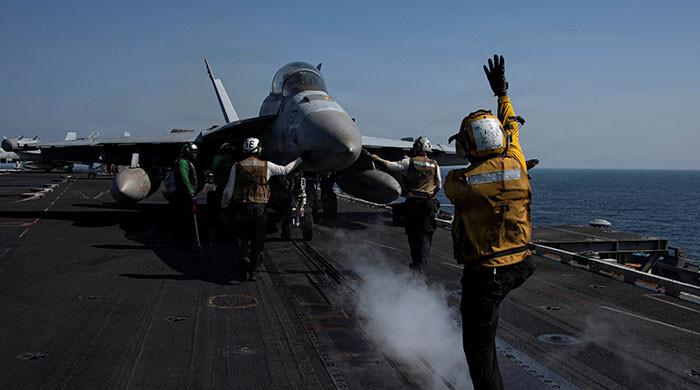
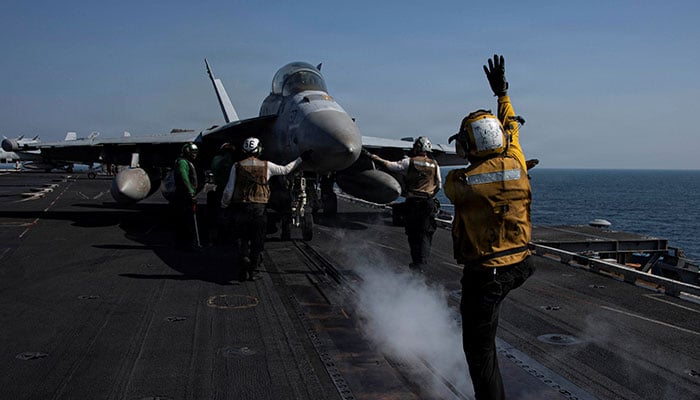
PARIS: US-Israeli strikes killed Iran’s supreme leader but have not toppled the government, which now, from its perch on the Strait of Hormuz, has put the entire world economy on the war’s frontlines.
The initial US victory in martyring supreme leader Ali Khamenei has given way to a conflict that Washington cannot completely control, sharply limiting President Donald Trump’s options.
Two weeks into a bloody air war, Iran holds many cards as it chokes the world’s oil supply and strikes US allies in the Middle East, including Gulf states who had for years staked their reputations on political and economic stability.
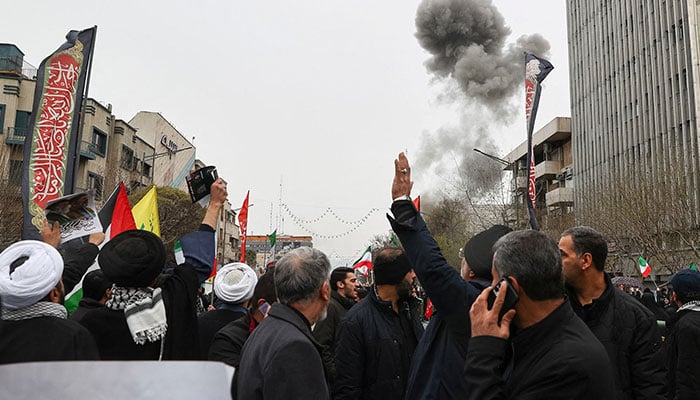
It makes for a drastic turn from the early hours of February 28, when the first clouds of black smoke rose over Tehran.
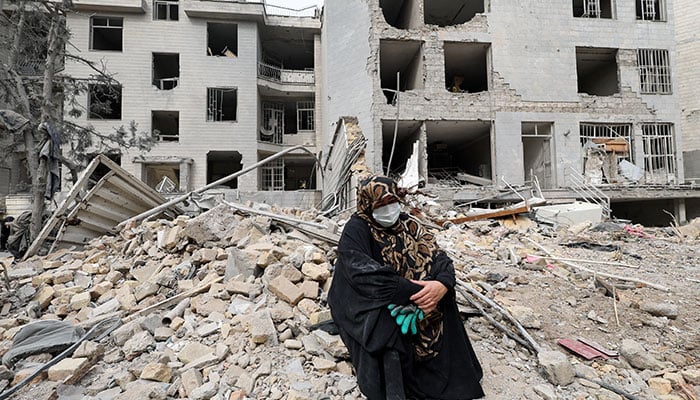
Amid the smouldering ruins of a housing complex in the Iranian capital were Khamenei and dozens of top-ranking officials, martyred in strikes that took years of espionage and planning.
The government had been decapitated.
And yet — such strategies have “never been effective” in state-versus-state warfare, writes American professor Robert Pape in his book “Bombing to Win”, a study of military air campaigns. And Iran itself is no stranger to history.
“We’ve had two decades to study defeats of the US military to our immediate east and west,” Iran’s foreign minister, Abbas Araghchi, said recently. “We’ve incorporated lessons accordingly.”
The government quickly put in place a new supreme leader, while its decentralised “mosaic defence” allowed the military to retaliate without losing much of a step.
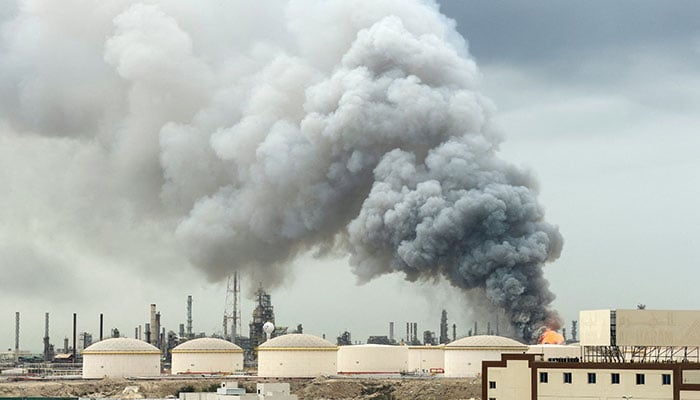
The military doctrine was developed in 2005, after the United States toppled the governments of Iraq and Afghanistan, said French researcher Elie Tenenbaum, of the French Institute of International Relations (IFRI).
It was meant to help a decentralised military command evade a debilitating loss of top leadership, and “the regime seems pretty intact, despite the fact that it has lost some very senior leaders,” said Ali Vaez, Iran project director at International Crisis Group.
That allows Tehran to roll out a “three-part strategy,” Vaez said: “First, ensure survival. Second, keep enough retaliatory capacity to be able to stay in the fight. And then third was to prolong the conflict” so that “you can end it on your terms.”
All of which spells trouble for Trump as the war draws in US allies and drives up the cost of living at home and abroad.
Global fallout
With its missiles and a vast supply of relatively cheap drones, Iran has struck a marina in Dubai and oil tankers at sea, expanding the war to US allies in the Gulf, Turkey, Cyprus, and elsewhere.
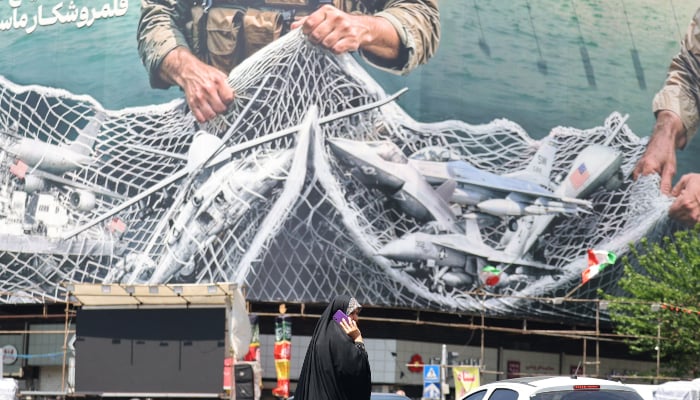
Meanwhile, in Lebanon, the Iran-backed armed group Hezbollah is trading missile fire with Israel, and Iranian forces have all but closed the Strait of Hormuz, a vital artery that normally hosts a fifth of the world’s crude oil traffic.
Oil and petrol prices have spiked or sparked rationing in countries from the United States to Bangladesh to Nigeria.
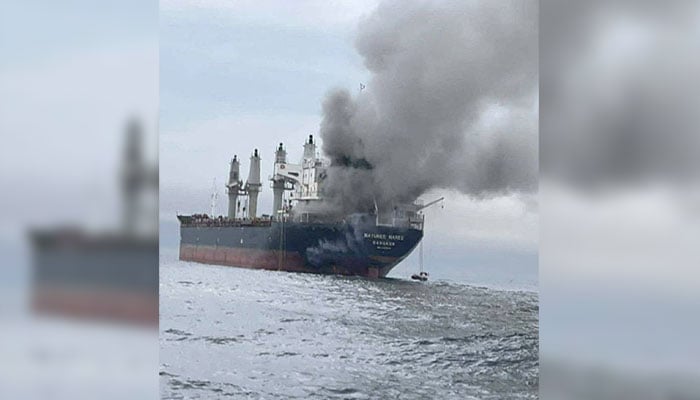
Air traffic has slowed and foreigners are fleeing the Gulf, whose image of business-friendly stability has taken a huge hit.
Oil importing countries around the world have released some 400 million barrels of strategic fuel reserves, though it has hardly eased the pain.
In Kenya, tea sellers are watching stocks pile up unsold as maritime trade lines come under pressure and shipping insurance spikes.
Bangladesh has rationed fuel and deployed the military to ward off unrest.
“We knew that this will open up a Pandora’s box of chaos,” said the Gulf International Forum’s Aziz Alghashian, a Saudi analyst.
He also said there was “anger” among Gulf states that had put “so much investment in” diplomacy with Iran.
False confidence?
The worldwide fallout has sparked questions over Washington’s strategy.
Trump has called for Iran’s “unconditional surrender,” while Defence Secretary Pete Hegseth has said the operation’s goals are “laser focused,” as the administration dodges questions over the war’s ill-defined, shifting objectives.
“There is a stark difference between the operational superiority that we have over Iran — we know where everyone [is] and where we can hit them — and the strategic understanding of Iran,” said Danny Citrinowicz, a senior fellow at Israel’s Institute for National Security Studies.
Jonathan Paquin, a political science professor at Canada’s Universite Laval, told AFP: “The American administration was undoubtedly presumptuous in believing it held all the cards.”
There were reasons Washington could find a way to assure itself of such confidence, Paquin noted: a US operation toppled the Venezuelan government of Nicolas Maduro at the beginning of the year.
The government in Iran, meanwhile, has been struggling through US sanctions, and was shaken by major demonstrations in December and January, sparking a security crackdown that killed thousands.
US elections
Yet in the short term, Tehran still has plenty of pressure points it can hit via oil and shipping threats, including via Yemen’s Houthi rebels, who previously disrupted shipping through the Red Sea with their own missile attacks.
Iran is taking “the global economy hostage” as a means of “putting pressure on Trump,” said Crisis Group’s Vaez.
All the while, Iranian missiles launched at US allies are eating up American interceptors, including expensive Patriot and THAAD systems.
And domestically, Trump — who ordered the surprise strikes without seeking public support for a war —is facing upcoming congressional elections.
As price-sensitive voters prepare to head to the polls, “certainly Republican representatives and senators calling the White House to say they risk losing their districts,” said Paquin, the political science professor.
Not that Iran, facing its own political, military and economic upheaval from the war, is without its own long-term difficulties.
“I think the most likely scenario is that of a zombie state,” said IFRI researcher Clement Therme — a government that maintains its security apparatus but struggles to fulfil functions such as revenue collection or oil exportation.
“They are already struggling to pay public salaries this month,” he noted.
The popular uprising called for by Trump to replace the government amid the bombardment seems a far way off — though Therme noted “it’s still too early to judge” the effects of the war on potential protests down the line.
No exit?
With no easy exit, Trump is likely to “revise the concept of victory, setting aside the prospect of surrender or regime change” and claiming that the Iranians should rise up on their own, said Paquin.
But while Trump might want to walk away boasting of martyring Khamenei and degrading the Iranian military, “Iran might not give him that off-ramp,” said Nate Swanson, of the Atlantic Council.
The remaining options seem increasingly bloody.
Iran could keep up the hostilities even after the United States lays down its arms.
Or, Trump “doubles down. We put some form of troops on the ground,” whether for special operations or long-term fighting.
The last possibility, worried Swanson, is that the war is “outsourced into an ethnic conflict” by Washington and Israel arming Iranian opposition groups.
For now, the missiles continue to rain down, inside Iran and increasingly further afield.

- Tehran doesn’t want return to war, says judiciary chief.
- Mohseni Ejei says, “we certainly do not accept imposition.”
- Trump under increasing domestic pressure over Iran war.
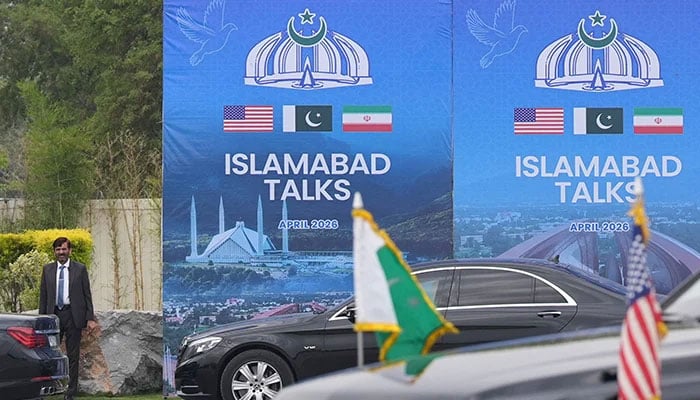
Iran delivered a new proposal for peace talks with the US via mediator Pakistan, state media reported on Friday, with negotiations between the two sides frozen despite a weeks-long ceasefire.
The text of the proposal was handed to Islamabad on Thursday evening, the IRNA news agency reported.
The war, launched by the United States and Israel with a vast wave of surprise strikes on February 28 has been on hold since April 8, but only one failed round of direct talks has taken place between Iranian and US representatives.
In the meantime, Iran has maintained its stranglehold on the Strait of Hormuz, cutting off vast amounts of oil, gas and fertiliser from the world economy, while the United States has imposed a counterblockade on Iranian ports.
The Wall Street Journal reported on Thursday that US President Donald Trump had told security officials to prepare for the blockade to last months, causing oil prices to spike.
Despite the failure to negotiate an end to the war, the ceasefire has held. On Friday, judiciary chief Gholamhossein Mohseni Ejei, a senior figure and well-respected cleric, said “the Islamic Republic has never shied away from negotiations”.
But in yet another sign that finding a compromise may prove difficult, Ejei said “we certainly do not accept imposition”, in a video shared by the judiciary’s Mizan Online website.
Tehran, though, does not want a return to war, he said.
“We do not welcome war in any way; we do not want war, we do not want its continuation.”
The lack of fighting has not assuaged markets, with oil prices still more than 50% above their prewar levels as traders confront a prolonged closure of Hormuz, while the European Central Bank held interest rates amid fears of soaring inflation.
War powers debate
Washington, meanwhile, was gripped by a legalistic debate over whether Trump had passed a deadline for requesting congressional approval for his war with Iran.
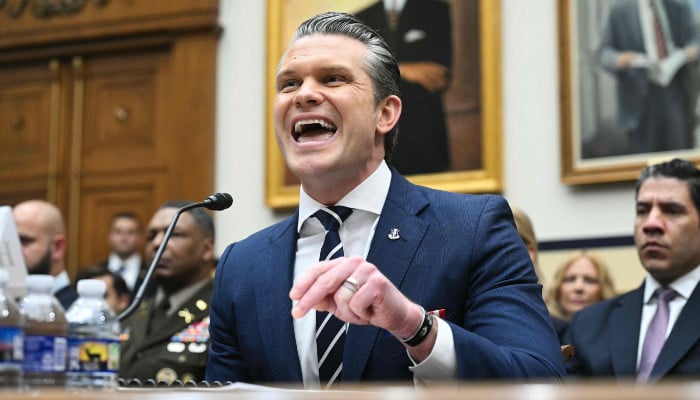
Administration officials, including defence secretary Pete Hegseth, insisted that the ceasefire meant that the clock was paused on a 60-day deadline requiring the president to seek war powers authorisation from Congress.
“For War Powers Resolution purposes, the hostilities that began on Saturday, February 28 have terminated,” a senior administration official told AFP late on Thursday.
Trump is under increasing domestic pressure over the war, with no clear victory in sight, inflation spiking due to the conflict and midterm elections due in November.
On Thursday, US government data showed slower than expected growth and inflation hit 3.5%.
In Iran, meanwhile, the economic consequences of the war, which come on top of years of fierce international sanctions, were beginning to bite.
On Thursday, the US military said its blockade had stopped Iran from exporting $6 billion worth of oil, while inflation, already above 45% before the war, reached 53.7% in recent weeks, according to the national statistics centre.
“For many people, paying rent and even buying food has become difficult, and some have nothing left at all,” 28-year-old Mahyar told an AFP reporter based outside Iran, saying the company he worked for had laid off 34 people – nearly 40% of its staff.
Hormuz missions
Trump has repeatedly lashed out at Washington’s international allies for failing to join efforts to reopen the Strait of Hormuz.
France and Britain have led efforts to bring together an international coalition of dozens of countries that would help reopen the strait, but only once peace is secured.
But on Thursday, a US official confirmed to AFP that Washington was launching its own international coalition to restart shipping, dubbed “the Maritime Freedom Construct”.
That prompted French Foreign Minister Jean-Noel Barrot to insist that the two missions would complement and not compete with each other.
The US mission is “not of the same nature as the one we established… it comes as a sort of complement”, Barrot said on a visit to the Gulf.
- White House sees war powers clock as halted.
- No US-Iran fire reported since early April ceasefire.
- Democrats dispute truce effect on legal deadline.
WASHINGTON: A US-Iran ceasefire that began in early April has “terminated” hostilities between the two sides for the purposes of an approaching congressional war powers deadline, a senior official of President Donald Trump’s administration said on Thursday.
Trump faced a deadline on Friday to end the Iran war or make the case to Congress for extending it, but the date was most likely to pass without altering the course of the war.
“For War Powers Resolution purposes, the hostilities that began on Saturday, February 28, have terminated,” said the official, describing the administration’s thinking.
There has been no exchange of fire between the US armed forces and Iran since a fragile ceasefire began more than three weeks ago, the official added.
Earlier, analysts and congressional aides had said they expected Trump to notify Congress that he planned a 30-day extension or to disregard the deadline, with the administration arguing the ceasefire marked an end to the conflict.
The 1973 law allows the president 60 days to wage military action before ending it, seeking authorisation from Congress or asking for a 30-day extension on grounds of “unavoidable military necessity” for the safety of the armed forces.
The Iran war began with airstrikes launched by Israel and the United States on February 28. Trump formally notified Congress of the conflict 48 hours later, triggering a 60-day deadline of May 1.
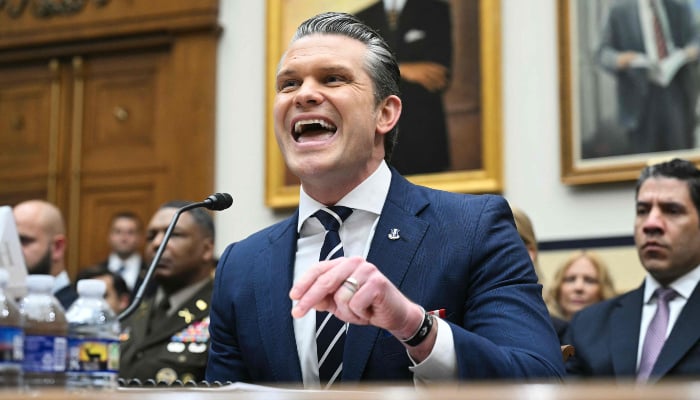
Defence Secretary Pete Hegseth told a Senate hearing on Thursday he understood that the 60-day clock stopped during the truce. Opposition Democrats disputed that, saying there was no such legal provision.
The US Constitution says only Congress, not the president, can declare war, but the curb does not apply for operations the administration casts as short-term or countering an immediate threat.
Trump’s Republican Party holds a narrow majority in both chambers of Congress. Democrats have tried since the war began to pass resolutions to force Trump to withdraw US forces or obtain congressional authorisation.
Republicans have voted them down.
Iran responded to the February 28 attacks by the US and Israel with its own strikes on Israel and Gulf states that host American bases. US-Israeli strikes on Iran and Israeli attacks in Lebanon have killed thousands and displaced millions.
SYDNEY: An angry crowd clashed with Australian police outside a hospital treating the suspected killer of a five-year-old Indigenous girl in the outback town of Alice Springs.
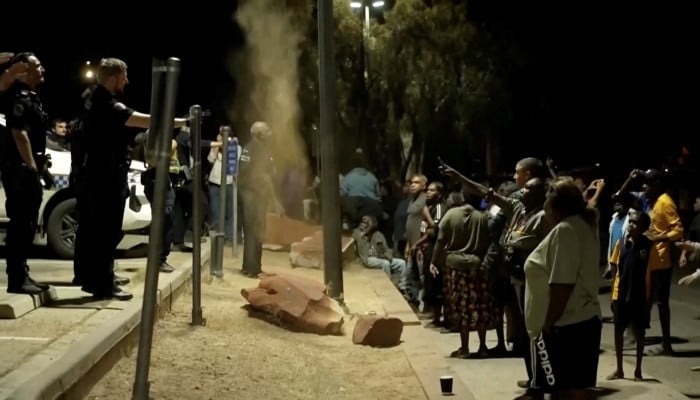
Images on local media Friday showed teargas in the air, a police van in flames, and crowds yelling at armed officers keeping people at bay during the overnight confrontation.
The violence followed the discovery Thursday of a body south of Alice Springs believed to be that of the little girl, referred to at her family’s request as Kumanjayi Little Baby.
She had disappeared from an Indigenous community camp called Old Timers late on Saturday night, sparking a vast, days-long search on foot, horseback, and by helicopter that gripped much of the country.
Police said a formal autopsy would be held on the child’s body, which was found about five kilometres (three miles) from the camp.
Hours after her body was found, police announced they had arrested the suspect, Jefferson Lewis.
‘He was unconscious’
Lewis was beaten until he was unconscious after turning himself in to Indigenous community members on Thursday evening at a camp by Alice Springs, in central Australia.
When police and emergency services intervened, they too came under attack, said Northern Territory Police Force Commissioner Martin Dole.
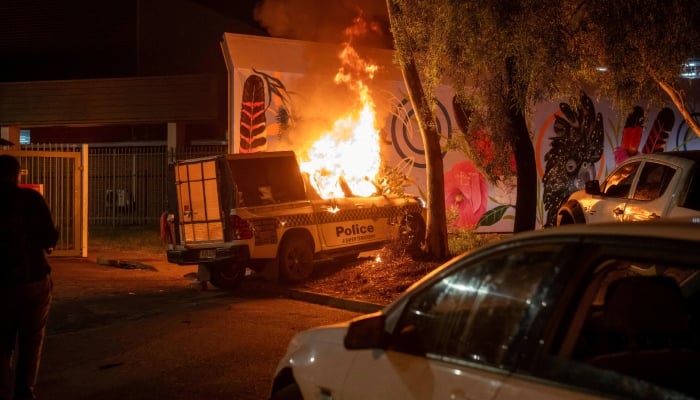
“At the time of his apprehension by us, he was unconscious and he was in the process of being treated by St John’s Ambulance when they were set upon, as were the police,” he told a news conference.
Lewis was then taken to hospital.
“A large crowd gathered and tried to gain access to that hospital,” the police commissioner said.
“We called out all the resources we had available to quell that violent disturbance. And just let me say that the behaviour that we saw last night cannot be explained away, excused or accepted.”
Dole said “a number” of police were injured at the hospital, and one officer was treated for a head wound inflicted during the suspect´s arrest.
Ambulance and fire crew members were also attacked, he said, with one fire and rescue officer receiving a “significant facial injury”.
‘Sorry business’
One woman was being investigated for allegedly trying to set a police car alight.
Many people outside the hospital shouted that Lewis must face “payback”, public broadcaster ABC reported, referring to a traditional punishment in central Australian Indigenous communities.
“I just call for calm across the community,” Dole said.
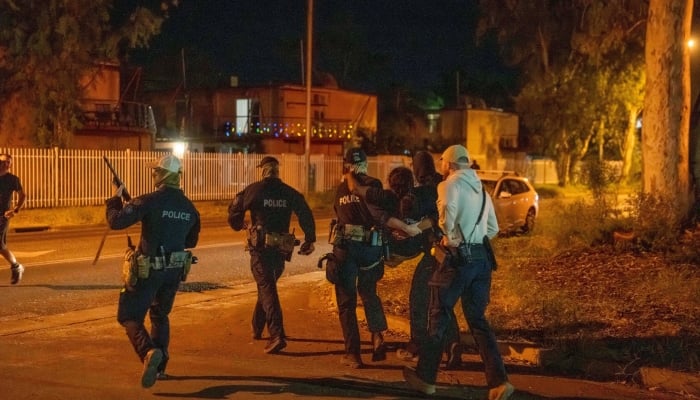
Police said they removed Lewis for his safety from the hospital to the Northern Territory capital of Darwin, where he was being held in custody.
He is expected to face charges in the coming days.
Northern Territory Chief Minister Lia Finocchiaro said the girl’s death was the realisation of “our worst nightmares”.
But it was no excuse for violence, she said, recalling how the community had united to search for the missing child.
“This week, we’ve seen this town come together like never before — hundreds of people walking shoulder to shoulder through the long buffel grass, through the bush, to make sure we left no stone unturned,” Finocchiaro said.
“I don’t want last night to take away from that extraordinary effort.”
Robin Granites, a spokesman for the family and an elder of the Warlpiri Indigenous group, called for calm in the community.
“It is time now for sorry business, to show respect for our family and have space for grieving and remembering,” he said in a statement.
“We need to be strong for each other, we must respect family and cultural practice.”


Turkiye’s apparel exports slip 7.2% in Q1 on soft demand

What petrol, diesel drivers must know now

AAFA marks 50th American Image Awards with future focus

-
 Business1 week ago
Gold prices in Pakistan Today – April 23, 2026 | The Express Tribune
-

 Fashion1 week ago
Canada forms new advisory committee to strengthen US trade relations
-

 Entertainment1 week ago
Mike Vrabel to miss Patriots’ final NFL draft day —here’s why
-
 Business1 week ago
Oil surges past 4% as Iran keeps Hormuz locked – SUCH TV
-

 Tech1 week ago
5 AI Models Tried to Scam Me. Some of Them Were Scary Good
-
 Business1 week ago
France Ends Airport Transit Visa Requirement for Indian Travellers | Business – The Times of India
-

 Tech4 days ago
A Brain Implant for Depression Is About to Be Tested in Humans
-

 Fashion1 week ago
India’s T&A exports fall 14% in March, FY26 down 2.21%