

Politics
Melissa kills at least 30 as this year’s most powerful hurricane batters Caribbean

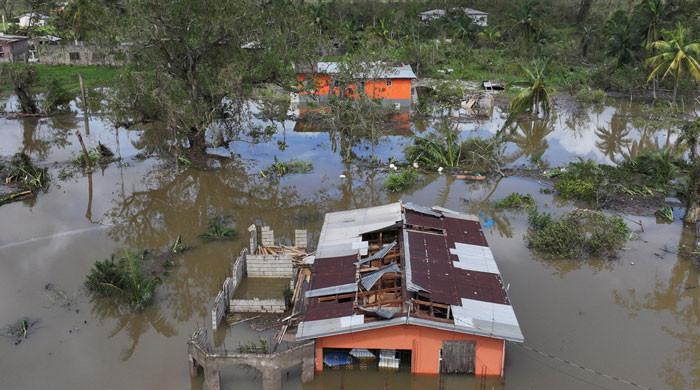
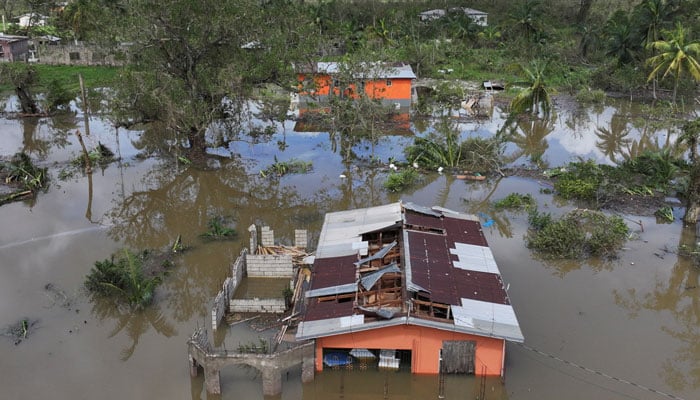
- Melissa strikes Jamaica as strongest-ever hurricane.
- Hurricane batters Jamaica with sustained winds of 185 mph.
- 10 children among 25 deaths reported in Haiti alone.
HAVANA/KINGSTON: Hurricane Melissa barreled through the Caribbean on Wednesday after thrashing Cuba’s second-biggest city, isolating hundreds of rural communities, unleashing devastation in Jamaica and drenching Haiti, where at least 25 were killed.
Melissa struck Jamaica on Tuesday as the strongest-ever hurricane to directly hit its shores, with sustained winds of 185 mph (298 kph), well above the minimum strength for a Category 5, the strongest classification for hurricanes.
As of 2100 GMT on Wednesday, Melissa was a Category 1 hurricane moving north-east through the Bahamas archipelago, which completed the air evacuation of nearly 1,500 people early.
The storm did not directly hit Haiti, the Caribbean’s most populous nation, but it hurled days of rain over the island nation. Authorities reported at least 25 deaths, largely due to floods in Petit-Goave, a coastal town 64 km (40 miles) west of the capital where a river burst its banks.
At least 10 children were killed there and 12 people remain missing there, Haiti’s disaster management agency said.
In Haiti, where a gang conflict has displaced over 1.3 million people, authorities said more than 1,000 homes were flooded. People living in makeshift camps said the flooding made it impossible to sit or sleep, and said the government and aid groups were slow to bring supplies.
Fortune Vital, a displaced man in Les Cayes, said he was separated from his family which already lacked sufficient food. “If the hurricane comes on top of all the problems we already have, we’ll simply die,” he said.
‘Like missiles blowing through the glass’
On Tuesday, Melissa made landfall in southwestern Jamaica, devastating areas already battered by last year’s Hurricane Beryl. US forecaster AccuWeather estimated Melissa cost $22 billion in damages and economic loss in Jamaica alone, and that rebuilding could take a decade or more.
Local authorities said flood waters had washed up four bodies in the southwestern agricultural hub of St. Elizabeth. About 77% of Jamaica was without electricity, authorities said on Wednesday morning. The capital Kingston was spared the worst damage and its main airport was set to reopen Thursday.
Prime Minister Andrew Holness visited Black River Hospital, the only public hospital in St. Elizabeth, where aerial footage showed the wrecks of buildings, roofs blown off, power cables knocked down and fields strewn with rubble.
Hospital workers there said the building showed some significant damage, and staff told the prime minister they spent the night fearing for their own families while working by flashlight to care for patients.
“It was the most terrifying experience in all my life,” a hospital worker said. “It is beyond imagining. At one point it was as if missiles were blowing through the glass.”
Jamaica’s government gave an “all clear” to begin recovery efforts, but said it would keep emergency shelters open through the week as people kept coming in from devastated homes.
Local government minister Desmond McKenzie said over 25,000 people had been admitted. “No one must be turned back from the shelters,” he said.
Mass evacuations in Cuba
Melissa was a still major Category 3 when it hit Cubaovernight with winds of 120 mph, landing in Guama, a rural, mountainous area some 25 miles (40 km) west of Santiago de Cuba, the island’s second-most populous city.
At least 241 communities remained isolated and without communications on Wednesday following the storm’s passage across Santiago province, according to preliminary media reports, affecting as many as 140,000 residents.
Across eastern Cuba, authorities evacuated around 735,000 people as the storm approached. Most remained in emergency centers.
No deaths were reported on Wednesday but President Miguel Diaz-Canel said the island had suffered extensive damage and warned of vigilance as rains continue to lash the region.
“A major hurricane landfall in the dark is incredibly dangerous,” AccuWeather lead hurricane expert Alex DaSilva said.
“The storm lost wind intensity as it interacted with the mountains of southeast Cuba, but the forced upward motion of the air over the mountainous terrain is squeezing out tremendous amounts of rainfall.”
Cuban officials also warned of severe impact on crops ahead of the Northern Hemisphere’s winter growing season.
Cuba was already suffering from food, fuel, electricity and medicine shortages that have complicated life, prompting record-breaking emigration since 2021.
On Wednesday, the UN General Assembly again voted overwhelmingly for the US to end its Cold War-era economic embargo on the communist-run country.
Loss and damage
Meteorologists at AccuWeather said Melissa ranked as the third-most intense hurricane observed in the Caribbean, after Wilma in 2005 and Gilbert in 1988 – the last major storm to directly hit Jamaica.
But scientists say hurricanes are intensifying faster with greater frequency as a result of warming ocean waters caused by greenhouse gas emissions. Many Caribbean leaders have called on wealthy, heavy-polluting nations to provide reparations in the form of aid or debt relief to tropical island countries.
The Caribbean Community Climate Change Centre, a branch of regional bloc CARICOM, issued a statement in solidarity of those affected by Hurricane Melissa and called for stronger efforts to curb climate change.
It said Melissa’s rapid intensification, fueled by record-breaking Caribbean sea temperatures, underscored need for the U.N.’s “loss and damage” fund to be scaled up.
The fund was established in 2023 as a mechanism for developing nations to quickly and reliably access financing to recover from more frequent extreme weather events. However, donations from wealthy, polluting nations have fallen short of targets and the US withdrew from its board in March.
The devastation caused by Melissa drew an outpouring of support from across the world, with some countries pledging support in the form of cash, food aid and rescue teams.
In Montego Bay, a popular Jamaican tourist destination, a resident told Reuters the water reached her waist and rescuers had to break into her home to save her and her child.
“All the trees that my dad planted, all of them are gone,” she said.
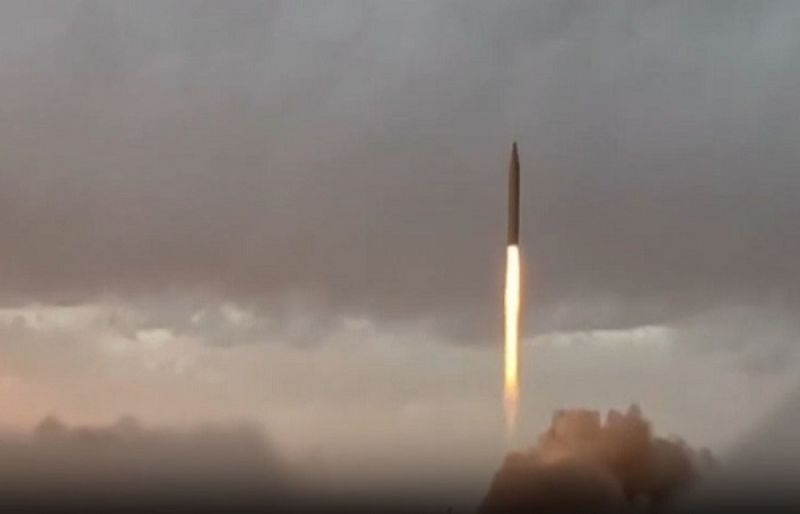
Iran has fully prepared for the possible resumption of war as the ceasefire deadline approaches, with new surprises ready for any new round of imposed war, the Tasnim News Agency reported on Tuesday, citing informed sources.
According to the report, the US naval blockade announcements and Washington’s excessive demands have prevented the formation of new negotiations as the agreed ceasefire period nears its end.
“Iran is fully prepared for the possibility of a new war and has prepared new surprises for a potential new round of combat,” the report said.
The sources told Tasnim that over the past two weeks, Iran has taken the possibility of renewed war seriously.
“Accordingly, some military movements and new target lists have been prepared for this purpose,” the report added.
Iran is ready to create “another hell” for Americans and Israelis from the very beginning of any potential new war, the sources said.
The United States and Israel launched their unprovoked, illegal war of aggression against Iran on February 28, assassinating the Leader of the Islamic Revolution, Ayatollah Seyyed Ali Khamenei, and striking nuclear facilities, schools, hospitals and bridges, along other civilian sites.
Iran’s armed forces responded with 100 waves of decisive retaliatory strikes under Operation True Promise 4, launching hundreds of ballistic and hypersonic missiles, as well as drones, against American military bases across West Asia and Israeli positions throughout the occupied territories.
A two-week ceasefire, brokered by Pakistan, took effect following the intense 40-day war. However, tensions have remained high.
The United States has declared plans for a naval blockade of Iranian ports, a move Tehran has condemned as provocative and a violation of the ceasefire.
Iranian officials have repeatedly warned that any US attempt to impose a blockade or conduct mine-sweeping operations in the Strait of Hormuz will be met with a decisive military response.
Iranian Foreign Minister Abbas Araghchi has previously accused Washington of bad faith, citing repeated US violations of the ceasefire, threats against Iranian shores and vessels, and continuous contradictions in American statements.
Tehran has made it clear that while it remains committed to diplomacy, it will not accept diktats or conditions imposed by the United States.
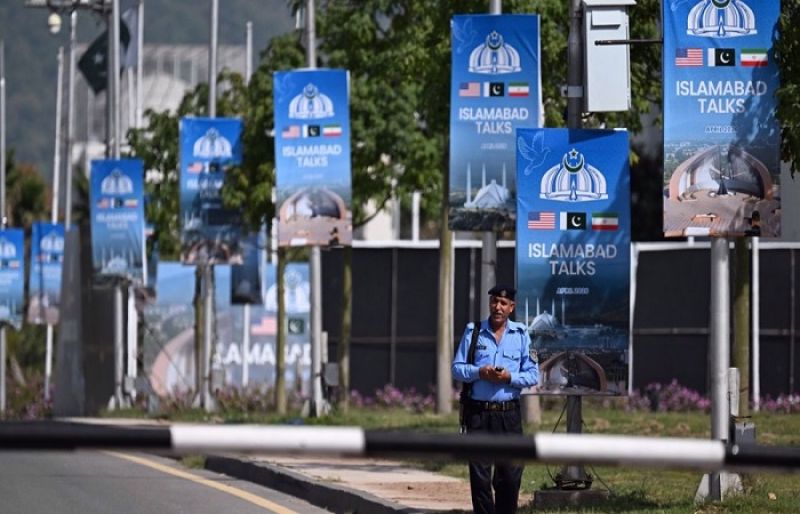
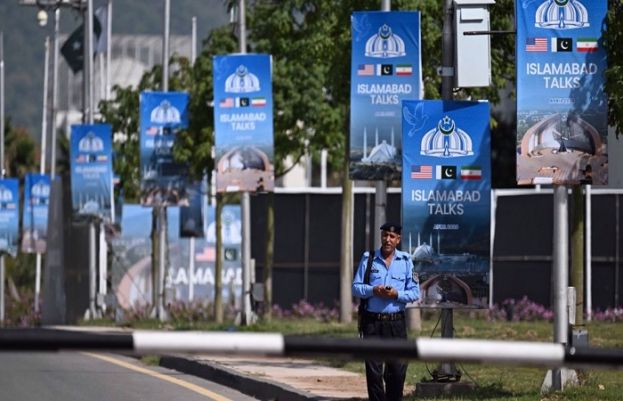
No Iranian delegation has arrived in Islamabad for talks with the United States, says a report, as senior Iranian officials declared they will not engage in talks “under the shadow of threats” following renewed American aggression at sea.
Contrary to numerous international and regional media reports suggesting an Iranian delegation was set to arrive for talks, IRIB News Agency reported on Tuesday that “to date, no delegation from Iran has gone to Islamabad, Pakistan; neither a main nor a subsidiary delegation; neither primary nor secondary.”
The report dismissed speculation about scheduled meetings, stating that news circulated since Saturday about the “departure” or “arrival” of an Iranian team, or even specific meeting times, was entirely without basis.
This firm stance follows blatant breaches of a two-week-old ceasefire by Washington. Iranian officials have maintained a consistent position since Sunday evening, asserting that the “continuation of talks depends on a change in American behavior and positions.”
Adding his voice to the resolute message, Iranian Parliament Speaker and lead negotiator Mohammad Baqer Qalibaf said on Monday that the US President was attempting to force Tehran into submission. “Trump, by imposing a blockade and violating the ceasefire, wants – in his own delusion – to turn the negotiating table into a table of surrender or to justify renewed warmongering,” he said in a post on X.
The speaker made Tehran’s position unequivocal. “We do not accept negotiations under the shadow of threats,” he said, warning, “Over the past two weeks, we have prepared ourselves to reveal new cards on the battlefield.”
The uncertainty shrouding the next round of talks escalated after the US Navy targeted an Iranian merchant vessel in the Sea of Oman on Sunday. Iran’s military condemned the incident as a “criminal operation” and “maritime piracy,” reiterating that its response posture remains active.
The backdrop to these renewed tensions is a 40-day US-Israeli war of aggression that began on February 28 with the assassination of high-level Iranian figures and civilians. After 40 days of criminal aggression, the US agreed to a ten-point proposal from Iran, leading to trilateral talks mediated by Pakistan.
While Iran subsequently opened the Strait of Hormuz to commercial traffic, it was forced to close the chokepoint again on Sunday after the US maintained its naval blockade in breach of the deal.
President Masoud Pezeshkian on Monday dismissed the American ultimatums as “pressure tactics,” insisting Iran will not submit to coercion.
This came as President Trump issued a direct threat on his social media pages, stating, “We’re offering a very fair and reasonable deal, and I hope they take it because, if they don’t, the United States is going to knock out every single power plant, and every single bridge, in Iran.”
The ongoing US blockade is also reportedly frustrating the mediation efforts. According to reports, Pakistani army chief Asim Munir conveyed to President Trump that the continued naval blockade of Iranian ports was hampering Islamabad’s ability to facilitate a permanent end to the war.
- Cause of fire being ascertained: police chief.
- Fire broke out during Hindu festival preparations.
- Indian PM offers condolences to victims’ families.
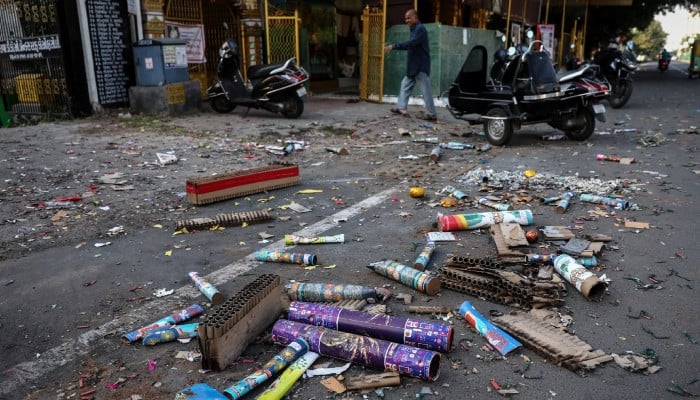
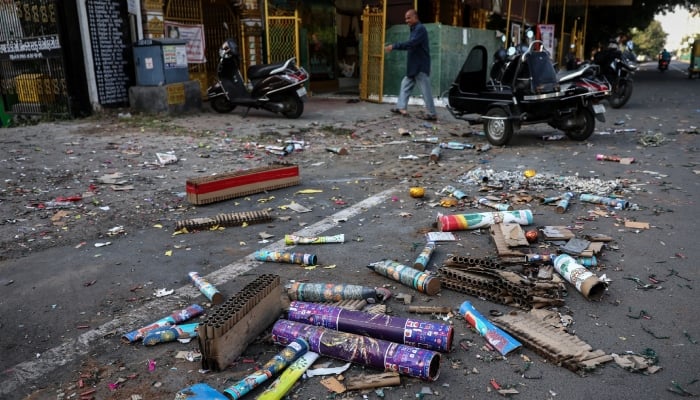
A firecracker storage facility in southern India caught fire on Tuesday, killing at least eight people, police said, the second such incident in three days.
Nakul Rajendra Deshmukh, police chief in Kerala state’s Thrissur district, told AFP that rescue operations were “over” after the deadly fire, which also left 15 people injured including two in critical condition.
The cause of the fire was being ascertained, he added.
Local media said it broke out during preparations for a Hindu festival.
Prime Minister Narendra Modi said in a social media post that he was “saddened” by the loss of lives and offered his “deepest condolences” to the families of the victims.
On Sunday, 20 people died in a similar blaze at a firecracker factory in the neighbouring state of Tamil Nadu.
Industrial accidents are common in India, often due to poor adherence to safety regulations and weak enforcement.
Last month, another fire at a fireworks factory in western India killed 17 people.


Ranking the Top 20 Players in the Men’s College Basketball Transfer Portal

FIFA to put more World Cup tickets on sale for all games

Framework Has a Better, More Take-Apart-Able Laptop

-

 Fashion5 days ago
France’s LVMH Q1 revenue falls 6%, shows resilience amid Iran war
-

 Sports1 week ago
The case for Man United’s Fernandes as Premier League’s best
-

 Entertainment1 week ago
Palace left in shock as Prince William cancels grand ceremony
-
 Business1 week ago
UK could adopt EU single market rules under new legislation
-

 Entertainment6 days ago
Is Claude down? Here’s why users are seeing errors
-

 Fashion1 week ago
Energy emerges as biggest cost driver in textile margins
-
 Business1 week ago
Delta Air Lines unveils first new Delta One suite in premium cabin arms race
-

 Fashion1 week ago
Asia claims largest share of markets on Kearney FDI Confidence Index