

Politics
Melissa kills at least 30 as this year’s most powerful hurricane batters Caribbean

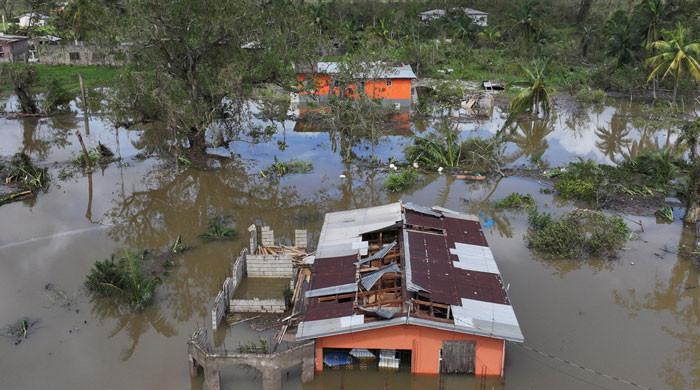
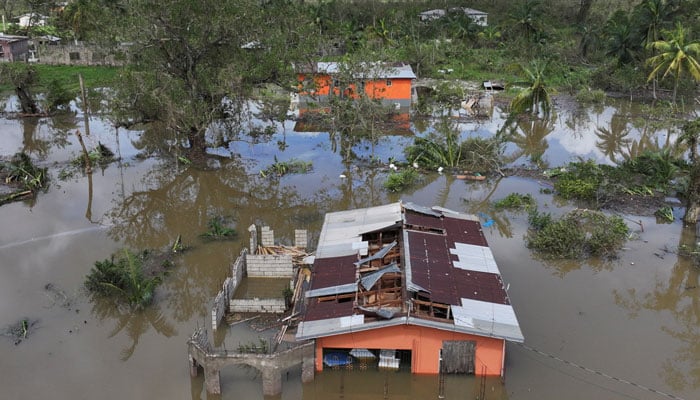
- Melissa strikes Jamaica as strongest-ever hurricane.
- Hurricane batters Jamaica with sustained winds of 185 mph.
- 10 children among 25 deaths reported in Haiti alone.
HAVANA/KINGSTON: Hurricane Melissa barreled through the Caribbean on Wednesday after thrashing Cuba’s second-biggest city, isolating hundreds of rural communities, unleashing devastation in Jamaica and drenching Haiti, where at least 25 were killed.
Melissa struck Jamaica on Tuesday as the strongest-ever hurricane to directly hit its shores, with sustained winds of 185 mph (298 kph), well above the minimum strength for a Category 5, the strongest classification for hurricanes.
As of 2100 GMT on Wednesday, Melissa was a Category 1 hurricane moving north-east through the Bahamas archipelago, which completed the air evacuation of nearly 1,500 people early.
The storm did not directly hit Haiti, the Caribbean’s most populous nation, but it hurled days of rain over the island nation. Authorities reported at least 25 deaths, largely due to floods in Petit-Goave, a coastal town 64 km (40 miles) west of the capital where a river burst its banks.
At least 10 children were killed there and 12 people remain missing there, Haiti’s disaster management agency said.
In Haiti, where a gang conflict has displaced over 1.3 million people, authorities said more than 1,000 homes were flooded. People living in makeshift camps said the flooding made it impossible to sit or sleep, and said the government and aid groups were slow to bring supplies.
Fortune Vital, a displaced man in Les Cayes, said he was separated from his family which already lacked sufficient food. “If the hurricane comes on top of all the problems we already have, we’ll simply die,” he said.
‘Like missiles blowing through the glass’
On Tuesday, Melissa made landfall in southwestern Jamaica, devastating areas already battered by last year’s Hurricane Beryl. US forecaster AccuWeather estimated Melissa cost $22 billion in damages and economic loss in Jamaica alone, and that rebuilding could take a decade or more.
Local authorities said flood waters had washed up four bodies in the southwestern agricultural hub of St. Elizabeth. About 77% of Jamaica was without electricity, authorities said on Wednesday morning. The capital Kingston was spared the worst damage and its main airport was set to reopen Thursday.
Prime Minister Andrew Holness visited Black River Hospital, the only public hospital in St. Elizabeth, where aerial footage showed the wrecks of buildings, roofs blown off, power cables knocked down and fields strewn with rubble.
Hospital workers there said the building showed some significant damage, and staff told the prime minister they spent the night fearing for their own families while working by flashlight to care for patients.
“It was the most terrifying experience in all my life,” a hospital worker said. “It is beyond imagining. At one point it was as if missiles were blowing through the glass.”
Jamaica’s government gave an “all clear” to begin recovery efforts, but said it would keep emergency shelters open through the week as people kept coming in from devastated homes.
Local government minister Desmond McKenzie said over 25,000 people had been admitted. “No one must be turned back from the shelters,” he said.
Mass evacuations in Cuba
Melissa was a still major Category 3 when it hit Cubaovernight with winds of 120 mph, landing in Guama, a rural, mountainous area some 25 miles (40 km) west of Santiago de Cuba, the island’s second-most populous city.
At least 241 communities remained isolated and without communications on Wednesday following the storm’s passage across Santiago province, according to preliminary media reports, affecting as many as 140,000 residents.
Across eastern Cuba, authorities evacuated around 735,000 people as the storm approached. Most remained in emergency centers.
No deaths were reported on Wednesday but President Miguel Diaz-Canel said the island had suffered extensive damage and warned of vigilance as rains continue to lash the region.
“A major hurricane landfall in the dark is incredibly dangerous,” AccuWeather lead hurricane expert Alex DaSilva said.
“The storm lost wind intensity as it interacted with the mountains of southeast Cuba, but the forced upward motion of the air over the mountainous terrain is squeezing out tremendous amounts of rainfall.”
Cuban officials also warned of severe impact on crops ahead of the Northern Hemisphere’s winter growing season.
Cuba was already suffering from food, fuel, electricity and medicine shortages that have complicated life, prompting record-breaking emigration since 2021.
On Wednesday, the UN General Assembly again voted overwhelmingly for the US to end its Cold War-era economic embargo on the communist-run country.
Loss and damage
Meteorologists at AccuWeather said Melissa ranked as the third-most intense hurricane observed in the Caribbean, after Wilma in 2005 and Gilbert in 1988 – the last major storm to directly hit Jamaica.
But scientists say hurricanes are intensifying faster with greater frequency as a result of warming ocean waters caused by greenhouse gas emissions. Many Caribbean leaders have called on wealthy, heavy-polluting nations to provide reparations in the form of aid or debt relief to tropical island countries.
The Caribbean Community Climate Change Centre, a branch of regional bloc CARICOM, issued a statement in solidarity of those affected by Hurricane Melissa and called for stronger efforts to curb climate change.
It said Melissa’s rapid intensification, fueled by record-breaking Caribbean sea temperatures, underscored need for the U.N.’s “loss and damage” fund to be scaled up.
The fund was established in 2023 as a mechanism for developing nations to quickly and reliably access financing to recover from more frequent extreme weather events. However, donations from wealthy, polluting nations have fallen short of targets and the US withdrew from its board in March.
The devastation caused by Melissa drew an outpouring of support from across the world, with some countries pledging support in the form of cash, food aid and rescue teams.
In Montego Bay, a popular Jamaican tourist destination, a resident told Reuters the water reached her waist and rescuers had to break into her home to save her and her child.
“All the trees that my dad planted, all of them are gone,” she said.
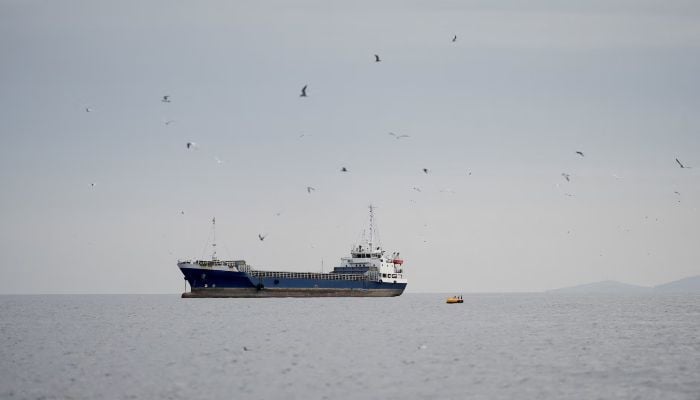
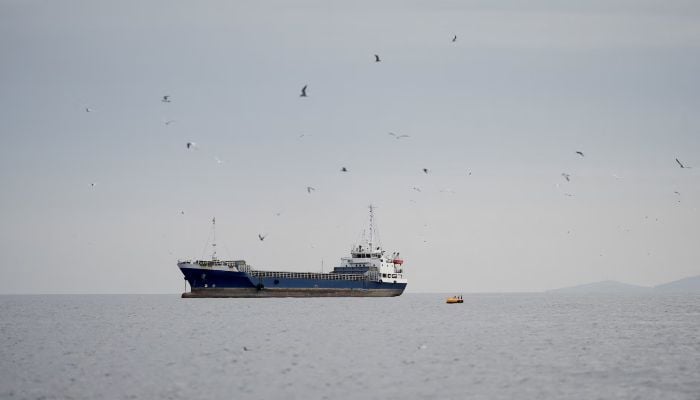
ATHENS: Fraudulent messages promising safe passage through the Strait of Hormuz in exchange for cryptocurrency have been sent to some shipping companies whose vessels are stranded west of the waterway, Greek maritime risk management firm MARISKS has warned.
The US has maintained its blockade of Iranian ports, while Iran has lifted and then re-imposed its blockade of the Strait of Hormuz, through which roughly a fifth of the world’s oil and liquefied natural gas passed before war broke out in the Middle East.
Amid ceasefire talks, Tehran, which controls the chokepoint, has proposed tolls on vessels to safely transit.
MARISKS on Monday issued an alert warning shipowners that unknown actors, claiming to represent Iranian authorities, had sent some shipping companies a message demanding transit fees in cryptocurrencies, Bitcoin or Tether, for “clearance”.
“These specific messages are a scam,” the firm said, adding the message was not sent by Iranian authorities.
There was no immediate comment from Tehran.
Hundreds of ships and about 20,000 seafarers remain stranded in the Gulf.
On April 18, when Iran briefly opened the strait subject to checks, ships tried to pass but at least two of them, including a tanker, reported that Iranian boats had fired shots at them, forcing the vessels to turn around.
MARISKS said that it believed that at least one of the vessels, which tried to exit the strait on Saturday and was hit by gunfire, was a victim of the fraud.
Reuters was not able to verify the information or track companies that had received the message.
“After providing the documents and assessing your eligibility by the Iranian Security Services, we will be able to determine the fee to be paid in cryptocurrency (BTC or USDT). Only then will your vessel be able to transit the strait unimpeded at the pre-agreed time,” said the message cited by MARISKS.
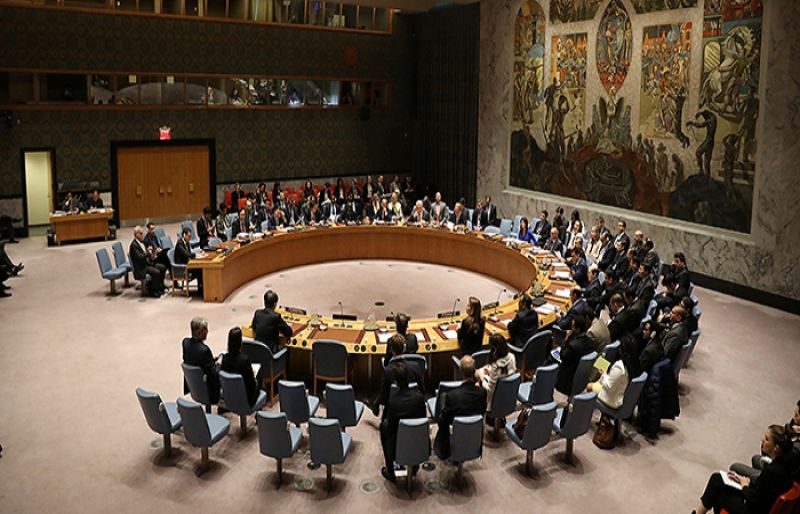
The UN Security Council on Monday condemned the recent killing of a French peacekeeper in Lebanon, whose death France has blamed on Hezbollah.
The Frenchman was killed and three others wounded when their unit was ambushed on Saturday as it headed to a UN Interim Force in Lebanon (UNIFIL) outpost cut off from the fighting between Hezbollah and Israel.
“The members of the Security Council condemned in the strongest terms the attack…(and) reaffirmed their full support for UNIFIL” a statement from the UN body said.
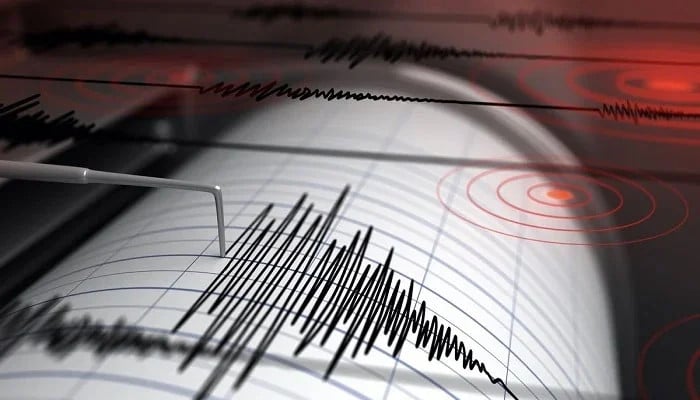
TOKYO: At least six people were reported injured on Tuesday, a day after a powerful quake rattled northern Japan, but there appeared to be no major damage from the tremor that also triggered tsunami waves up to 80 centimetres (31 inches).
However, the Japan Meteorological Agency (JMA) also warned of an increased risk of a megaquake — a tremor with a magnitude of 8.0 or stronger — hours after Monday’s 7.7 magnitude quake in Pacific waters off northern Iwate prefecture.
The jolt was so intense that it shook large buildings in the capital Tokyo, hundreds of kilometres from the epicentre.
Six people were reported injured by 8am (2300 GMT Monday), two seriously, the Fire and Disaster Management Agency (FDMA) said in a statement.
There were no reported fire outbreaks or damage to important facilities, it said.
Japan issued a warning for tsunami waves of up to three metres (10 feet) but it was lifted hours after an 80-centimetre (31-inch) wave hit a port in Kuji in Iwate, one among a series of small waves that hit elsewhere in northern Japan.
The JMA said that “the likelihood of a new, huge earthquake occurring is relatively higher than during normal times”.
Municipalities in the affected region issued non-compulsory evacuation directives to more than 182,000 residents, the FDMA said.
Japan is one of the world’s most seismically active countries, sitting on top of four major tectonic plates along the western edge of the Pacific “Ring of Fire”.
The archipelago, home to around 125 million people, typically experiences around 1,500 jolts every year and accounts for about 18 percent of the world´s earthquakes.
The vast majority are mild, although the damage they cause varies according to their location and the depth below the Earth´s surface at which they strike.
Japan is haunted by the memory of a massive 9.0 magnitude undersea quake in 2011, which triggered a tsunami that killed or left missing around 18,500 people and caused a devastating meltdown at the Fukushima nuclear plant.


Scam messages offering ships safe transit through Hormuz, warns security firm

UN Security Council denounces killing of French peacekeeper in Lebanon
Apple names new boss to replace Tim Cook after 15 years

-

 Fashion5 days ago
France’s LVMH Q1 revenue falls 6%, shows resilience amid Iran war
-

 Sports1 week ago
The case for Man United’s Fernandes as Premier League’s best
-

 Entertainment1 week ago
Palace left in shock as Prince William cancels grand ceremony
-
 Business1 week ago
UK could adopt EU single market rules under new legislation
-

 Entertainment6 days ago
Is Claude down? Here’s why users are seeing errors
-
 Fashion1 week ago
Energy emerges as biggest cost driver in textile margins
-
 Business1 week ago
Delta Air Lines unveils first new Delta One suite in premium cabin arms race
-

 Tech1 week ago
A Lot of Shops Won’t Fix Electric Bikes. Here’s Why