

Politics
Trump Says He’s Open to Reviewing Iran Sanctions

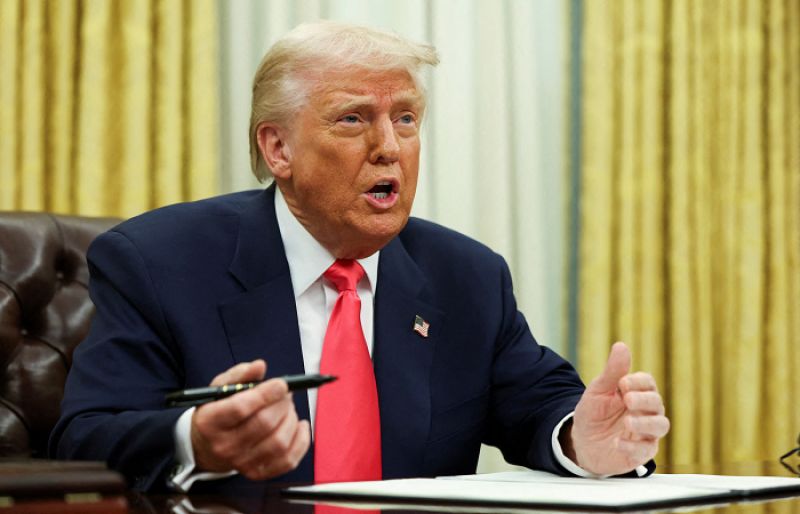

US President Donald Trump said on Thursday that Iran has requested the lifting of heavy US sanctions, adding that he is open to discussing the possibility.
“Frankly, Iran has been asking if the sanctions could be lifted. They’re facing very heavy US sanctions, which makes it really hard,” Trump said during a dinner with Central Asian leaders at the White House.
“I’m open to hearing that, and we’ll see what happens but I would be open to it,” he added.
Western powers, including the United States, have long accused Tehran of pursuing nuclear weapons, a charge Iran denies, insisting its program is purely peaceful.
Iran has been under years of international sanctions, particularly since Washington withdrew from the 2015 nuclear deal in 2018 and reimposed strict economic measures.
Tensions escalated in June, when Israel launched an unprecedented bombing campaign against Iran, triggering a 12-day war that briefly drew in the United States with targeted strikes on Iranian nuclear facilities.
The conflict marked by Iranian missile and drone attacks in retaliation — derailed the fragile nuclear talks that had been ongoing between Tehran and Washington since April.
Trump said Iran had once been the “bully of the Middle East,” but “no longer has the possibility of nuclear weapons.”
The Republican president, who returned to office in January, has repeatedly claimed that recent strikes destroyed much of Iran’s nuclear infrastructure, though the full extent of the damage remains unclear.
In September, the United Nations reinstated sanctions against Tehran under the so-called “snapback” mechanism after Britain, France and Germany triggered the process.
Those measures bar dealings linked to the Islamic republic’s nuclear and ballistic missile activities.
Oman, which has hosted several rounds of US-Iran nuclear talks, has called on both sides to return to negotiations.
The talks had aimed for a new agreement that would curb Iran’s nuclear activities in return for sanctions relief.
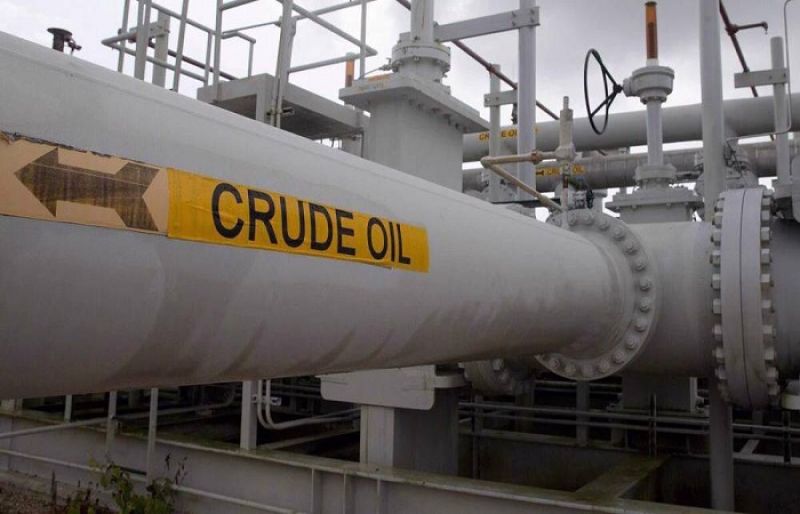
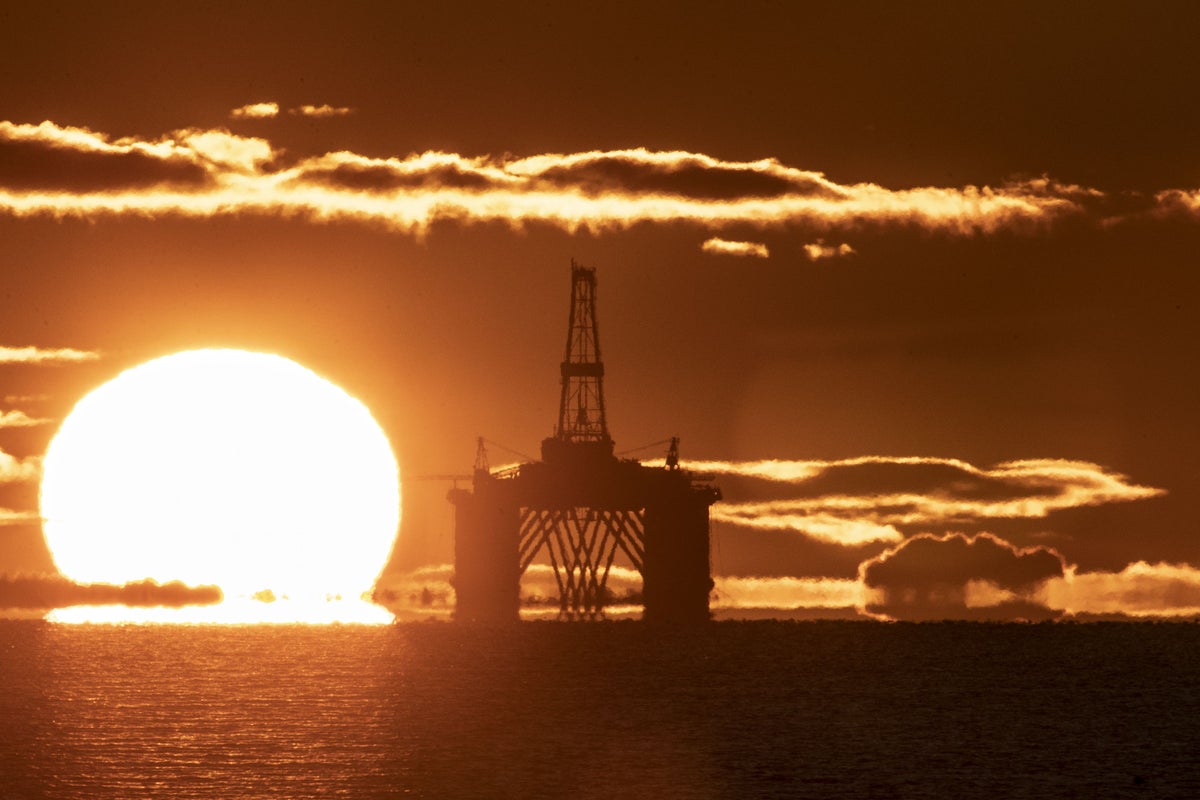
Crude oil prices have soared past $100 a barrel amid a large-scale and unprovoked US-Israeli war on Iran.
The international benchmark of Brent crude jumped more than 20 percent on Sunday, and at one point hit $115 as concerns increased over prolonged disruptions to global energy supplies.
The benchmark was being traded at around $107.50 as of 0230 GMT on Monday following a slight moderation. The uptick marked the first time oil prices climbed over $100 per barrel since the onset of Russia’s operations in Ukraine in 2022.
US President Donald Trump, who campaigned heavily on cost-of-living concerns in the 2024 vote, sought to downplay the rise in prices.
“Short term oil prices, which will drop rapidly when the destruction of the Iran nuclear threat is over, is a very small price to pay for the USA, and World, Safety and Peace,” Trump asserted in a post on Truth Social.
US Secretary of Energy Chris Wright also tried to brush off the prospect of soaring energy prices earlier on Sunday.
He told CBS News’ Face the Nation program that any increase in prices at the petrol pump would be “temporary.”Crude oil prices have spiked by about 50 percent since the US and Israel launched joint strikes on Iran on February 28.
Iran, in retaliation, has effectively brought shipping in the Strait of Hormuz to halt.
Iraq, the United Arab Emirates and Kuwait — three of the major producers in the Organization of the Petroleum Exporting Countries (OPEC) — have slashed production amid an accumulating backlog of barrels with no destination to go due to the effective closure of the strategic waterway.
Meanwhile, stocks in Asia tumbled drastically on Monday morning, as investors prepared for the fallout of soaring energy prices.
Japan’s 225 index fell more than 7 percent in early trading, while South Korea’s KOSPI plunged more than 8 percent.The Hang Seng Index in Hong Kong also fell by nearly 3 percent.
US stocks futures, which are regularly traded outside of usual market hours, also experienced significant losses.
Futures tied to Wall Street’s benchmark S&P 500 fell by 1.7 percent, while those for the tech-heavy Nasdaq Composite dropped by 1.90 percent.
The International Monetary Fund (IMF) has predicted that energy sustained 10 percent rise in oil prices brings about a 0.5 rise in inflation and a 0.15 percent reduction in global economic growth.
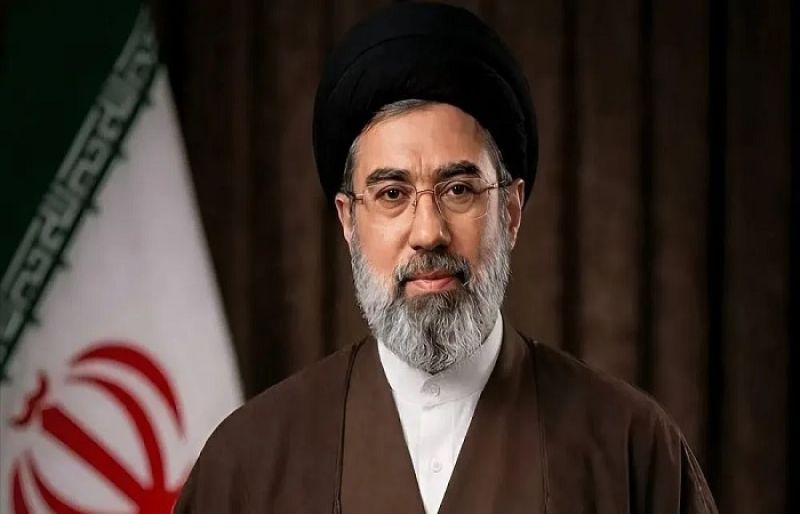

Ayatollah Seyyed Mojtaba Hosseini Khamenei has been elected the new Supreme Leader of the Islamic Revolution and the Islamic Republic of Iran.
Iran’s Assembly of Experts, a body of 88 clerics, on Sunday night officially appointed Mojtaba Khamenei, 56 years old, as the new Leader of the Islamic Revolution and the third Supreme Leader of the Islamic Republic of Iran. Mojtaba Khamenei is the son of martyred Supreme Leader Ayatollah Seyyed Ali Khamenei.
“By a decisive vote, the Assembly of Experts appointed Ayatollah Seyyed Mojtaba Hosseini Khamenei as the third Leader of the sacred system of the Islamic Republic of Iran,” the assembly said in a statement.
The announcement, issued by the Secretariat of the Assembly of Experts, begins with invocations in the name of Allah, the Most Gracious, the Most Merciful, and extends heartfelt condolences to the noble and free nation of Islamic Iran.
It honors the martyrdom of Ayatollah Seyyed Ali Khamenei, whose heavenly ascension marks the end of an era of wise and steadfast leadership. Ayatollah Khamenei was martyred on February 28 in a terrorist US and Israeli strike.
The statement also pays tribute to other exalted martyrs, including high-ranking commanders of the armed forces and the innocent students of the Shajra Tayyiba School in Minab City, all victims of the barbaric assaults by criminal America and the Zionist regime.
The statement reveres the exalted institution of Wilayat al-Faqih (Guardianship of the Islamic Jurist) during the occultation of the Imam of the Age (may Allah hasten his reappearance), emphasizing its pivotal role in the Islamic Republic’s system.
It celebrates the 47 years of exemplary governance by the Imams of the Revolution, rooted in dignity, independence, and divine authority.
Following meticulous studies and a decisive vote by the respected representatives, guided by religious duty and accountability before God Almighty, Ayatollah Seyyed Mojtaba Hosseini Khamenei (may Allah protect him) was introduced as the new Leader.
The statement expresses gratitude to the members of the provisional council under Article 111 for their interim service and calls upon the entire noble nation of Iran –especially the elites, intellectuals, scholars of the seminaries, and university communities — to pledge unwavering allegiance to the new leadership.
It urges unity around the axis of Wilayat al-Faqih, a bulwark against the plots of arrogant powers.
In closing, the Assembly of Experts statement invokes Almighty God’s continued grace and mercy upon Iran and its resilient people, affirming that the Islamic Revolution remains an indomitable force for justice and independence.
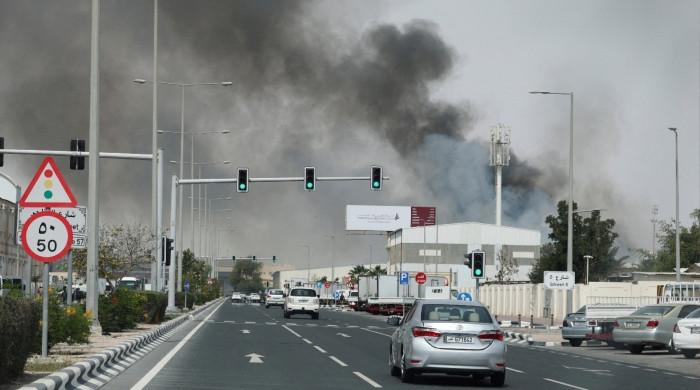
Qatari authorities have arrested more than 300 people for sharing images and what they described as “misleading information” during days of attacks by Iran, the interior ministry said on Monday.
The arrests echo measures across the Gulf as Iran targets airports, military bases, energy installations and residential areas with daily drones and missiles.
Those arrested “filmed and circulated video clips and published misleading information and rumours that could stir public opinion”, a statement said.
The people of “various nationalities” were held by the Department for Combating Economic and Cyber Crimes at the ministry´s General Directorate of Criminal Investigations.
The announcement follows a spate of arrests elsewhere in the region.
In Bahrain, four people were arrested for “filming and broadcasting clips about the effects of Iranian attacks and spreading false news”, the interior ministry said on Friday.
And in Kuwait, authorities on Saturday said three people had been arrested over a video showing them mocking the situation in the country.
Residents in the United Arab Emirates have received text messages warning of possible legal action for sharing sensitive images or “reposting unreliable information”.
The UAE attorney general’s office also warned against “filming, publishing, or circulating images and videos documenting incident sites or damage caused by falling projectiles or shrapnel”, the Emirates News Agency said.
Saudi Arabia has issued similar warnings.
Despite the warnings, images of missiles, drones and the fallout of the war continue to circulate on social media and in group chats.


Adidas salutes USMNT’s 1994 World Cup run with denim jersey

Oil surges past $100 a barrel as stocks tumble amid US-Israeli aggression against Iran
Espresso Machines Are Like Guitars: The Rich Don’t Win

-
 Politics2 days ago
India let Iran warship dock the day US sank another off Sri Lanka, say officials
-

 Sports3 days ago
Pakistan set for FIH Pro League debut | The Express Tribune
-

 Sports1 week ago
College basketball star suspended by team for spitting toward opposing fan
-

 Entertainment1 week ago
Al Jazeera broadcast interrupted by emergency missile alert in Qatar
-

 Entertainment2 days ago
Harry Styles kicks off new era with ‘One Night Only’ comeback show
-
 Business3 days ago
Home heating oil: ‘Most of my pension has gone on home heating oil’
-
 Business1 week ago
Labour parliamentarians urge UK Government to oppose Rosebank oil field
-

 Sports1 week ago
Michigan loses L.J. Cason for rest of season with torn ACL