

Tech
Newsom touts California’s record battery energy gains at UN climate conference


California added 1,200 megawatts of battery energy storage to its electrical grid over the last six months, further building on its nation-leading capacity and pushing the state closer to its clean energy goals, officials said on Nov. 13.
Gov. Gavin Newsom announced the latest milestone while making the rounds at the United Nations Conference of the Parties climate summit in Belém, Brazil, where he is touting the state’s international climate leadership amid the notable absence of officials from the Trump administration.
With the latest additions, the Golden State has reached 16,942 megawatts of available battery storage—about one-third of the estimated capacity needed to reach its goal of 100% clean energy by 2045.
Battery energy storage systems capture excess wind and solar power and push it onto the grid during hours of peak demand, or when the sun isn’t shining or the wind isn’t blowing.
Newsom used the announcement as an opportunity to swipe at President Donald Trump, who has focused heavily on the growth of fossil fuels such as oil, gas and coal while simultaneously slashing funding for renewable energy projects in California and across the U.S.
“Donald Trump’s reckless energy agenda puts China first and America last—letting Beijing seize the global clean energy economy and the good-paying jobs, manufacturing, and economic prosperity that come with it,” the governor said in a statement. “California won’t stand by and watch.”
While China continues to burn fossil fuels, the country is breaking global records with its investments in renewable energy and battery storage. In 2024, China commissioned 37 gigawatts of battery storage, more than the combined additions of the U.S. and Europe, according to the energy think tank Ember.
But battery storage has also been transformative for California, helping the state avoid rolling blackouts and urgent calls for energy conservation, known as Flex Alerts, in the last several years. California now has more installed battery capacity than any other jurisdiction on the planet except for China, according to Newsom.
“We now dominate,” he said at a climate investors event in São Paulo before heading to Belém.
Experts say the state’s gains are impressive. The U.S. has about 37 gigawatts of total operating battery capacity, nearly half of which is in California, said Maia Leroy, founder of the energy consulting firm Lumenergy LLC.
“California is claiming a huge victory here,” Leroy said. She said the state’s capacity of 16,942 megawatts—or 16.9 gigawatts—is enough to power about 13 million homes for four hours, the typical duration of a battery.
The surge in storage is meeting with even faster growth of solar in the state. Together, solar plus batteries have eliminated more than 37% of fossil gas use on the state’s main grid, the California Independent System Operator, in just the last two years, according to Mark Z. Jacobson, a professor of civil and environmental engineering at Stanford University.
“That is an enormous amount of batteries,” Jacobson said.
Energy storage is one of many ways California is hoping to stand out at this year’s COP summit. Representatives from the state—including Newsom, California Natural Resources Secretary Wade Crowfoot and Air Resources Board Chair Lauren Sanchez—have also entered into several partnerships and agreements with other regions and nations this week.
Among them is the Global Energy Storage and Grids Pledge, an initiative started at last year’s COP conference that sets a global target of deploying 1,500 gigawatts of energy storage and building about 15.5 million miles of new transmission infrastructure by 2030. California became the first subnational entity to join the pledge, which has been backed by more than 100 countries and organizations.
The pledge is a good start, but the world needs more than just storage and transmission, Jacobson said.
“California is moving faster than the U.S. as a whole, but to really make inroads, California needs to also electrify transport, industry and buildings as fast as it is building batteries, while growing offshore wind, utility solar, rooftop solar and enhanced geothermal,” he said.
The state is working toward those goals, including pushing forward with a major offshore wind project that lost nearly half a billion dollars in federal funding from the Trump administration this year.
Other agreements signed at COP so far this year include joint partnerships and memoranda of understanding with Colombia, Chile, Nigeria, the Brazilian state of Pará and the German state of Baden-Württemberg on issues such as wildfire prevention and response, sustainable urban transportation and greenhouse gas emission reductions.
2025 Los Angeles Times. Distributed by Tribune Content Agency, LLC.
Citation:
Newsom touts California’s record battery energy gains at UN climate conference (2025, November 15)
retrieved 15 November 2025
from https://techxplore.com/news/2025-11-newsom-touts-california-battery-energy.html
This document is subject to copyright. Apart from any fair dealing for the purpose of private study or research, no
part may be reproduced without the written permission. The content is provided for information purposes only.













Even though it said the financial year saw increased demand for its next-generation products and networks, the UK’s leading telco, BT, has announced a fiscal year 2026 with noticeable falls in revenue and broadband customers, offset by a modest gain in profitability.
For the full financial year to 31 March 2026, BT reported revenues of £19.7bn, down by 3% compared with the previous financial year, with adjusted revenue of £19.6bn, slipping by 4%. These figures were driven by lower international revenue, including divestments, declines in handset trading and declines in adjusted UK service revenue.
Adjusted UK service revenue was £15.4bn, down by 1% compared with fiscal 2025, mainly driven by lower voice volumes, offset by Consumer Price Index-linked price increases and an improved broadband fibre-to-the-premises (FTTP) mix in its Openreach broadband provision division.
The lower revenue was offset by strong cost transformation and cost control, according to BT, leading to adjusted earnings before interest, taxes, depreciation, and amortisation (EBITDA) of £8.2bn, flat year-on-year, excluding divestments. Like-for-like adjusted EBITDA was up by 1%. Reported profit before tax was £1.4bn, up 8%, with the increase said to be primarily driven by lower specific items, lower depreciation and amortisation, offset by a higher finance expense.
During the course of the year, and as part of its long-standing transformation plan, BT realised £580m in gross annualised cost savings, at a cost to achieve of £336m, taking total savings over two years to £1.5bn at costs of £800m. It said that it also realised year-on-year reductions in energy usage in its networks of 6%, in total labour resource of 7% to 108,000 and in Openreach repair volumes of 18%. The company’s overall transformation plan target has been raised to £3.7bn from £3bn, and the programme has been extended by a year to 2030, at a cost to achieve of £1.4bn from £1bn.
Among the officially selected highlights of the year, BT said it had reached a record FTTP build of 4.8 million premises passed in the year, achieving the accelerated target set in 2025 and the fastest build in Europe.
At the end of the year, BT’s FTTP footprint stood at 23 million premises, which is more than two-thirds of all UK premises, 6.3 million of which were in rural locations. It was on track to reach its stated target of hitting 25 million premises by December 2026.
The results also showed record customer demand for Openreach FTTP, with 2.2 million net adds in the year, bringing total premises connected to 8.8 million and take-up among all major fibre providers to over 38%. Higher FTTP take-up, speed mix and price increases saw Openreach broadband grow its average revenue per user by 4% on an annual basis to £16.7.
However, FTTP growth contrasted with overall broadband performance. Openreach broadband line losses amounted to 203,000 in the fourth quarter, giving full-year losses of 825,000. This, noted BT, was slightly better than its near 850,000 guidance, supported by expanded and accelerated build. However, BT also expects customer losses of around 800,000 over the course of the next financial year.
In the realm of mobile, the company boasted that its EE subsidiary remains the UK’s best mobile network, and its 5G+ population coverage increased to 73% from 43% at the end of fiscal 2025. The EE 5G base reached 14.5 million by 31 March, up 10% year-on-year.
BT’s business division achieved what was described as “significant” new connectivity and security wins, including those with BAE Systems, NIE Networks and easyJet. It is also partnering with Nscale to deliver sovereign AI datacentres in the UK.
Summing up her company’s performance over the course of the year, BT chief executive Allison Kirkby called the financial year 2026 another year of strong delivery against the company’s strategy.
“We are building the UK’s digital backbone even faster and further, connecting the country like no one else and accelerating our transformation – and we know there is much more we can do, as we create a better BT for all of us,” she remarked.
“We have delivered on our financial guidance, and we are transforming ahead of plan, offsetting headwinds while successfully competing…We’re announcing an increased full-year dividend of 8.32 pence per share and an updated dividend policy, and we are reiterating our guidance of sustained growth, including cash flow inflection to c. £2bn in FY27 and to c. £3bn by the end of the decade.”
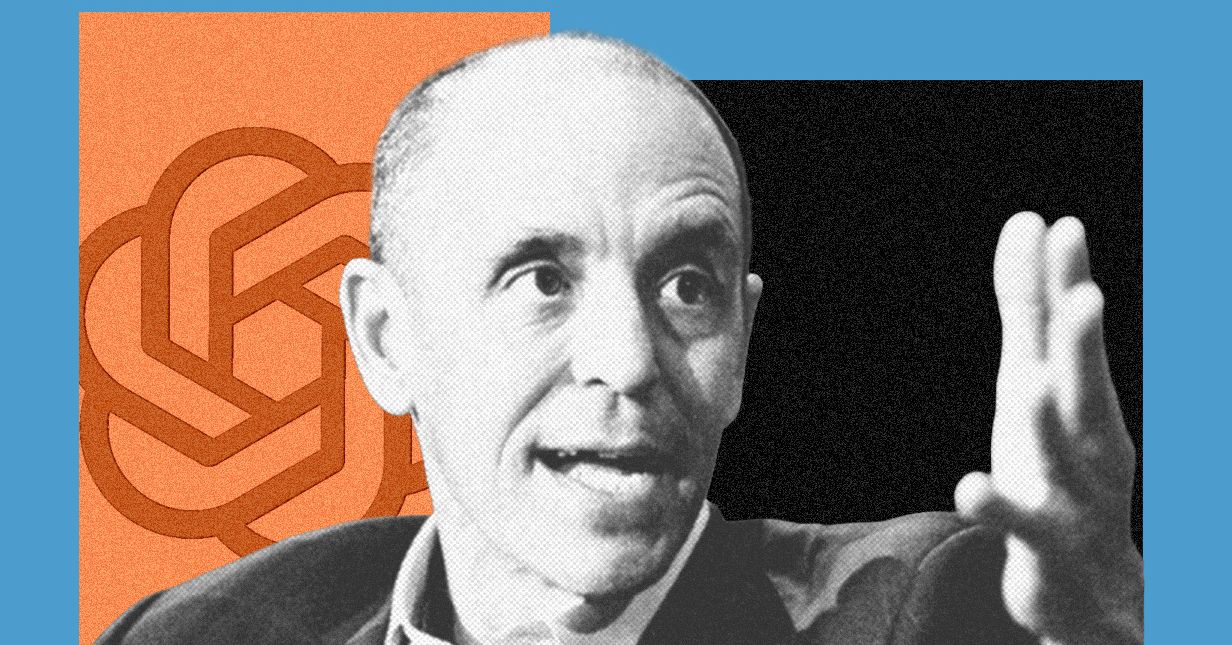
Three months ago, OpenAI cofounder Greg Brockman told me his concerns about a mounting public relations crisis facing artificial intelligence companies: Despite the popularity of tools like ChatGPT, an increasingly large share of the population said they viewed AI negatively. Since then, the backlash has only intensified.
College commencement speakers are now getting booed for talking about AI in optimistic terms. Last month, someone threw a Molotov cocktail at OpenAI CEO Sam Altman’s San Francisco home and wrote a manifesto advocating for crimes against AI executives. No one has more to lose from this reputation crisis than OpenAI.
The person tasked with trying to fix it is Chris Lehane, OpenAI’s chief of global affairs and a veteran political operative. I sat down with him this week to discuss what I’d argue are his two biggest challenges yet: convincing the world to embrace OpenAI’s technology, while at the same time persuading lawmakers to adopt regulations that won’t hamper the company’s growth. Lehane views these goals as one in the same.
“When I was in the White House, we always used to talk about how good policy equals good politics,” says Lehane. “You have to think about both of these things moving in concert.”
After working on crisis communications in Bill Clinton’s White House, Lehane gave himself the nickname “master of disaster.” He later helped Airbnb fend off regulators in cities that viewed short-term home rentals as existing in a legal gray area, or as he puts it, “ahead of the law.” Lehane also played an instrumental role in the formation of Fairshake, a powerful crypto industry super PAC that worked to legitimize digital currencies in Washington. Since joining OpenAI in 2024, he’s quickly become one of the company’s most influential executives and now oversees its communications and policy teams.
Lehane tells me public narratives about how AI will change society are often “artificially binary.” On one side is the “Bob Ross view of the world” that predicts a future where nobody has to work anymore and everyone lives in “beachside homes painting in watercolors all day.” On the other is a dystopian future in which AI has become so powerful that only a small group of elites have the ability to control it. Neither scenario, in Lehane’s opinion, is very realistic.
OpenAI is guilty of promoting this kind of polarizing speech in the past. CEO Sam Altman warned last year that “whole classes of jobs” will go away when the singularity arrives. More recently he has softened his tone, declaring that “jobs doomerism is likely long-term wrong.”
Lehane wants OpenAI to start conveying a more “calibrated” message about the promises of AI that avoids either of these extremes. He says the company needs to put forward real solutions to the problems people are worried about, such as potential widespread job loss and the negative impacts of chatbots on children. As an example of this work, Lehane pointed to a list of policy proposals that OpenAI recently published, which include creating a four-day work week, expanding access to health care, and passing a tax on AI-powered labor.
“If you’re going to go out and say that there are challenges here, you also then have an obligation—particularly if you’re building this stuff—to actually come up with the ideas to solve those things,” Lehane says.
Some former OpenAI employees, however, have accused the company of downplaying the potential downsides of AI adoption. WIRED previously reported that members of OpenAI’s economic research unit quit after they became concerned that it was morphing into an advocacy arm for the company. The former employees argued that their warnings about AI’s economic impacts may have been inconvenient for OpenAI, but they honestly reflected what the company’s research found.
Packing Punches
With public skepticism toward AI growing, politicians are under pressure to prove to voters they can rein in tech companies. To combat this, the AI industry has stood up a new group of super PACs that are boosting pro-AI political candidates and trying to influence public opinion about the technology. Critics say the move backfired, and some candidates have started campaigning on the fact that AI super PACS are opposing them.
Lehane helped set up one of the biggest pro-AI super PACs, Leading the Future, which launched last summer with more than $100 million in funding commitments from tech industry figures, including Brockman. The group has opposed Alex Bores, the author of New York’s strongest AI safety law who is running for Congress in the state’s 12th district.
Leah Feiger: Let’s invest.
Zoë Schiffer: They have that going for a while.
Leah Feiger: It wasn’t full Google, but it—
Zoë Schiffer: Somewhat there.
Leah Feiger: —had that vibe. To me, someone so on the outside of this in every single way, I know about these layoffs because they’ve been, A) so chaotic, but B) in some ways, needlessly so. Not to say that other tech companies aren’t firing scores of workers all the time. That feels like something we discuss on this podcast frequently, but this is happening with such a large runway and in a way that’s making employees feel so terrible about themselves.
Brian Barrett: Well, because it’s not just the layoffs, right? It’s also, even if you stay there, if you’re not culled from the herd, you are going to have to deal with this world in which you’ve got spyware on your laptops training AI to probably take your job at some point, right?
Zoë Schiffer: Explain that a little bit.
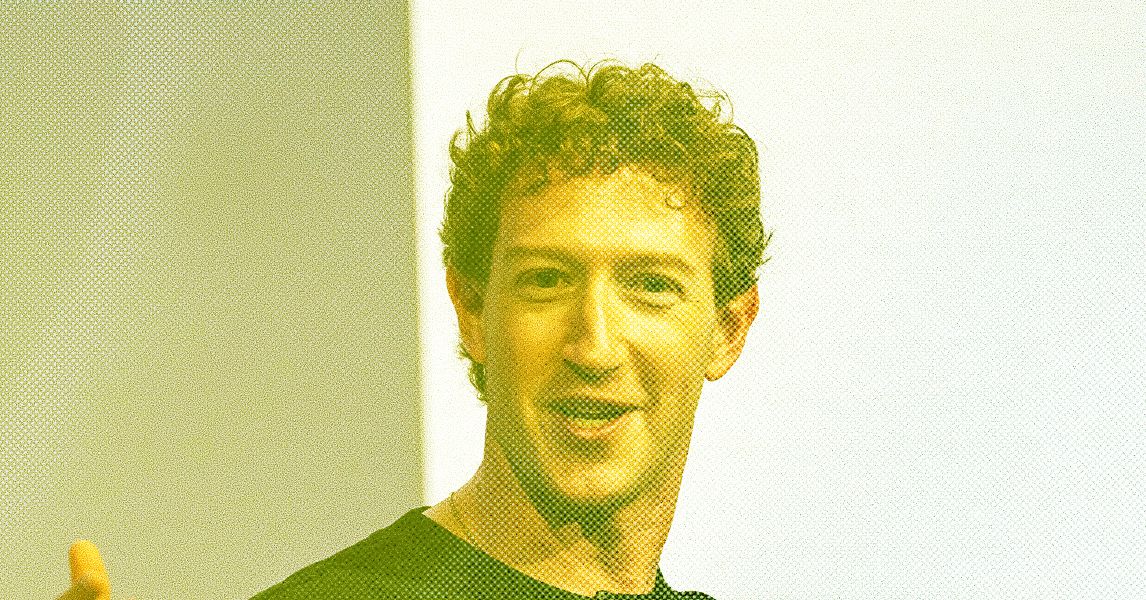
Brian Barrett: Meta announced, and this was more public, that they were going to put software on employee laptops that would monitor their keystrokes and how they move their cursors and basically how they do their job as Meta engineers and use that as training data for their own internal models to try to make their AI models better because they’re running out of other sources.
Zoë Schiffer: And could you opt out of that, Brian?
Brian Barrett: That’s a great question. I’m so glad you asked. You could not opt out.
Zoë Schiffer: I felt you didn’t know the answer to that one.
Brian Barrett: In fact, when an employee asked in a very public forum within Meta, “Hey, could we not do this?” Zoë, the response was?
Zoë Schiffer: Oh, absolutely you’re going to do this and shame on you for asking. And some of the employees who are staying, actually thousands of the employees who are staying, are getting drafted into the AI ranks. We published a piece today that was kind of about the morale inside the company, but also how there’s been this mad dash to use up perks and stipends that employees have. But one of the things that’s said at the end was that remaining employees are being asked to join AI teams. So whatever your job was previously, they’re internally getting drafted. You’re getting drafted into the AI ranks, now your job is going to look quite different.
Brian Barrett: That’s like 7,000 people.
Zoë Schiffer: Yes.
Leah Feiger: I’ve actually heard people use the word raptured.
Zoë Schiffer: Oh, my gosh.
Leah Feiger: Isn’t that—
Zoë Schiffer: And I wish we had that in the story.
Leah Feiger: I’m so sorry, but raptured into other teams. All of a sudden one day they’ve just disappeared. After this layoff, has Zuckerberg and co proposed a sort of coherent leadership plan or proposal? What happens after this?


Vietnam, US to finalise reciprocal trade agreement soon

Cloudways vs Hostinger, tested by a tech expert

CBS News Radio signs off Friday night after nearly 100 years of broadcasting: “An American institution”

-

 Fashion1 week ago
Italy’s Zegna Group’s Q1 growth boosted by strong organic performance
-

 Entertainment6 days ago
Where Pete Davidson, Elsie Hewitt stand after breakup: Details revealed
-

 Entertainment1 week ago
Emilia Clarke recalls near-death incident while filming ‘Game of Thrones’
-
 Business1 week ago
Jersey Election 2026: Cost of living concern in St Helier Central
-

 Fashion1 week ago
Global cotton production, stocks to fall; consumption to rise: WASDE
-

 Politics6 days ago
Rising diesel costs from Iran war strain US school budgets
-

 Fashion1 week ago
US’ Kontoor Brands’ posts strong Q1, plans Lee divestiture
-

 Politics1 week ago
UK’s Starmer faces survival battle as potential rivals circle