

Fashion
Sosandar returns to revenue growth in H1 but loss widens, stores still a drag on performance


Published
November 25, 2025
Womenswear brand Sosandar said on Tuesday that it returned to revenue growth in H1 (the six months to the end of September), “underpinned by strong own-site performance and resilient margins”.
It saw growth in revenue of 15% year on year to reach 18.7 million, with own-site revenue up by 28% versus the prior year.
And it reported that the gross margin was flat at 62.2%, although the company said this was a “strong” figure, “reflecting the strategic focus on margin enhancement”.
That said, it made a loss before tax of £1.1 million, a bigger loss than the £0.7 million in the previous year, “reflecting traditional second-half weighting of profitability alongside the impact of own stores and M&S cyber incident”.
Meanwhile its net cash increased a little and it said its current trading is in line with FY26 full-year expectations for both revenue and profit before tax. Current expectations are £43.6 million in revenue and profit before tax of £0.4 million.
Sosandar said its own-site performance was driven by a “meaningful uplift in site traffic, improved conversion rates, and increased order volumes from both new and existing customers”.
And it remains one of the top-selling brands across all third-party partners, including Next, “delivering robust trading during the period” and entering the key AW season “with positive momentum”.
Also on the plus side, it launched its licensed homewares range with Next in September, “which has delivered a strong initial performance in line with our expectations”.
But not so good is the fact that “stores continue to weigh on profitability until they mature”.
In the last year, it has opened six standalone retail stores across the UK and they represent just 5% of its total net revenue. Since it opened, 60% of customers shopping in-store are brand new to Sosandar, and it’s also seeing “a notable uplift in both traffic and online revenue in those areas where we have opened stores”.
Its first two locations, Chelmsford and Marlow have recently passed their 12-month anniversary “and are delivering encouraging results. Both stores are expected to achieve breakeven in year two”.
Two of the locations, both in shopping centres (Cardiff and Gateshead) “have been challenging”, however. The company said that one of the key learnings is that “smaller market towns have consumers who shop more regularly in those locations meaning it has been quicker to build repeat customer visits resulting in higher revenue”.
As for current trading, “as anticipated, trading during the autumn period has been strong, in line with expectations” and sales through M&S have resumed following its cyber incident, “with collaborative efforts under way to scale stock intake”.
It has seen a further step up in the gross margin as well, to 67.2% in October and November to date, compared to 64.6% a year ago, “reflecting improved intake margin on new season product”
Co-CEOs Ali Hall and Julie Lavington said they were “really pleased with how the business has performed over the past six months” and that AW25 has delivered “another robust trading performance, with customers continuing to respond positively to our unique collections across both occasion and everyday dressing”.
Copyright © 2025 FashionNetwork.com All rights reserved.











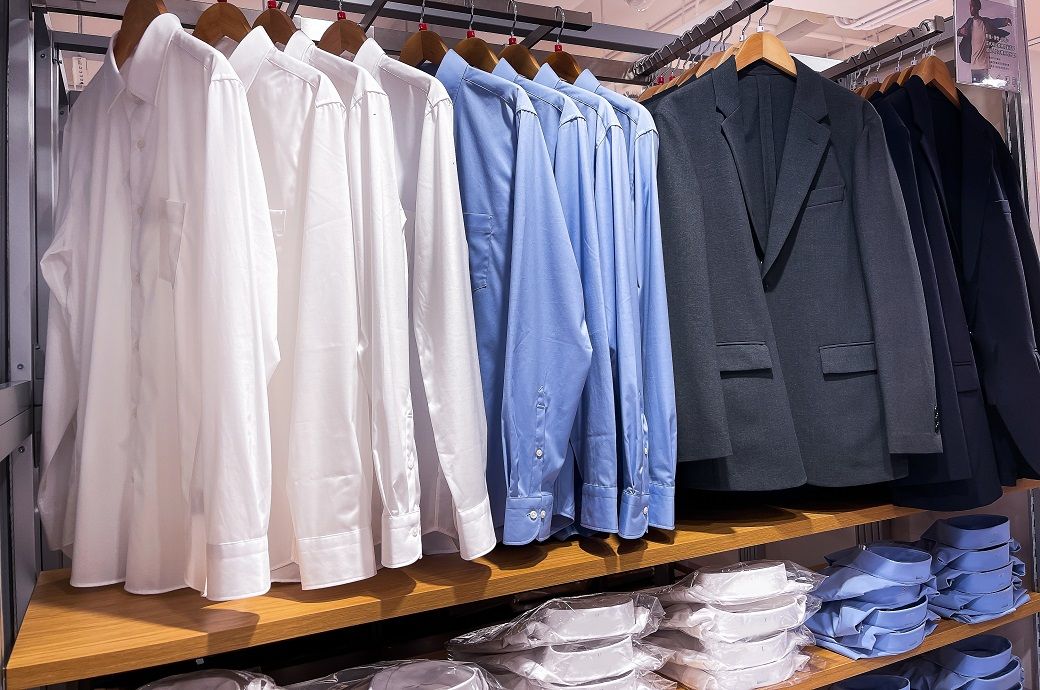
Apparel imports (code **) eased to Au$*.*** billion (~$*.*** billion), compared with Au$*.*** billion a year earlier. In November ****, imports fell sharply by **.** per cent year on year to Au$*.*** billion (~$*.*** billion) from Au$*.*** billion. The November contraction points to retailers delaying replenishment amid weak consumer confidence, promotional stock overhangs, and a preference for tighter inventory management ahead of the peak sales season.
Imports of textile yarn, fabrics, and made-up articles (code **) increased *.** per cent to Au$*.*** billion (~$*.*** billion) from Au$*.*** billion in the same period last year. However, November **** shipments under this category slipped to Au$*** million, down from Au$*** million in November ****, indicating short-term moderation after earlier restocking by manufacturers and converters.
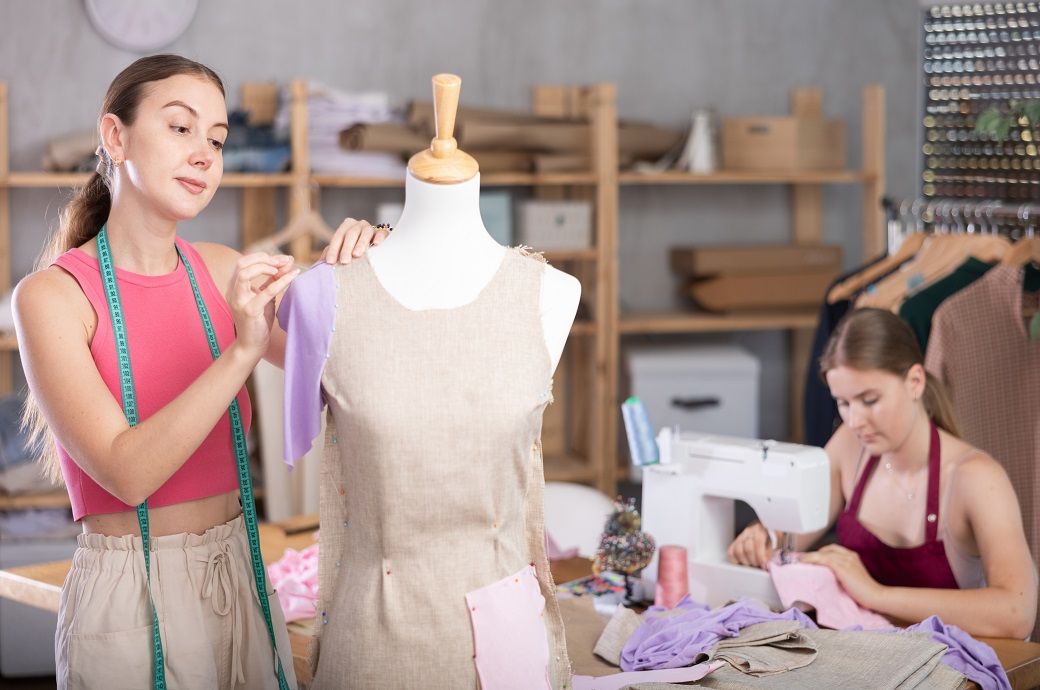
The CFDA x NY Forward Grant Fund, developed with funding from both the New York State Department of State and Ralph Lauren Corporation (Ralph Lauren), will provide partially matching grants to designers and manufacturers based in New York City’s Garment District. The U.S. Fashion Manufacturing Fund, created with Ralph Lauren as founding partner, will support apparel manufacturers nationwide. Both programs aim to help companies to modernize equipment, expand services, and train workers – building the capacity and resilience of American fashion manufacturing.
CFDA has launched two new grant programmes with Ralph Lauren to strengthen American fashion manufacturing.
The CFDA x NY Forward Grant Fund will support New York City’s Garment District, while the US Fashion Manufacturing Fund will aid manufacturers nationwide, focusing on modernisation, workforce training, innovation and long-term industry resilience.
These programs build on the success of the CFDA’s Fashion Manufacturing Initiative (FMI), launched in 2013 in affiliation with the New York City Economic Development Corporation (NYCEDC), Andrew Rosen, and with the long-term support of Ralph Lauren, among others. To date, Ralph Lauren has contributed $2 million as FMI’s Premier Underwriter, enabling grants to 54 factories and positively impacting more than 2,000 jobs.
“Strengthening American manufacturing to ensure designers have local partners has long been at the core of CFDA’s mission,” said Steven Kolb, CEO and President of the CFDA. “We are proud to extend our decade-plus work with Ralph Lauren Corporation and expand to a national level while also continuing our local NYC investments alongside our first-ever partnership with the New York State Department of State.”
Together, these new grant programs mark a landmark commitment: sustaining New York’s Garment District while bolstering U.S. manufacturing nationwide — ensuring that American fashion continues to lead globally through innovation, craftsmanship and community.
“Our expanded partnership with the CFDA reflects Ralph Lauren’s enduring commitment to advancing innovation and supporting American fashion,” said Katie Ioanilli, Chief Global Impact & Communications Officer, Ralph Lauren Corporation. “This is not only an investment in our industry — it’s an investment in a vital part of American culture that we share with the world.”
Note: The headline, insights, and image of this press release may have been refined by the Fibre2Fashion staff; the rest of the content remains unchanged.
Fibre2Fashion News Desk (RM)

Economic momentum remained strong at the end of 2025, with real GDP expanding 8.4 per cent year on year (YoY) in the fourth quarter, the fastest pace in several years. Growth was driven by robust export-oriented industrial production. Credit growth surged to 19.4 per cent YoY by December, well above deposit growth of 14 per cent, SBV said in a release.
Vietnam’s interbank rates, which rose sharply in late 2025, are expected to ease in 2026 as credit growth and economic momentum cool.
GDP expanded 8.4 per cent year on year in Q4, while credit growth of 19.4 per cent outpaced deposits.
Despite a strong 2025, US tariff risks remain.
The SBV is likely to keep rates steady while targeting slower credit growth.
While Vietnam enters 2026 on a positive footing after achieving an estimated 8 per cent growth in 2025, external risks remain significant for the export-driven economy. Goods exports to the US, which account for around 30 per cent of the total, face the lagged impact of 20 per cent reciprocal tariffs, uncertainty over transshipment duties, and the risk of additional sectoral measures, including possible semiconductor levies.
Monetary authorities have signalled a cautious policy stance for 2026 despite an official GDP growth target of 10 per cent, which analysts view as difficult to achieve. Growth is expected to moderate to around 6.5 per cent, while the SBV has set a lower credit growth target of 15 per cent to limit overheating and resource misallocation risks.
The refinancing rate is expected to remain unchanged at 4.50 per cent, though the possibility of an unexpected rate hike cannot be ruled out if liquidity strains persist.
Fibre2Fashion News Desk (HU)


Budget 2026 Should Support MSMEs, Critical Minerals For Boosting Trade Resilience: Deloitte

Australia’s apparel imports fall, textiles rise in July-Nov 2025

Robert Downey Jr. hails Timothée Chalamet as ‘one of the greats’

-

 Politics1 week ago
UK says provided assistance in US-led tanker seizure
-

 Entertainment1 week ago
Does new US food pyramid put too much steak on your plate?
-

 Entertainment1 week ago
Why did Nick Reiner’s lawyer Alan Jackson withdraw from case?
-

 Sports5 days ago
Clock is ticking for Frank at Spurs, with dwindling evidence he deserves extra time
-
 Business1 week ago
Trump moves to ban home purchases by institutional investors
-

 Sports1 week ago
PGA of America CEO steps down after one year to take care of mother and mother-in-law
-

 Tech3 days ago
New Proposed Legislation Would Let Self-Driving Cars Operate in New York State
-
 Business1 week ago
Bulls dominate as KSE-100 breaks past 186,000 mark – SUCH TV