

Business
SIFC to take final decision on chemical licences | The Express Tribune


Industries demand extension in date for acquiring licences, get assurance from DG explosives
ISLAMABAD:
The issue of delay in extension for acquiring dangerous petroleum licences has landed in the Special Investment Facilitation Council (SIFC) as the business community of Karachi is disappointed over the absence of a solution.
Sources said that the extension was discussed in SIFC, which would take the final decision and it would be binding for the Ministry of Petroleum/Explosives.
They said that a meeting was held in Karachi between DG Explosives Abdul Ali Khan and the Federation of Pakistan Chambers of Commerce and Industry (FPCCI) to discuss issues related to dangerous petroleum licences required for the release of consignments of chemicals and petrochemicals for industrial and commercial consumers. They fall under petroleum Classes A, B and C.
FPCCI Senior Vice President Saquib Fayyaz Magoon asked the DG to consider the extension in acquiring licences, which had already expired on October 23, 2025. The matter has been under discussion for the last one year and the stakeholders have yet to reach a solution. He emphasised that traders would certainly abide by provisions of the relevant law but the Department of Explosives was asking for the dangerous petroleum licence for chemicals which were not hydrocarbons and the demand was unjustified.
It is clear from the definitions of petroleum and petrochemicals that both are different products based on their use. Petrochemicals are basic raw material for almost all industries and the majority of consignments are imported by commercial importers whereas direct import by industrial consumers comprises 18-22%. For instance, the chemicals used in the textile industry and the raw material for other industries are not hydrocarbons.
Department of Explosives Director General Abdul Ali Khan said that recent amendments to the Petroleum Act 1934 showed that things had not changed with respect to norms and standards, ie, the petroleum products which included Classes A, B and C. As far as the industrial consumers were concerned, he said, the ministry had a soft corner for them and things were being streamlined.
In case of commercial importers and traders, he argued, there was a need to regulate the products coming under the purview of the Petroleum Act 1934.
The DG stressed that the ministry had been actively sorting out the issue since September 2023 and it should be regulated either by the Department of Explosives or the Ministry of Environmental Coordination. The government was committed to settling the issue, which was why the last date to acquire the licence was being extended from time to time, he said.
An industrialist belonging to the tannery sector said that apart from the problems discussed, the leather industry was concerned about the availability of raw material such as formic acid.
While pointing to the interpretation of federal and provincial laws, the DG emphasised that various courts had ruled that the federal law would prevail over provincial laws if the laws were related to the same subject. He highlighted that the laws of the Environmental Protection Agency and the Department of Explosives were overlapping and clarified that the NOC and licence were two different things as the NOC could not be a licence.
A chemical company representative told meeting participants that their principals abroad were questioning about import restrictions, saying that trade in formic acid was not restricted by any licence worldwide. The DG revealed that some stakeholders had acquired dangerous petroleum licences in Punjab and the number may increase in future.
A representative of the Pakistan Chemical and Dyes Merchants Association (PCDMA) said that a huge quantity of products, coming under the ambit of dangerous petroleum licence, was being imported by commercial importers and the percentage of industrial consumers was not more than 15-20%.
The DG told meeting participants that major items, according to a list provided to PCDMA, may be tested by reputable laboratories to find hydrocarbon content and those items in which no hydrocarbon was detected would not be included in the category.
The PCDMA representative said that the collection of samples and their testing by laboratories may take some time. Therefore, the last date to obtain dangerous petroleum licences may be extended in such a manner that the stakeholders have ample time to get the samples tested. The DG said that he had already forwarded the proposal of a two-month extension to the government.






Now one of the biggest sportswear firms, Anta’s rise follows a playbook adopted by many Chinese giants.
Source link
Business
Gold price prediction today: Will gold prices continue to be volatile? Key levels to watch out for April 27, 2026 week – The Times of India

Gold price prediction today: Gold prices will closely track movements on the rate decisions by several central banks, including the US Federal Reserve, this week, says Manav Modi, Senior Analyst, Commodity Research at Motilal Oswal Financial Services Ltd.Gold is currently consolidating after sharp swings in a broad range, indicating a pause rather than a reversal. Price action shows a higher-high structure intact, but the recent sideways movement suggests indecision near the upper supply zone around 158,000–160,000. The formation resembles a short-term flag/triangle continuation pattern, where a breakout on either side will define the next directional move. Volume has tapered slightly, reinforcing the consolidation narrative.Gold prices recently moved from the upper band toward the mid-band (20 DMA), and are now attempting to stabilize. The bands have started to contract, signaling a potential volatility expansion ahead. Sustaining above the mid-band (~150,500–151,000 zone) keeps bullish bias intact, while a breakdown below this could trigger a deeper mean reversion toward the lower band.For the week, immediate support for gold prices is placed at around Rs 150,500, which is followed by stronger support near Rs 148,500. On the upside, the resistance stands at around Rs 155,500, and after that the key supply zone is at Rs 158,000. A decisive close for gold above Rs 158,000 levels can then resume the broader uptrend. However, a break in gold prices below levels of Rs 148,500 may shift the momentum to bearish in the near term.The economic docket is filled with data points and events this week as the focus will be on FED, BOJ, ECB and ECB policy meetings. US consumer confidence, GDP, inflation and durable goods orders data will also be in radar.(Disclaimer: Recommendations and views on the stock market, other asset classes or personal finance management tips given by experts are their own. These opinions do not represent the views of The Times of India)

British families tell BBC Panorama how the Iran war is affecting their monthly budgets.
Source link


UNCTAD, Maritime and Port Authority of Singapore launch partnership

Lexie Brown denies Klay Thompson cheated on Megan Thee Stallion with her

Strait of Hormuz disruption ‘systemic shock’ threatening SE Asia: ERIA

-

 Sports1 week ago
WWE WrestleMania 42 Night 2: Live match results and analysis
-

 Sports1 week ago
NCAA men’s gymnastics championship: All-time winners list
-

 Fashion1 week ago
UK’s Sosandar returns to profitability amid robust FY26 performance
-

 Politics6 days ago
UK’s Starmer seeks to deflect blame over Mandelson appointment
-

 Entertainment7 days ago
Lee Anderson, Zarah Sultana kicked out of UK Parliament for calling PM ‘liar’
-

 Entertainment1 week ago
Ruby Rose old essay resurfaces detailing night of alleged Katy Perry assault
-

 Entertainment1 week ago
Nathalie Baye, low-key legend of French cinema, dies aged 77
-
 Business1 week ago
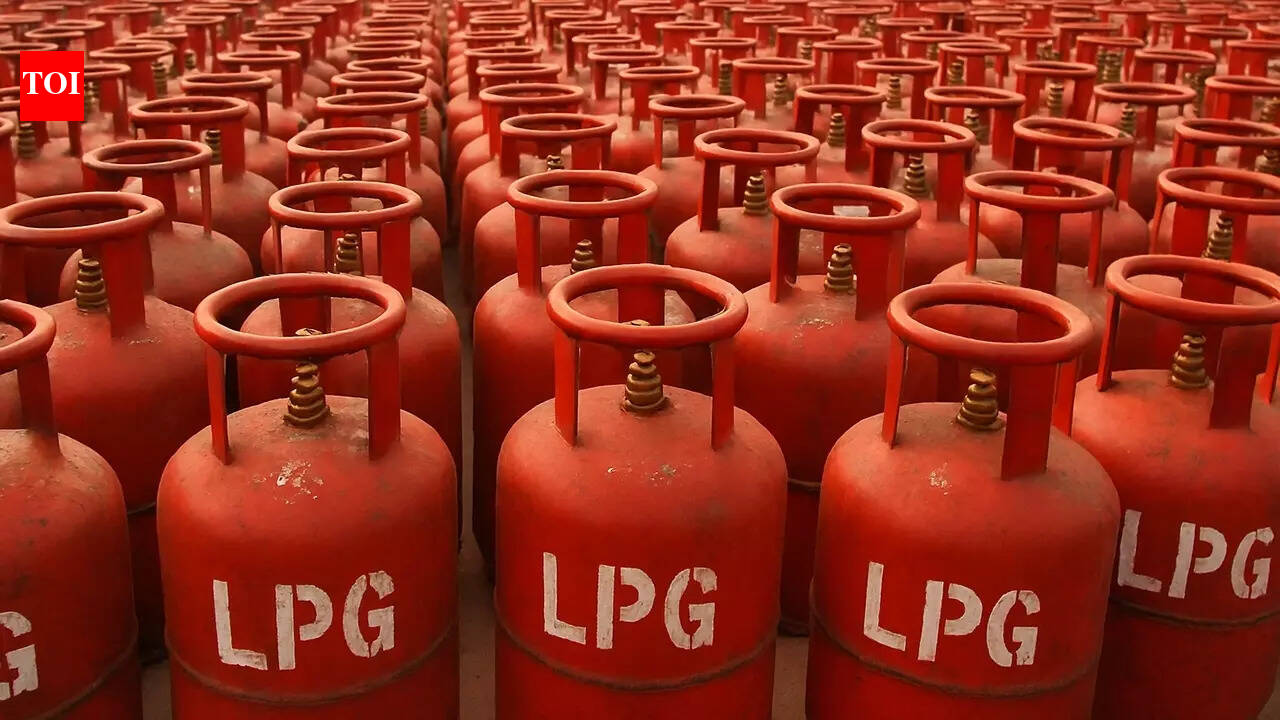
No fuel shortage: Govt assures 100% domestic LPG, PNG, CNG supply amid Hormuz energy crunch – The Times of India