

Business
MNCs exit clouds startup growth | The Express Tribune


LAHORE:
At a time when Pakistan is grappling with the departure of some multinational giants, an unexpected surge in new business registrations has added a complex layer to the country’s investment outlook.
The Securities and Exchange Commission of Pakistan (SECP) has recently reported that 14,802 new companies were registered during the first four months of FY26, a development the regulator says reflects strong investor confidence. Yet business leaders warn that such growth does not offset the economic and reputational risks created when global corporations pull out.
The contrasting trends, fresh entrepreneurship on one hand and multinational exits on the other, have raised questions about whether Pakistan is entering a phase of renewal or quietly losing ground in global competitiveness.
Muddasir Masood Chaudhry, Senior Vice Chairman of the Pakistan Industrial and Traders Association Front (PIAF), says the recent uptick in registrations is encouraging, but it cannot overshadow the deeper systemic issues that continue to push international companies away.
SECP data shows that 99.9% of new incorporations were processed online, bringing the total number of registered companies in Pakistan to 272,918. The regulator added that the total paid-up capital recorded during July-October FY26 reached Rs20.59 billion ($74.1 million).
Private limited companies accounted for 59% of new registrations, while single-member firms made up 37%. The IT and e-commerce sectors led the surge with 2,999 new companies, followed by trading (1,954), services (1,807), and real estate development and construction (1,393).
Chaudhry acknowledges these numbers as a positive signal of domestic entrepreneurial activity but stresses that local dynamism alone cannot compensate for the strategic loss caused when major global players leave.
“Every exit of a multinational hurts not just foreign investor sentiment, but also local morale,” he said, adding, “When companies with decades of presence depart, it sends a message that doing business here has become unpredictable.”
The challenges, Chaudhry highlighted, include high corporate taxes, complex regulatory frameworks, heavy utility costs, and restrictions on moving profits abroad. He called on the government to introduce a simpler tax system with fewer, lower-rate taxes, ensure quick resolution of legal matters, and create an investment protection policy that encourages long-term commitment from foreign firms.
The pattern of exits has accelerated in recent years. Some global companies have restructured internationally, reallocating operations and retreating from multiple regions, a trend Pakistan cannot isolate itself from.
Shell Petroleum’s transition to a new operational model and the transfer of certain business units to local partners are one such example. But industry officials say not every departure can be explained by global realignment. Many firms have cited Pakistan’s difficult regulatory environment, profit repatriation restrictions, and high corporate taxation as decisive factors.
One senior executive of a multinational company, who requested anonymity, said, “It’s not that Pakistan lacks potential; the challenge is that the cost of operating here keeps shifting. Whether it’s profit repatriation delays or unexpected changes in tax policy, the uncertainty becomes the biggest barrier.”
Senior market analyst Muhammad Salman said that Pakistan has reached an inflection point. “The rise in new company registrations shows that local entrepreneurship is alive and resilient, but this alone cannot substitute for the stability, technology transfer, and long-term capital that multinationals provide. If Pakistan does not fix tax unpredictability, regulatory complexity, and the high cost of compliance, the divide between local energy and global withdrawal will keep widening.”
Meanwhile, SECP’s data also shows that investment interest is not completely drying up. Though the foreign direct investment (FDI) in the first four months of FY26 dropped by 26% as per the State Bank of Pakistan (SBP), 332 newly registered companies received foreign capital between July and October, spanning sectors from IT to energy and manufacturing.
Nearly 30% of all new incorporations came from around 250 smaller cities and towns, demonstrating the widening reach of digital company registration.
Still, despite these positive signals, Chaudhry insisted that Pakistan cannot afford complacency. “New entrants are always welcome, but the departure of established multinationals is not something we can dismiss,” he said, adding, “When global companies restructure, Pakistan must adapt, but when they leave because our environment is too challenging, that is a warning we must take seriously.”






Malaysia-based Karex produces more than five billion condoms a year and supplies global brands like Durex and Trojan.
Source link

Tesco Pet Insurance, who provided the cover, says “the cost of claims is one of a number of factors that can affect the price of a policy at renewal” and also noted Tilly’s age had been reflected in the quote. It says the couple had a more comprehensive policy, which typically costs more than basic levels of cover, and that alternative options were presented to Fawcett and Neild.
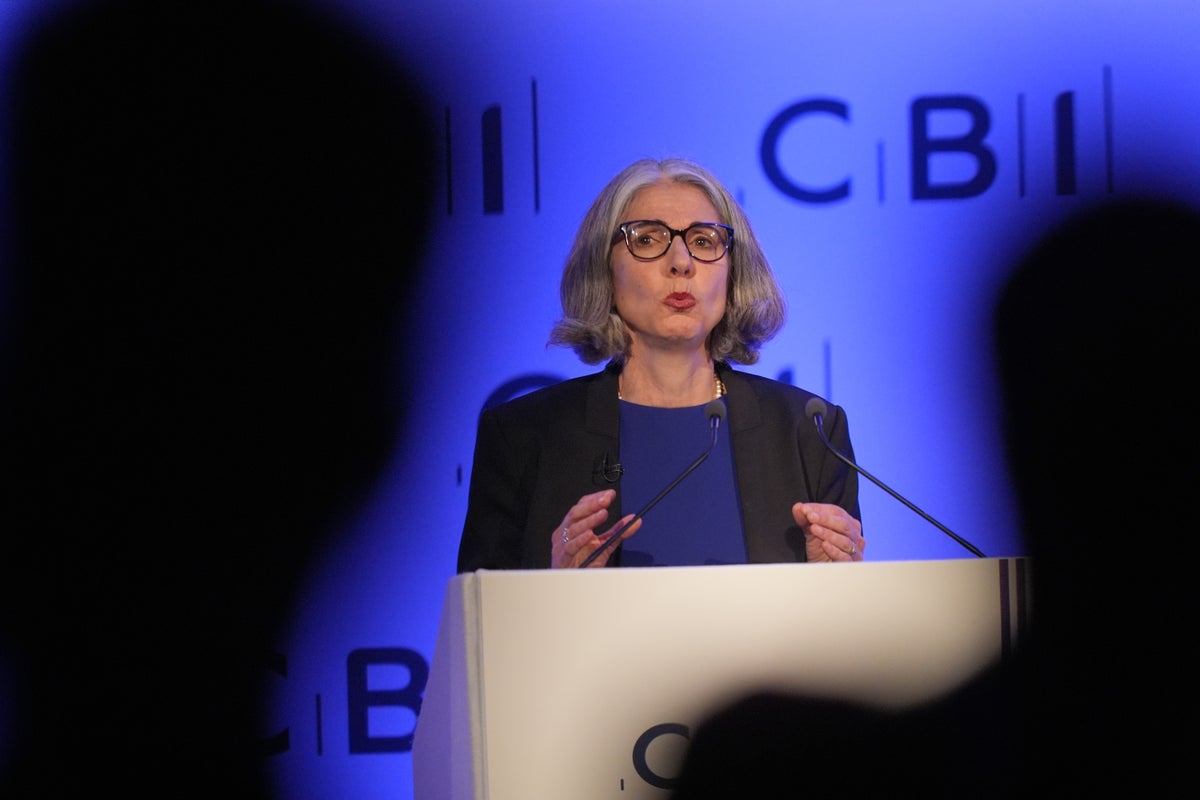
The UK must not “cut ourselves off” from trade opportunities in China despite security and business risks, the head of the Confederation for British Industry has warned.
CBI chief Rain Newton-Smith highlighted that British businesses see increased trade with Chinese firms as an opportunity to drive growth.
Her remarks came as business leaders were questioned by MPs on Parliament’s Business and Trade Select Committee regarding the UK’s economic relationship with China.
Last December, Prime Minister Sir Keir Starmer admitted China poses security threats to the UK but urged for greater business ties.
Ms Newton-Smith, chief executive of one of the UK’s largest business groups, was positive about the Government’s engagement with China.
“You can’t have a growth strategy without a strategy for China,” she said.
“China has the biggest contribution to global growth, is the third largest trading partner, and the world’s largest consumer market.
“The UK is second largest exporter of trade and services.
“We are mindful as all businesses are of security risks but it is really important that we have a strategy towards China.
“This Government has increased the economic engagement with China and including business within this does help us as a country.”
She added: “If we think about the future economy, there is a huge market in China and I think we mustn’t cut ourselves off from some of the opportunities there, even if in some areas there are difficult conversations and negotiations that need to be had.”
Peter Burnett, chief executive of the China-Britain Business Council, told the committee: “There are risks associated with technology advancement, AI, industrial development that they need to assess.
“Increasingly you will find them saying that they need to engage more in China to understand those risks and to develop some of the technologies along some of those risks themselves.”


IMF to give specific attention to low-income, vulnerable nations

A case for fuel reforms
World’s biggest condom maker Karex set to raise prices due to Iran war

-

 Fashion6 days ago
France’s LVMH Q1 revenue falls 6%, shows resilience amid Iran war
-

 Sports1 week ago
The case for Man United’s Fernandes as Premier League’s best
-

 Entertainment1 week ago
Palace left in shock as Prince William cancels grand ceremony
-
 Business1 week ago
UK could adopt EU single market rules under new legislation
-

 Entertainment7 days ago
Is Claude down? Here’s why users are seeing errors
-

 Fashion1 week ago
Energy emerges as biggest cost driver in textile margins
-
 Business1 week ago
Delta Air Lines unveils first new Delta One suite in premium cabin arms race
-

 Fashion1 week ago
Asia claims largest share of markets on Kearney FDI Confidence Index