

Business
Will Crude Oil Become Cheaper Than Water? Experts See A Massive Price Fall By March 2027

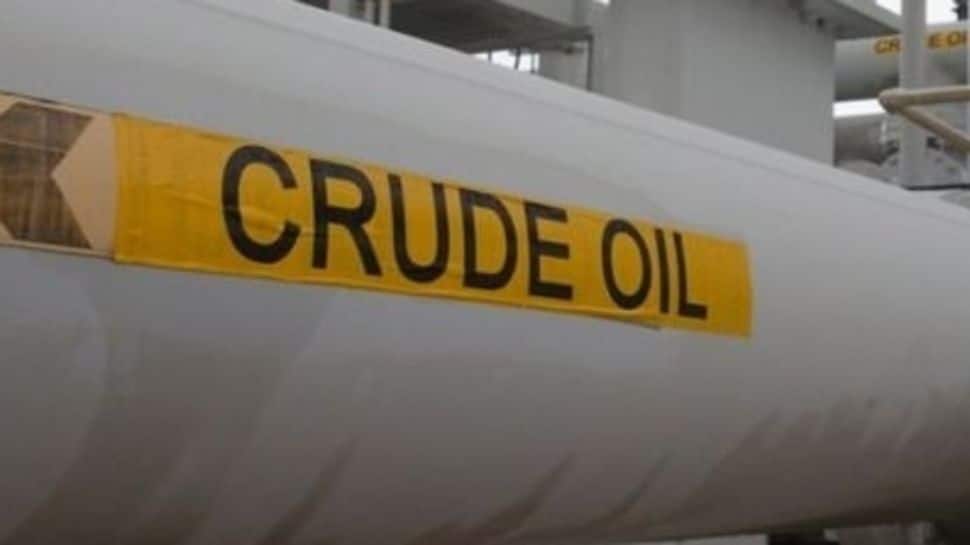
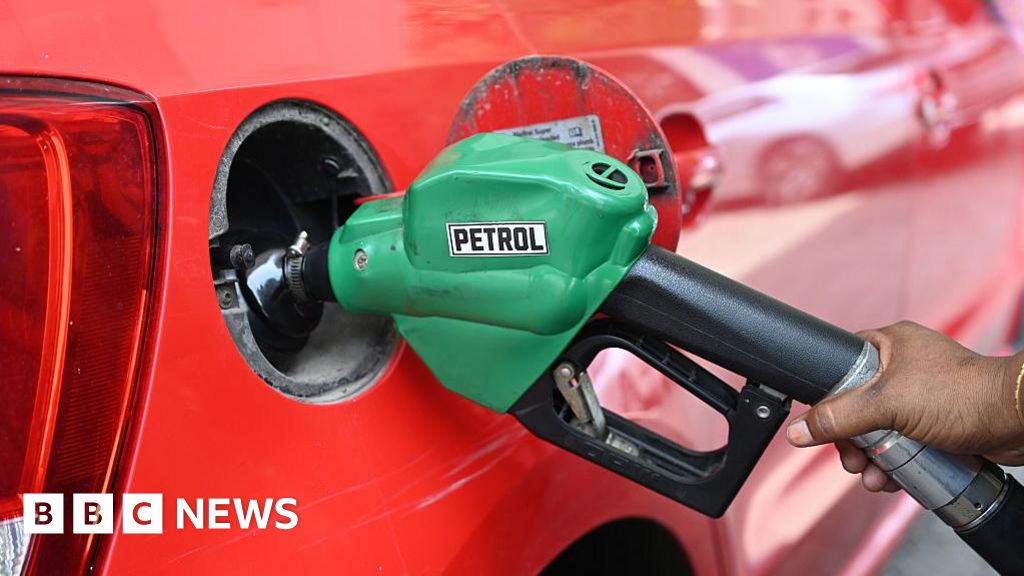
New Delhi: Crude oil prices in the international market could soon fall below the cost of a bottle of drinking water, and this is not an exaggeration. According to projections by global brokerage giant JP Morgan, Brent crude could drop to $30 per barrel by March 2027.
If converted to Indian rupees at an estimated exchange rate of Rs 95 per dollar, the price of one barrel would come to roughly Rs 2,850. Given that a barrel contains 159 litres, this would bring the cost of one litre of crude to just Rs 17.90, cheaper than the average price of bottled water in Delhi, which presently ranges between Rs 18 and Rs 20 per litre.
A Major Price Drop
JP Morgan’s forecast is significant for countries that rely heavily on crude imports. The firm estimates that Brent crude could fall more than 50% from present levels, which are hovering just above $62 per barrel. The expected decline is primarily due to a surge in global supply that could exceed demand.
Even though global oil consumption is projected to rise steadily over the next three years, supply growth, particularly from non-OPEC+ countries (Russia, Mexico, Kazakhstan, Oman, Malaysia, Sudan & South Sudan, Azerbaijan, Bahrain, Brunei and Singapore), is expected to outpace demand. This supply glut is likely to put considerable downward pressure on prices.
Global Demand, Supply Dynamics
In 2025, global oil demand is expected to grow by 0.9 million barrels per day (mbpd), reaching a total consumption of 105.5 mbpd. Growth is predicted to remain steady in 2026 and could rise to 1.2 mbpd in 2027.
However, JP Morgan forecasts that supply growth will significantly exceed these demand hikes. In 2025 and 2026, supply could expand nearly three times faster than demand. By 2027, supply will continue to outpace consumption, creating an oversupply that could depress prices further.
Non-OPEC+ Drives Oil Supply Boom
One of the key drivers of this oversupply will be production from non-OPEC+ countries. JP Morgan highlights that roughly half of the expected supply surplus by 2027 will come from outside the traditional OPEC+ coalition (Saudi Arabia, Iraq, UAE, Kuwait, Iran, Venezuela, Nigeria, Libya, Algeria, Angola, Gabon, Republic of the Congo and Equatorial Guinea), fuelled by steady offshore growth and global shale production.
Once considered a high-cost cyclical sector, offshore oil has now become a reliable low-cost growth engine. JP Morgan projects offshore additions of 0.5 mbpd in 2025, 0.9 mbpd in 2026 and 0.4 mbpd in 2027.
Most floating production, storage and offloading (FPSO) units required for this expansion have already been approved, making this growth highly probable.
Shale, Other Key Supply Sources
Shale oil remains the most flexible lever in global supply. While US shale growth is slowing, efficiency and productivity improvements continue to support output. In addition, Argentina’s Vaca Muerta region has emerged as a low-cost scalable source thanks to improvements in export infrastructure.
Global shale supply is expected to increase by 0.8 mbpd in 2025. Assuming prices remain around $50 per barrel, production could grow by another 0.4 mbpd in 2026 and 0.5 mbpd in 2027. This surge in supply has already contributed to a rise in global inventories, which increased by 1.5 mbpd this year alone, including roughly 1 mbpd in floating storage and Chinese stockpiles.
JP Morgan expects this surplus layer to continue through 2026, with inventories potentially reaching 2.8 mbpd in 2026 and 2.7 mbpd in 2027 if no supply adjustments are made.
How $30 Per Barrel Could Happen
This imbalance could push Brent crude below $60 in 2026, possibly dropping to around $50 in the final quarter of the year. Average prices could fall to $42 by 2027, with end-of-year levels approaching $30 per barrel.
While supply cuts could be used to stabilise prices, hitting $30 would be challenging. The forecast suggests Brent could trade around $58 per barrel in 2026, slightly below current levels above $60.
Impact On Petrol, Diesel Prices In India
Such a dramatic fall in crude prices would be a major benefit for India. Petrol and diesel prices could drop substantially, easing the burden on consumers.
At present, Brent crude imports cost India over Rs 5,600 per barrel due to both price and rupee depreciation. By 2027, even if the rupee weakens to Rs 100 per dollar, the cost per barrel would still fall to around Rs 3,000 (roughly Rs 2,600 cheaper than current levels).
This provides ample room for the government and oil companies to reduce retail fuel prices.




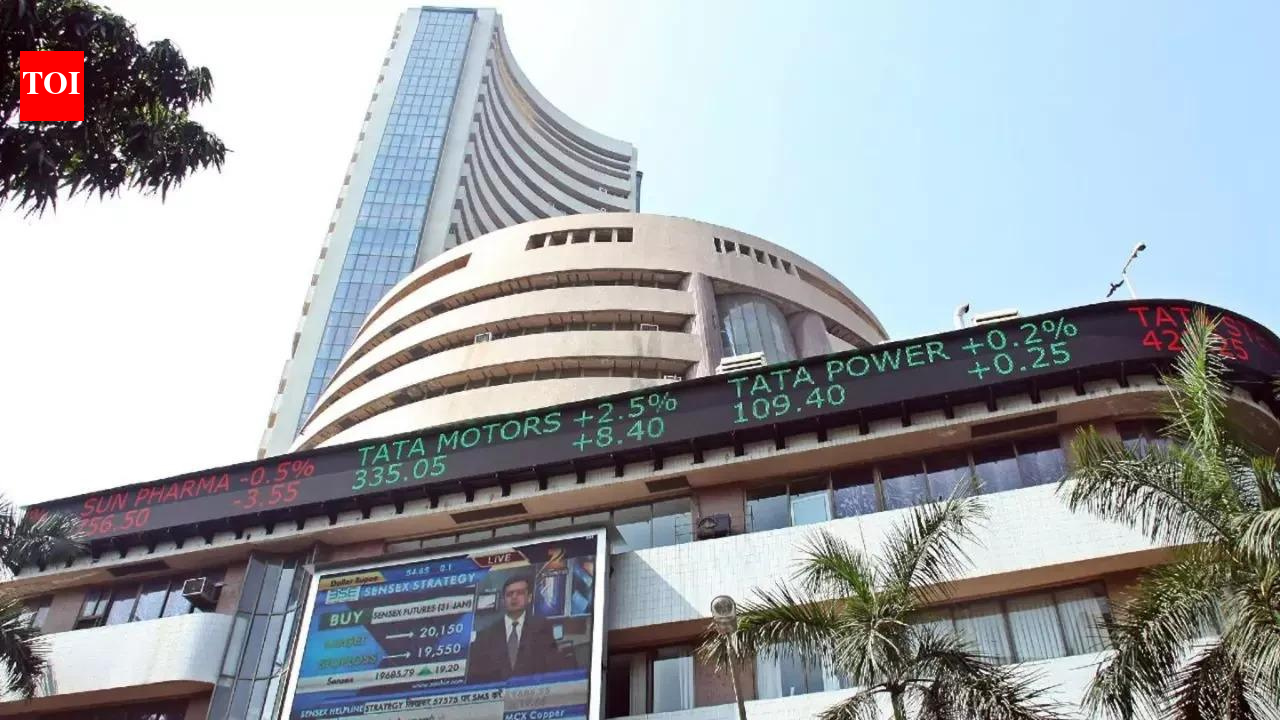
Stock market rallied sharply on Monday, with the Sensex soaring more than 1,000 points and the Nifty reclaiming the 24,000 mark, as easing geopolitical tensions in West Asia and falling crude oil prices boosted investor sentiment globally.The 30-share BSE Sensex jumped 1,073.61 points, or 1.42 per cent, to close at 76,488.96, while the NSE Nifty 50 surged 312.40 points, or 1.32 per cent, to settle at 24,031.70.The rally came after optimism grew around a possible agreement between the United States and Iran, following remarks by US President Donald Trump over the weekend that a deal was “largely negotiated”.
Nifty50 top gainers
| Company Name | Current Price (Rs) | Price Change | % Change |
|---|---|---|---|
| Eicher Motors | 7,414 | 433.00 ↑ | 6.20% ↑ |
| Adani Ent. | 2,850 | 132.00 ↑ | 4.88% ↑ |
| Bajaj Finance | 941.90 | 25.40 ↑ | 2.77% ↑ |
| Tata Motors PV | 373.25 | 9.90 ↑ | 2.73% ↑ |
| L&T | 4,033 | 107.00 ↑ | 2.72% ↑ |
| HDFC Bank | 786.85 | 20.10 ↑ | 2.62% ↑ |
| Eternal | 247.67 | 5.72 ↑ | 2.37% ↑ |
| Bajaj Finserv | 1,807 | 41.40 ↑ | 2.35% ↑ |
| Kotak Bank | 392.85 | 8.71 ↑ | 2.27% ↑ |
| Shriram Finance | 961.95 | 21.00 ↑ | 2.23% ↑ |
Sensex top gainers
| Company Name | Current Price (Rs) | Price Change | % Change |
|---|---|---|---|
| Bajaj Finance | 941.90 | 25.40 ↑ | 2.77% ↑ |
| L&T | 4,033 | 107.00 ↑ | 2.72% ↑ |
| HDFC Bank | 786.85 | 20.10 ↑ | 2.62% ↑ |
| Eternal | 247.67 | 5.72 ↑ | 2.37% ↑ |
| Bajaj Finserv | 1,807 | 41.40 ↑ | 2.35% ↑ |
| Kotak Bank | 392.85 | 8.71 ↑ | 2.27% ↑ |
| ICICI Bank | 1,292 | 27.50 ↑ | 2.18% ↑ |
| SBI | 969.60 | 20.40 ↑ | 2.15% ↑ |
| Axis Bank | 1,311 | 25.80 ↑ | 2.01% ↑ |
| Titan Company | 4,159 | 79.40 ↑ | 1.95% ↑ |
Nifty50 top losers
| Company Name | Current Price (Rs) | Price Change | % Change |
|---|---|---|---|
| Max Healthcare | 1,001 | -22.40 ↓ | -2.19% ↓ |
| ONGC | 284.95 | -5.06 ↓ | -1.75% ↓ |
| Hindalco | 1,100 | -9.61 ↓ | -0.87% ↓ |
| Nestle India | 1,414 | -9.50 ↓ | -0.67% ↓ |
| Bajaj Auto | 10,491 | -58.50 ↓ | -0.56% ↓ |
| Infosys | 1,169 | -6.00 ↓ | -0.52% ↓ |
| TCS | 2,308 | -9.11 ↓ | -0.40% ↓ |
| Tata Consumer | 1,187 | -4.60 ↓ | -0.39% ↓ |
| HUL | 2,197 | -7.10 ↓ | -0.33% ↓ |
| Sun Pharma | 1,841 | -4.00 ↓ | -0.22% ↓ |
Sensex top losers
| Company Name | Current Price (Rs) | Price Change | % Change |
|---|---|---|---|
| Infosys | 1,169 | -6.00 ↓ | -0.52% ↓ |
| TCS | 2,308 | -9.11 ↓ | -0.40% ↓ |
| HUL | 2,197 | -7.10 ↓ | -0.33% ↓ |
| Sun Pharma | 1,841 | -4.00 ↓ | -0.22% ↓ |
| Kwality Wall’s | 26.33 | -0.06 ↓ | -0.19% ↓ |
Oil prices tumble as Iran deal hopes rise
Investor confidence improved as markets increasingly priced in the possibility of a diplomatic breakthrough between Washington and Tehran, which could lead to the reopening of the Strait of Hormuz and ease global energy supply concerns.According to news agency ANI, market expert Ponmudi R said optimism surrounding a potential US-Iran agreement revived risk appetite across global markets.“Investor sentiment improved significantly after Donald Trump stated over the weekend that a deal was ‘largely negotiated’, encouraging markets to increasingly price in the possibility of a near-term diplomatic resolution,” he said.He added that markets would look for the “successful implementation of a lasting peace agreement and the credible reopening of the Strait of Hormuz”.Brent crude prices dropped sharply below the $100 per barrel mark and were trading around $98 per barrel, down more than 5 per cent during the session.The Indian rupee also recovered strongly, gaining 48 paise to trade at Rs 95.21 against the US dollar after recent weakness.
Banking stocks lead market rally
Financial stocks led the gains on Dalal Street. Bajaj Finance, Larsen & Toubro, HDFC Bank, Eternal, Bajaj Finserv and Kotak Mahindra Bank emerged among the top Sensex gainers.Sectorally, Nifty PSU Bank rose 2.73 per cent, while Nifty Private Bank advanced 2.02 per cent, as per ANI. Nifty Auto climbed 1.66 per cent and Realty gained 1.54 per cent.However, FMCG stocks remained under pressure. Infosys, Tata Consultancy Services, Sun Pharma and Hindustan Unilever were among the laggards.
Global markets gain amid improving sentiment
Asian markets also ended higher on Monday amid improving global risk appetite. Japan’s Nikkei 225 surged 2.76 per cent, while Taiwan’s weighted index jumped 3.15 per cent.European markets were trading in positive territory, while US markets had settled higher on Friday.Meanwhile, Foreign Institutional Investors (FIIs) offloaded equities worth Rs 4,440.47 crore on Friday, according to exchange data.
Business
PSX gains over 2,500 points as US-Iran peace hopes fuel bullish rally | The Express Tribune

KSE-100 surges past 170,000 intraday on strong institutional buying, easing geopolitical tensions
KARACHI:
The Pakistan Stock Exchange (PSX) extended strong bullish momentum on Monday as the benchmark KSE-100 Index hovered around 170,423.30 points at 1:24pm, up 2,579.06 points or 1.54% in intraday trade.
During the session, the benchmark index touched an intraday high of 171,519.26 points, while the day’s low was recorded at 170,161.66 points. Market participation remained strong, with traded volume reaching 125.96 million shares and total traded value standing at Rs11.75 billion.
Read: PSX gains 2,248 points in mixed week
Investor sentiment remained upbeat amid reports of a likely peace agreement between the United States and Iran, which boosted confidence across regional markets and improved risk appetite among investors.
Analysts said the rally was driven by aggressive institutional buying and renewed optimism over easing geopolitical tensions following progress in US-Iran negotiations.
The previous close of the KSE-100 index was 167,844.24 points.
Trump said on Saturday that an agreement would include the reopening of the Strait of Hormuz, without giving further details.
Source link


Financial conditions, oil prices concerns for India: RBI Bulletin

US govt formally implements extension of AGOA till 2026 end
Stock market today: Which are top gainers and losers on NSE & BSE on May 25? Check list

-

 Entertainment1 week ago
Where Pete Davidson, Elsie Hewitt stand after breakup: Details revealed
-

 Tech1 week ago
Why Is Your Grill So Dumb? The Best Grills Set Temp Like an Oven
-

 Tech1 week ago
This Solar-Powered Smart Sprinkler Keeps My Lawn Watered Without Any Power Cables
-
 Fashion7 days ago
Turkiye’s current account deficit expected to widen in 2026: Minister
-

 Fashion5 days ago
US cotton planting advances to 41%, concerns persist in Texas
-

 Fashion4 days ago
ICE cotton sees mixed trend as rain forecasts weaken sentiment
-

 Fashion1 week ago
India’s Pearl Global’s FY26 revenue crosses $521 mn milestone
-

 Tech1 week ago
A Danish Couple’s Maverick African Research Finds Its Moment in RFK Jr.’s Vaccine Policy