

Fashion
US debt projected to rise to 122% of GDP by 2035: CRFB


If the US Supreme Court rules the International Emergency Economic Powers Act (IEEPA) tariffs illegal, debt would rise further to 127 per cent of GDP, it estimates.
Debt would rise even higher—to 128 per cent of GDP—if tariffs were repealed in full or used for deficit-neutral rebates.
In light of US CBO’s updated tariff estimates and the incorporation of 2025 budget data from Treasury, the Committee for a Responsible Federal Budget now projects debt to rise to 122 per cent of GDP by 2035.
If the apex court rules the IEEPA tariffs illegal, debt may rise to 127 per cent of GDP.
Lawmakers should replace any lost tariff revenue and work to put the debt on a sustainable path, it suggested.
If the rebates were set at $2,000 annually regardless of tariff revenue coming in, debt could rise to 138-143 per cent of GDP, depending on if IEEPA tariffs are ruled illegal or not.
Debt projections have continued to rise beyond CBO’s January 2025 budget outlook, deepening a fiscal outlook that was already worrisome. Lawmakers should replace any lost tariff revenue and work to put the debt on a sustainable path, the Committee recommended. The longer they wait, the heavier the burden will be on future generations to restore fiscal stability, it noted.
Updated CBO projections show that tariffs enacted this year will reduce debt (including interest) by $3 trillion till fiscal 2034-35 (FY35), down from the $4 trillion projected in August, according to CRFB.
Excluding dynamic effects, CBO now projects $2.5 trillion of revenue as opposed to $3.3 trillion—with a third of the difference driven by announced policy changes and the other two-thirds due to updated estimates based on improved methods and the latest data.
Accounting for CBO’s updated tariff estimates, the Committee’s debt projections rise from 120 per cent of gross domestic product (GDP) in 2035 under the CRFB adjusted August 2025 baseline to 122 per cent of GDP.
The remaining one-third of the projections update was due to policy changes since August, such as the recent 10 percentage point reduction in tariffs on Chinese goods, product-specific tariffs on certain vehicles and vehicle parts and certain lumber and derivative products, reduced rates for goods from the European Union and Japan, and additional tariffs on India, CRFB noted.
If accounting only for policy changes, CBO’s updated estimates would have been roughly $3 trillion, down from $3.3 trillion and aligned with CRFB estimates.
If the Supreme Court upholds the ruling that IEEPA tariffs are illegal, then the primary deficit impact would likely drop to around $0.7 trillion, or roughly $0.9 trillion after interest, the Committee noted.
Fibre2Fashion News Desk (DS)










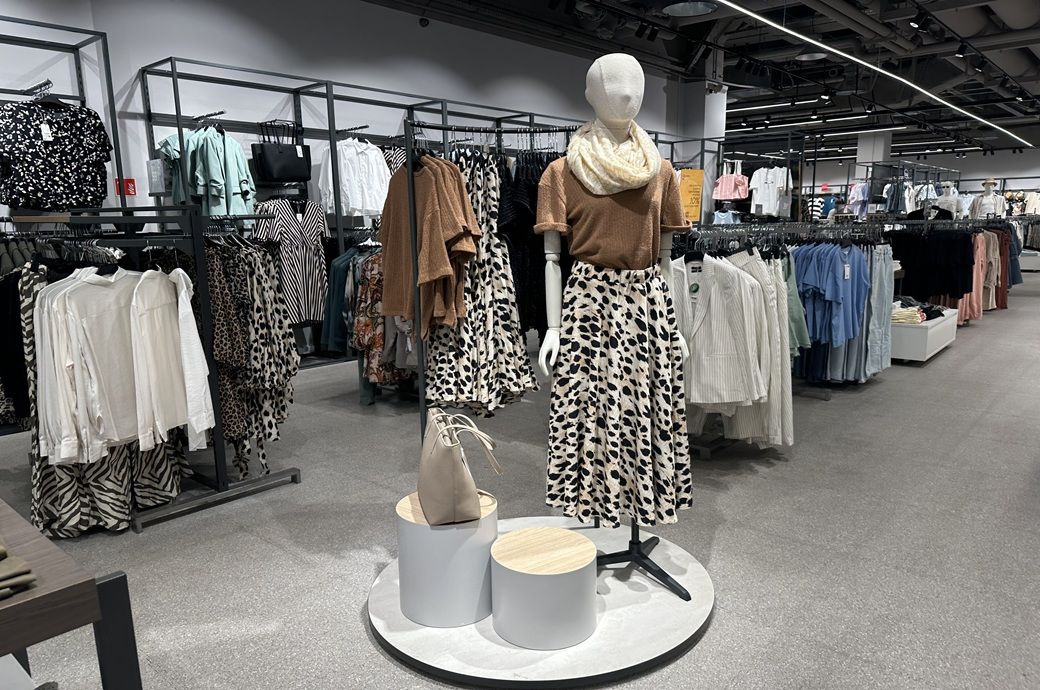
The company posted a revenue of £42.3 million (~$57.53 million) in FY26 ended March 31, 2026, up 14 per cent YoY from the previous year, supported by a 24 per cent surge in own-site sales. The growth was fuelled by higher website traffic, improved conversion rates and increased order volumes from both new and returning customers.
Sosandar reported FY26 revenue of £42.3 million (~$57.53 million), up 14 per cent, driven by strong online growth, with own-site sales rising 24 per cent.
The company returned to profitability with PBT of £0.4 million (~$0.54 million) and improved margins.
Despite slightly missing revenue expectations, performance remained solid.
Strong third-party sales supported confidence in profitable growth.
Sosandar noted strong performance across all categories, from occasion wear to casual collections, reflecting its ability to translate trends into its distinctive design aesthetic.
Profitability improved significantly during the year, with profit before tax expected to reach £0.4 million (~$0.54 million), compared to a loss of £0.1 million in FY25. Gross margin also strengthened to 63.9 per cent from 62.1 per cent, highlighting the company’s focus on margin enhancement and operational efficiency. Sosandar ended the year with net cash of £8.4 million, even after £1.8 million in share buybacks, up from £7.3 million a year earlier, Sosandar said in a press release.
The company noted that market expectations ahead of the announcement had been set at revenue of £43.1 million and profit before tax of £0.4 million for FY26, indicating that profitability is in line with forecasts, while revenue came in slightly below expectations.
The brand continued to perform strongly across third-party platforms, particularly with NEXT, reinforcing its position as a leading womenswear label in the UK market. Trading with Marks & Spencer also began to normalise following earlier disruptions, with stock intake returning to expected levels.
Sosandar’s physical retail presence delivered a positive uplift, with stores entering their second year of trading and locations in market towns performing particularly well. However, the company noted that stores are still weighing on overall profitability as they mature, especially those located in shopping centres. As a result, no new store openings are planned in the near term, with a focus instead on improving profitability at existing locations.
Looking ahead, the board expressed confidence in the company’s strategy, emphasising that strong foundations are in place to deliver sustainable, profitable and cash-generative growth.
Fibre2Fashion News Desk (SG)
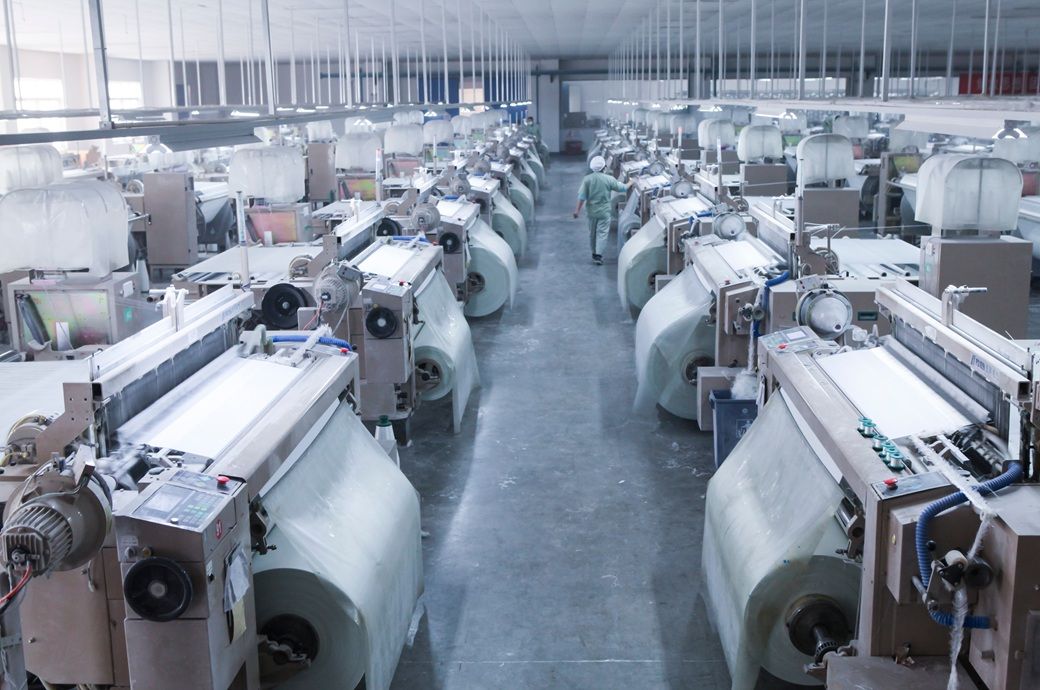
Firms also increased stock purchases to support rising output, with some resorting to precautionary inventory building amid concerns over disruptions linked to the ongoing Middle East conflict, the Central Bank of Sri Lanka said in a press release.
Sri Lanka’s manufacturing PMI surged to 66.7 in March from 56.8 in February, driven by strong gains in new orders and production, particularly in apparel.
Firms raised inventories amid Middle East-related risks.
However, supply constraints, rising costs, and logistics issues persisted, with delivery times worsening.
Employment growth slowed.
Outlook remains positive.
Despite robust demand, manufacturers reported a constrained operating environment due to raw material and fuel shortages, rising input costs, and logistical challenges. Supplier delivery times lengthened significantly to 75.5, reflecting shipping disruptions and demand pressures. Employment rose at a slower pace, indicating cautious hiring despite increased workloads.
Looking ahead, business expectations for the next quarter remain positive across sectors, supported by seasonal trends and emerging opportunities. However, concerns persist over the impact of the Middle East conflict, supply disruptions, and broader global economic uncertainty, which may weigh on future momentum.
Fibre2Fashion News Desk (SG)

The agreement covers the construction and operation of a 360-kilometre railway linking the main mining areas of Al-Shidiya and Ghor Al-Safi to the Port of Aqaba.
The United Aran Emirates and Jordan recently an agreement to develop a railway network in Jordan and establish the UAE-Jordan Railway Company.
The agreement covers the construction and operation of a 360-kilometre railway linking the main mining areas of Al-Shidiya and Ghor Al-Safi to the Port of Aqaba.
The project aims at transporting 16 million tonnes of phosphate and potash annually.
The project aims at transporting 16 million tonnes of phosphate and potash annually, with a total investment value of $2.3 billion. Both phosphate and potash are chemicals used in the textile industry.
The agreement was signed by UAE Minister of Energy and Infrastructure Suhail bin Mohamed Al Mazrouei and Jordan’s Minister of Transport Nidal Al-Qatamin.
The UAE-Jordan Railway Company was formally established as a joint venture between Abu Dhabi’s L’IMAD Holding Company (L’IMAD) and several Jordanian stakeholders, according to an official release in the UAE.
The joint venture will be responsible for the implementation, operation and maintenance of Jordan’s railway network through its executing arm, Etihad Rail, the developer and operator of the UAE’s national railway network.
The project will enhance Jordan’s export capabilities and logistics efficiency by directly linking phosphate and potash production sites to the Port of Aqaba, significantly reducing transport time and costs.
It will also support comprehensive economic development and open wide prospects for job creation across multiple sectors, leveraging the extensive expertise of Etihad Rail.
Fibre2Fashion News Desk (DS)


2026 NBA playoffs: Western Conference first-round takeaways

UK’s Sosandar returns to profitability amid robust FY26 performance

VAR review: Should Arsenal’s Gabriel have been sent off for headbutt?

-

 Fashion4 days ago
France’s LVMH Q1 revenue falls 6%, shows resilience amid Iran war
-

 Entertainment1 week ago
Palace left in shock as Prince William cancels grand ceremony
-

 Sports7 days ago
The case for Man United’s Fernandes as Premier League’s best
-
 Business1 week ago
100% road tax waiver for electric cars, new rules for 2, 3 and 4 wheelers – what Delhi govt’s draft EV policy says – The Times of India
-
 Business7 days ago
UK could adopt EU single market rules under new legislation
-

 Entertainment1 week ago
Dua Lipa hits major career high ahead of wedding with Callum Turner
-

 Sports1 week ago
Lamar Jackson hits back at critics with faithful message on social media
-

 Entertainment5 days ago
Is Claude down? Here’s why users are seeing errors