

Fashion
Heimtextil 2026 to feature Patricia Urquiola’s AI textile world

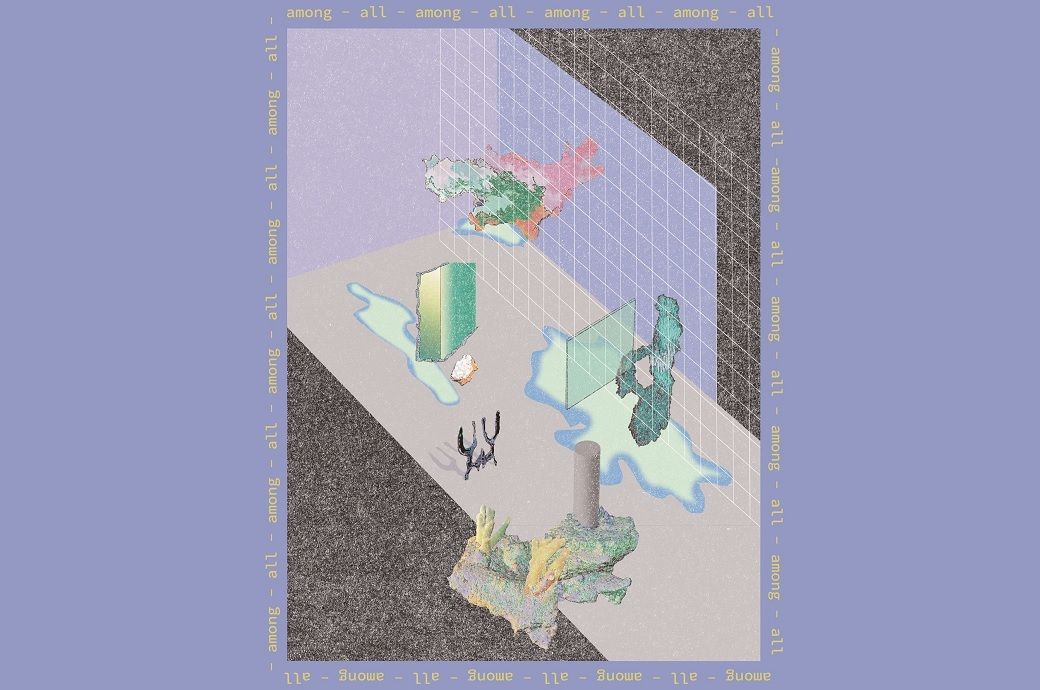
With ‘among-all’, Patricia Urquiola presents a new design installation in Hall 3.0 at Heimtextil 2026. Visitors actively shape the space. Their movements become part of the installation through AI. Patricia Urquiola demonstrates how textiles function as transformative and intelligent materials. They combine craftsmanship, technology, texture and structure. Textiles thus form the interface between people, materials and machinery.
Patricia Urquiola’s ‘among-all’ installation at Heimtextil 2026 will reimagine textile design through AI-enabled interaction, material innovation and circular principles.
To be located in Hall 3.0, it uses motion sensors, hybrid sculptures, ECONYL-based structures and salvaged textile remnants to create a responsive environment shaped by visitors’ movements.
‘among-all’ showcases the many possibilities of textiles, from soft, fluid surfaces to structural and rigid forms, revealing how fabric can shape space, gestures and interaction. It is the second chapter in an ongoing exploration of textile thinking. At its core, the installation reflects Patricia Urquiola’s research into material innovation and sustainability. It demonstrates how the life cycle of materials can be embedded in the design process from the very beginning, leading to more circular and responsible forms of creation.
“I’m very happy to return to Heimtextil in 2026 with ‘among-all’, the second chapter of our ongoing exploration into textile thinking. This new landscape listens and responds, inviting visitors to gently activate the space through their presence,” says Patricia Urquiola.
AI places human interaction at the centre
A 3D-printed portal by Caracol produced with its robotic platform Heron AM and made from ECONYL chips by Aquafil welcomes visitors into a future-facing design world. A large LED wall with motion sensors detects movement and uses AI to morph visitors into hybrid beings, merging body and technology in an immersive experience.
Sustainable design with circular materials
In addition, a hybrid sculpture introduces a material contrast with the synthetic fibres and highlights the project’s circular approach: it is made with Ohoskin, the Italian textile material derived from orange by-products and designed to offer a sustainable, high performance alternative to leather. Spread-out carpets rugs describe organic fields of texture and colour on the floor. They consist of woven selvages and production remnants from 13RUGS by rohi. The carpets from 13RUGS by rohi are made of woolen selvages, which are production remnants from the weaving mill of rohi textiles. From these woven fabric edges selvages (cimosa), two hanging grid structures are also created. They are connected to form open, tactile frameworks.
‘among-all’ is an entirely new installation. At the same time, it is a further development of ‘among-us’ from the previous edition of Heimtextil. In addition to new elements, Patricia Urquiola also transforms existing designs. The ‘Giano’ upholstered sculpture, for example, is given a new cover made from ECONYL yarns by cc-tapis. And digital elements evolve into physical objects. The design presentation looks to the future, combining materials, technology and interaction. Visitors become activators who actively change the space. In Hall 3.0 of Heimtextil, ‘among-all’ is a unique interactive experience.
Visitors have the opportunity to learn about the design process from Patricia Urquiola herself in the Architonic LIVE TALK. Guided tours of the space also provide background information on the materials and design elements.
Heimtextil 2026 takes place from 13 to 16 January 2026.
Note: The headline, insights, and image of this press release may have been refined by the Fibre2Fashion staff; the rest of the content remains unchanged.
Fibre2Fashion News Desk (KD)








Such countries include fragile and conflict-affected states and small developing states, especially where debt and financing pressures are mounting, he noted in his statement.
The IMF will continue to support countries in their efforts to promote stability and growth, including through sound macroeconomic policies, domestic resource mobilisation and better governance.
The chair of its International Monetary and Financial Committee said this support will include specific attention to low-income and vulnerable countries.
The committee called for enhanced debt transparency.
“We remain committed to further improving debt restructuring processes, including under the Common Framework, building on the progress already achieved, and advancing the work at the Global Sovereign Debt Roundtable (GSDR) to ensure debt restructurings are delivered in a predictable, timely, orderly and coordinated manner,” he said.
The committee called for enhanced debt transparency from all stakeholders, including private creditors.
“We will advance structural reforms to enable private sector-led investment, increase productivity, safeguard energy security, and elevate medium-term growth prospects,” added Aljadaan.
Fibre2Fashion News Desk (DS)
“The improved order situation in industry has brightened sentiment somewhat. However, as a result of the Iran war, energy costs have risen sharply, and uncertainty among companies has also increased. That runs counter to a stronger economic recovery,” said Timo Wollmershauser, head of forecasts at ifo.
Firms in Germany have raised investment plans, with ifo expectations rising to 0.2 points in March from -3.1 in December 2025.
Industry led gains, especially non-energy sectors, while energy-intensive segments and chemicals remained weak.
Services showed modest optimism, but trade stayed pessimistic.
Rising energy costs and geopolitical uncertainty temper recovery.
The most notable rise in the willingness to invest was in industry. Expectations rose to +0.1 points in March, up from -6.9 points in December. The outlook improved particularly strongly in non-energy-intensive industries, where significantly more companies were planning to expand their investments this year, ifo said in a press release.
In energy-intensive industries, however, the willingness to invest remains subdued. At -9 points in March, the balance remained virtually unchanged from December (-8.9 points). In the chemical industry, investment expectations even declined further, from -15.8 to -16.2 points.
Overall, the corresponding balance in manufacturing rose from -4.1 to +1.2 points. “Companies across all sectors also want to invest more in software. The growing use of artificial intelligence is likely to play a role in that,” said ifo economic expert Lara Zarges.
In trade, companies remain the most pessimistic. The balance of investment expectations stood at -9.6 points in March, virtually unchanged from the level in December. Service providers, on the other hand, confirmed their slightly positive outlook from December: Their investment expectations improved from +1.1 to +2.8 points.
The points for the ifo investment expectations indicate the percentage of companies that intend to increase their investments on balance.
Fibre2Fashion News Desk (SG)
The report highlighted that although overall energy demand growth slowed compared with 2024 and remained slightly below the previous decade’s average, electricity demand rose by around 3 per cent, driven by increased usage across buildings, industry, electric vehicles, and data centres.
Global energy demand growth slowed to 1.3 per cent in 2025, while electricity demand rose around 3 per cent, driven by EVs, industry, and data centres, according to IEA.
Solar PV led supply growth for the first time.
Oil demand grew modestly, and coal growth slowed.
CO2 emissions rose slightly.
Renewables and nuclear expansion highlighted an accelerating shift towards cleaner energy systems.
Solar photovoltaic (PV) emerged as the largest contributor to global energy supply growth for the first time, accounting for over 25 per cent of the increase. Natural gas followed with a 17 per cent share, while renewables and nuclear together met nearly 60 per cent of additional demand.
Global oil demand rose modestly by 0.7 per cent, reflecting the continued expansion of electric vehicles, with sales surpassing 20 million units in 2025. Coal demand growth slowed overall, with declines in China offset by increases in the United States due to high natural gas prices.
“Global energy demand continued to increase in 2025 against a complex economic and geopolitical backdrop, with one trend unmistakeable: the expanding electrification of economies,” said Fatih Birol, IEA executive director.
He added that electricity consumption was growing much faster than overall energy demand, with one energy source outpacing all others. He noted that solar PV accounted for over a quarter of global energy demand growth for the first time, followed by natural gas, and added that countries prioritising resilience and diversification would be better placed to manage volatility and ensure secure, affordable energy.
Regional trends varied significantly. Energy demand growth in the United States rose sharply, supported by industrial activity, data centre expansion, and colder weather, while China’s growth slowed to 1.7 per cent due to rising renewable adoption and improved efficiency.
Global energy-related CO2 emissions increased marginally by around 0.4 per cent. Emissions declined in China and remained flat in India, aided by renewable deployment and favourable weather conditions, while advanced economies recorded higher emissions growth due to colder winter conditions.
In the power sector, solar PV generation surged by a record 600 terawatt-hours, marking the largest annual increase for any electricity generation technology. Battery storage emerged as the fastest-growing segment, with around 110 gigawatts of new capacity added, while nuclear energy also saw renewed momentum with over 12 gigawatts of new reactors under construction.
The IEA noted that cumulative deployment of low-emissions technologies since 2019 now offsets fossil fuel consumption equivalent to the entire energy demand of Latin America, underscoring the accelerating transition towards cleaner energy systems.
Fibre2Fashion News Desk (SG)


IMF to give specific attention to low-income, vulnerable nations

A case for fuel reforms

World’s biggest condom maker Karex set to raise prices due to Iran war

-

 Fashion6 days ago
France’s LVMH Q1 revenue falls 6%, shows resilience amid Iran war
-

 Sports1 week ago
The case for Man United’s Fernandes as Premier League’s best
-

 Entertainment1 week ago
Palace left in shock as Prince William cancels grand ceremony
-
 Business1 week ago
UK could adopt EU single market rules under new legislation
-

 Entertainment7 days ago
Is Claude down? Here’s why users are seeing errors
-

 Fashion1 week ago
Energy emerges as biggest cost driver in textile margins
-
 Business1 week ago
Delta Air Lines unveils first new Delta One suite in premium cabin arms race
-
 Fashion1 week ago
Asia claims largest share of markets on Kearney FDI Confidence Index