

Business
Tribunal upholds decision in LDI case | The Express Tribune

ISLAMABAD:
The Competition Appellate Tribunal has upheld the Competition Commission of Pakistan’s (CCP) decision to penalise Pakistan Telecommunication Company Limited (PTCL) and other Long Distance International (LDI) operators for entering into an anti-competitive International Clearing House (ICH) agreement. These companies have been directed to deposit the fine within 30 days.
The total turnover of PTCL and other LDI operators amounts to Rs11 billion and they have been directed to deposit 2% of the turnover within a month.
While upholding the CCP’s findings, the tribunal reduced the penalty from 7.5% to 2% of the turnover generated from ICH-related activity. It said that if the operators failed to deposit the penalty within 30 days, it would automatically reinstate the original 7.5% fine.
The ICH agreement, signed in 2012, routed all incoming international calls through a single gateway operated by PTCL as the head of LDI consortium. All other LDI operators assigned their termination rights to the consortium, and traffic and revenues were shared on a quota basis rather than through competition.
The arrangement fixed termination rates at around 8.8 US cents per minute, up from about 2 cents earlier, effectively eliminating competition and reducing consumer choice.
Data from the Pakistan Telecommunication Authority (PTA) showed that the incoming call volume dropped 70%, from 1.9 billion minutes in September 2012 to 579 million minutes in February 2013. Despite the sharp decline in traffic, the LDI operators’ revenue surged 308%.
In April 2013, the CCP declared the ICH a cartel arrangement involving price fixing and market sharing. It imposed penalties of 7.5% of the annual turnover (approximately Rs11 billion) on each LDI operator and directed the PTA to restore competition to pre-ICH levels. The ICH policy was subsequently withdrawn in June 2014.
During proceedings, the LDI operators claimed they entered into the ICH agreement on directives from the Ministry of Information Technology (MOIT) and the PTA, arguing that non-compliance would have risked the loss of their licences. However, the tribunal found no genuine state compulsion and ruled that records showed that the LDI operators had lobbied themselves for the ICH policy.
The MOIT had no authority under the Telecom Act, 1996 to issue directives to the operators and its powers were limited to issuing policy directives to the PTA.
The tribunal noted that even if the directives had been given, the operators were fully aware that the ICH violated competition laws, as evidenced by their earlier application for exemption under Section 5 of the Competition Act. The agreement, it held, restricted competition, prevented new entrants and clearly fell within the CCP jurisdiction.
The ruling reaffirmed that the Competition Act, 2010 applies to all undertakings, including the regulators and government bodies. The tribunal stated that even the PTA could be held liable, if found guilty of restricting or reducing competition.
PTCL had argued that the CCP should have conducted an inquiry before issuing a show-cause notice. The tribunal rejected this, saying that an inquiry is not necessary in every case, particularly where facts are admitted. The LDI operators had already acknowledged the existence of the ICH agreement, which was the root cause of the violation.







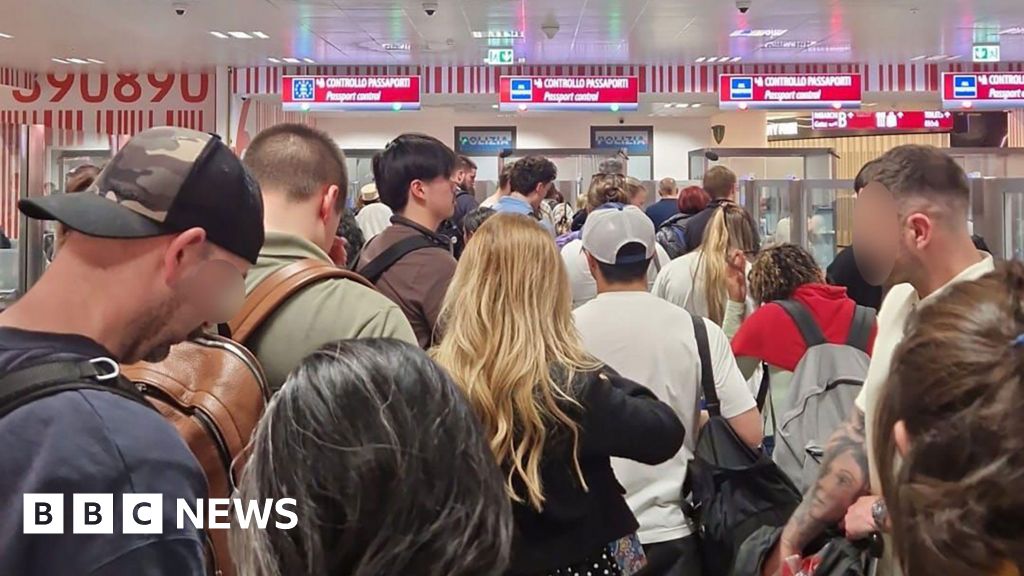
New European border rules have caused delays at airports across the continent, affecting flights.
Source link
Business
‘A win-win for both nations!’ Three-day India-US trade talks to begin this week – The Times of India
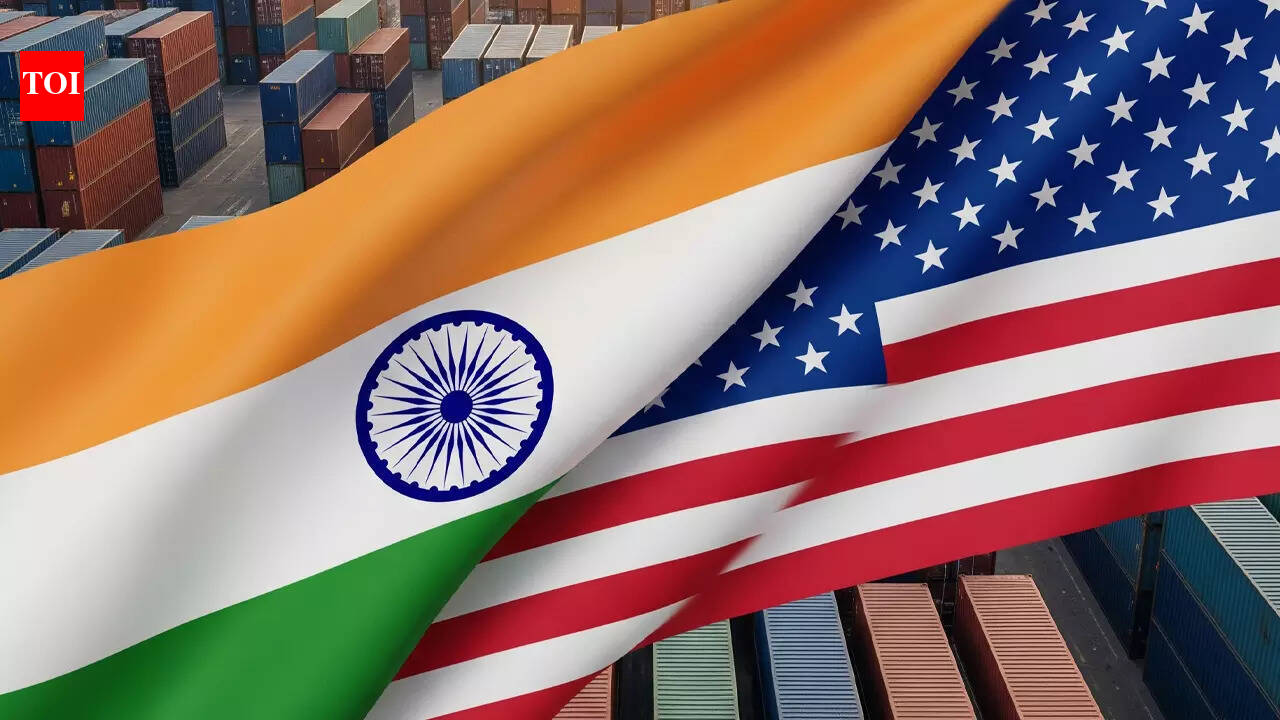
India and the United States are set to resume trade talks this week, taking a “great step to finalize” the proposed agreement. Taking to social media platform X, US Ambassador to India Sergio Gor said “The Indian trade delegation will be arriving in Washington this week. A great step to finalize our bilateral trade deal. A win-win for both nations!”This week, a delegation of around a dozen officials will be travelling from New Delhi to Washington for discussions on the first phase of the proposed bilateral trade agreement (BTA). The talks are scheduled from April 20 to 22 and will be led by India’s chief negotiator Darpan Jain, additional secretary in the department of commerce. The team will also include officials from the customs department and the ministry of external affairs.The negotiations come against the backdrop of recent changes in the US tariff system, prompting both sides to revisit parts of the trade agreement finalised earlier this year and released on February 7.A key development was the US Supreme Court striking down reciprocal tariffs imposed under the 1977 International Emergency Economic Powers Act. Following this, the US administration introduced a temporary flat 10% tariff on all countries for 150 days from February 24.These changes led to the postponement of a planned February meeting between the chief negotiators. The rescheduled talks in Washington will now proceed under the revised tariff framework.Alongside tariff issues, the discussions are also expected to cover two investigations initiated by the US Trade Representative under Section 301 of its trade law. India has refuted the allegations and is seeking withdrawal of the probes, arguing that the initiation notices do not provide adequate justification.

Energy markets have seen wild swings since the US and Israel attacked Iran on 28 February.
Source link

Ryanair flight from Milan to Manchester leaves passengers behind due to border delays

Harry Kane vows Bayern Munich have ‘a lot to play for’ after Bundesliga title

Hyundai’s New Ioniq 3 Has Hot-Hatch Looks, but Can It Beat BYD?

-

 Fashion4 days ago
France’s LVMH Q1 revenue falls 6%, shows resilience amid Iran war
-

 Sports1 week ago
The case for Man United’s Fernandes as Premier League’s best
-

 Entertainment1 week ago
Palace left in shock as Prince William cancels grand ceremony
-
 Business1 week ago
UK could adopt EU single market rules under new legislation
-

 Entertainment5 days ago
Is Claude down? Here’s why users are seeing errors
-

 Fashion1 week ago
Energy emerges as biggest cost driver in textile margins
-
 Business1 week ago
Delta Air Lines unveils first new Delta One suite in premium cabin arms race
-

 Tech1 week ago
A Lot of Shops Won’t Fix Electric Bikes. Here’s Why