

Business
Energy firms told to pass on £150 discount to customers on fixed tariffs

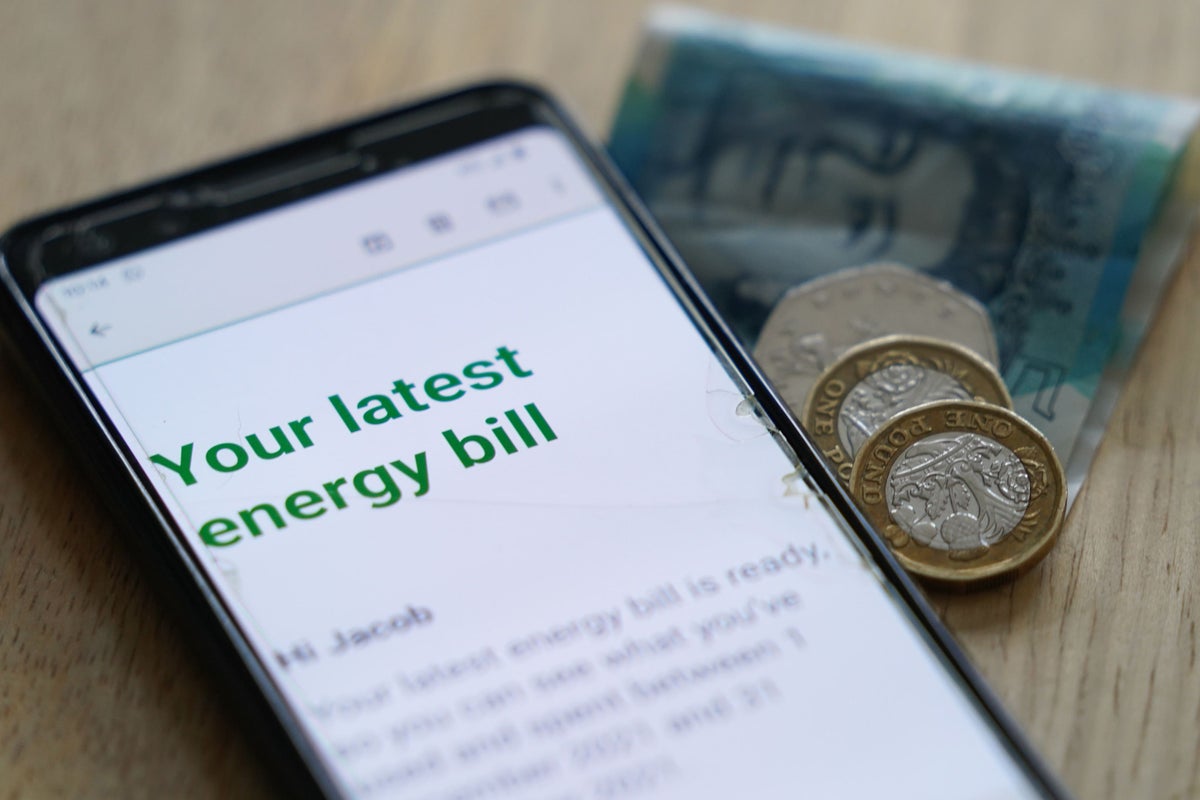
The Government has told energy firms to ensure consumers on fixed tariffs also benefit from the £150 cut to household bills announced in the Budget.
Chancellor Rachel Reeves announced she was taking action to get energy bills down and reduce the cost of living, with an average £150 cut from the average household bill from April.
Ms Reeves said she would do this by scrapping the Energy Company Obligation (Eco) scheme introduced by the Tories in government, which she claimed had cost households £1.7 billion a year on their bills.
On Wednesday, Energy Secretary Ed Miliband wrote to energy firms, calling on them to ensure that consumers on fixed energy tariffs benefit from the cut.
A fixed energy tariff means a household’s unit rates and standing charge stays the same for the length of the contract agreed with the supplier – which tend to be a year or longer.
Those on standard variable tariffs pay changing rates as wholesale market costs paid by the supplier go up or down and are not limited to a set time frame.
In his letter, Mr Miliband wrote: “This government has made a clear commitment to cut people’s bills and help ease the financial pressure on millions of families, as we know energy costs cause such anxiety for many people, and that is why we are acting now.
“As we move forward, we want to set out our clear expectation that every single penny of our intervention at this Budget is passed onto consumers, including those on existing fixed term tariffs.
“Around 37% of the market is now on a fixed term tariff and government is clear that they must benefit from this reduction in bills.
“We urge you to continue to work with our department to ensure that this happens.
“This close, joint working will be both welcomed and reassuring for customers, demonstrating our shared commitment to fairness and consumer protection.
“Thank you once again for your partnership and for your efforts to ensure that these positive changes reach every household.”
According to latest Ofgem figures, around 21 million domestic customers’ energy accounts are on fixed tariffs, while around 34 million remain on standard variable tariffs.

Comcast topped Wall Street’s revenue and earnings estimates for the first quarter on Thursday, lifted by NBC’s sports slate in February and improving broadband customer losses.
The company said it lost 65,000 broadband customers compared with 183,000 losses in the same period last year. Heightened competition from wireless providers like Verizon and T-Mobile has led to quarterly customer losses for Comcast and its cable peers in recent years – which has weighed on these companies’ stocks in particular.
In response, Comcast in the last year has shifted its strategy and introduced more competitive pricing packages in a bid to reduce the broadband losses. The company has also leaned on its mobile business for growth, which added 435,000 new lines during the quarter. In total, Comcast now has 9.7 million mobile customers.
The company also reported 322,000 cable TV customer losses – fewer than the 427,000 in the same period last year.
Revenue for Comcast’s connectivity and platforms unit, which includes its Xfinity-branded broadband, cable TV, and mobile businesses, decreased 2% to $17.32 billion.
The company’s stock climbed as much as 8% in premarket trading.
Here’s how Comcast performed for the period compared with average analyst estimates, according to LSEG:
- Earnings per share: 79 cents adjusted vs. 73 cents expected
- Revenue: $31.46 billion vs. $30.43 billion expected
Comcast’s net income fell nearly 36% to $2.17 billion, or 60 cents per share, compared to $3.38 billion, or 89 cents a share, during the same period last year. Adjusting for one-time items including amortization and investments, Comcast reported earnings per share of $0.79.
Adjusted earnings before interest, taxes, depreciation and amortization were down roughly 17% to $7.93 billion.
Comcast’s overall revenue increased roughly 5% to $31.46 billion for the quarter.
Revenue got a boost from Comcast’s NBCUniversal, which aired a slate of sports – including the Super Bowl, Winter Olympics and NBA All-Star Weekend, during the quarter – that the company coined as “Legendary February.”
The media business, which is made up of NBCUniversal, recorded a nearly 61% increase in revenue to $7.28 billion during the quarter. Excluding the Olympics and Super Bowl – which provided significant boosts to advertising sales – revenue for the unit was up about 13%.
Live sports remains the highest rated programming on traditional TV and streaming, and beckon the most advertising dollars. The Super Bowl, in particular, breaks records annually when it comes to its pricey commercial spots. NBC received an average $8 million per 30-second ad, CNBC reported.
Domestic advertising for the media unit was up 135% to $3.45 billion for the quarter. Excluding the Super Bowl and Winter Olympics, it was up 4.7% to $1.54 billion.
NBC’s sports roster also helped lift streaming service Peacock during the quarter. Peacock subscribers increased 12% year over year to 46 million. Peacock nearly doubled revenue to $2.1 billion compared to the same period last year. The streamer recorded a quarterly loss of $432 million compared to a loss of $215 million in the prior year period.
Adjusted EBITDA for the media segment decreased to a loss of $426 billion due to higher operating expenses related to the costs associated with the Winter Olympics and Super Bowl, as well as the cost of the NBA rights.
NBCUniversal is part of the overall content and experiences segment, which also includes the film studio and theme parks – each of which saw sales climb year-over-year.
Revenue for the film studio was up 21% to $3.43 billion, while Universal theme parks revenue increased 24% to $2.33 billion. The theme parks were boosted by the opening of Epic Universe last May.

Across the UK, shopfronts are being exploited by criminal gangs pushing illegal drugs, experts say.
Source link
Expands focus beyond infrastructure financing to fiscal reforms, women’s economic inclusion, critical minerals
The Asian Development Bank (ADB) increased its financial commitments to Pakistan in 2025, approving $3.672 billion, which is 22 per cent higher than the $2.995 billion recorded in the previous year. The expansion reflects the bank’s growing engagement in new sectors, including Pakistan’s mineral resources industry.
According to ADB’s Annual Report 2025, the institution also provided $1.485 billion in new support to Pakistan’s public sector during the year, marking a rise of around one-third compared to $1.113 billion in 2024. A large share of these funds was extended under ordinary capital resources on commercial terms.
The bank highlighted a policy-backed guarantee mechanism in Pakistan designed to reduce lending risk for commercial banks and encourage financing for small and medium-sized enterprises. Through this mechanism, around $1 billion in private sector financing was mobilised.
ADB also supported Pakistan’s mineral development strategy by approving financing for a copper-gold mining project, aimed at strengthening global supply chains for critical minerals. The bank said it is also assisting in developing links between mineral extraction and manufacturing industries.
In addition, ADB is providing advisory assistance to Pakistan for preparing frameworks related to digital skills development, while also supporting investments aimed at improving girls’ participation in science, technology, engineering and mathematics (STEM) education.
Also Read: Construction of M6: NHA, ADB sign agreement
The report noted that Pakistan continues to face significant fiscal constraints that limit public investment in essential services. In response, ADB approved an $800 million programme consisting of a $300 million policy-based loan and up to $500 million in guarantees. This package is expected to help Pakistan raise an additional $1 billion in financing.
In education, ADB approved funding for at least 1,700 STEM laboratories across schools, with half of them planned for girls’ institutions, alongside a $100 million loan and a $7 million grant.
Globally, ADB’s total commitments from its own resources reached $29.3 billion in 2025, reflecting a 20 per cent increase from the previous year. The bank also reported strong private sector engagement, with $5.5 billion directed towards private sector development.
Across the region, South Asia received $9.7 billion, making it the largest recipient, followed by Southeast Asia, Central and West Asia, East Asia, and the Pacific.
ADB said it undertook major institutional reforms during the year, including changes to its charter to expand lending capacity by 50 per cent without requiring additional capital from shareholders. It also revised its energy policy, improved procurement systems, and introduced a new framework to support critical minerals value chains linked to clean energy and digital industries.
The bank said these reforms are intended to make its financing more flexible, faster, and better aligned with development needs across Asia and the Pacific.
Read More: ADB says budget gaps delayed loan
The bank also stressed gender disparities in Pakistan’s economy, estimating a financing gap of around 37 per cent for women-led enterprises. To address this, it committed $350 million to expand access to credit and support women entrepreneurs, with an estimated two million women expected to benefit.
In education, ADB approved funding for at least 1,700 STEM laboratories across schools, half of which will be established in girls’ institutions to promote participation in science and technology fields.
Regionally, South Asia remained the largest recipient of ADB funding with $9.7 billion in commitments, ahead of Southeast Asia and Central and West Asia.
The bank also reported $5.5 billion in private sector development commitments, reflecting its increasing focus on blended finance and risk-sharing instruments to mobilise commercial capital.
ADB implemented several institutional reforms during 2025, including amendments to its charter to expand lending capacity by 50 per cent without a general capital increase. It also revised its energy policy, streamlined procurement processes, and introduced a new framework for critical minerals development.
For Pakistan, the report suggests growing access not only to concessional financing but also to private capital mobilisation tools and risk-sharing mechanisms as the country continues to address fiscal and structural challenges.


Prince William tries to squeeze into Formula E car on Louis’ birthday

France’s Kering acquires ICCF’s minority stake to expand ICICLE

Hackers steal $2.5m from Sri Lanka finance ministry

-

 Fashion1 week ago
France’s LVMH Q1 revenue falls 6%, shows resilience amid Iran war
-

 Entertainment1 week ago
Is Claude down? Here’s why users are seeing errors
-

 Sports1 week ago
PSL 11: Peshawar Zalmi win toss, opt to field first against Quetta Gladiators
-

 Tech1 week ago
The Deepfake Nudes Crisis in Schools Is Much Worse Than You Thought
-

 Politics1 week ago
Iran in continuous message exchange with mediator Pakistan after US talks: Report
-
 Business1 week ago
Standard Life buys rival in £2b deal to create savings giant
-

 Tech1 week ago
CYBERUK ’26: UK lagging on legal protections for cyber pros | Computer Weekly
-

 Sports1 week ago
World Cup kit ranking: Which teams will look best in 2026?