

Business
Pakistan to launch first stablecoin, says official | The Express Tribune

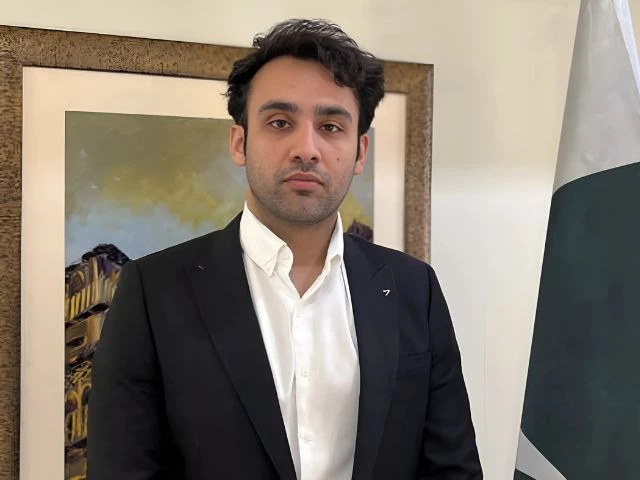
Minister of State for Crypto, Blockchain and CEO of the Pakistan Crypto Council Bilal Bin Saqib. Photo: X
Pakistan is poised to enter the global digital finance arena with the launch of its first stablecoin, a move aimed at integrating virtual assets into the national economy, Bilal bin Saqib, chairman of the Pakistan Virtual Assets Regulatory Authority (PVARA), announced on Friday.
Speaking at Binance Blockchain Week, Saqib confirmed that the country will “definitely launch” a stablecoin, while also developing Central Bank Digital Currencies (CBDCs).
“I think it is a great way to collateralise the government debt,” Saqib said. “We want to be at the forefront of this financial digital innovation that is happening. Why should we be at the tail-end of it when we have the muscle and the adoption?”
He made the remarks during a panel discussion on the future of virtual assets and emerging-market regulation, hosted by the Pakistan Crypto Council (PCC).
The council noted on its social media that Saqib “emphasised that for countries like Pakistan, clear and innovation-friendly crypto regulation is a key driver of economic growth”.
The post added that Pakistan’s work on stablecoins, data frameworks and efforts to bank the unbanked could become valuable case studies for other nations.
The PVARA is an autonomous federal authority and operates under a multi-stakeholder board that includes the State Bank of Pakistan governor, the Securities and Exchange Commission chairman and the Federal Board of Revenue chairman.
Its mandate includes curbing illicit finance, protecting consumers, and unlocking opportunities in fintech, remittances and tokenised assets, while fostering Shariah-compliant innovation through regulatory sandboxes.
Earlier in 2025, Saqib unveiled Pakistan’s first government-led Strategic Bitcoin Reserve during a keynote at Bitcoin Vegas, attended by prominent figures including US Vice President JD Vance, Eric Trump and Donald Trump Jr.
In May, the government also announced the allocation of 2,000 megawatts (MW) of electricity in the first phase of a national initiative to power Bitcoin mining and artificial intelligence (AI) data centres.









Sarah has now got her money back but there are calls to reform the deadline for reporting scams to banks.
Source link

Music streamer Deezer allows users to filter out AI music, so why does Spotify not offer the same?
Source link

Intellia Therapeutics, building exterior and company sign, Cambridge, Massachusetts, USA.
Spencer Grant | Universal Images Group | Getty Images
Intellia Therapeutics said its Crispr-based treatment for a rare swelling condition met its goals in a late-stage trial, marking a milestone for the field of gene editing and putting the company on track to seek approval from the U.S. Food and Drug Administration.
The company’s treatment uses Nobel Prize-winning technology Crispr to edit DNA and turn off the gene that controls production of a peptide that’s overactive in people with hereditary angioedema, causing them to experience potentially life-threatening swelling attacks. Intellia’s treatment is administered once through an hourslong infusion, making the edits directly in the liver.
Intellia said the one-time treatment reduced attacks by 87% compared with a placebo, meeting the study’s main goal. Six months after treatment, 62% of patients were free from attacks and weren’t using other therapies, Intellia said.
The company described the safety and tolerability of the treatment as “favorable,” reporting the most common side effects were infusion-related reactions, headaches and fatigue. Analysts were closely watching safety in the trial since a patient in a separate trial of a different treatment from Intellia died. That patient developed a liver injury and ultimately died from septic shock following an ulcer, according to the company.
“When you think about where we started with Crispr, just 12 years ago with some of the fundamental insights, I think there was a lot of talk about what might be possible, and we’ve had reports along the way in terms of milestones, but this is the first Phase 3 data in any indication with in vivo Crispr where you’re actually changing a gene that causes disease,” said Intellia CEO John Leonard.
The only FDA-approved Crispr-based medicine comes from Vertex Pharmaceuticals. Called Casgevy, the gene editing is done outside the body, or ex vivo. The process requires collecting a person’s blood cells, making the edits outside the body, then reinfusing them back into a patient. Intellia’s treatment, meanwhile, makes the edits inside the body, or in vivo.
Intellia said it has started a rolling application with the FDA and plans to complete the filing in the second half of this year. The company expects to launch the treatment in the U.S. in the first half of next year, if it’s approved.
If approved, Intellia’s treatment, lonvoguran ziclumeran, will compete with about a dozen other chronic drugs for HAE. Despite the allure of a one-time treatment, genetic medicines haven’t always been a commercial successes. BioMarin withdrew its gene therapy for Hemophilia A because of weak sales, for example.
Leonard said there are important differences between the two, like the fact that BioMarin’s therapy faced questions about how long the effects would last. In contrast, he said Intellia hasn’t seen a single case in almost six years where the effects diminished over time.
Despite the results, he’s reluctant to call Intellia’s treatment a functional cure.
“I think this is a tipping point for the disease and tipping point for Crispr-based in vivo therapy where you can make a change [and] it’s permanent,” Leonard said. “And, as far as we can tell, we don’t have a single patient in this program or other program where there’s been any waning of the effect of what we did to the gene or the effect of what we’ve seen with the clinical aspects of the disease itself. So it’s pretty exciting.”
Clarification: This story has been updated to clarify that a patient in a separate trial of a different treatment from Intellia developed acute liver injury and ultimately died from septic shock following an ulcer.

Why Spotify has no button to filter out AI music
‘I had £20,000 stolen and had to fight a 13-month fraud reporting rule to get it back’

King Charles and the Trumps unite at White House for a historic tea meeting

-

 Sports1 week ago
NCAA men’s gymnastics championship: All-time winners list
-

 Sports1 week ago
WWE WrestleMania 42 Night 2: Live match results and analysis
-

 Fashion1 week ago
UK’s Sosandar returns to profitability amid robust FY26 performance
-

 Politics7 days ago
UK’s Starmer seeks to deflect blame over Mandelson appointment
-

 Entertainment1 week ago
Lee Anderson, Zarah Sultana kicked out of UK Parliament for calling PM ‘liar’
-
 Business1 week ago
How Trump’s psychedelics executive order could unlock stalled cannabis reform
-
 Business1 week ago
No fuel shortage: Govt assures 100% domestic LPG, PNG, CNG supply amid Hormuz energy crunch – The Times of India
-

 Sports1 week ago
Quetta Gladiators opt to bowl after winning toss against Peshawar Zalmi in PSL 11 clash