

Fashion
Arena launches swimwear collection with LYCRA ecomade fibre

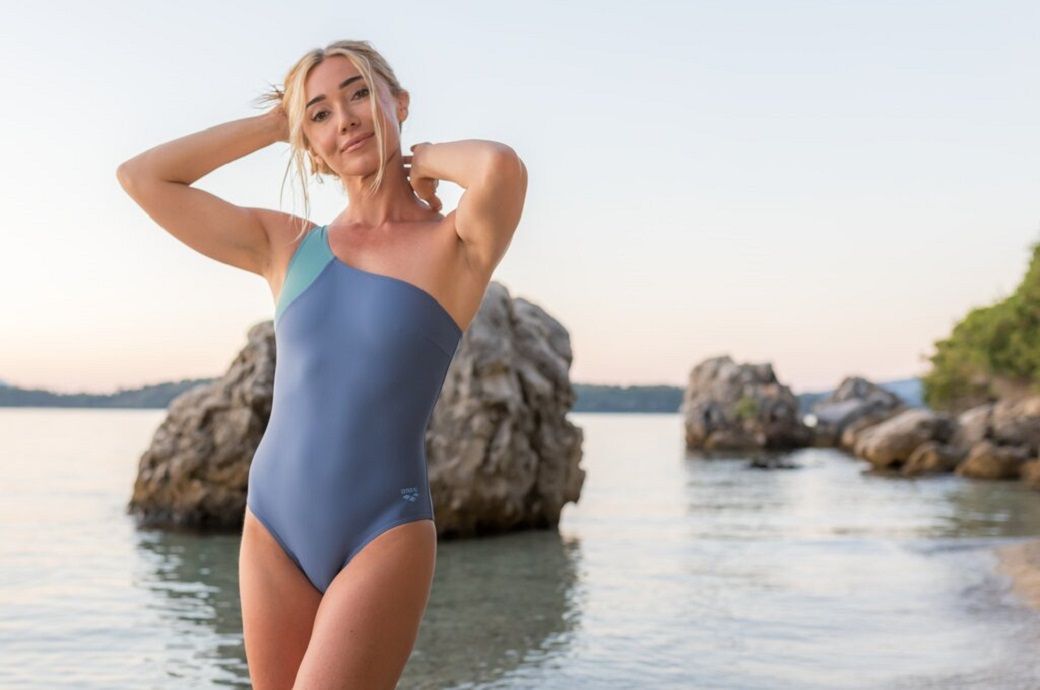
arena, one of the leading brands in the world of swimming, is presenting its first collection of swimsuits made with the renewable LYCRA EcoMade fibre, raising the bar of innovation with an absolute novelty. This project celebrates the connection between the body and nature, transforming every movement into a gesture of awareness and style.
Arena has launched its first swimsuit collection made with renewable LYCRA EcoMade fibre, featuring the sustainable Vitalife fabric with 70 per cent plant-based elastomer.
Offered in three women’s styles and nature-inspired colours, the line blends performance and eco-responsibility.
Supported by athlete Sahika Ercumen, it promotes mindful, environmentally respectful swimming.
The Vitalife Fabric: Performance and Sustainability
At the heart of this collection is Vitalife, a revolutionary fabric that combines high performance with a profound commitment to sustainability. Its uniqueness lies in the use of an innovative LYCRA elastomer composed of 70% plant-based materials, primarily corn, a renewable resource harvested annually. The new fibre offers a concrete and sustainable alternative to traditional fossil raw materials, while guaranteeing the same performance as the original LYCRA and proven resistance to degradation caused by chlorine, UV rays, and sun creams.
Style and Functionality for Every Woman
The collection is aimed primarily at those who do not compromise between style and performance, with a particular focus on sustainability. The swimsuits are offered in three distinct models, designed to enhance every silhouette and perfectly adapt to the needs of every woman:
- Single shoulder: for a femininity expressed with elegance.
- O back: a comfortable and trendy design for those seeking a modern look.
- Swim pro-back: ideal for swimmers facing intense training, without sacrificing style.
Colors that Tell the Story of Nature
The color palette is an ode to nature, with ethereal and pastel shades that evoke lightness and elegance, mixed with intense and dusty colors, an echo of earthly strength. Deep blues, on the other hand, recall the hidden life of the ocean, creating a harmonious dialogue between the aquatic and terrestrial worlds.
Each model is available in three color variations, in a mix of shades that combines earth tones and pastel hues: Morocco-Valencia, Film-Stone blu, and Caviar-Valencia.
“Since I was little, I had to deal with asthma, a condition that limited my breathing and my freedom – said Sahika Ercumen Turkish freediver who hold several records. “To overcome this challenge, I started practicing swimming and, later, freediving. Water was not just a sport for me, but real therapy and salvation. Immersing myself transformed my relationship with breathing, allowing my respiratory problems to progressively improve until they almost disappeared. But water also became the stage for a continuous challenge with myself, a challenge that pushed me beyond my limits and allowed me to achieve many world records. It is proof that what seems like a weakness can become our greatest strength.
Today, I am honored and profoundly happy to have become an ambassador for the ‘Vitalife’ swimwear line, because the values embodied in these designs are also my own. The dedication to protecting nature and in particular the care and respect for water are the same ones I firmly believe in. I love how their colors vibrate and are inspired by the Earth’s palette, with shades ranging from the deep sea to the horizon, ideally uniting the sky and the water. For me, Vitalife’. is a manifesto that celebrates life, the environment, and well-being. They are values that I will carry with me in every dive”.
“At arena, we are committed to creating high-performance swimwear that is durable, chlorine-resistant, and safe”. stated Peter Graschi, CEO of arena.” Many of our products already feature recycled fibres such as nylon and polyester, and our collaboration with the LYCRA Company, marks a further step towards sustainability. By introducing bio-derived elastane—sourced from renewable materials—we reduce reliance on virgin fossil-based resources without compromising on quality.
Using responsible fibers, such as recycled, organic or bio-based, is part of our broader commitment to environmental protection and responsible innovation.
This choice reflects our long-term vision as a Società Benefit, where business success goes hand in hand with social and environmental responsibility. Through trusted partnerships and rigorous testing, we ensure that sustainable materials continue to meet our exacting standards of performance, while contributing to meaningful, lasting change”.
“The LYCRA Company, always at the forefront of innovation in the textile world, is actively committed to reducing greenhouse gas emissions throughout the value chain. We believe that every player in the supply chain—from suppliers to brands, up to the final consumer—has a fundamental role. Only through shared commitment can we build a truly sustainable future for future generations,” declared Alistair Williamson, Vice President EMEA & South Asia of The LYCRA Company.
This collection, therefore, goes beyond a simple swimsuit, celebrating a new way of experiencing sport and fashion, in harmony with the environment. Vitalife is not only a cutting-edge technical proposal but also an invitation to swim while respecting the environment around us, transforming every stroke into a gesture in favor of the planet. The collection will be available online starting December 4th. In 2026, the collection will also be available in the best sports stores.
Note: The headline, insights, and image of this press release may have been refined by the Fibre2Fashion staff; the rest of the content remains unchanged.
Fibre2Fashion News Desk (HU)






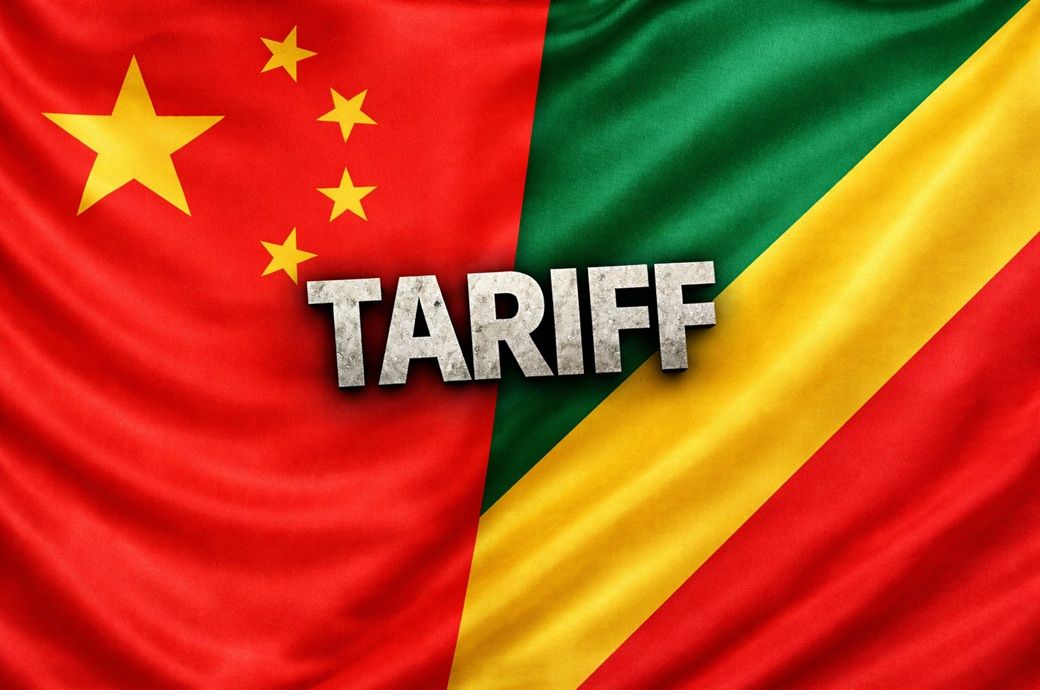
The measure implements tariff reduction commitments made under the ‘Early Harvest Arrangement of the Agreement on Economic Partnership for Shared Development’ between the two countries.
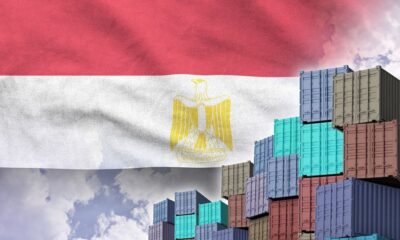
China will implement preferential tariff rates on selected imports from the Republic of the Congo starting April 1 under the Early Harvest Arrangement of their economic partnership agreement.
The move announced by the Customs Tariff Commission, is aimed at fulfilling tariff reduction commitments, enhancing bilateral trade cooperation and advancing long-term economic ties between the two countries.
The commission said the move is in line with China’s tariff law and reflects the country’s continued efforts to expand opening-up and strengthen trade ties with African partners.
Officials stated that the preferential tariff treatment will help deepen bilateral economic and trade cooperation and support the development of a higher-level community with a shared future between China and the Republic of the Congo.
The Early Harvest Arrangement, signed in November 2025, marked the first such agreement of its kind between China and an African country, paving the way for broader market access and phased tariff reductions.
Fibre2Fashion News Desk (JP)
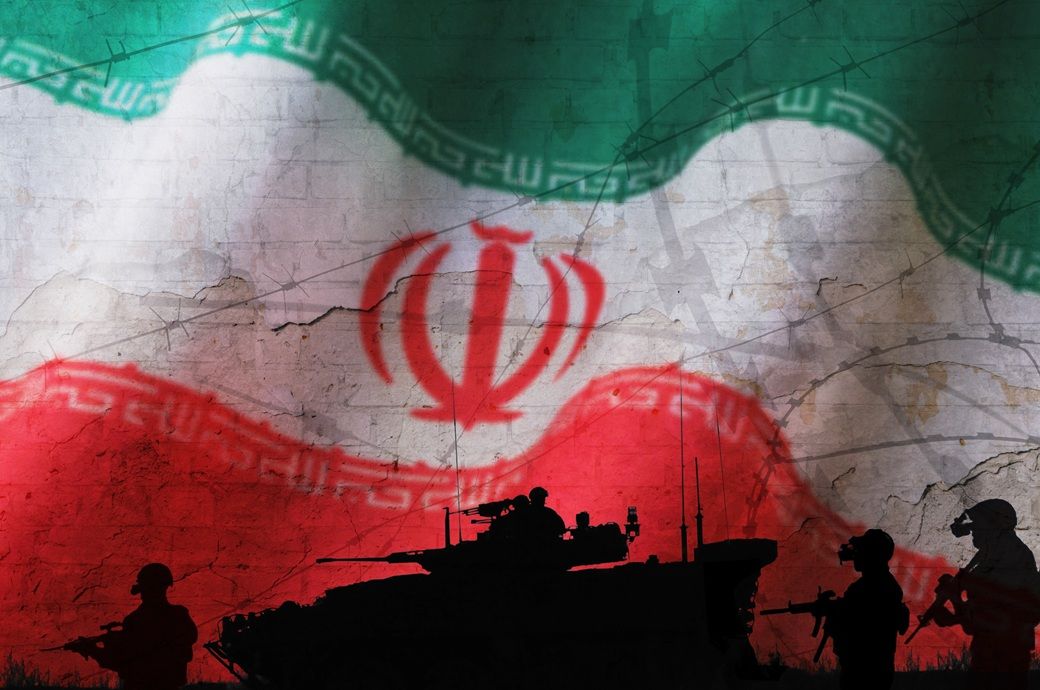
These countries are particularly vulnerable to rising oil prices and potential supply disruptions, it noted in a recent article.
The Iran war poses a greater risk to Bangladesh, Pakistan and Sri Lanka, and to a lesser extent Laos, due to their high dependence on imported energy and limited reserves, S&P Global Ratings said.
These countries are particularly vulnerable to rising oil prices and potential supply disruptions.
All four governments are likely to see significant credit metric deteriorations, if the conflict is prolonged.
In our base case scenario, the war is unlikely to have a material impact on our sovereign ratings on these countries, but a more prolonged price and supply shock in global energy markets could cause more pronounced credit damage.
Pakistan, Sri Lanka, and Bangladesh are showing signs of economic recovery. The three countries have made progress, but sustained high energy prices and potential disruptions to trade and remittances could derail their fragile economies.
S&P Global Ratings believes the higher-income Asia-Pacific (APAC) economies are better placed to weather temporary disruptions to oil and gas supply from the Middle East.
Even where they are highly dependent on imported energy, they generally have more significant oil reserves to meet the shortfall in imports. They also have financial resources to acquire available supply in the spot oil and gas markets to secure needed energy, the rating agency noted.
Lower-income economies in the region do not enjoy such flexibility. The sovereign ratings on some may face pressure if the supply disruption persists longer than our assumptions. Bangladesh, Laos, Pakistan and Sri Lanka are among this group. These economies have one thing in common: a high dependence on imported energy products.
The Middle East war is likely to have a more severe impact on these economies, due to their fuel import bills, and generally weaker fiscal and external reserves to withstand supply shortages and high oil prices.
Among the four sovereigns, Laos is likely to fare better due to the dominance of hydropower in its energy mix.
Bangladesh, with government revenues at only around 9 per cent of gross domestic product, has fewer options to cap electricity and fuel prices through fiscal means.
All four governments are likely to see significant credit metric deteriorations, through inflation and currency channels, if the Middle East conflict is prolonged. However, the impact on the agency’s ratings on these sovereigns may be limited, as the generally low rating levels have already captured a significant share of the risks.
S&P Global Ratings’ base case for the Middle East war assumes that elevated hostilities will persist into early April, with the Strait of Hormuz facing material disruptions.
Fibre2Fashion News Desk (DS)
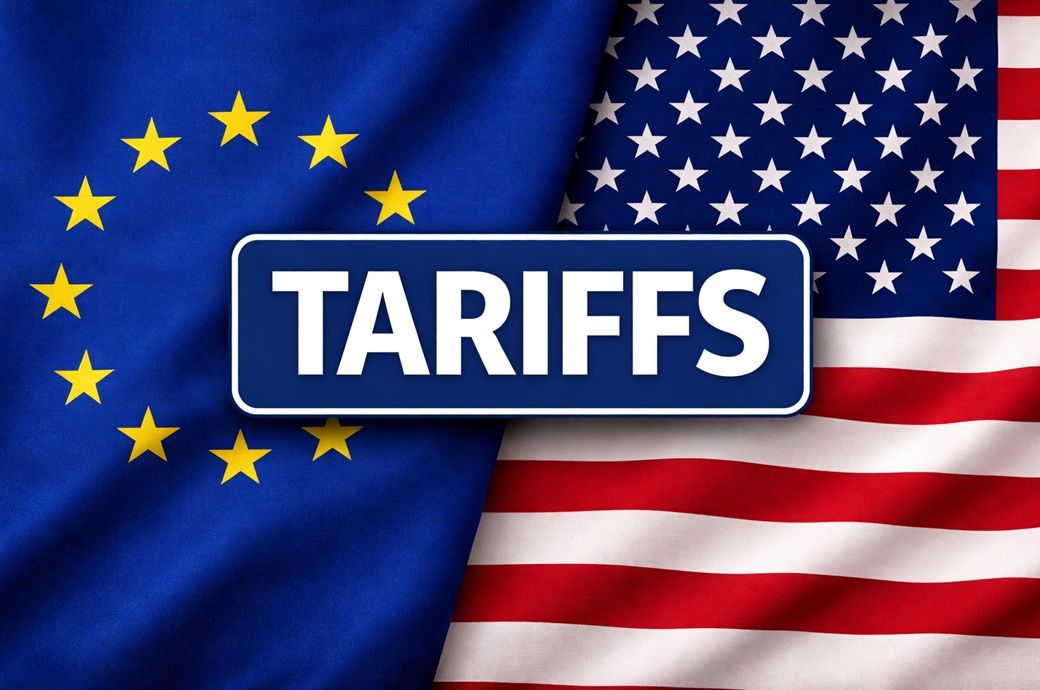
On July 27, 2025, in Turnberry, Scotland, US President Donald Trump and European Commission President Ursula von der Leyen reached a deal on tariff and trade issues, outlined in a joint statement published on August 25.
EU Parliament members have adopted their position on two proposals implementing the tariff aspects of the EU-US Turnberry trade deal.
The texts, if agreed with EU members, will eliminate most tariffs on US industrial goods and offer preferential market access for many US seafood and agricultural goods.
The members strengthened the proposed suspension clause, and introduced ‘sunrise’ and ‘sunset’ clauses.
The texts, if agreed with EU member states, will eliminate most tariffs on US industrial goods and provide preferential market access for a wide range of US seafood and agricultural goods, in line with the commitments made in summer 2025 between the EU and the United States.
The MEPs strengthened the proposed suspension clause, which would allow the tariff preferences with the US to be suspended under a number of conditions.
For instance, the Commission would be able to propose suspending all or some trade preferences if the US were to impose additional tariffs exceeding the agreed 15-per cent ceiling, or any new duties on EU goods, a release from the Parliament said.
The suspension clause could also be activated if the US undermines the objectives of the deal, discriminated against EU economic operators, threatened member states’ territorial integrity, foreign and defence policies, or engaged in economic coercion, it noted.
The MEPs have introduced a ‘sunrise clause’ that means the new tariffs would only become effective if the US respects its commitments. These conditions include the US lowering its tariffs on EU products with a steel and aluminium content below 50 per cent, to a tariff of maximum 15 per cent.
Furthermore, for EU products with a steel and aluminium content of above 50 per cent, unless the US reduces its tariffs to a maximum of 15 per cent, EU tariff preferences for US exports of steel, aluminium and their derivative products would cease to apply six months after the entry into application of the regulation.
The members also agreed on an expiry date for the main regulation on March 31, 2028. This could only be extended via a new legislative proposal, to be submitted following a thorough impact assessment of the effects of the regulation.
The European Commission would be tasked with monitoring the impact of the new rules and would be able to suspend the new tariffs temporarily, should US imports reach a level that could cause serious harm to EU industry.
Fibre2Fashion News Desk (DS)


China rolls out tariff cuts on Congo imports from April 1

How Khloé Kardashian, Lamar Odom marriage affected his ex Liza Morales
India-US trade deal update: Piyush Goyal meets USTR Jamieson Greer, discusses next steps in BTA talks – The Times of India

-

 Entertainment1 week ago
Val Kilmer revived 1 year after death through AI
-

 Fashion6 days ago
China’s textile & apparel exports surge 17% to $50 bn in Jan-Feb 2026
-
 Business1 week ago
Video: The Effects of High Oil Prices
-
 Business7 days ago
Flipkart group CFO to leave co amid IPO plans – The Times of India
-

 Sports7 days ago
Rating Adidas’ 2026 World Cup away shirts: Argentina, Spain, Mexico and more
-
Tech1 week ago
The Corsair 4000D RS PC Case Keeps Your System Cool
-

 Sports7 days ago
American Conference Commissioner Tim Pernetti thanks Trump for Army-Navy game executive order
-
 Fashion1 week ago
The hidden $1.62 war tax now embedded in every garment you source