

Tech
Why SpaceX Is Finally Gearing Up to Go Public


SpaceX is planning to raise tens of billions of dollars through an initial public offering next year, multiple outlets have reported, and Ars can confirm. This represents a major change in thinking from the world’s leading space company and its founder, Elon Musk.
The Wall Street Journal and The Information first reported about a possible IPO last Friday, and Bloomberg followed that up on Tuesday evening with a report suggesting the company would target a $1.5 trillion valuation. This would allow SpaceX to raise in excess of $30 billion.
This is an enormous amount of funding. The largest IPO in history occurred in 2019, when the state-owned Saudi Arabian oil company began public trading as Aramco and raised $29 billion. In terms of revenue, Aramco is a top-five company in the world.
Now SpaceX is poised to potentially match or exceed this value. That SpaceX would be attractive to public investors is not a surprise—it’s the world’s dominant space company in launch, space-based communications, and much more. For investors seeking unlimited growth, space is the final frontier.
But why would Musk take SpaceX public now, at a time when the company’s revenues are surging thanks to the growth of the Starlink Internet constellation? The decision is surprising because Musk has, for so long, resisted going public with SpaceX. He has not enjoyed the public scrutiny of Tesla, and feared that shareholder desires for financial return were not consistent with his ultimate goal of settling Mars.
Data Centers
Ars spoke with multiple people familiar with Musk and his thinking to understand why he would want to take SpaceX public.
A significant shift in recent years has been the rise of artificial intelligence, which Musk has been involved in since 2015, when he cofounded OpenAI. He later had a falling out with his cofounders and started his own company, xAI, in 2023. At Tesla, he has been pushing smart-driving technology forward and more recently focused on robotics. Musk sees a convergence of these technologies in the near future, which he believes will profoundly change civilization.
Raising large amounts of money in the next 18 months would allow Musk to have significant capital to deploy at SpaceX as he influences and partakes in this convergence of technology.
How can SpaceX play in this space? In the near term, the company plans to develop a modified version of the Starlink satellite to serve as a foundation for building data centers in space. Musk said as much on the social media network he owns, X, in late October: “SpaceX will be doing this.”











The Federal Communications Commission has banned new consumer internet routers manufactured outside the US, citing national security concerns. The ban doesn’t affect any routers already in American homes or currently on sale in the US, but all new routers aimed at the consumer market will need to be approved.
While the headline is that foreign-made consumer routers are banned, manufacturers can apply for exemptions. There’s no need to throw out your router, and you’ll still find plenty of mesh systems on the store shelves. But what does this mean for you?
Why Are Foreign-Made Routers Banned?
“Malicious actors have exploited security gaps in foreign-made routers to attack American households, disrupt networks, enable espionage, and facilitate intellectual property theft,” the FCC wrote. “Foreign-made routers were also involved in the Volt, Flax, and Salt Typhoon cyberattacks targeting vital US infrastructure.”
Foreign-made consumer routers were added to the Covered List, which details equipment and services “deemed to pose an unacceptable risk to the national security of the United States.”
Which Routers Are Banned?
The ban only affects the sale of new Wi-Fi routers aimed at consumer households. The ban does not apply to existing FCC-approved routers on sale in the US. Previously purchased routers already in use in homes across the country are also fine and are not part of the ban, according to the FCC’s FAQ. These routers can continue to be sold, used, and updated with new firmware.
Any new router manufactured outside the US now requires FCC approval before it can be imported, marketed, or sold in the US. This includes routers from US companies that are manufactured overseas, which is the vast majority of the market right now.
What Does Foreign-Made Mean?
This is decidedly murky. The ban is concerned with “consumer-grade” routers and could include any that are designed or manufactured outside the US or manufactured by companies that are not completely US-owned and operated. All the major players in the market, including Netgear, TP-Link, Asus, Amazon’s Eero, Google’s Nest, Synology, Linksys, and Ubiquiti, fall under the definition. As do most, if not all, of the routers supplied by internet service providers in the US.
Just like the recent federal drone ban, the router only applies only to new routers, but manufacturers can apply for Conditional Approval from the Department of Defense and the Department of Homeland Security. Applications must include details about ownership, board membership, and country of origin for components, IP ownership, design, assembly, and firmware, among other things. The final section requests details of the applicant’s US manufacturing and onshoring plan, so there’s a clear push to persuade companies to commit to making their routers in the US.
“No routers or manufacturers have been granted a Conditional Approval so far, but as the process gets underway, we expect approvals to be granted in a timely manner,” an FCC spokesperson tells WIRED.
What About Foreign-Made Components?
Well, the FCC provides some clarification in its FAQ (“covered” here means banned):
“Non-‘covered’ devices do not become ‘covered’ simply because they contain a ‘covered’ component part, unless the ‘covered’ component part is a modular transmitter under the FCC’s rules,” it says. “Therefore, a router produced in the United States is not considered ‘covered’ equipment solely because it contains one or more foreign-made components.”
Manufacturers importing components from China but assembling them in the US will presumably be OK, though it’s far from clear. “Applicants will need to be able to have sufficient evidence that the routers were not produced in a foreign country to make this certification, but there is no specific documentation or evidence required,” according to the FCC.
Let’s look at the big three US router brands and see how they’re affected.
Will TP-Link Be Banned?
Since all of its routers are made overseas, TP-Link will have to apply for Conditional Approval or spin up manufacturing in the US to sell any new routers. Estimates vary, but TP-Link’s US consumer router market share is somewhere around 35 percent, with Netgear and Asus accounting for another 25 percent or so.
The US Commerce, Defense, and Justice departments have reportedly been investigating and considering a ban on TP-Link routers for more than a year over concerns about the company’s links to China. No ban has been enacted until now, but Texas attorney general Ken Paxton sued TP-Link in February, claiming the company allows the Chinese Communist Party to access American consumers’ devices. Detractors have also criticized perceived predatory pricing, claiming TP-Link flooded the US market with a wide range of affordable routers to establish dominance.
TP-Link has repeatedly denied any wrongdoing and claims it has divested from its Chinese roots and is now headquartered in the US with the bulk of manufacturing in Vietnam. TP-Link’s cofounder and CEO, Jeffrey Chao, recently applied for permanent US residency through President Trump’s Gold Card program, according to the Times of India.
“Virtually all routers are made outside the United States, including those produced by US-based companies like TP-Link, which manufactures its products in Vietnam,” a spokesperson from TP-Link tells WIRED. “It appears that the entire router industry will be impacted by the FCC’s announcement concerning new devices not previously authorized by the FCC.”
TP-Link is a privately owned company and not publicly listed on any stock exchange. Chao and his wife, Hillary, are listed as the company’s sole owners.
Will Netgear Be Banned?
While it is a US-founded and headquartered company, Netgear’s routers are manufactured abroad, mostly in Vietnam, Thailand, Indonesia, and Taiwan, so it will have to apply for Conditional Approval. The company has moved away from China in recent years. Netgear has been lobbying the government on “cybersecurity and strategic competition with China.”
“We commend the administration and the FCC for their action toward a safer digital future for Americans,” a Netgear spokesperson tells WIRED. “Home routers and mesh systems are critical to national security and consumer protection, and today’s decision is a step forward.”
Netgear is a publicly traded company on the Nasdaq, mostly owned by institutional investors, including BlackRock and Vanguard. The company’s stock rose on news of the ban, suggesting that many investors believe it won’t be hit too hard.
Will Asus Be Banned?
Asus primarily makes its routers in Taiwan, though it has production facilities in China and works with several third-party manufacturers. Recent tariff pressures led the company to branch out to Thailand, Vietnam, Indonesia, Mexico, and the Czech Republic, but the bulk of its routers still come from Taiwan or China. Asus will have to apply for Conditional Approval to sell new routers. The company did not respond to WIRED’s request for comment.
The company is listed on the Taiwanese Stock Exchange and is mostly owned by public shareholders. The ban doesn’t appear to have impacted its stock price.
Are Any Routers Manufactured in the US?
The only routers I know of that are manufactured in the US are some Starlink Wi-Fi routers, which are primarily made in Texas. Starlink is part of Elon Musk’s SpaceX company, but many of the components in these routers come from East Asia.
How Will the Router Ban Impact Ordinary Folks?
It’s not entirely clear, but it probably won’t have a huge immediate impact. There is already a wide range of Wi-Fi 7 routers and mesh systems on the market that will continue to be sold—they enable speeds well in excess of what most people need at home. Whether companies spin up manufacturing in the US or find other ways to satisfy government agencies that their wares are not a security risk, the result is likely to be higher prices for consumers.
“This ruling has the potential to significantly disrupt the U.S. consumer router market,” Brandon Butler, Senior Research Manager, Network Infrastructure and Services at IDC tells WIRED. “In the near term, much will depend on how quickly conditional waivers are processed. Most vendors are likely to pursue them, but any delays could constrain supply and create upward pressure on pricing.”
If you haven’t upgraded to the latest Wi-Fi 7 standard, now might be a good time to do it.
Unanswered Questions
The ban does leave several unanswered questions. Why is it being applied only to consumer routers? Which routers or manufacturers will be granted a Conditional Approval? Why are the foreign-made routers currently on sale and in our homes deemed safe? The FCC did not address these questions.
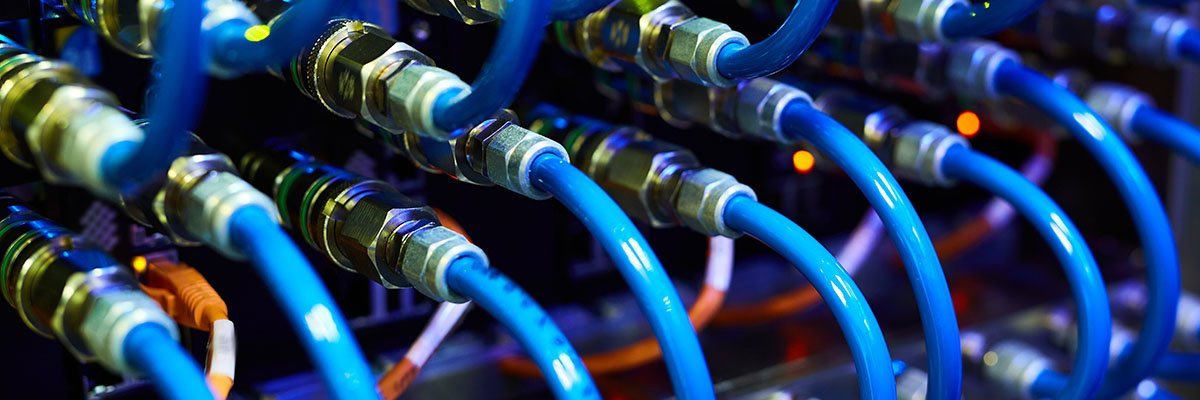
Tata Communications has launched a self-healing network platform called IZO datacentre Dynamic Connectivity, which is designed to eliminate costly datacentre downtime and support the demands of an artificial intelligence (AI)-driven world.
In explaining the rationale for the launch, Tata Communications said that in the current digital economy, disruptions from cable cuts, route failures or sudden AI workload spikes can bring business to a standstill.
Specifically, that is every enterprise depends on the ability to always be connected with an uninterrupted data flow. From financial transactions, information technology-enabled services (IT-ITeS) and manufacturing to streaming platforms and online retail, the connections between datacentres keep the modern world running. Tata Communications added that when those connections are interrupted, businesses do not just slow down, they are brought to a complete standstill.
The company warned that the networks connecting many enterprise datacentres were built for a different era. Traditional datacentre (DC)-to-DC links were designed for predictable workloads and stable traffic patterns. It stressed that the current reality is far more dynamic. In this, enterprises operate across global locations and cloud environments, moving massive volumes of data in real time to support AI workloads and business needs.
In an environment shaped by increasing geopolitical constraints, cable outages, route failures or sudden spikes in demand, these can quickly cascade into service disruption and operational risk, leading to a costly downtime. In such scenarios, the response is often reactive and manual, consuming valuable time when business need certainty and speed.
The IZO datacentre Dynamic Connectivity platform is designed to address these issues by creating an intelligent network that covers key global datacentres across five continents.
Tata Communications, said that unlike conventional architectures, the new platform uses deterministic multi-path routing to deliver predictable latency and performance. It said this transforms resilience from a reactive process into an autonomous capability, changing how enterprises connect their datacentres in an increasing AI-driven and distributed world.
This means the platform is smart enough to automatically re-route traffic within seconds without manual intervention during disruptions. This is said to enable enterprises to achieve >99.99% service availability across mission-critical infrastructure that supports business-critical applications, “turning resilience from a contingency into a default state”.
The platform is also attributed with giving enterprises access over their connectivity. Through a unified digital interface and APIs, enterprises can monitor performance, receive proactive alerts and dynamically scale bandwidth as workloads evolve.
Tata Communications said the result is that business impact is a shift from crisis management to strategic growth with business leaders no longer having to guess their future needs or over-pay for “just in case” bandwidth. Instead, leaders have access to Al-driven predictive insights allowing them to forecast their capacity requirements in advance. If a sudden workload demands more capacity or choice of route, users can instantly scale their bandwidth or add route through self-service feature.
Tata Communications calculates that by moving to a flexible, consumption-based pricing model, enterprises can reduce the need for idle backup capacity and save up to 30% on operational costs. Enterprises can activate resilience and bandwidth when required, helping to optimise costs while maintaining deterministic performance across geographies.
“Datacentres are the core engines of today’s digital economy, and the connections between them must be as resilient as the networks that connect them,” said Genius Wong, chief technology officer and executive vice-president of core and next-gen connectivity services at Tata Communications. “They must be just as dynamic as the applications they support.
“With IZO DC Dynamic Connectivity, we are shifting resilience from a reactive process to an autonomous capability. By combining global reach, deterministic routing and intelligent automation, we are enabling enterprises to build a digital foundation that scales with confidence and operates without disruption.”

Soft plastics are notorious for jamming sorting machines, slipping through processing lines, and wreaking havoc on the environment. They’re also not accepted in most municipal curbside recycling programs.
Facilities for recycling these types of plastic exist, but getting waste to these locations clean and free of what some call “wishful recycling” items (compostable cups, plastic utensils) is such a challenge that the majority of soft plastics, even the bags recycled at the front of grocery stores, end up in the trash. The SPC is what Arbouzov calls a “pre-recycling device,” designed to simplify this stream and deliver plastic that’s contained, traceable, and more likely to make it through the system.
I tried to envision how the blocks would turn into patio furniture, as advertised, but didn’t learn exactly how until months later, when Arbouzov sent me a video of the blocks at their final destination—a facility in Frankfort, Indiana, that specializes in processing polyethylene and polypropylene films. The blocks get shredded into crumbles resembling, at least on video, handfuls of wet newspaper, which are then compressed into composite decking, chairs, garden edging, and more.
Courtesy of Clear Drop
Courtesy of Clear Drop
“The full cycle from mailing a block to it entering recycling processing typically takes a few weeks,” Arbouzov said, “depending on shipping time and batching schedules.” Right now, the Frankfort location is the only facility processing the blocks, but Arbouzov said he hopes this is only temporary.
“Our goal is to shift more of this processing closer to where the material is generated, so blocks can move in bulk through regional recycling infrastructure rather than through mail-based logistics,” he said. “The mail-back system is essentially a bridge that allows the material to be captured today while that larger infrastructure develops.”
Recycling, Rewired
I found that my household of three was able to produce a block every couple of weeks, which quickly outpaced the provided supply of mailers. As the blocks started piling up on the floor of my office, I found myself wishing the SPC made something useful for consumers. Spoons, straws, 3D-printing filament … anything that could be used at home.
However, a 2023 Greenpeace report found that recycling plastic can actually make it even more toxic than it already is—heating it can not only cause existing chemicals to escape into the air and water supply, but even create new ones, like benzene. Would I want this in my house? Does recycled plastic actually belong in a circular economy? I asked Arbouzov what he thought.


Mohamed Salah to leave Liverpool at end of the season

2026 NBA draft stock watch: Which NCAA prospects are rising?

Space company plans bold landing on fast-moving asteroid passing near Earth

-

 Tech7 days ago
Justice Department Says Anthropic Can’t Be Trusted With Warfighting Systems
-

 Fashion1 week ago
Trump signs order to combat fraudulent ‘Made in America’ labels
-
 Business1 week ago
Stocks and pound rise as US rate call approaches
-
 Business1 week ago
Stocks To Watch: Tata Motors, IndiGo, Jindal Stainless, GMR Airports, Hindalco, And Others
-

 Tech1 week ago
Early Deals From the Amazon Spring Sale That Passed Our BS Test
-

 Sports6 days ago
March Madness 2026 – How to watch in SA, start time, schedule, TV channel for NCAA championship basketball tournament
-

 Sports1 week ago
Men’s March Madness 2026 bracket: Get to know all 68 teams
-
 Business1 week ago
Gas supply crunch a worry for AC makers ahead of peak season – The Times of India