

Business
Trump’s ‘Gold Card’ defines wealth as an ‘extraordinary ability.’ Immigration experts say it raises questions


President Donald Trump’s new “Gold Card” visa program uses a novel definition of wealth as a job skill to allow the overseas wealthy to bypass immigration rules and secure citizenship, according to immigration attorneys.
Trump last week announced the start of applications for the “Trump Gold Card,” a new investment visa for foreign nationals. In exchange for $1 million and a $15,000 processing fee, “Gold Card” applicants will get full-time residency in the U.S. in “record time,” according to the program’s website. The website also offers a “Corporate Gold Card,” allowing companies to pay $2 million to secure a “Gold Card” for an employee, and a “Platinum Card,” which offers special tax benefits and may eventually be offered for $5 million.
Only Congress can set immigration policy, meaning the president doesn’t have the power to create or destroy a visa program. So to create the “Gold Card,” Trump is effectively adding a new fee model to two existing programs – known as EB-1 and EB-2 – experts explained to CNBC.
The EB-1 and EB-2 programs are both employment-based programs aimed at attracting award-winning or celebrated professionals. The EB-1 program, nicknamed the “Einstein Visa,” is aimed at those with “extraordinary abilities” – such as scientists, artists, entrepreneurs, athletes and professors who have achieved “sustained international or national acclaim.”
The EB-2 is for researchers, scientists and others whose skills are useful to help solve national problems, like a leading cancer researcher developing new treatments, or a top energy scientist who can help expand the power grid.
White House officials say that the $1 million payment is proof that “Gold Card” holders are successful business people who meet the requirements for exceptional abilities. Anyone with $1 million to spend on a visa is likely to be a productive addition to the American economy and society, they say. Entrepreneurs who started companies overseas can come to the U.S. to expand or start new ventures, creating more jobs. Spending by the “Gold Card” wealthy is also expected to help real estate, the service economy and other industries.
“Why shouldn’t we expedite the people who are willing to step up, to give the United States $1 million,” Commerce Secretary Howard Lutnick told CNBC last week. “Let’s bring in the top of the top, the best. Why should we take people who are below average?”
Immigration attorneys, however, say that replacing highly skilled or celebrated talents with foreign nationals whose sole qualification is writing a $1 million check distorts the intent of the EB-1 and EB-2 programs. Not everyone with $1 million payment is a high-achieving businessperson or entrepreneur, they say. Some may have borrowed the money from friends, family or a lender. Others may have inherited their fortunes but have scant job skills.
“Having $1 million has nothing to do with your value as a person of extraordinary ability,” said Emily Neumann, an immigration attorney with Reddy Neumann Brown PC. “It doesn’t mean you are able to provide value to the United States of America. These categories were supposed to be reserved for people who can foster innovation and contribute to the economy and create jobs. There is no requirement that “Gold Card” holders have a track record of any of those things, just because they happen to have $1 million.”
While “Gold Card” applicants can’t legally skip the current waiting line for EB-1 and EB-2 holders, some attorneys fear the White House will give “Gold Card” applicants priority. Neumann said she has an Indian client who’s a leading expert in artificial intelligence and machine learning and is working on AI applications for doctors to better diagnose patients. He’s approved for the EB-1 but is still waiting on a green card, which could take years.
“They’re using up a limited number of green cards meant for people who have done wonderful things,” she said. “It’s a very different standard.”
Using the EB-1 and EB-2 programs for the “Gold Card” program has created other potential hurdles. While Trump has said he would sell “millions” of “Gold Cards,” and Lutnick said sales could raise $1 trillion in revenue, the two programs are capped at around 28,000 a year. Individual countries are capped at 7% of the total, which is why the the waiting list for E-1 and E-2 applications from India and China already extends for several years.
Immigration attorneys say India and China would be largest sources of demand for “Gold Cards.” Yet because of the waiting lists, few are likely to apply.
“If ‘Gold Card’ holders will be allowed to jump the queue, there will likely be lawsuits from those currently on the wait list,” said Reaz Jafri, an immigration attorney with the international law firm Withers. “And if not, who will want to pay the $1 million and then wait for three years?”
The unanswered questions and legal risks surrounding the “Gold Card” have caused potential buyers to hold off on applying, attorneys say. Dominic Volek, group head of private clients at Henley & Partners, said a number of his clients in Taiwan, Vietnam and Singapore are interested in the “Gold Card” but are waiting for proof that the program works.
Some are also worried about paying the $1 million and then having their visas overturned by a court or a future Democratic administration.
“They want to see the dust settle and see if there are any major legal challenges,” Volek said.
Another concern is the structure of the fee. While some national investment visas are more expensive – such as Singapore’s at nearly $8 million or New Zealand’s at nearly $3 million – they’re structured as investments rather than non-refundable payments. Without an explicit guarantee of a green card, the overseas wealthy are reluctant to pay the $1 million.
“It’s not clear if you make the payment once it’s approved or you provide the payment as evidence, or if it’s kept in escrow during the process,” Jafri said. “They haven’t addressed so many basic questions.”
Proof of funds is proving to be another hurdle for the overseas wealthy. In order to screen for money laundering or criminal activity, the U.S. government typically requires proof that the $1 million fee didn’t come from illegal or illicit sources. Many potential applicants from Asia, Africa and the Middle East are already balking at the demands, since financial documentation is not as thorough.
“The biggest sticking point for a lot of clients is being able to document the source of money,” Jafri said. “In certain parts of the world it’s not so easy to document.”





Business
Sri Lanka increases fuel prices around 25% as Middle East tensions disrupt global oil supplies – The Times of India

Sri Lanka on Sunday raised fuel prices by around 25 per cent, marking the second increase within a week as the ongoing Middle East conflict continues to disrupt global energy markets, news agency PTI reported.The price revision, effective from midnight, comes as tensions triggered by joint US–Israel strikes on Iran and retaliatory action by Tehran have spread across the Gulf region, leading to the closure of the Strait of Hormuz — a key global energy transit route.According to official announcements, the price of auto diesel rose 26.1 per cent from Sri Lankan rupees (LKR) 303 to LKR 382 per litre, while super diesel increased 25.5 per cent from LKR 353 to LKR 443. Petrol 92 octane climbed 25.6 per cent from LKR 317 to LKR 398, petrol 95 octane rose 24.7 per cent from LKR 365 to LKR 455, and kerosene jumped 30.8 per cent from LKR 195 to LKR 255.This is the third fuel price hike since March 1 and comes as the conflict, which has unsettled global oil markets, entered its fourth week.With the latest revision, retail fuel prices in Sri Lanka are set to return close to levels seen during the 2022 economic crisis, when the country declared its first-ever sovereign default since independence in 1948. The unprecedented financial turmoil at the time forced then president Gotabaya Rajapaksa to resign amid widespread civil unrest.The steep increase has sparked concern among transport operators. Non-state bus owners warned that up to 90 per cent of their fleet could be taken off the roads unless fares are revised.“This is the biggest rise of diesel ever. We will not be able to operate buses without an adequate fare revision. We need a minimum 15 per cent fare hike to stay afloat,” Gamunu Wijeratne, chairman of the Lanka Private Bus Owners’ Association, told reporters.The association threatened a nationwide strike if authorities fail to announce a scheduled fare revision.Responding to the developments, the National Transport Commission (NTC) said the latest diesel price increase, when applied to its fare formula, translates into a rise of more than 10 per cent in current bus fares. NTC Director General Nilan Miranda said Cabinet approval is expected on Monday to implement revised fares, according to media reports.Private operators account for about 65–75 per cent of the island nation’s public transport fleet, while the state-run share stands at around 25–35 per cent.Three-wheeler taxi operators, many of whom use petrol vehicles dominated by India’s Bajaj brand, said the price of commonly used petrol had risen to nearly LKR 400 per litre.“Who would want to ride with us at this rate?” a three-wheeler driver said, as quoted news agency PTI.Apart from state-owned Ceylon Petroleum Corporation (CPC), fuel retailing in Sri Lanka is also carried out by Lanka IOC — a subsidiary of IndianOil –as well as China’s Sinopec and Australia’s United Petroleum. Following CPC’s decision, LIOC and Sinopec also revised their retail fuel prices, media reports said.Opposition leaders criticised the government’s tax policy, claiming that authorities collect about LKR 119 per litre of petrol and LKR 93 per litre of diesel in taxes. They demanded that these levies be scrapped to provide relief to consumers.Analysts warned that the fresh fuel price hike could push inflation higher by 5–8 per cent.Earlier, government spokesman and minister Nalinda Jayatissa said that despite the price revisions, the government continues to bear a monthly subsidy burden of around Rs 20 billion by subsidising diesel by Rs 100 per litre and petrol by Rs 20 per litre.He said that without the revision, the state would have faced an additional financial burden of approximately $1.5 billion. Jayatissa urged the public to consume electricity and fuel “mindfully” and warned against hoarding, calling on citizens to report any such attempts.
Business
Govt orders faster city gas project clearances, hikes commercial LPG allocation to ease supply stress – The Times of India
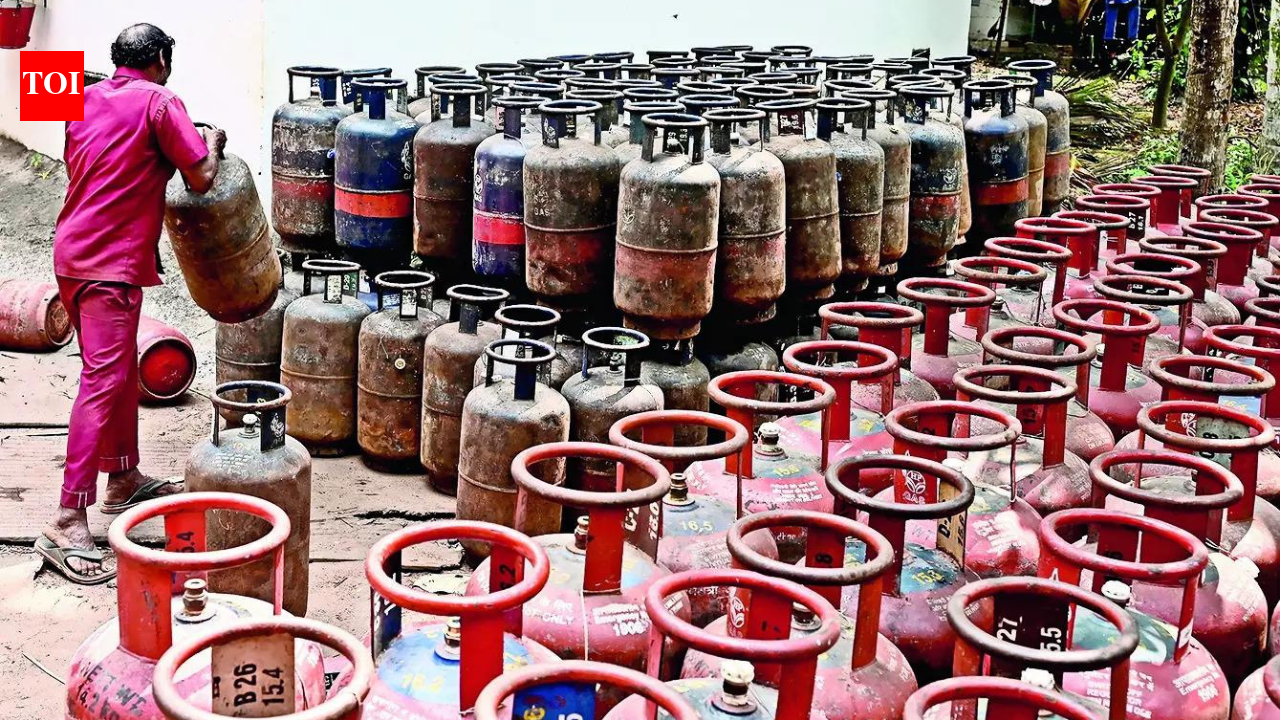
The government has stepped up efforts to streamline gas distribution and ease supply pressures, directing faster processing of city gas projects while increasing allocations of commercial LPG to key sectors amid a challenging geopolitical environment.The Petroleum and Explosives Safety Organisation (PESO) has instructed its offices to dispose of City Gas Distribution (CGD) applications within 10 days, aiming to accelerate the rollout of piped natural gas (PNG), an official statement said.Commercial LPG consumers in major cities and urban areas have also been advised to shift to PNG as part of a broader strategy to reduce dependence on liquefied petroleum gas. Domestic LPG supply remains stable, with no reported dry-outs at distributorships and normal delivery patterns across the country, the statement said, adding that most deliveries are being carried out through the Delivery Authentication Code (DAC) while panic bookings have subsided, PTI reported.On the commercial LPG front, the government has progressively increased allocations. After restoring 20 per cent supply earlier, an additional 10 per cent allocation linked to PNG expansion reforms was announced on March 18. A further 20 per cent allocation was cleared on March 21, taking total commercial LPG supply to 50 per cent.The latest increase prioritises sectors such as restaurants, dhabas, hotels, industrial canteens, food processing units, dairy operations, community kitchens and subsidised food outlets run by state governments and local bodies. Provision has also been made for 5 kg cylinders for migrant workers.Around 20 states and Union Territories have implemented the revised allocation guidelines, while public sector oil marketing companies are supplying commercial LPG in the remaining regions. In the past eight days, about 15,440 tonnes of LPG have been lifted by commercial entities.Educational institutions and hospitals continue to receive priority, accounting for nearly half of the total commercial LPG allocation. Despite global uncertainties affecting supply, the government indicated that domestic availability remains under control while efforts continue to transition urban consumers towards PNG.

Always products are displayed on a shelf in a supermarket in Sarajevo, Bosnia and Herzegovina October 29, 2024.
Dado Ruvic | Reuters
Rising inflation and ever-changing tariff policies have led to higher prices across store shelves over the past few years, squeezing consumers’ budgets.
An often overlooked example: menstrual products.
The average price of menstrual products, including sanitary pads and tampons, has risen nearly 40% since 2020, from roughly $5.37 per unit to $7.43 per unit, according to February data from Chicago-based market research firm Circana.
Dollar sales from menstrual products have grown by nearly 30% over that same period, according to Circana.
But at the same time, sales of menstrual products — which broadly includes pads, tampons, liners and more — have seen a roughly 6% decrease since 2022, falling incrementally each year, according to data from NielsenIQ.
The data analytics company noted that items across the store have seen average unit price increases, with the dollar volume of consumer packaged goods at large rising 2.7% year-to-date. Those price increases are in line with climbing inflation, with the latest consumer price index in February showing a 2.4% annual rise.
The latest CPI data found that inflation in personal care products in the U.S. has jumped dramatically, up 22.1% in February from January 2020.
But because menstrual products are a necessity for a large portion of the population, those costs may be hurting consumers.
“I do think that we’re at a point where consumers in general are having to choose whether they can buy food for their family, or buy prescriptions for their family. Some things that we do typically define as a necessity, people are finding alternatives for or going without,” said Sarah Broyd, a partner with consultancy firm Clarkston Consulting.
Broyd said the gap between higher prices and declining sales shows consumers may be searching for alternatives out of necessity.
Menstrual products haven’t just been hit by inflation, either. According to government data, the U.S. collected $115 million through tariffs on menstrual products containing cotton in 2025, compared with just $42 million in 2020.
The U.S. imported the majority of its menstrual products from Canada, China and Mexico in 2024, according to the World Bank. President Donald Trump has imposed tariffs on all three of those countries at varying levels over the past year.
Those added costs come on top of the so-called “pink tax,” where some states place a sales tax on menstrual products. According to 2025 data from Statista, Tennessee, Mississippi and Indiana have the highest sales tax on menstrual products at 7%. Products that are deemed “medical devices” are often excluded from sales taxes.
‘A subscription service to be a woman’
For 30-year-old Dafna Diamant, the rising price of menstrual products has become noticeable at the cash register and a drag on her monthly expenses.
The New York resident said she’s noticed her usual pack of roughly 18 tampons rise to somewhere around $25, especially over the past year.
“It’s crazy, and it just feels like as a woman, you have to pay sometimes $50 every couple months,” Diamant told CNBC. “And for some people, it takes a toll on the income.”
Diamant said she feels particularly frustrated because it’s not a monthly expense she can go without. She often buys store-brand period products at retailers like CVS and Walgreens, yet she said she’s still shocked by the sticker price.
“It still feels like a subscription service to be a woman,” Diamant told CNBC. “You have to pay every month to be fertile.”
Even larger companies have felt the effects. Procter & Gamble, the parent company of menstrual product brand Always, said in July that it was raising prices on 25% of its personal care and household products due to a $1 billion total annual tariff impact. It manufactures its Always products across facilities in Maine, Utah and Canada, according to the company.
P&G declined to comment for this story.
Kimberly-Clark, the maker of menstrual product brand Kotex, said on an earnings call in April that the company incurred a total of $300 million in gross costs from tariffs, with more than half of that related to tariffs on China. The company did not respond to CNBC’s requests for comment.
Broyd, the partner at Clarkston Consulting, said menstrual products have been hit with a “triple whammy” of rising raw material costs, inflation across energy and supply chains, and cross-border friction from tariffs.
“When you think about plastic and pulp and some of the main components of feminine care products, they’re largely probably coming from overseas and then getting hit with that much more of tariffs,” Broyd said.
She added that these tariffs are on top of already alleged higher levies on other women’s products, the subject of Congress’ Pink Tariffs Study Act introduced last year by Democrats to determine whether the U.S. tariff system is “regressive” or has a “gender bias.”
As prices continue to shoot up, Broyd said she believes companies will continue to reevaluate their portfolios and potentially sell off their feminine care segments to focus on businesses with higher margins. In November, Edgewell Personal Care sold its feminine care business to a company in Sweden for $340 million.
“You’re seeing these more niche, more startup type brands that are popping up in stores. … That’s the biggest growth,” Broyd said. “People that have the ability to flex up and buy more organic or products that they trust, they’ll spend that price premium. But for other consumers that don’t have the discretionary income to do that, they’re going to trade down and go private label, or go without.”
The rise of reusables
Diamant said she and her friends are now trying period underwear instead of single-use products to streamline their expenses.
A growing number of people have been trying reusable period products, primarily because they’re environmentally friendly and cheaper.
Major manufacturers have often relied on brand loyalty for their products, which could take a hit if consumers turn to alternatives.
“If you’re in fem care, you’re going to be using Kotex for 40 years. If you’re in Depend, you’re going to be using Depend for 40 years, right?” Kimberly-Clark CEO Michael Hsu said on a November earnings call. “There is long-duration frequency. There’s a lot of expenditure for consumers, and so because of that, they want to have an ongoing relation with us.”
Saalt, a reusable period products company offering cups, discs and underwear, said it estimates that 16% to 20% of U.S. consumers have tried or used reusable menstrual products, consisting of mostly younger consumers.
“Affordability is huge,” CEO Cherie Hoeger told CNBC. “When you look at our product, a cup or disc can last 10 years, and our product is only in the $30 price range. … They’re able to save up to $1,800 on the lifespan of that cup or disc, and that’s on the low end.”
Saalt, which launched in 2018, hit revenues of eight figures in its third year of business, Hoeger said. The company declined to disclose details of its financials, but she said demand has grown year-over-year since it launched.
Among Generation Z, Hoeger said the top reason for switching to reusables is pricing.
“They usually have some affinity toward sustainability and climate change, but it’s never their number one,” Hoeger said.
The rise of reusables may be contributing to the declining sales of single-use period products over the past few years. It also coincides with recent studies indicating that tampons could contain lead or other harmful ingredients. The Food and Drug Administration investigated the presence of metals and determined there was no risk.
Riding that momentum, other companies like Knix, MeLuna, Flex and more have entered the reusables space and garnered growing market share as consumers search for alternatives.
“Affordability is the crux; it’s the root problem,” Hoeger said. “Without affordability for these period products, you have real economic consequences for women to happen.”


Dubai offers departing passengers souvenirs, thanks amid regional tensions

Lisa Kudrow on making “The Comeback”

Lady Amelia Windsor shares private hen photos tied to grandparents’ love story

Tips and Advice for Buying Used or Refurbished Electronics

UAE savings strategies 2026 explained: Best apps, tools, budget rules and smart money hacks to beat rising cost of living in emirates – The Times of India

Iran threatens US-linked oil facilities after Kharg Island bombed

-
 Tech1 week ago
Tips and Advice for Buying Used or Refurbished Electronics
-
Business1 week ago
UAE savings strategies 2026 explained: Best apps, tools, budget rules and smart money hacks to beat rising cost of living in emirates – The Times of India
-

 Tech1 week ago
Apple’s New Monitor Does HDR Like It’s Never Been Done Before
-
 Politics1 week ago
Iran threatens US-linked oil facilities after Kharg Island bombed
-

 Entertainment1 week ago
Iran at war
-

 Sports1 week ago
Japan suffers shocking collapse to Venezuela in World Baseball Classic
-

 Entertainment7 days ago
Strategic oil stocks to be released ‘immediately’ in Asia and Oceania: IEA
-

 Sports1 week ago
College Basketball Invitational abruptly cancels 2026 tournament