

Business
These restaurant chains closed locations in 2025


As the restaurant industry endured another difficult year, many chains opted to close underperforming locations as they try to turn around their businesses.
Inflation-weary consumers have pulled back their restaurant spending, choosing to eat at home or chasing deals when they go out for a meal. While some restaurants have won over reluctant diners, the industry has largely struggled with the sales slump. Traffic to restaurants open at least a year fell every month in 2025, excluding only July, according to Black Box Intelligence.
In years past, restaurant closures have been more concentrated across casual-dining chains, which lost customers to fast-casual competitors like Chipotle. But this year, chains across the industry announced plans to shutter at least hundreds of locations.
In such a tough environment, some restaurant companies even filed for bankruptcy protection. Hooters, Pinstripes and On the Border were some of the notable names that landed in bankruptcy court this year.
Here are the chains that announced closures in 2025:
Starbucks
A Starbucks coffee cup sits on a table inside a Starbucks in New York on Dec. 2, 2025.
Spencer Platt | Getty Images News | Getty Images
In September, the coffee giant announced a $1 billion restructuring plan that included closing roughly 500 of its North American locations. The closures even extended to shuttering its upscale Reserve Roastery cafe in Seattle, the company’s hometown.
Starbucks’ announcement followed CEO Brian Niccol’s one-year anniversary at the helm of the company. Under his leadership, Starbucks is trying to reverse a sales slump in the U.S., its biggest market.
Executives plan to share more details about the turnaround at the company’s upcoming investor day in late January in New York.
Wendy’s
A Wendy’s restaurant sign in Austin, Texas, Nov. 10, 2025.
Brandon Bell | Getty Images News | Getty Images
In November, Wendy’s announced that it would undergo a strategic review of its restaurant footprint and begin closing underperforming locations that quarter. While the company did not announce a specific number of closures, interim CEO and CFO Ken Cook told analysts that the company could shutter a “mid-single digit percentage” of its U.S. restaurants shuttering, which would mean hundreds of the burger chain’s locations.
The closures are one phase of Wendy’s “Project Fresh” turnaround plan. The company has reported same-store sales declines even as rivals McDonald’s and Burger King see higher demand for their Big Macs and Whoppers.
In 2024, Wendy’s shuttered about 140 locations.
Denny’s
A view of a Denny’s restaurant in Hayward, California, Feb. 14, 2025.
Justin Sullivan | Getty Images
In February, Denny’s said it planned to close between 70 and 90 restaurants in 2025. In recent months, the diner chain’s sales sunk as customers opted to visit cheaper fast-food restaurants for breakfast. The shift in behavior led the company to shutter underperforming locations and attempt to improve the rest of its restaurant footprint.
In November, the chain announced it had sold itself for $620 million to Yadav Enterprises, TriArtisan Capital Advisors and Treville Capital Group. The deal is expected to close in the first quarter of 2026, pending regulatory approval.
Jack in the Box
Geri Lavrov | Getty Images
In April, Jack in the Box said it would close between 150 and 200 restaurants as part of its “Jack on Track” strategy to improve its financial performance. By the end of its fiscal 2025 on Sept. 28, the chain had permanently shuttered 86 restaurants.
Bahama Breeze
In May, Bahama Breeze parent company Darden Restaurants closed 15 of the chain’s locations, which represents roughly a third of its overall footprint.
Following the closures, executives decided that the Caribbean-inspired chain was not a strategic priority for Darden, so the company is exploring strategic alternatives for the brand. Options include selling the chain outright or converting its restaurants into other Darden brands, like Olive Garden. Darden expects to make a decision on Bahama Breeze by the end of its fiscal 2026, which concludes in May.
Hardee’s
Dozens of Hardee’s locations will close by end of the year after the franchisor sued ARC Burger, one of its largest franchisees. Hardee’s alleges that the operator fell behind on payments like royalties, rent and taxes.
ARC, which is owned by private equity firm High Bluff Capital Partners, operated 77 Hardee’s restaurants before the legal battle began. Its footprint stretched across eight states, including Alabama, Florida, Georgia, Illinois, Missouri, Montana, South Carolina and Wyoming, according to legal filings.
Papa John’s
The Papa John’s Pizza logo is shown in Austin, Texas, May 9, 2024.
Brandon Bell | Getty Images
In the first three quarters of 2025, Papa John’s shuttered 173 restaurants worldwide, according to company filings. Most of the closures affected international locations, although 62 of the pizza chain’s U.S. locations also closed.
Despite the closures, Papa John’s still had nearly 6,000 restaurants in operation at the end of September.
Noodles & Co.
Michael Siluk | UCG | Universal Images Group | Getty Images
At the end of October, Noodles & Co. had closed 29 company-owned restaurants this year, and executives said that they planned to shutter another two to five underperforming locations by the end of 2025.
In 2024, the fast-casual chain closed 20 locations.
By the end of 2026, Noodles & Co. is planning to close another 12 to 17 stores, as it aims to improve the company’s financial performance and boost sales at the chain’s nearby locations.
Outback Steakhouse
An Outback Steakhouse restaurant in Daly City, California, Jan. 31, 2025.
Justin Sullivan | Getty Images
In October, restaurant company Bloomin’ Brands closed 21 locations across the company. The closures hit Outback Steakhouse, the gem of its portfolio, as well as Bonefish Grill and Carrabba’s Italian Grill.
Bloomin’ has identified nearly two dozen other restaurants that will not renew their leases when they expire over the next four years, executives said in November when sharing the company’s quarterly earnings. At the same time, the company announced a $75 million turnaround plan to improve Bloomin’ sales and its overall financial health.




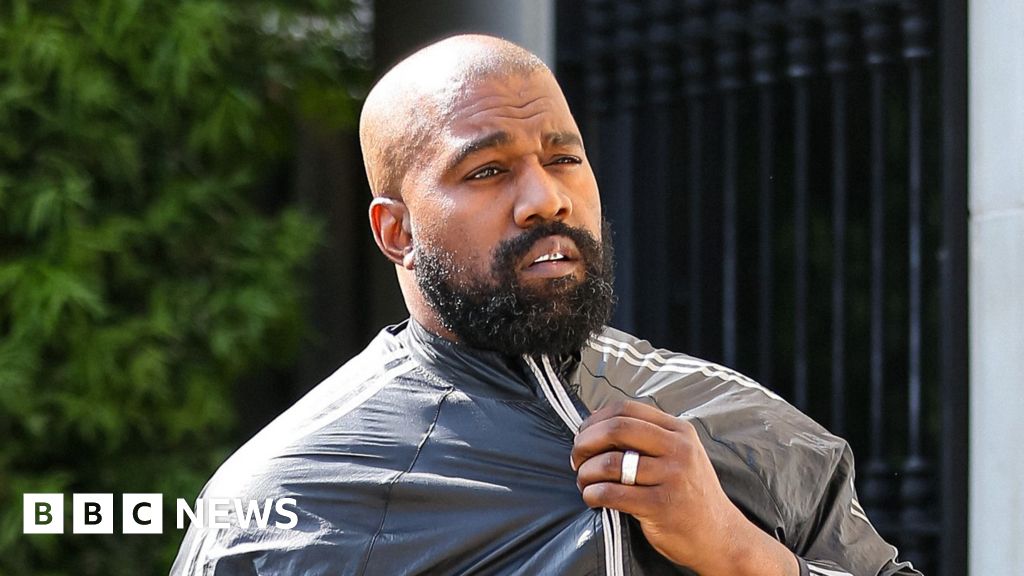
Sir Keir Starmer says it is “deeply concerning” the rapper is set to headline a festival after recent antisemitic comments.
Source link
Business
Stock markets outlook: Dalal Street braces for swings as RBI MPC decision, war risks weigh on sentiment–Check key triggers – The Times of India

Domestic equities are expected to remain volatile this week as investors track the Reserve Bank’s monetary policy decision, global macroeconomic cues and evolving developments in the West Asia conflict, analysts said, according to PTI.Market participants will also keep a close watch on crude oil price movements and foreign fund flows, which continue to influence sentiment.Vinod Nair, Head of Research at Geojit Investments Ltd, said the RBI’s Monetary Policy Committee (MPC) meeting will be the key domestic trigger, with investors focusing on the central bank’s stance on inflation and growth.“A rate pause is near-certain consensus, the central bank walks a tightrope between crude-driven inflation risks and a four-year low Manufacturing PMI signalling a softening growth impulse. The governor’s commentary on the rate cycle trajectory and FY27 projections will be closely monitored.“Globally, the US March CPI reading will carry significant importance, as it buries residual Fed rate-cut hopes, strengthens the dollar and tightens financial conditions for emerging markets, including India,” Nair said.He added that geopolitical developments in West Asia will remain the dominant factor shaping market direction.“Indian markets return after a three-day gap and remain acutely vulnerable to weekend war developments, with crude trajectory and any credible ceasefire signal being the decisive variable that could either trigger a sharp relief rally or extend the current sell-on-rise mode,” he said.In the previous holiday-shortened week, the BSE Sensex declined 263.67 points, or 0.35%, while the NSE Nifty fell 106.5 points, or 0.46%.Siddhartha Khemka, Head of Research (Wealth Management) at Motilal Oswal Financial Services Ltd, said investor sentiment will remain closely linked to developments in the West Asia conflict.Brent crude prices have stayed elevated near $107 per barrel, fuelling concerns around imported inflation. Currency pressures have also intensified, with the rupee weakening sharply before recovering towards Rs 93 against the US dollar following RBI intervention, he noted.Foreign institutional investor (FII) outflows remain a key overhang, with March witnessing heavy selling of Rs 1.2 lakh crore, among the highest monthly outflows in recent years.“Investors will monitor the US Federal Open Market Committee (FOMC) meeting minutes, GDP data, and initial jobless claims for further cues on growth and the policy trajectory.“Overall, markets are expected to remain volatile as geopolitical developments, crude price movements, FII flows and global macro data continue to drive sentiment,” Khemka said.Analysts said any signs of de-escalation in the West Asia conflict could ease crude prices and stabilise the currency, offering relief to markets, while further escalation may prolong risk aversion and keep pressure on foreign flows.

One elderly couple had to find £1,000 for an oil delivery and suppliers are not giving quotes, a councillor says.
Source link


Actress Tori Spelling hospitalized after Southern California crash; authorities investigating cause

With Messi goal, Inter Miami open new stadium with dream moment

Justin Bieber ignites documentary release speculations ahead of Coachella

-

 Sports1 week ago
USMNT handed reality check by Doku, Belgium ahead of World Cup
-

 Sports1 week ago
2026 NCAA men’s hockey tournament: Schedule, results
-

 Fashion1 week ago
EU apparel imports slump 15.48% YoY in Jan; Bangladesh hardest hit
-
Uncategorized3 days ago
[CinePlex360] Please moderate: “Trump signals p
-
Uncategorized6 days ago
[CinePlex360] Please moderate: “Further tariff
-

 Tech2 days ago
Our Favorite iPad Is $50 Off
-

 Sports1 week ago
Man City show why they are worthy WSL title winners as tired United wilt
-
Uncategorized1 week ago
[CinePlex360] Please moderate: “Apple scrapping