

Business
‘Political Stability Has Powered India’s Growth’: PM Modi At Vibrant Gujarat Conference

Last Updated:
PM Modi further emphasised that over the past 11 years, India has emerged as the largest data consumer and built the country’s largest real-time digital platform.



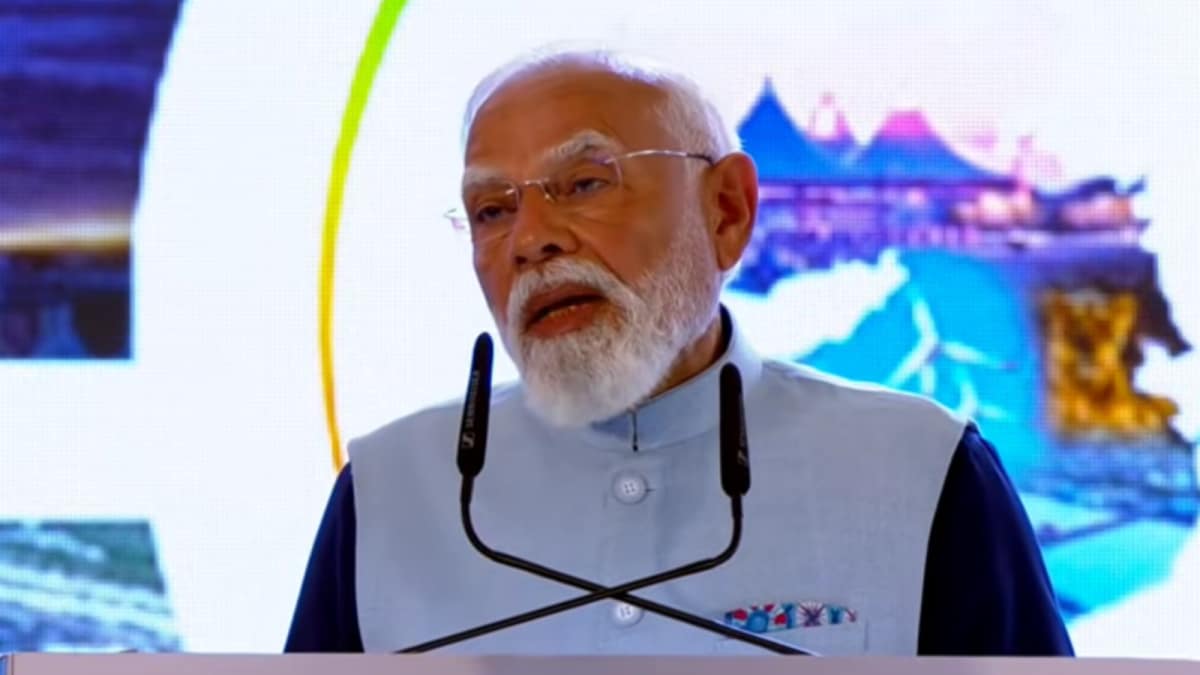
PM Modi speaking at the inauguration of Vibrant Gujarat Regional Conference. (PTI)
Prime Minister Narendra Modi on Sunday said that India’s political stability and strong macroeconomic fundamentals are driving global investor confidence, with Gujarat emerging as a key anchor of the country’s growth story.
While addressing the Vibrant Gujarat Regional Conference in Gujarat, the Prime Minister highlighted India’s economic trajectory, saying that the country is the world’s fastest-growing major economy, with inflation under control and a strong foundation for long-term growth. He said that reform express is driving India’s journey to developed nation status.
He highlighted that India is the largest producer of milk and a leading manufacturer of generic medicines, reflecting the country’s growing strength in both agriculture and pharmaceuticals.
VIDEO | Rajkot: PM Modi (@narendramodi) says, “India is the world’s fastest-growing large economy and inflation is under control. Agricultural production in India is setting new records, and the country ranks number one in milk production. India is also the world’s largest… pic.twitter.com/R6f7tDhoZD— Press Trust of India (@PTI_News) January 11, 2026
He noted that global institutions are increasingly bullish on India, with the International Monetary Fund (IMF) describing the country as the engine of global growth.
“India is the world’s 3rd largest startup ecosystem, 3rd largest aviation market, we are in the top 3 metro networks of the world,” he said, asserting that the country is heading to become the world’s 3rd largest economy.
PM Modi further emphasised that over the past 11 years, India has emerged as the largest data consumer and built the country’s largest real-time digital platform. He highlighted that India is now the second-largest mobile manufacturer, whereas earlier the country imported nine out of ten phones.
The Prime Minister also underlined Gujarat’s contribution to India becoming the world’s third-largest economy, noting that the state has grown across sectors. He said regions like Saurashtra and Kutch, once seen as remote, have now become major drivers of Atmanirbhar Bharat and investment-led growth.
Highlighting Saurashtra’s manufacturing strength, with over 2.5 lakh MSMEs producing goods ranging from basic tools to high-precision aircraft components, PM Modi pointed to the region hosting the world’s largest ship-breaking yard and being a major hub for tile manufacturing.
He further said that India’s first semiconductor fabrication plant is coming up in Dholera, with the land ready and a predictable policy environment supporting long-term growth.
Vibrant Gujarat Regional Conference
PM Modi on Sunday inaugurated the Vibrant Gujarat Regional Conference for the Kutch and Saurashtra regions.
The event saw the presence of Gujarat Chief Minister Bhupendra Patel and Deputy Chief Minister Harsh Sanghavi, among other dignitaries.
He also inaugurated 13 New Smart Industrial Estates in 7 Districts (Amreli, Bhavnagar, Jamnagar, Kutch, Morbi, Rajkot and Surendranagar) spanning an area of over 3540 Acres by Gujarat Industrial Development Corporation before his address on Sunday.
The two-day conference summit will highlight Gujarat’s leadership in the clean energy sector and its alignment with India’s ‘Panchamrit’ commitments announced by the Prime Minister. These include achieving 500 GW of non-fossil energy capacity by 2030, meeting 50 per cent of energy requirements from renewable sources, reducing projected carbon emissions by 1 billion tonnes, lowering carbon intensity by 45 per cent by 2030, and attaining net-zero emissions by 2070.
Rajkot, India, India
January 11, 2026, 16:22 IST
Read More

Business
Hormuz flashpoint: Why Indian-flagged ships are in focus as Middle East tensions hit global shipping – The Times of India
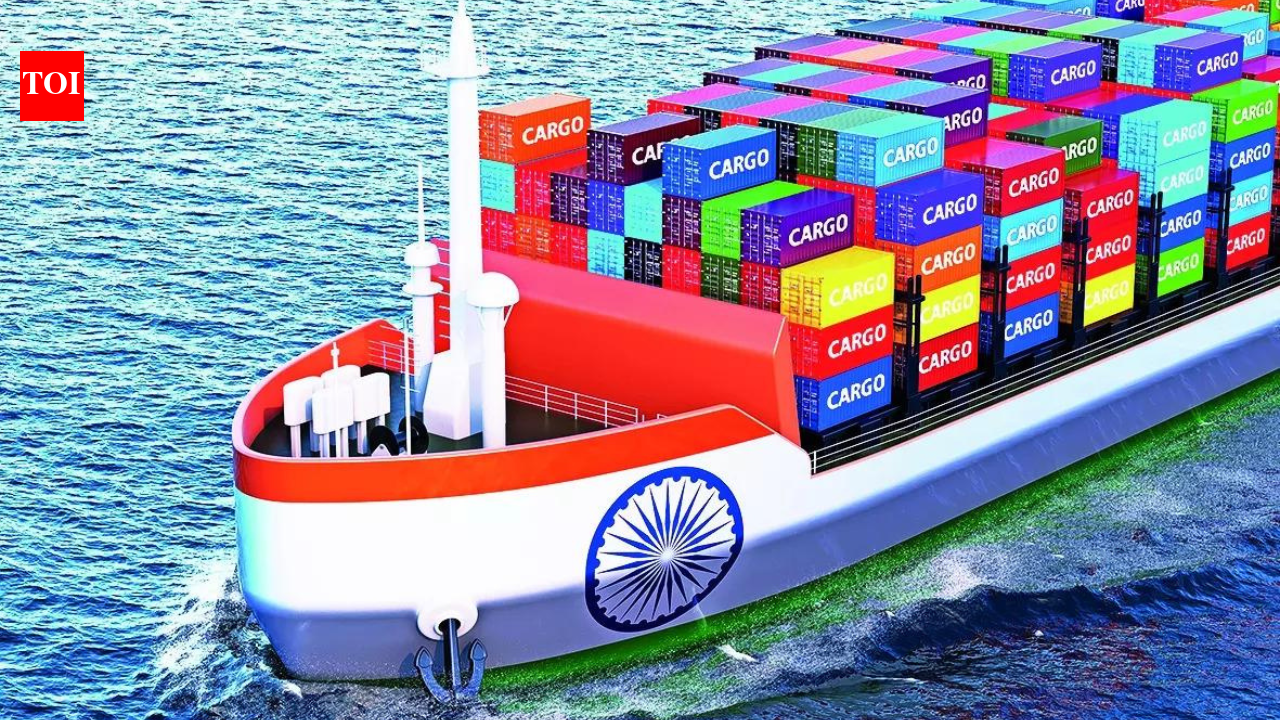
As tensions rise in Middle East and vessel safety in the Strait of Hormuz comes under renewed focus, the flag a ship flies has emerged as a key factor in maritime security, regulation and state protection.Flagging a vessel means it is registered with a country and must comply with that nation’s maritime laws and regulations. It also gives the flag state powers to investigate and penalise violations of domestic and international laws. Since regulations differ across countries, shipowners often choose jurisdictions that best suit operational and commercial needs, according to an ET report.An Indian-flagged vessel is a commercial ship registered with the Directorate General of Shipping and authorised to fly the national flag. Such vessels are governed by the Merchant Shipping Act and operate under Indian jurisdiction as a sovereign extension on the high seas.These ships are taxed by Indian authorities and must comply with Indian maritime safety, labour and environmental rules. To qualify for Indian flagging, vessels must come to domestic waters for registration and the owning company must be incorporated in India.Indian-flagged ships also receive strategic backing. India protects their interests through naval and diplomatic intervention when required. Experts say this creates a higher compliance burden than “Flag of Convenience” jurisdictions such as Panama and St Kitts.According to Rajeev Kumar Yadav, as quoted ET, director at Vertex Marine Services, Flag of Convenience systems allow vessels to be flagged from anywhere in the world within “3-4 days”.Indian-flagged ships calling at domestic ports can also benefit from lower port levies and tax liabilities, along with priority in government cargo movement and public sector charter contracts.During the Iran crisis, more than two dozen Indian ships were stranded west of the Strait of Hormuz after strict high-risk area classifications were imposed. The Indian Navy escorted several tankers to safety, though some vessels remain in the Persian Gulf.No direct attacks have been reported on Indian-flagged vessels so far, largely due to India’s balanced diplomatic approach in the crisis.However, being Indian-flagged does not give the government powers to decide freight rates or commercial destinations. The state’s role is limited to enforcing civil, criminal and regulatory laws onboard, along with international safety, environmental and labour compliance norms.India’s flagged fleet has been expanding. The Indian-flagged vessel fleet reached 14.2 million Gross Tonnage (GT) in March, with 92 vessels of 1.5 million GT joining during FY26.The long-term Maritime Amrit Kaal Vision 2047 aims to sharply raise India’s share of the global flagged fleet and increase utilisation of Indian-flagged ships from about 7 per cent currently to 30-40 per cent by 2047.
Brent crude sinks by a tenth after Iran says the key waterway is open for commercial ships for the rest of the ceasefire.
Source link
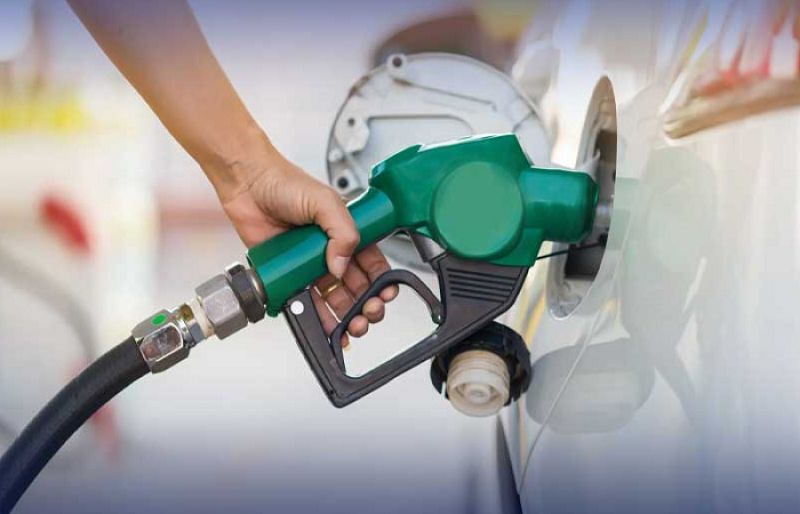
Oil prices tumbled on Friday after Iranian officials said they would allow commercial traffic to resume in the Strait of Hormuz. This lifted equity markets in Europe and New York, where major indices hit new records.
Citing the ceasefire between Israel and Lebanon, Iran’s Foreign Minister Abbas Araghchi said Tehran would lift its blockade on shipping through the key Gulf energy trade route.
“In line with the ceasefire in Lebanon, the passage for all commercial vessels through Strait of Hormuz is declared completely open for the remaining period of ceasefire,” Araghchi said.
Traffic in the strategic waterway, through which one-fifth of the world’s crude oil normally flows, has been disrupted by Iran since the US-Israeli offensive began on Feb. 28. At one point, this sent oil prices to a peak of nearly $120 a barrel and roiled the global economy.
Both Brent, the benchmark international contract, and its US equivalent WTI fell below $90 per barrel following Tehran’s announcement. Brent later cut its losses and finished at $90.38 a barrel, down 9.1%.
‘Immediate impact’
“This news is having an immediate impact on markets,” said Kathleen Brooks, research director at XTB.
The move also sent a jolt through equity markets, extending a rally in New York. There, equities have pushed ever higher since late March in anticipation of a breakthrough in the Middle East crisis.
“We had seen a big move the last two weeks, and now it’s just really pricing completely out the worst-case scenario, said Angelo Kourkafas, from Edward Jones.
Kourkafas also pointed to underlying strength in the US economy that should get more attention in the coming period as geopolitical concerns ebb.
“Geopolitical developments are moving in the right direction, and at the same time, the earning strength is hard to ignore,” Kourkafas said.
The broad-based S&P 500 finished at 7,126.06, up 1.2% for the day and 4.5% for the week.
‘Good news’
Earlier, European stocks closed higher, with both Frankfurt and Paris gaining 2%.
US President Donald Trump cheered the reopening of the Strait of Hormuz in an interview with AFP.
“We’re very close to having a deal,” Trump said in a brief telephone call with AFP from Las Vegas. He added there were “no sticking points at all” left with Tehran.
But Iran quickly pushed back on one key point.
Iran’s foreign ministry said Friday that its stockpile of enriched uranium would not be transferred “anywhere.” It rejected an earlier claim by Trump that the Islamic Republic had agreed to hand it over.
Shipping industry figures, meanwhile, gave a cautious welcome to Iran’s announcement.
A spokesman for German transportation giant Hapag-Lloyd, which has ships stuck in the Gulf, told AFP by phone that the reopening was “in general… good news.”
But he cautioned that shippers still needed details of what route vessels could take and in what order, citing fears of mines.
“One thousand ships cannot just go now to the entrance of the strait, that will be chaos. They (the Iranians) need to give clear orders,” said the spokesman, Nils Haupt.
“We would be ready to go very soon if some of these open questions can be solved within the weekend.”


‘The Naked Gun’ actor Paul Walter Hauser bloodies opponent at Maple Leaf Pro’s first US show

Iran says no date set for next round of negotiations with US
Hormuz flashpoint: Why Indian-flagged ships are in focus as Middle East tensions hit global shipping – The Times of India

-

 Politics1 week ago
Indian airlines hit hardest after Dubai limits foreign flights until May 31
-

 Entertainment5 days ago
Palace left in shock as Prince William cancels grand ceremony
-

 Sports5 days ago
The case for Man United’s Fernandes as Premier League’s best
-

 Politics1 week ago
Chinese, Taiwanese will unite, Xi tells Taiwan opposition leader
-
 Business5 days ago
UK could adopt EU single market rules under new legislation
-

 Entertainment1 week ago
Dua Lipa hits major career high ahead of wedding with Callum Turner
-
 Business1 week ago
He paid $248 in illegal tariffs for this coat. Will he ever get it back?
-

 Sports7 days ago
Lamar Jackson hits back at critics with faithful message on social media