

Business
8th Pay Commission Salary Calculator: How To Estimate Your New Take-Home Pay

Last Updated:
While the final recommendations are yet to be notified, a structured calculation using expected pay panel principles allows employees to project likely 2026/2027 take-home salary.



8th Pay Commission Salary Hike.
8th Pay Commission Salary Hike: As central government employees awaiting the implementation of the 8th Central Pay Commission (CPC), one question dominates discussions: How much will my take-home salary increase once the new pay matrix comes into effect?
While the final recommendations are yet to be notified, a structured calculation using expected pay commission principles allows employees to project their likely 2026/2027 take-home salary. This guide explains the process step by step, focusing on the three core components of pay — Basic Pay, House Rent Allowance (HRA) and Transport Allowance (TA).
If the 8th CPC salary structure is expected to follow the same broad framework used by the 7th CPC, with revisions in pay matrix and fitment factor, basic pay levels, and allowance calculations linked to the revised basic.
This calculator assumes:
- A fitment factor range of 2.5x to 2.8x (for projection purposes only)
- Existing HRA slabs (24%, 16%, 8%)
- Transport allowance slabs similar to the current structure
These assumptions help create a working estimate, not a final entitlement.
Step 1: Identify Your Current Pay Level
Under the 7th CPC, every employee is placed in a pay level (Level 1 to Level 18). Each level has a fixed basic pay.
For example:
- Level 3: Rs 21,700
- Level 6: Rs 35,400
- Level 10: Rs 56,100.
Your current basic pay is the foundation for all calculations.
Step 2: Apply the Expected 8th CPC Fitment Factor
The fitment factor is used to revise the basic pay under a new pay commission.
Expected 8th CPC Formula: Revised Basic Pay = Current Basic Pay × Expected Fitment Factor
Illustration (Level 6)
- Current Basic: Rs 35,400
- Fitment factor (assumed): 2.6x
- Revised Basic (2026/2027 estimate): Rs 92,040
This revised basic becomes the new anchor for all allowances.
Step 3: Calculate House Rent Allowance (HRA)
HRA is calculated as a percentage of the revised basic pay, based on city classification:
| City Category | HRA Rate |
|---|---|
| X (Metro) | 24% |
| Y | 16% |
| Z | 8% |
Example (Metro City)
- Revised Basic: Rs 92,040
- HRA @ 24%: Rs 22,090
Step 4: Add Transport Allowance (TA)
Transport allowance depends on pay level and city type. Under the current structure:
| Category | Monthly TA |
|---|---|
| Higher Pay Levels (Metro) | Rs 7,200 + DA |
| Other Employees (Metro) | Rs 3,600 + DA |
| Non-Metro | Lower slab |
For simplicity, DA on TA is not added here, as DA itself will reset under the new CPC.
Example
- TA (Metro, Level 6): Rs 3,600
Step 5: Estimate Gross Salary (Before Deductions)
Gross Salary = Revised Basic + HRA + TA
Sample Projection (Level 6, Metro)
| Component | Amount (Rs) |
|---|---|
| Revised Basic | 92,040 |
| HRA | 22,090 |
| Transport Allowance | 3,600 |
| Estimated Gross | 1,17,730 |
Step 6: Estimate Take-Home Salary
From the gross salary, standard deductions apply:
- NPS contribution (10% of basic)
- CGHS / health scheme
- Income tax (as per regime chosen)
Approximate Deduction Snapshot
- NPS (10% of basic): Rs 9,204
- Other deductions (average): Rs 2,000-3,000
Estimated Take-Home (illustrative): Rs 1.05-1.07 lakh per month
Level-by-Level Snapshot (Indicative):
| Pay Level | Current Basic (Rs) | Estimated Revised Basic (Rs) | Approx Take-Home (Metro) |
|---|---|---|---|
| Level 3 | 21,700 | 56,420 | Rs 65,000-68,000 |
| Level 6 | 35,400 | 92,040 | Rs 1.05-1.07 lakh |
| Level 10 | 56,100 | 1,45,860 | Rs 1.60-1.65 lakh |
Note: Figures are indicative and subject to final CPC notification.
What This Calculator Does — and Does Not — Do
The 8th Pay Commission salary calculator helps the central government employees understand how their salary is built, estimate post-8th CPC take-home pay, and compare outcomes across pay levels.
It is important to note that it does not predict the final fitment factor and account for DA reset mechanics. These are just speculations. Final official government notifications will be issued after the 8th Pay Commission submits its report within 18 months of its date of constitution (November 3, 2025).
When is the 8th Pay Commission likely to be implemented?
Based on historical timelines of previous pay commissions, the actual implementation of revised pay scales is unlikely in 2026 and could spill over into 2027. Until then, central government employees and pensioners will continue to draw salaries and pensions as per existing 7th Pay Commission norms, along with applicable DA revisions.
 Click here to add News18 as your preferred news source on Google.
January 12, 2026, 14:16 IST
Read More


Citigroup initiated its coverage of Pine Labs with a buy rating and a target price of Rs 235. Analysts said that India’s payments fintech is on a monetization improvement trajectory, with leading players increasingly entrenched in respective core areas of leadership. While product, services and distribution build-outs into comprehensive plays will continue across the fintech ecosystem, large players don’t face significant disruption risks owing to: Across-the-board profitability push; rising regulatory costs and compliance requirements; and stickiness borne out of integration into enterprise business workflows. Further, while consumer payments have seen flux in competitive positioning in the past decade, there have been relatively fewer changes in positioning and leadership within segments in merchant payments.BoFA Securities has initiated its coverage of Groww (Billionbrains Garage Ventures) with a buy rating and a target price of Rs 235. Analysts said Groww is well positioned to capitalize on India’s retail investing tailwinds and they expect compounded annual growth rate (CAGR) for revenue at 30% over FY26-FY28. The company produces best-in-class profitability with further upside from operating leverage. Analysts have valued Groww at 39x FY28E price-to-earnings. They, however, said that the near-term risks for the stock are a weak capital market performance and the expiry of the six-month lock-in of shares post-IPO.Elara Capital initiated its coverage of Jindal Saw with a buy rating and a target price of Rs 280. Analysts said earnings recovery is expected over FY27–FY28, driven by water, and oil & gas demand. The company’s order book is at an all-time high, indicating strong visibility. They also feel Jal Jeevan Mission spending revival to drive domestic pipe demand, while the global pipeline capex is supported by energy security concerns. Analysts also pointed out that exports are rising, with diversification reducing dependence on domestic capex. The company’s capacity expansion to support margins and operating leverage. They feel the stock’s valuations are attractive, with rerating potential driven by execution and growth.Jefferies has downgraded Indus Towers to underperform from buy with a target price cut to Rs 375 from Rs 530. Analysts downgrade the stock due to site-renewal risks bunched up over second half of 2026 (H2CY26) and first half of 2027 (H1CY27) which could impact revenues and growth. Elevated capex levels due to higher growth and maintenance capex which will impact earnings growth as well free cash flow and payouts. They cut Indus Towers’ revenue and profit after tax (PAT) estimates by 2-6% to factor renewal risks post which stock offers 3% EPS growth and a 4% yield. They said risks on growth outlook should weigh on re-rating potential too.Kotak Institutional Equities has a buy on Ujjivan SFB with a target price of Rs 72. Analysts said that the RBI has returned Ujjivan SFB’s application for a universal bank license, citing need for further loan portfolio diversification. While the outcome is clearly not favourable, the regulator has flagged no concerns relating to governance, compliance or operational soundness. Analysts said their investment thesis did not factor in any benefit from a potential transition to a universal bank. Hence, they maintained a buy but remained watchful of any sharp changes in asset mix strategy in response to RBI’s feedback.(Disclaimer: Recommendations and views on the stock market, other asset classes or personal finance management tips given by experts are their own. These opinions do not represent the views of The Times of India)
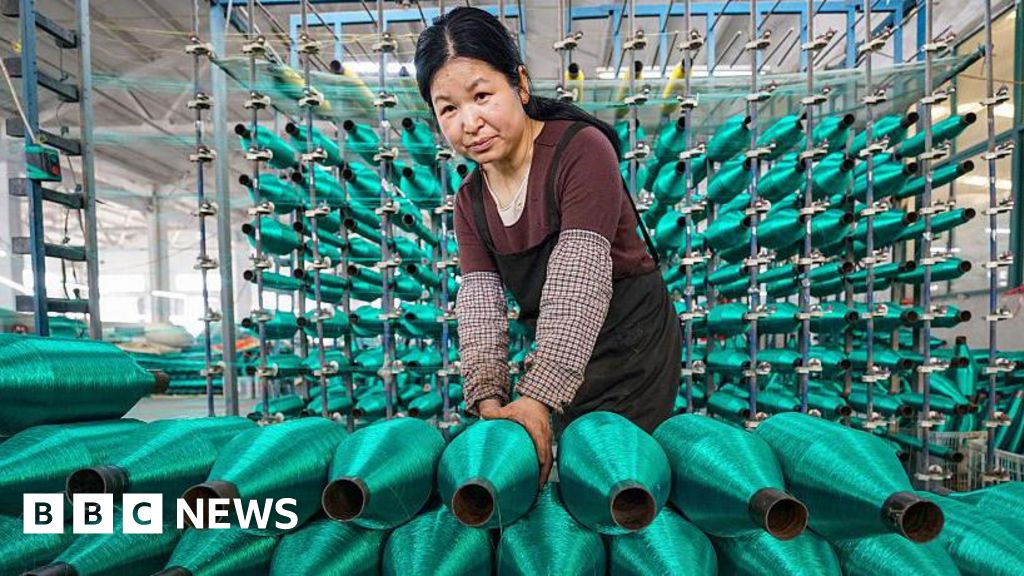
The better-than-expected GDP data comes as Asian countries have been hit hard by the impact of the conflict.
Source link
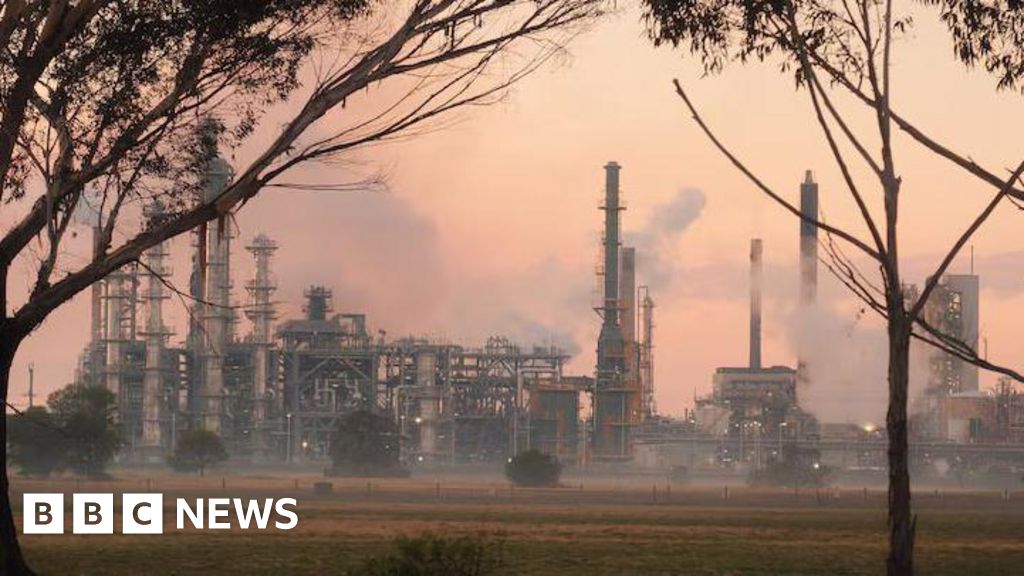
The fire has deepened fears over the nation’s petrol supplies amid a global crunch.
Source link


Switzerland’s apparel imports grow double-digit in Jan–Feb 2026

No vote after NCAA urges further study of age eligibility changes to college sports

Taylor Swift on bond with Dakota Johnson: ‘Curious’

-

 Fashion1 week ago
India’s exports face reset as EU links trade to carbon metrics: EY
-

 Entertainment1 week ago
Lamar Odom shocking response to Khloé Kardashian account of his overdose
-

 Entertainment1 week ago
Queen Elizabeth II emotional message for Archie, Lilibet sparks speculation
-

 Tech1 week ago
Azure customers up in arms over ‘full’ UK South region | Computer Weekly
-

 Tech1 week ago
As the Strait of Hormuz Reopens, Global Shipping Will Take Months to Recover
-

 Fashion1 week ago
CII submits 20-pt agenda to Indian govt to back firms hit by Iran war
-

 Tech7 days ago
This AI Button Wearable From Ex-Apple Engineers Looks Like an iPod Shuffle
-

 Politics6 days ago
Indian airlines hit hardest after Dubai limits foreign flights until May 31