

Sports
‘Head coach’ vs ‘manager’: Why job title matters for Chelsea, Man United

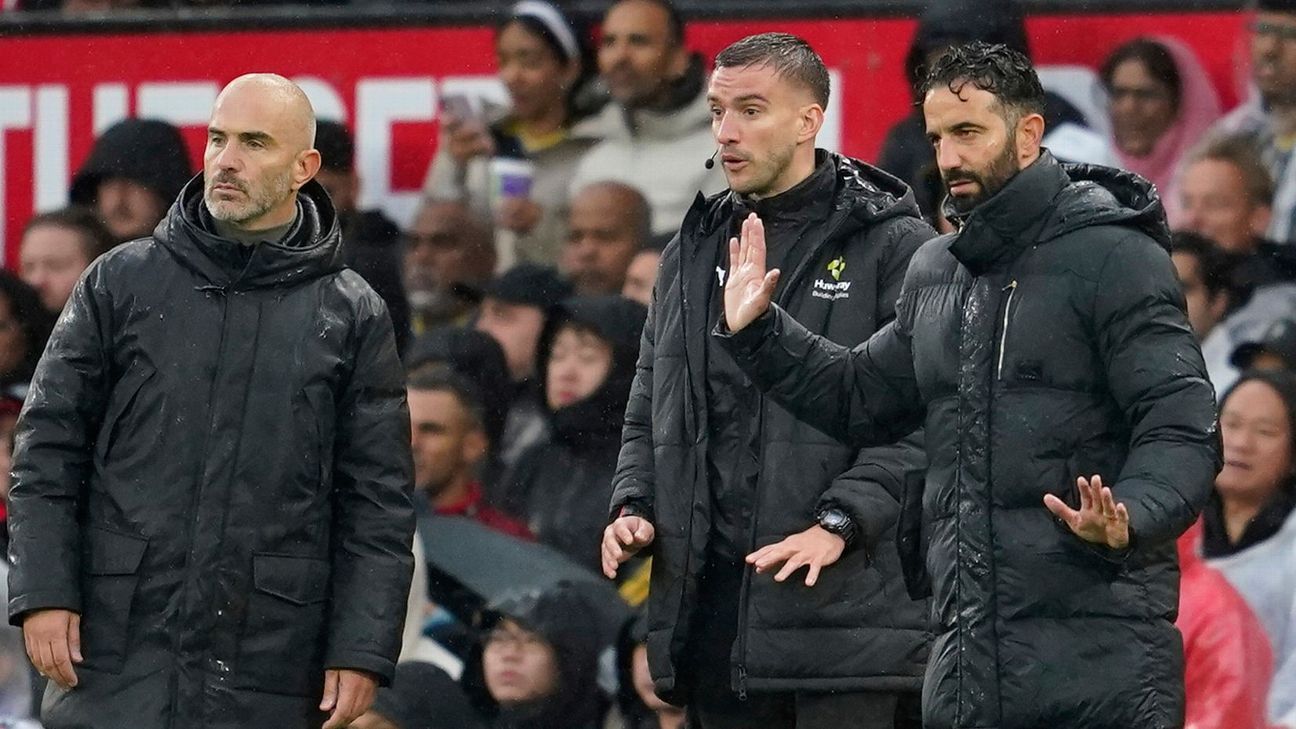
Who would be a football manager? Well, as it turns out, in the Premier League the answer is an increasing number of head coaches.
The difference between the job titles of “manager” and “head coach” may seem mere semantics at first glance, but events at Manchester United and Chelsea this month point to deeper structural problems that many clubs are now grappling with.
Both Ruben Amorim and Enzo Maresca chose to go public with frustrations they deemed as unnecessary interference from the infrastructure around them.
Maresca went first. In mid-December, after a routine 2-0 home win over Everton, which should have calmed the mood around Stamford Bridge, Maresca opted instead to ignite a fire by declaring the buildup “the worst 48 hours” of his tenure due to “a lack of support.”
– Why did Man United, Chelsea, Madrid all sack managers? It’s about culture
– How Man United chose Carrick as head coach: A no-fuss, loyal, safe option
– Real Madrid fired Xabi Alonso after 233 days. Where did it all go wrong?
His working relationship with senior figures at the club quickly eroded, and Chelsea parted company with Maresca just 19 days later. We will never know for certain, but perhaps Amorim, increasingly disgruntled at United, was inspired by those events in west London.
The following day, Amorim hinted at internal issues at a prematch news conference before facing Leeds United and, after that game, launched a full-scale assault on his bosses, insisting he joined United to “be the manager, not the head coach.” Amorim was sacked the following morning.
Chelsea have since doubled down on their existing head coach model by appointing Liam Rosenior as Maresca’s successor, not least because of his experience working for the club’s owners, BlueCo, at their sister team, Strasbourg of France’s Ligue 1.
United’s next move seems less certain after they installed Michael Carrick as an interim boss before making a permanent appointment in the summer.
The club still appears stuck at a crossroads created by legendary manager Sir Alex Ferguson’s departure in 2013, just as Arsenal were when Arsène Wenger left in 2018. They were the two most prominent exponents of the old model, which dictated that control comes at all costs for a manager. But what balance works best in 2026?
What’s the difference between ‘head coach’ and ‘manager’?
2:02
Rosenior: I’m accountable for my players mistakes
Chelsea boss Liam Rosenior refused to criticise Robert Sánchez after errors in the 3-2 Carabao Cup semifinal defeat to Arsenal.
This isn’t a new problem. Ferguson and Wenger once sat on stage together at a League Managers’ Association meeting, opining on how the preeminence they enjoyed was founded on controlling all aspects of their respective clubs. They were becoming increasingly isolated cases.
“The manager is the most important man at the club,” Wenger said. “If not, why do you sack the manager if it doesn’t go well?”
“Very good,” said Ferguson, sitting alongside him, smiling.
Ferguson later praised then-Premier League bosses Alan Curbishley and Kevin Keegan for leaving their posts on “a point of principle,” specifically that West Ham and Newcastle United, respectively, were letting players leave against the wishes of their managers. That was in 2008.
The intervening 18 years have seen the power balance shift steadily away from autonomous managerial figures toward head coaches, who are expected to work within a structure which divides responsibilities, including scouting, recruitment, medical determinations and data analysis among several others. A manager is a visionary to whom everyone must answer. A head coach is more of a prominent cog within a larger machine.
In one clear example of the transformation in thinking, Arsenal appointed nine new department heads around the time of Wenger’s departure in 2018 and trebled the number of operations staff in three years.
Top Premier League clubs routinely arrive at away games with two team buses — the expanded support staff no longer fit onto one bus with the playing squad. Club doctors Stephen Lewis (Chelsea) and Zaf Iqbal (Arsenal) were even listed on the official teamsheet for Wednesday’s Carabao Cup semifinal first-leg clash at Stamford Bridge.
Where the boundaries are drawn for each member of this infrastructure is where the tension usually lies for a head coach.
Today, there are only five Premier League clubs employing someone whose official job title is ‘manager’: Arsenal, Everton, Manchester City, Crystal Palace and Leeds.
One of those is Mikel Arteta, but he is a unique case. He was appointed as Arsenal head coach in December 2019 — following Unai Emery’s unsuccessful attempt to operate within the club’s post-Wenger model — but then “promoted” to manager in September 2020 after winning the FA Cup a month earlier in a Covid-delayed season.
Arteta revealed last week that the plan to promote him was actually hatched before his Wembley triumph.
“It was in my house,” he said. “They came to me and started to propose the idea of what they thought and the way they wanted to structure the club. That was after probably five, six months in the job.
“They believed that and [I said] ‘this is where I think I can help, this is my vision, this is what I would do, this is how I see this project.’ I presented it, and from there we started all together to start to add value to those ideas.
“I didn’t demand it. I didn’t ask for it, and they believed it was the right thing to do. When you have a leader, which is ownership in this case — Stan [Kroenke] and Josh [Kroenke, representing owners Kroenke Sports Enterprises] — and Josh that is very close to us with clear alignment to all of us what he wants to do, how he wants to create that space for everybody, I think it is very easy to work like this.
“At the end, it is about the relationships and the people that we have from great teams with very different qualities. Sometimes, I have been more on certain things; when there is somebody who is much better than me on that, I let them do it. For me, the title doesn’t really reflect the way we operate daily.”
Although KSE is an American company, well-placed sources within football point to the increase in U.S. ownership — now 22 of the top 44 clubs comprising England’s top two leagues — as a contributing factor. They want their clubs to retain a stable, long-term identity of their own, impervious to the idiosyncrasies of the man in the dugout.
The modern-day trend certainly appears to be clubs seeking to establish an identity based on principles set by their own sporting infrastructure, rather than the shorter-term whims of a manager or head coach who is just passing through. The League Managers’ Association published data last year suggesting the average tenure of a sacked manager is 1.42 years.
But there are signs head coaches are pushing back against this transient existence. Amorim and Maresca took internal tensions public while Tottenham Hotspur captain Cristian Romero broke ranks with an Instagram post that suggested the Spurs hierarchy “only show up when things are going well, to tell a few lies.”
It doesn’t help advocates of the head coach model that Arsenal under Arteta lead the Premier League from Pep Guardiola’s Manchester City and Aston Villa, who named Emery as head coach but whose influence is widely acknowledged to extend far beyond the limitations that title would suggest.
Finding the right fit
1:25
Was the Man United job ‘too big’ for Ruben Amorim?
Julien Laurens explains what went wrong for Ruben Amorim at Manchester United after being sacked following 14 months at the club.
Supporters have protested against Chelsea’s BlueCo owners, who completed their takeover in 2022 and whose methods have frustrated head coaches of high pedigree before Maresca, including Thomas Tuchel and Mauricio Pochettino.
The appointment of Rosenior has emboldened critics, suggesting the owners want a “yes man” as head coach, willing to acquiesce to the specialists who operate separately to his immediate coaching staff.
Predictably, Rosenior pushed back on any such notion when speaking at his first Chelsea news conference.
“Being a head coach, you talk about football systems and tactics,” he said. “[But] that’s 10% of the job. The job is to create spirit, energy, a culture. It doesn’t matter if you’re called a head coach, manager or anything else. The job is the same. My job is to have a team that runs, fights for each other, that plays with spirit and quality. That’s what I’m going to focus on.”
Whatever the rights and wrongs of Chelsea’s strategy — which includes employing five sporting directors, an independent medical team whose advice on player load must be followed and regular technical feedback sessions for the head coach after every game — they know exactly what they want.
Multiple sources told ESPN that BlueCo had quickly identified Rosenior as a leading candidate among a small pool of options, ruling out higher-profile names almost immediately. The belief in their model is resolute and clear.
If anything, control has been tightened. Maresca brought six staff with him from Leicester City. Rosenior has three from Strasbourg — assistant Justin Walker, first-team coach Kalifa Cissé and analyst Ben Warner — while Calum McFarlane was promoted from Chelsea’s under-21s and goalkeeper coach Ben Roberts remains in post. Set-piece coach Bernardo Cueva was appointed independently from Maresca and stayed on. All six of Maresca’s staff left.
There seems to be less clarity at United. Even caretaker boss Darren Fletcher admitting that he called Ferguson for “his blessing” before accepting the temporary position smacked of a club still struggling to emerge from the shadow of its past. They didn’t appoint a director of football and technical director until 2021, and Amorim was the first man in the club’s history to be appointed “head coach” rather than “manager.”
However, club sources have told ESPN that director of football Jason Wilcox sees recruitment falling within his sphere of influence and has said publicly that he can’t help but “interfere” in what the head coach is doing. It is, at least from the outside, a confused picture.
Carrick has brought in two staff members for his five-month stint: ex-England No. 2 Steve Holland and Jonathan Woodgate, who worked under Carrick at Middlesbrough.
‘Manager’ is a title that’s earned
Recruitment is invariably a point of friction. Club sources told ESPN that Maresca wanted a center back last summer after Levi Colwill got injured but was told to find internal solutions.
Conversely, ESPN sources say Arteta fought hard and won a battle to sign Mikel Merino from Real Sociedad in 2024 despite others involved in recruitment casting doubt over his ability and transfer fee.
Tottenham are grappling with their own approach, appointing Fabio Paratici as co-sporting director alongside Johan Lange in October, only for Spurs to confirm on Wednesday that the former will leave next month to join Fiorentina.
Gone are the days when the chief scout — and wider scouting staff that followed — operated as close allies of the manager. Some head coaches now insist on bringing their own trusted recruitment staff, often as part of their initial appointment, because they want specialists who share their way of seeing the game. This guarantees the coach a voice early in the scouting process and keeps them closely involved in the club’s strategic thinking and player selection.
Sources working in recruitment say that even though power has gradually shifted away from the manager or head coach, cases where players are signed without that individual’s involvement remain extremely rare, to the point of being almost unheard of in a top-five league environment.
However, the level of power can change over time. If a sporting director signs off on a run of mediocre transfers, a head coach may use that to push for greater influence over recruitment. Equally, when a head coach is flavour of the month with successful results, some will take the opportunity to gain a greater say in squad building.
What matters initially are the job description and the powers laid out in the contract. Perhaps the conclusion is that head coaches who want to become managers have to go to great lengths to earn it.
Arsenal recognised they needed a cultural overhaul and believed in Arteta to deliver it. Guardiola earned it before he arrived as City’s whole football structure was tailored to lure him to the club. Emery has improved Villa to such a dramatic extent that the case for greater influence was almost impossible to ignore.
Maresca and Amorim chanced their arm and failed. They almost certainly won’t be the last.
Information from ESPN’s Rob Dawson and Tor-Kristian Karlsen contributed to this report.
NEWYou can now listen to Fox News articles!
Mendoza Mania has arrived in the NFL.
The projected No. 1 overall pick in this year’s draft, Fernando Mendoza brings one of football’s most unexpected stories to the pros.
Legendary football agent Leigh Steinberg, who has represented an NFL-record eight first overall draft picks, believes what sets Mendoza apart from the other hyped prospects is his words.
CLICK HERE FOR MORE SPORTS COVERAGE ON FOXNEWS.COM
“The way he relates to people,” Steinberg said was the most unique part about Mendoza, in an interview with Fox News Digital.
“He seems to have a really nice touch in dealing with teammates. It seems to be a natural leader. He relates well in interviews. He relates well in everything. And so, the job of a franchise quarterback is to represent the franchise, and he becomes the most visible face of a franchise. And you know, he’s handsome. He speaks well, and I think he’s sort of an ideal representative or spokesman for the team.”
How did a kid from Florida who know one saw coming become a Heisman Trophy winner, national champion, and the NFL’s next big thing?
Mendoza’s grandparents fled communist Cuba
The reason Fernando Mendoza is in the U.S. and making his mark on football history is because of a bold decision by his grandparents decades ago.
After Fidel Castro seized control of Cuba and installed a communist regime, all four of Mendoza’s grandparents fled the country and came to America.
“We all thought it was temporary,” Mendoza’s maternal grandfather Alberto Espino previously told The Washington Post of the “There was no way the United States would allow a communist regime 90 miles away.”
But Castro’s reign endured, so Espino and the Mendozas remained in the U.S. and built their life as Americans. That meant American sports.
Mendoza’s parents were star athletes
Both of his parents grew up in Miami, Florida as the children of Cuban refugees.
Mendoza’s father, Fernando Mendoza Sr., was a rower at Brown University and a 1987 Junior World Championships gold medalist.
But Mendoza’s father also played football when he was younger, and was teammates with Miami Hurricanes head coach Mario Cristobal at Christopher Columbus High School during the 1980s. Mendoza would go on to defeat his father’s former teammate in this year’s CFP national championship game.
Meanwhile, his mother, Elsa Mendoza, played tennis at the University of Miami.
When Mendoza was a child, his mother was diagnosed with a serious disease
Mendoza was born in Boston in 2003 as the first of his parents’ three children, before his family moved back to Miami, Florida where he would grow up.
But when Mendoza was only about four years old, his mother was diagnosed with multiple sclerosis. It’s a chronic, autoimmune disease of the central nervous system that can affect the brain and spinal cord. She has spent the last few years in a wheelchair.
Elsa Mendoza wrote about the experience in a 2015 letter to her sons that was published in The Player’s Tribune.
“I was diagnosed about 18 years ago, but of course you never knew that. You and Alberto were so young, and I was doing fine….. and mostly I didn’t want you to worry. It just felt like this impossible thing to place on you guys. On my sweet boys. And then I kept doing fine until about 10 years ago, when we went skiing and I broke my ankle and knee,” she wrote.
“But even after that, I wasn’t quite ready to tell you — only that my leg hadn’t healed all the way, which is why your mom had her limp. It wasn’t until five years ago, when I got Covid, that things started to go downhill in a way where there was no more hiding it. It was during football season, and I realized I wasn’t going to be able to travel. And the thought of you wondering if I supported you any less, because suddenly I wasn’t at your games? I hated that. So that’s when I knew we had to sit you and your brother down.”
She went on to recall, “how hard of a conversation it ended up being. ‘Your mom has this degenerative disease … and while we don’t know how it will progress, it’s going to start to affect us in a few ways. But it won’t affect us in the ways that matter. We’ll have each other, and love each other, and be there for each other. I promise.'”
He grew up Catholic, and went to an elite Catholic school
As a young boy, Mendoza would gather mangoes from his grandparents’ yard and sell them door-to-door to his neighbors.
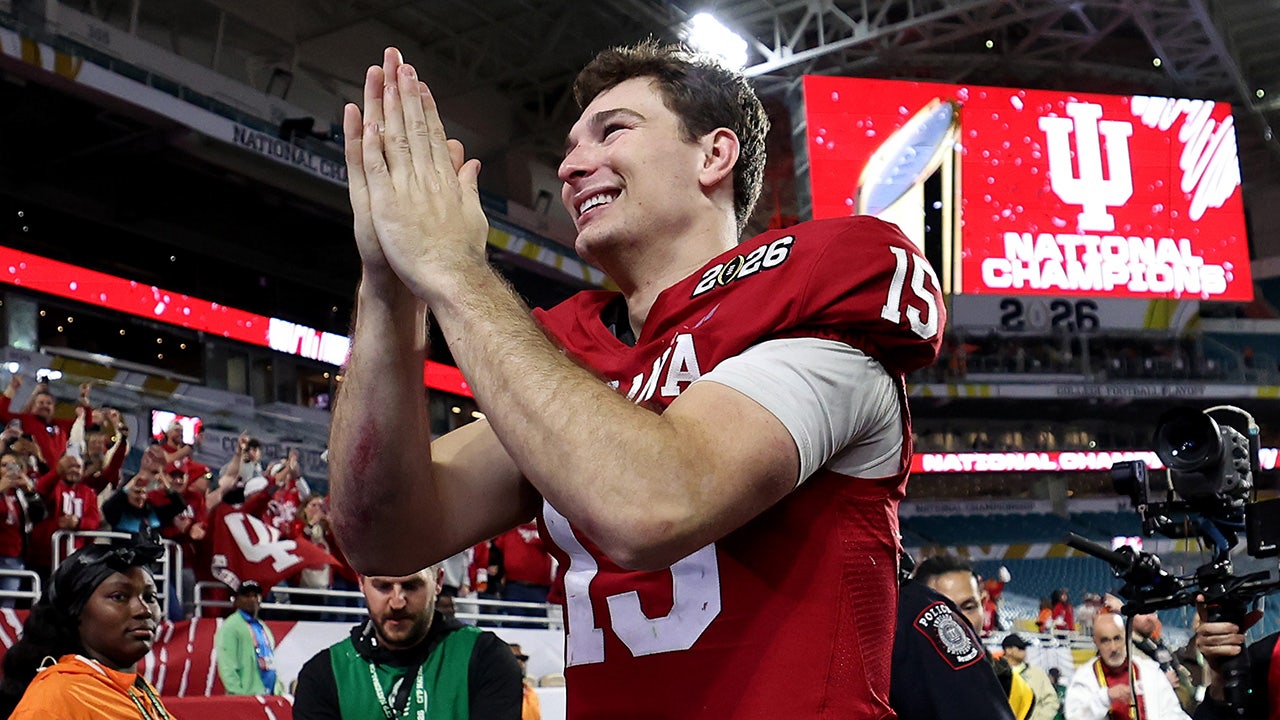
Indiana quarterback Fernando Mendoza looks to throw a pass during the school’s NFL pro day in Bloomington, Indiana, on April 1, 2026. (AJ Mast/AP Photo)
Not only did he embrace capitalism as a young man, but he also embraced Catholicism.
He later followed in his father’s footsteps of playing football at Christopher Columbus High School — an elite, $18,000-a-year all-boys private Catholic school with a football program.
As the team’s starting quarterback his senior year, he led his team to an 11-3 record and the 2021 FHSAA Class 8A state semifinals.
INDIANA FOOTBALL STAR AND HIS BROTHER TURN THEIR NAMESAKE BURGER INTO BATTLE AGAINST MS
But it wasn’t enough to earn the affection of many college scouts.
As a two-star recruit, Mendoza was ranked the 2,149th-ranked recruit in the country in his high school class. He didn’t receive a single FBS scholarship offer.
He passed on Yale for Cal Berkeley
With limited offers out of college, Mendoza nearly accepted an Ivy League education and non-scholarship football spot at Yale. But instead, he went across the country to try his luck at California, Berkeley.
He wasn’t handed the starting job on day one; instead, he redshirted, studied the game, and quietly earned his business degree from the prestigious Haas School of Business in just three years.
As a quarterback, he earned the starting job in 2023 and 2024, becoming Cal’s all-time leader in completion percentage (66.4%) and tying for 7th in 250-yard passing games.
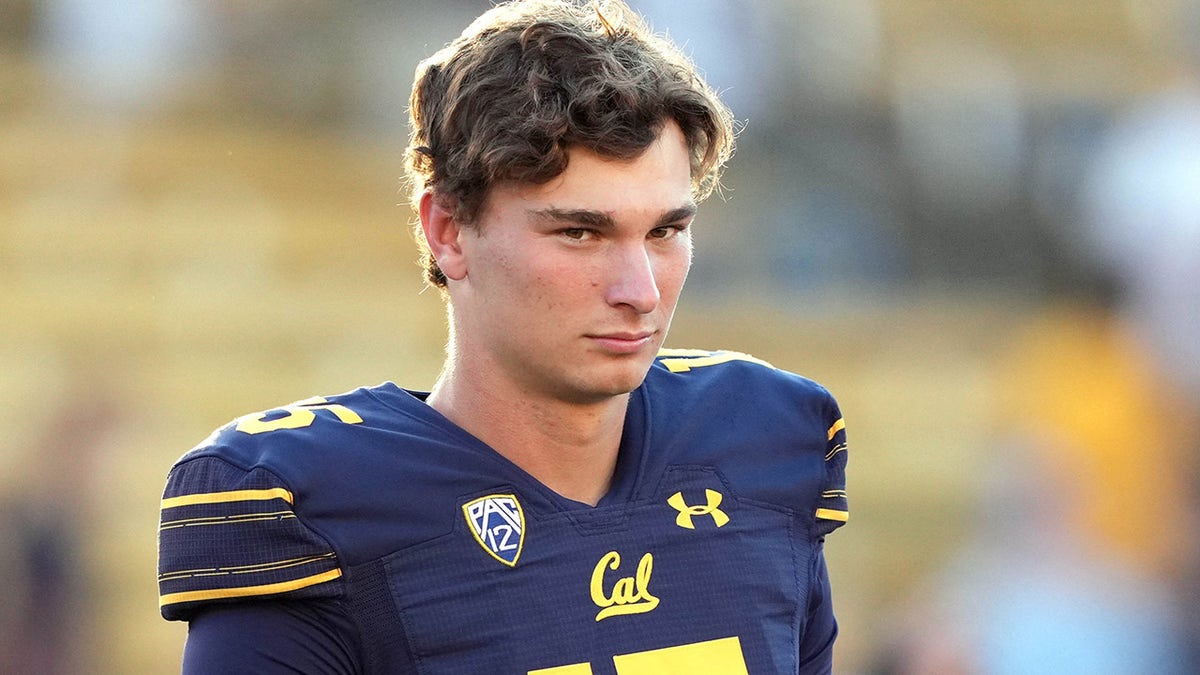
California Golden Bears quarterback Fernando Mendoza stands on the field after the game against the Arizona Wildcats at FTX Field at California Memorial Stadium in Berkeley, Calif., on Sept. 24, 2022. (Darren Yamashita/USA TODAY Sports)
But his college football career hadn’t even really begun.
The Indiana decision
In 2025, Mendoza made the decision to transfer to Indiana. What followed is considered one of the most unlikely runs in college football history.
He threw for 3,535 yards, 41 touchdowns, and only 6 interceptions, completing over 72% of his passes, while also adding seven rushing touchdowns, and won the Heisman Trophy.
“It’s very often not until the end of their [college] career that they show exactly those qualities. So a lot of maturation happened,” Steinberg said of Mendoza’s senior-year surge. “There have been a number of players who were late bloomers… you’re getting them at the height of their arc, and they put it all together. It takes time to read defenses and see the field.”
Then when the playoffs started, he cemented his name in college football history. He threw eight touchdowns with only five incompletions in the initial playoff games against Alabama in the Rose Bowl and Oregon in the Fiesta Bowl.
In the national championship game, played in his home town of Miami against his hometown university Miami Hurricanes, he was named the CFP National Championship Offensive Player of the Game, delivering a crucial 12-yard fourth-quarter touchdown run to seal the title.
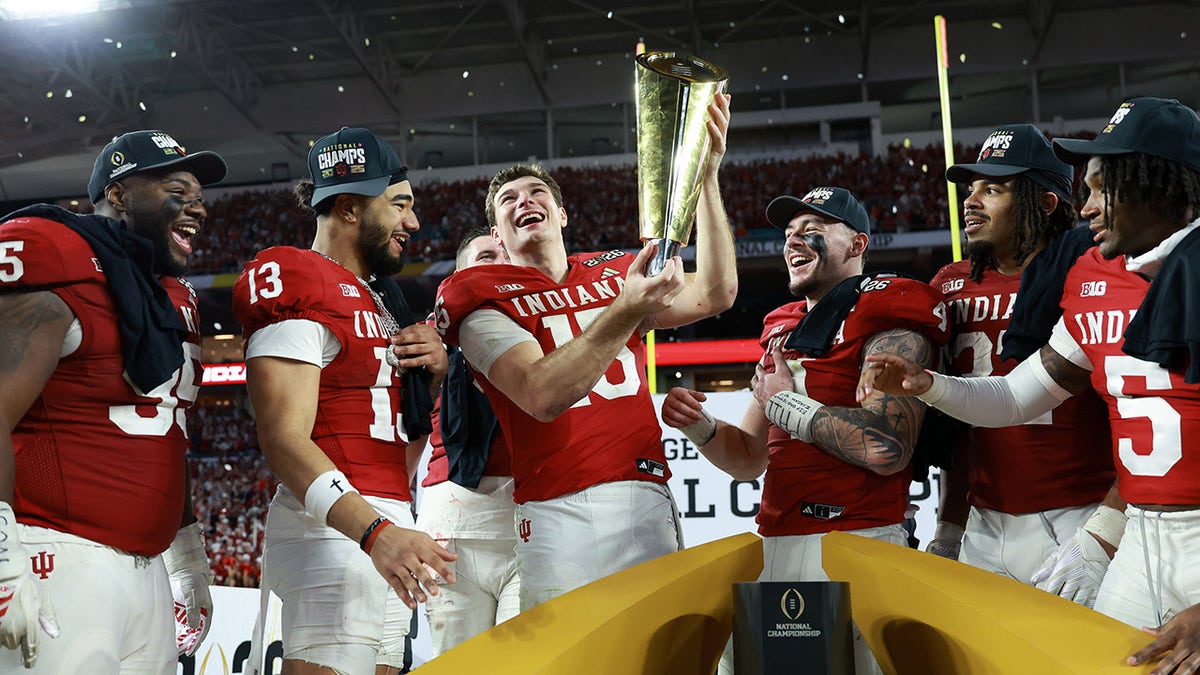
Indiana Hoosiers quarterback Fernando Mendoza holds up the trophy after the College Football Playoff National Championship game at Hard Rock Stadium in Miami Gardens, Fla., on Jan. 19, 2026. (Mark J. Rebilas/Imagn Images)
Indiana became the first time in modern college football history to go a perfect 16-0 behind Mendoza’s leadership, making a case for one of the greatest CFB quarterback seasons ever.
Now the real work begins
With the Las Vegas Raiders set to pick first in the NFL Draft this year, Mendoza appears destined for Sin City.
Steinberg believes the fit will work out well football wise and business wise.
“He’s a perfect pick for the Raiders because he’s someone they can build a franchise around. He seems to have the proper leadership skills and motivational ability to lead a team. He’s high character, he’s got physical size. He’s got great arm strength. He’s indicated a number of times that he can bring the team back in critical circumstances,” Steinberg said.
“As a marketing proposition, Las Vegas is the hottest sports town as there is in America… It’s a good environment to be in with supportive fans and companies for sponsorships and endorsements.”
CLICK HERE TO DOWNLOAD THE FOX NEWS APP
Mendoza has already filed 12 trademark applications. These filings include his name, “Fernando Mendoza,” “Mendoza,” “Flippin’,” and “HE15MENDOZA,” aimed at covering athletic apparel and merchandising.
“By picking 12 different areas, that pretty much covered the field. And that means that nobody can go ahead and put together distinctive Mendoza [merchandise] without dealing with him,” Steinberg said.
Follow Fox News Digital’s sports coverage on X, and subscribe to the Fox News Sports Huddle newsletter.
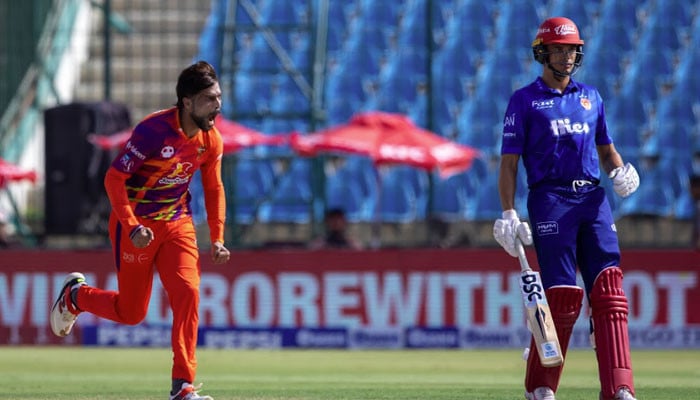
Rawalpindiz delivered a clinical bowling performance, maintaining pressure throughout the innings to limit Islamabad United to a modest total of 137 in the 34th match of the Pakistan Super League (PSL) 11 at Karachi’s National Bank Stadium on Thursday.
Batting first, the former champions were dismissed for 137 in their allotted 20 overs, as RawalPindiz’s bowling attack produced a standout display throughout the innings.
Islamabad United made a cautious start as openers Devon Conway and Sameer Minhas struggled to accelerate, with runs coming at a slow pace in the early overs.
However, Mohammad Amir made the breakthrough on the second ball of the fifth over, dismissing Minhas for six off 11 balls, including one boundary, to end the 20-run opening partnership.
United slipped further in the final over of the powerplay when Naseem Shah joined the attack and removed Mohammad Faiq for five off six deliveries, leaving Islamabad at 29-2 after 5.5 overs.
The pressure mounted in the seventh over when Saad Masood struck, claiming the key wicket of Shadab Khan for just one run, leaving United reeling at 30-3.
Devon Conway and Mark Chapman then attempted to stabilise the innings, sharing a crucial partnership that took the total past the 50-run mark.
However, Daryl Mitchell broke the 49-run stand by dismissing Conway, who scored a fighting 40 off 33 balls, including three fours and two sixes, reducing Islamabad to 79-4 in 11.3 overs.
Asif Afridi added to United’s troubles by trapping Chapman lbw for 23 off 18 deliveries, an innings featuring one four and a six.
Wickets continued to fall at regular intervals as Haider Ali was dismissed for six off 13 balls, again courtesy of Saad Masood, who completed his spell effectively.
Mohammad Amir returned to the attack and removed Faheem Ashraf, who made 11 off 12 deliveries, leaving Islamabad struggling at 99-7 in 16.3 overs.
Chris Green then attempted to revive the innings with a brisk contribution, pushing the total beyond the 100-run mark and adding valuable late runs in search of a defendable score.
However, Islamabad United’s innings ended shortly after, with Green run out in the final over for 29 off 16 balls, featuring two fours and two sixes.
Dian Forrester then wrapped up the innings by dismissing Mohammad Hasnain for a first-ball duck, before removing Richard Gleeson to claim his second wicket.

Cricket’s return to the Olympic Games after 128 years reached an “important milestone” Wednesday when construction began on the new Los Angeles 2028 cricket venue.
International Cricket Council (ICC ) Chairman Jay Shah and other officials took part in a ground-breaking ceremony on the Fairplex Grounds in Pomona, Los Angeles County.
“Our focus has been on expanding the footprint of cricket and being part of the Olympic movement is something that brings both pride and dreams with it,” said Shah.
“The groundbreaking marks an important milestone in cricket’s return to the Olympics and is a proud moment for all ICC members and stakeholders worldwide.”
ICC chief executive Sanjog Gupta said the Games would be a significant step in expanding the game outside of its traditional heartlands.
“The momentum for our game has never been stronger, with strong participation growth across the world,” he said.
The inclusion of cricket at LA28 provides a platform to inspire more young people to take up the game, the ICC said, and broaden the fan base across continents, accelerating the game’s global growth.
Cricket at the Los Angeles Games will feature T20 competitions for both men’s and women’s teams.


Italy’s OVS’ FY25 sales rise 7% to $2.06 bn; beats market

Comcast beats revenue, earnings expectations as broadband losses improve

Meghan Markle plots royal bombshell sequel to Prince Harry’s big hit

-

 Fashion1 week ago
France’s LVMH Q1 revenue falls 6%, shows resilience amid Iran war
-

 Entertainment1 week ago
Is Claude down? Here’s why users are seeing errors
-

 Tech1 week ago
The Deepfake Nudes Crisis in Schools Is Much Worse Than You Thought
-

 Sports1 week ago
PSL 11: Peshawar Zalmi win toss, opt to field first against Quetta Gladiators
-
 Business1 week ago
Standard Life buys rival in £2b deal to create savings giant
-

 Tech1 week ago
Human-machine teaming dives underwater
-

 Politics1 week ago
Iran in continuous message exchange with mediator Pakistan after US talks: Report
-

 Tech1 week ago
CYBERUK ’26: UK lagging on legal protections for cyber pros | Computer Weekly