

Business
How the Buffett family plans to give away more than $150 billion


A version of this article first appeared in CNBC’s Inside Wealth newsletter with Robert Frank, a weekly guide to the high-net-worth investor and consumer. Sign up to receive future editions, straight to your inbox.
When Peter Buffett learned that he and his siblings would be in charge of giving away the fortunes of their father, Warren Buffett, his response was clear.
“I did not want it,” Peter Buffett told CNBC. “I called him up and said, ‘I want to opt out.’ He said, ‘I don’t blame you.’ It obviously puts an enormous amount of pressure on us.”
In 2024, Warren Buffett announced that after his death, his fortune would be directed to a new charitable foundation overseen by his three children, Susan A. (Susie) Buffett, Howard G. (Howie) Buffett and Peter Buffett. The 95-year-old’s wealth is now estimated at more than $150 billion, according to Bloomberg.
Adding to the challenge, the legendary investor requested that all the money be given away within 10 years of his death. Another catch: All three must unanimously agree on how to disburse the funds.
The magnitude of Buffett’s wealth means his children will need to give away at least $15 billion a year, which would equal about 4% of annual charitable giving in America, according to data from Giving USA through 2024. The amounts are likely to increase even further with time, as Buffett’s fortune continues to grow.
“It’s something nobody has done, certainly not as a family,” Howie Buffett said.
Adds Susie Buffett: “It’s just so much money.”
The bequest has suddenly thrown the low-profile Buffett children into the spotlight. After Warren Buffett’s death, Susie, Howie and Peter will become three of the most important philanthropists in the world, scrutinized by the media, widely followed by other wealthy donors and barraged with requests for funds.
In a rare interview with CNBC’s Becky Quick, the three Buffett heirs said their world view, priorities and approach to philanthropy began in the Buffett household. While their father’s wealth was starting to grow, the children lived a middle-class or upper-middle-class life. They took the bus to public school every day. They did chores for an allowance and had jobs.
Warren Buffett drove a blue Volkswagen bug when they were growing up, they said. Their mom, Susan T. Buffett, volunteered for various groups and hosted exchange students from around the world. When Susie Buffett was in elementary school, she recalls she had to fill out a census form listing her father’s occupation and her mother told her to write “security analyst.”
“I thought he checked burglar alarms,” Susie Buffett said.

As they went on to form their own families and find their own causes, the Buffett children grew as philanthropists. Since 2006, the longtime Berkshire Hathaway CEO has given shares of the firm to each of the three children’s foundations every year, giving them each more than 20 years of philanthropic experience.
Susie Buffett lives in Omaha, Nebraska, and focuses on early childhood education and social justice, through the Susan Thompson Buffett Foundation and the Sherwood Foundation. Howie Buffett, who lives in Illinois and heads the Howard G. Buffett Foundation, devotes more of his time and resources overseas, working on food security and conflict resolution. Peter Buffett, who lives in upstate New York and leads the NoVo Foundation, works on health and economic programs for women and children.
Warren Buffett hasn’t given the siblings explicit instructions for the money, they say. His only guidance is that it be used for those “less fortunate,” Peter Buffett said. In his 2024 Thanksgiving letter, Warren Buffett explained his confidence in giving them so much money and such wide discretion.
“I know the three well and trust them completely,” he wrote. “The 2006-2024 period gave me the chance to observe each of my children in action and they have learned much about large-scale philanthropy and human behavior. They enjoy being comfortable financially, but they are not preoccupied with wealth. Their mother, from whom they learned these values, would be very proud of them. As am I.”
Susie, Howie and Peter will likely each focus on different causes, while also funding some joint efforts. The requirement that all disbursements be unanimous is both a challenge and blessing, they say, since each sibling can blame one another if they don’t want to fund a cause.
“It makes it really easy to say no,” Susie Buffett said. “It’s like, ‘I’m sorry, I’d like to do it, but my brothers would hate it. So call them.'”
As the Buffetts prepare for a historic giving campaign, here are five principles and strategies they say they’ve leaned about effective use of capital and philanthropy:
1. Flexibility
Since the world is constantly changing along with its needs, philanthropists need to quickly adapt. The broad causes they support can shift, as well as the individual organizations and people they support.
Warren Buffett “has always said, ‘This is what I think matters now. I don’t know if that will be true 20 years after I’m dead or 10 years after I’m dead,'” Susie Buffett recalled.
Howie Buffett said that funding programs in Africa, for example, frequently requires working with governments, which also change.
“We work in a lot of places where things can happen quickly, like in Eastern Congo or something. So you need flexibility,” he said.
2. Embrace risk and failure
Howie Buffett called philanthropy the “risk capital of the world” and said foundations need to make bigger bets — even if they fail.
“Sometimes things don’t work out the way you think they will,” Susie Buffett added. “Sometimes that’s a good thing. You learn from it.”
She added that being in Omaha, outside of the spotlight, also allows for more experimentation.
“My staff has said to me many times, ‘It’s refreshing to be in a place where we can screw up, we can make a mistake,'” Susie Buffett said, noting her team rarely goes to conferences, where other nonprofit leaders are more reluctant to take risks and “are afraid to go back and talk about things that might not work.”
Not all failures are worth celebrating, however: “It’s not OK if you really screwed up and did something you shouldn’t have done,” Howie Buffett said, “but if it failed for reasons that you knew might be a challenge, then it’s OK.”
3. Seeing is believing
Philanthropists can read all the reports and research on a subject, but nothing replaces seeing a problem or population in person.
“I’ve been to Africa 97 times and the 98th time that I go to Africa I’ll learn something new,” Howie Buffett said. “Every time you put yourself in a dynamic environment you see things.”
His brother Peter has his own saying: “You won’t know if you don’t go.”
When Peter Buffett started his foundation, he said he felt like he could “change the world.” Then he visited Sierra Leone, Liberia and Bangladesh and said the scale of the need was “overwhelming,” he said. “Slowly we retracted.”
Among his current projects is helping the community of Kingston, New York, near his home, where he can remain close to the fabric of daily life and learn about which causes are the most effective.
“I had to be in a place where I could essentially be there every day,” he said.
4. Trust but verify
Giving away more than $150 billion will require writing mega-checks of hundreds of millions, or even billions, of dollars. Typically, only governments and large institutions can handle such large gifts. Yet as Howie Buffett said, “I don’t trust them that much to make good judgements, or they have big overheads.”
Developing trust and accountability is paramount. Howie Buffett said his grant letters always include a clause that they can terminate the money at any time for any reason. He also includes a “no-cost extension” provision, which requires that any funds left over from a budgeted project be returned rather than spent on other projects.
Over time, he said he has found nonprofits and groups they can rely on.
“We have five or six partners where we give tens of millions of dollars a year to regularly,” he said. “And we’ve built that trust. You know how they operate. They know what your expectations are.”
Trust also includes sharing negative outcomes: “I want every bit of bad news if there is bad news,” Susie Buffett said. “You have to get super clear with people, like ‘I want to hear everything.'”
5. Efficiency
Just as Warren Buffett keeps a famously low-cost structure in his life and at Berkshire, the Buffett family has learned to make the most of every dollar in their philanthropy.
Howie Buffett said his foundation’s “percent of distributions,” or operating costs versus money distributed, is a mere 1.3%.
“That was just ingrained in us,” he said. “We know that’s what our dad would expect us to do.”
Having a lean staff and small team also allows for quick decisions, similar to the culture at Berkshire.
“I have been in places where I’ve made a $50 million decision right there after a two-hour meeting,” Howie Buffett said. “It’s like, ‘We want to do this we’re going to spend the money.'”
Moving fast with bold bets runs counter to many foundations, which can struggle with layers of decision-makers and bureaucracy.
“They have to have a board meeting, and then the trustees have to look at it and vote on it, and it drags everything out,” Susie Buffett said. “People are always amazed that we just do it.”


Business
Gadkari urges shift to 100% ethanol blending, flags energy security and import risks – The Times of India
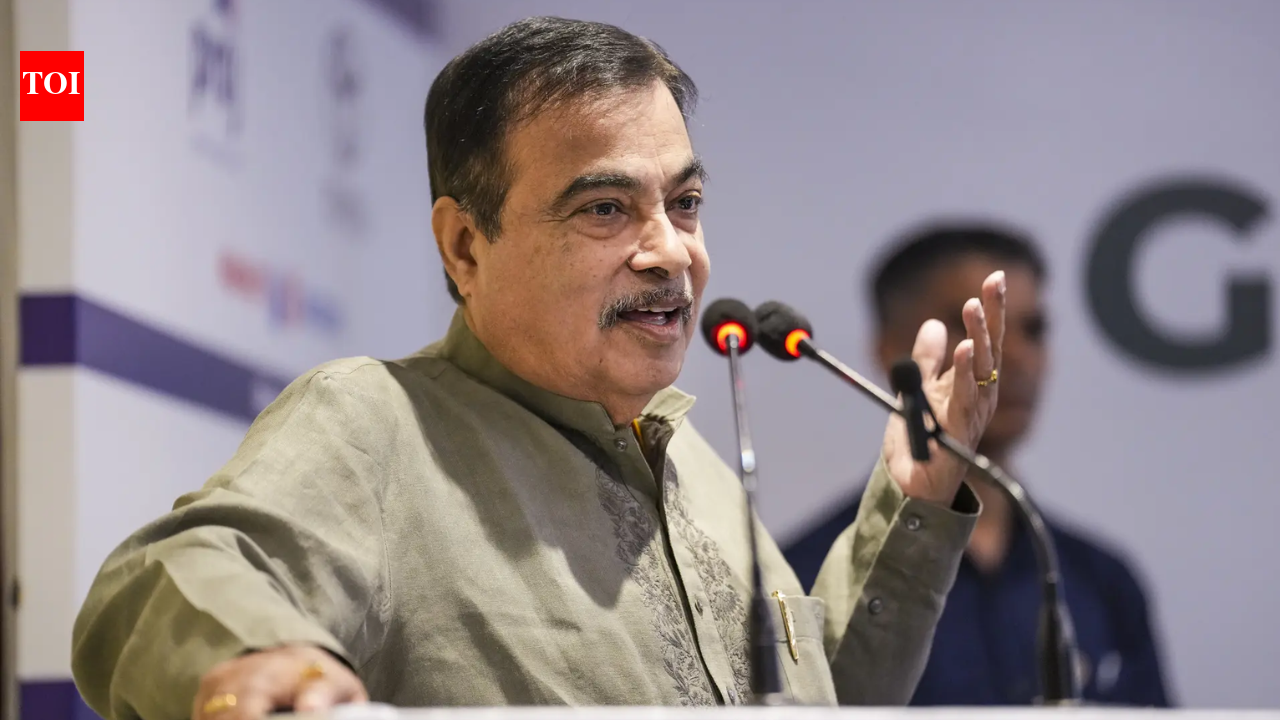
India should aim for 100 per cent ethanol blending in the near future to strengthen energy self-reliance, road transport and highways minister Nitin Gadkari said on Tuesday. He said that vulnerabilities in oil supplies due to the ongoing crisis in West Asia have made it essential for the country to reduce dependence on imports.Speaking at the Indian Federation of Green Energy’s Green Transport Conclave, Gadkari said, “In the near future, India should aspire to achieve 100 per cent ethanol blending… Today, we are facing an energy crisis due to the war in West Asia, so it is necessary for us to become self-reliant in the energy sector,” as quoted by PTI.India currently allows vehicles to run on E20 petrol, which contains 20 per cent ethanol, with minor engine modifications to avoid corrosion and related issues. In 2023, PM Modi launched petrol blended with 20 per cent ethanol. Countries such as Brazil have already achieved 100 per cent ethanol blending.Gadkari noted that India imports 87 per cent of its oil requirements, adding, “We import fossil fuels worth Rs 22 lakh crore, which is also causing pollution… so we need to work on increasing production of alternative fuel and bio-fuel.”On future energy solutions, he stressed the importance of green hydrogen but pointed out challenges in cost and transport. “Transport of hydrogen fuel is a problem. Also, we need to produce 1 kg of hydrogen at $1 dollar, to make India an exporter of energy,” he said, adding that hydrogen production from waste should be explored.The minister also emphasised the role of a circular economy in generating employment opportunities. While calling for reduced reliance on petrol and diesel vehicles, he clarified, “But we can not force people to stop buying petrol and diesel vehicles.”Addressing concerns about E20 fuel, Gadkari said the petroleum sector is lobbying against the move. He also urged automobile manufacturers to prioritise quality over cost to expand into new markets.Last year, Gadkari dismissed criticism against E20 (ethanol-blended petrol), saying a “paid” social media campaign is being run to “target me politically.” He said Society of Indian Automobile Manufacturers and Automotive Research Association of India have shared their findings on ethanol blending in petrol. He added that India’s ethanol programme has benefited farmers, noting that ethanol made from maize has helped them get better prices and led to gains of Rs 45,000 crore.

One petrol retailer says he is experiencing about five drive-offs a week at each forecourt, costing him thousands.
Source link
Business
Billions to be paid! US starts refund process for Trump tariffs: Can Indian exporters claim? – The Times of India
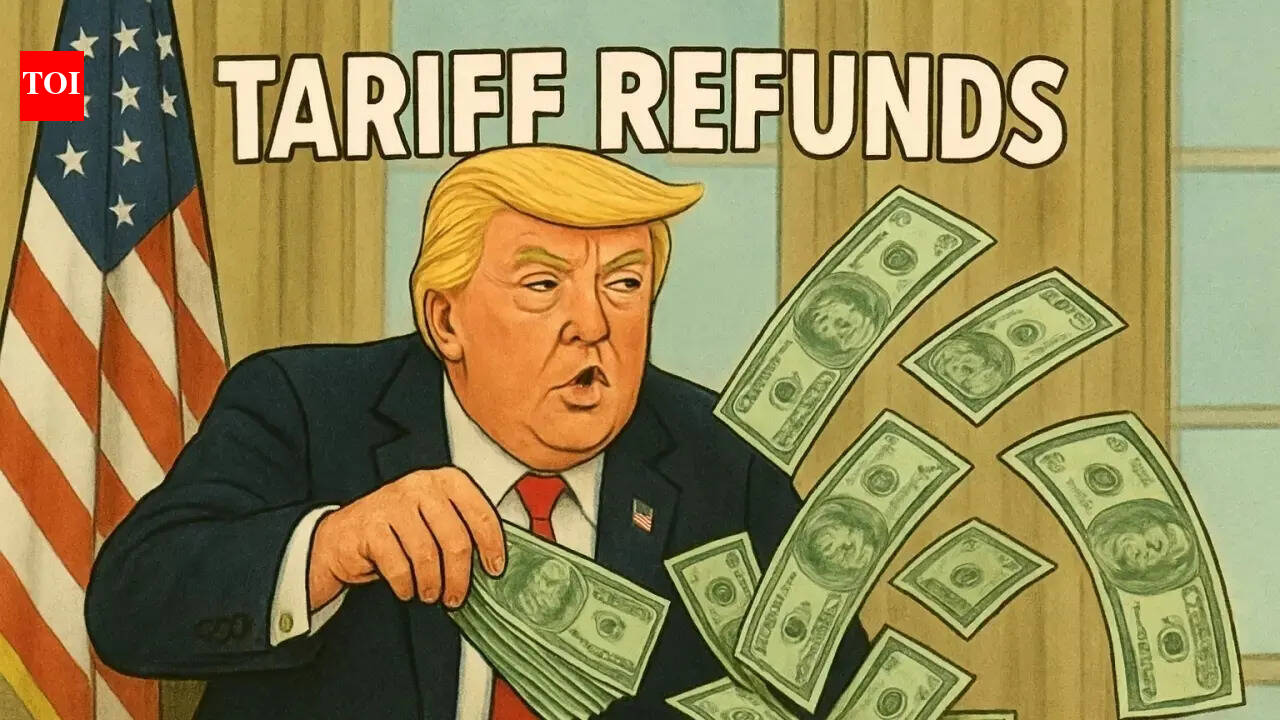
The US government has rolled out a system to facilitate refunds of over $166 billion from tariffs introduced by Donald Trump and later invalidated by the US Supreme Court. In February, the court struck down a broad set of reciprocal tariffs, delivering a significant setback to a central pillar of Trump’s economic agenda and paving the way for repayments.On Monday, US Customs and Border Protection announced that the first phase of its refund-processing platform is now operational, allowing importers and customs brokers to begin filing claims to recover the duties they had paid.The agency had earlier estimated in March that more than 330,000 importers may qualify for reimbursements on duties or deposits linked to over 53 million shipments. In its initial rollout, the platform covers about $127 billion in duty payments eligible for electronic refunds.
Tariff refunds What US Customs and Border Protection has said
The process to return reciprocal tariff payments starts on April 20 through a newly launched online platform, CAPE (Consolidated Administration and Processing of Entries), operated by US Customs and Border Protection.This move follows a February 20, 2026 judgment by the US Supreme Court, which ruled that tariffs introduced by Donald Trump were unlawful. The court found that these duties had been imposed under the International Emergency Economic Powers Act without adequate legal backing.Also Read | Iran has closed Strait of Hormuz completely: What does this mean for India’s crude oil, LPG, LNG supplies?The tariffs impacted a wide range of exports from countries including India. To receive repayments, importers in the US are required to submit claims which include shipment details, applicable tariff classifications and proof of payment. Once approved, these refunds along with interest are expected to be processed within 60 to 90 days. Eligibility is limited to those who originally paid the tariffs, primarily US importers and businesses.The total amount to be refunded is estimated at around $166 billion, with nearly $12 billion tied to Indian goods.The tariff structure began at 10% on April 2, 2025, before escalating quickly. Duties on Indian goods increased to 25% by August 7, 2025, and further to 50% by August 28, remaining at that level until early February 2026. On February 6, 2026, rates were lowered to 18% following negotiations. However, the Supreme Court’s ruling later that month nullified the entire regime, effectively rendering the tariffs void and paving the way for refunds.
What it means for India
Exporters and end consumers are not permitted to file claims directly, although some companies, such as FedEx, may opt to pass on the refunded amounts at their discretion.According to Global Trade Research Initiative (GTRI), around 53% of India’s shipments to the US, which largely comprises textiles and apparel, were subject to higher tariffs. This makes them the largest contributors to the refund pool. Of the nearly $12 billion tied to Indian exports, textiles and apparel are estimated to account for around $4 billion, followed by engineering goods with a similar share and chemicals contributing about $2 billion, while other sectors make up the remainder.However, what is important to understand is that these refunds will not flow directly to Indian exporters. The payments are meant only for US importers who bore the tariff burden.Also Read | Explained: On way to 4th largest, how India slipped to 6th rank & what it means for 3rd largest economy dream“Payments go only to US importers, and exporters have no legal right to claim them. Indian exporters, therefore, have no direct legal route to claim refunds,” explains Ajay Srivastava, founder of GTRI.Hence, any potential recovery of these refunds will depend on commercial discussions. Exporters will need to actively engage with their US counterparts to negotiate a share of the refunded duties, particularly in cases where earlier pricing factored in tariff costs. GTRI explains that this can be done by reopening contracts, adding rebate-sharing clauses, asking for price revisions or credit notes, and using invoices and tariff data to show how costs were absorbed. “Exporters with stronger bargaining power, especially in textiles and engineering goods, may secure better terms in future orders,” the think tank says.Industry bodies such as the Apparel Export Promotion Council, Engineering Export Promotion Council of India and Chemexcil can also assist exporters with guidance on contract renegotiation and sector-specific approaches, it adds.


I’ve Tested Gaming Laptops for Over a Decade. This Is What I Think You Should Buy
Gadkari urges shift to 100% ethanol blending, flags energy security and import risks – The Times of India

Global energy growth slows to 1.3% in 2025: Report

-

 Fashion5 days ago
France’s LVMH Q1 revenue falls 6%, shows resilience amid Iran war
-

 Sports1 week ago
The case for Man United’s Fernandes as Premier League’s best
-

 Entertainment1 week ago
Palace left in shock as Prince William cancels grand ceremony
-
 Business1 week ago
UK could adopt EU single market rules under new legislation
-

 Entertainment6 days ago
Is Claude down? Here’s why users are seeing errors
-

 Fashion1 week ago
Energy emerges as biggest cost driver in textile margins
-
 Business1 week ago
Delta Air Lines unveils first new Delta One suite in premium cabin arms race
-

 Tech6 days ago
The Deepfake Nudes Crisis in Schools Is Much Worse Than You Thought