

Business
How the Buffett family plans to give away more than $150 billion


A version of this article first appeared in CNBC’s Inside Wealth newsletter with Robert Frank, a weekly guide to the high-net-worth investor and consumer. Sign up to receive future editions, straight to your inbox.
When Peter Buffett learned that he and his siblings would be in charge of giving away the fortunes of their father, Warren Buffett, his response was clear.
“I did not want it,” Peter Buffett told CNBC. “I called him up and said, ‘I want to opt out.’ He said, ‘I don’t blame you.’ It obviously puts an enormous amount of pressure on us.”
In 2024, Warren Buffett announced that after his death, his fortune would be directed to a new charitable foundation overseen by his three children, Susan A. (Susie) Buffett, Howard G. (Howie) Buffett and Peter Buffett. The 95-year-old’s wealth is now estimated at more than $150 billion, according to Bloomberg.
Adding to the challenge, the legendary investor requested that all the money be given away within 10 years of his death. Another catch: All three must unanimously agree on how to disburse the funds.
The magnitude of Buffett’s wealth means his children will need to give away at least $15 billion a year, which would equal about 4% of annual charitable giving in America, according to data from Giving USA through 2024. The amounts are likely to increase even further with time, as Buffett’s fortune continues to grow.
“It’s something nobody has done, certainly not as a family,” Howie Buffett said.
Adds Susie Buffett: “It’s just so much money.”
The bequest has suddenly thrown the low-profile Buffett children into the spotlight. After Warren Buffett’s death, Susie, Howie and Peter will become three of the most important philanthropists in the world, scrutinized by the media, widely followed by other wealthy donors and barraged with requests for funds.
In a rare interview with CNBC’s Becky Quick, the three Buffett heirs said their world view, priorities and approach to philanthropy began in the Buffett household. While their father’s wealth was starting to grow, the children lived a middle-class or upper-middle-class life. They took the bus to public school every day. They did chores for an allowance and had jobs.
Warren Buffett drove a blue Volkswagen bug when they were growing up, they said. Their mom, Susan T. Buffett, volunteered for various groups and hosted exchange students from around the world. When Susie Buffett was in elementary school, she recalls she had to fill out a census form listing her father’s occupation and her mother told her to write “security analyst.”
“I thought he checked burglar alarms,” Susie Buffett said.

As they went on to form their own families and find their own causes, the Buffett children grew as philanthropists. Since 2006, the longtime Berkshire Hathaway CEO has given shares of the firm to each of the three children’s foundations every year, giving them each more than 20 years of philanthropic experience.
Susie Buffett lives in Omaha, Nebraska, and focuses on early childhood education and social justice, through the Susan Thompson Buffett Foundation and the Sherwood Foundation. Howie Buffett, who lives in Illinois and heads the Howard G. Buffett Foundation, devotes more of his time and resources overseas, working on food security and conflict resolution. Peter Buffett, who lives in upstate New York and leads the NoVo Foundation, works on health and economic programs for women and children.
Warren Buffett hasn’t given the siblings explicit instructions for the money, they say. His only guidance is that it be used for those “less fortunate,” Peter Buffett said. In his 2024 Thanksgiving letter, Warren Buffett explained his confidence in giving them so much money and such wide discretion.
“I know the three well and trust them completely,” he wrote. “The 2006-2024 period gave me the chance to observe each of my children in action and they have learned much about large-scale philanthropy and human behavior. They enjoy being comfortable financially, but they are not preoccupied with wealth. Their mother, from whom they learned these values, would be very proud of them. As am I.”
Susie, Howie and Peter will likely each focus on different causes, while also funding some joint efforts. The requirement that all disbursements be unanimous is both a challenge and blessing, they say, since each sibling can blame one another if they don’t want to fund a cause.
“It makes it really easy to say no,” Susie Buffett said. “It’s like, ‘I’m sorry, I’d like to do it, but my brothers would hate it. So call them.'”
As the Buffetts prepare for a historic giving campaign, here are five principles and strategies they say they’ve leaned about effective use of capital and philanthropy:
1. Flexibility
Since the world is constantly changing along with its needs, philanthropists need to quickly adapt. The broad causes they support can shift, as well as the individual organizations and people they support.
Warren Buffett “has always said, ‘This is what I think matters now. I don’t know if that will be true 20 years after I’m dead or 10 years after I’m dead,'” Susie Buffett recalled.
Howie Buffett said that funding programs in Africa, for example, frequently requires working with governments, which also change.
“We work in a lot of places where things can happen quickly, like in Eastern Congo or something. So you need flexibility,” he said.
2. Embrace risk and failure
Howie Buffett called philanthropy the “risk capital of the world” and said foundations need to make bigger bets — even if they fail.
“Sometimes things don’t work out the way you think they will,” Susie Buffett added. “Sometimes that’s a good thing. You learn from it.”
She added that being in Omaha, outside of the spotlight, also allows for more experimentation.
“My staff has said to me many times, ‘It’s refreshing to be in a place where we can screw up, we can make a mistake,'” Susie Buffett said, noting her team rarely goes to conferences, where other nonprofit leaders are more reluctant to take risks and “are afraid to go back and talk about things that might not work.”
Not all failures are worth celebrating, however: “It’s not OK if you really screwed up and did something you shouldn’t have done,” Howie Buffett said, “but if it failed for reasons that you knew might be a challenge, then it’s OK.”
3. Seeing is believing
Philanthropists can read all the reports and research on a subject, but nothing replaces seeing a problem or population in person.
“I’ve been to Africa 97 times and the 98th time that I go to Africa I’ll learn something new,” Howie Buffett said. “Every time you put yourself in a dynamic environment you see things.”
His brother Peter has his own saying: “You won’t know if you don’t go.”
When Peter Buffett started his foundation, he said he felt like he could “change the world.” Then he visited Sierra Leone, Liberia and Bangladesh and said the scale of the need was “overwhelming,” he said. “Slowly we retracted.”
Among his current projects is helping the community of Kingston, New York, near his home, where he can remain close to the fabric of daily life and learn about which causes are the most effective.
“I had to be in a place where I could essentially be there every day,” he said.
4. Trust but verify
Giving away more than $150 billion will require writing mega-checks of hundreds of millions, or even billions, of dollars. Typically, only governments and large institutions can handle such large gifts. Yet as Howie Buffett said, “I don’t trust them that much to make good judgements, or they have big overheads.”
Developing trust and accountability is paramount. Howie Buffett said his grant letters always include a clause that they can terminate the money at any time for any reason. He also includes a “no-cost extension” provision, which requires that any funds left over from a budgeted project be returned rather than spent on other projects.
Over time, he said he has found nonprofits and groups they can rely on.
“We have five or six partners where we give tens of millions of dollars a year to regularly,” he said. “And we’ve built that trust. You know how they operate. They know what your expectations are.”
Trust also includes sharing negative outcomes: “I want every bit of bad news if there is bad news,” Susie Buffett said. “You have to get super clear with people, like ‘I want to hear everything.'”
5. Efficiency
Just as Warren Buffett keeps a famously low-cost structure in his life and at Berkshire, the Buffett family has learned to make the most of every dollar in their philanthropy.
Howie Buffett said his foundation’s “percent of distributions,” or operating costs versus money distributed, is a mere 1.3%.
“That was just ingrained in us,” he said. “We know that’s what our dad would expect us to do.”
Having a lean staff and small team also allows for quick decisions, similar to the culture at Berkshire.
“I have been in places where I’ve made a $50 million decision right there after a two-hour meeting,” Howie Buffett said. “It’s like, ‘We want to do this we’re going to spend the money.'”
Moving fast with bold bets runs counter to many foundations, which can struggle with layers of decision-makers and bureaucracy.
“They have to have a board meeting, and then the trustees have to look at it and vote on it, and it drags everything out,” Susie Buffett said. “People are always amazed that we just do it.”




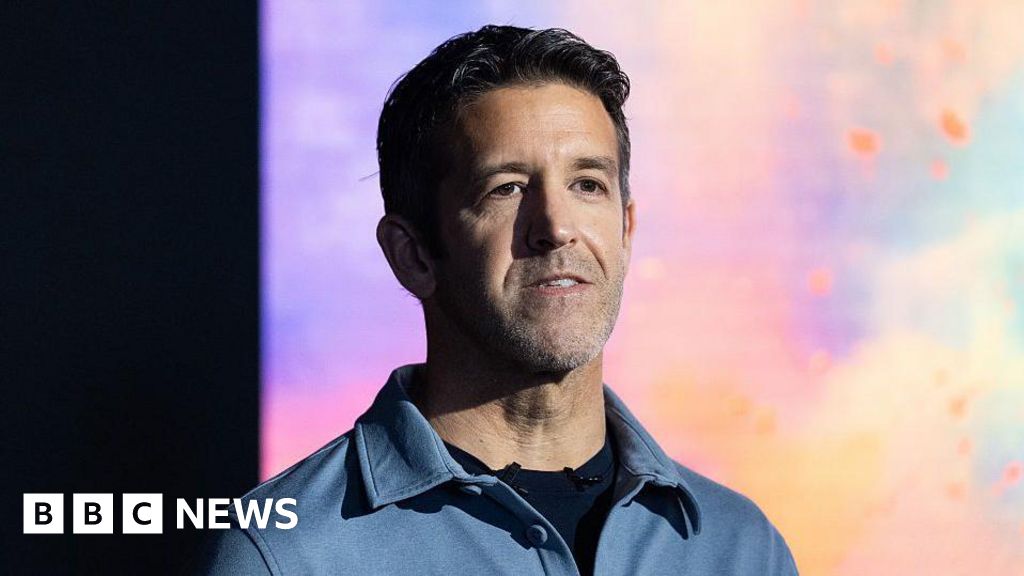
John Ternus will take over running the technology giant as Cook steps up to become executive chairman.
Source link
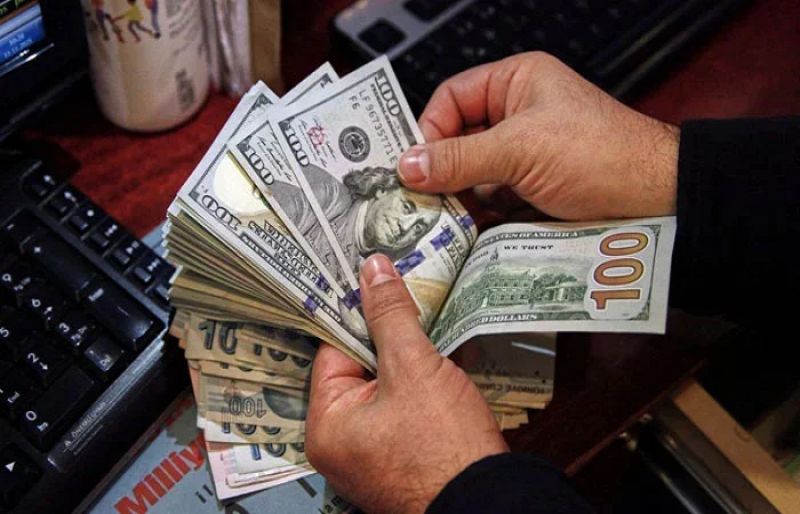
The State Bank of Pakistan (SBP) has received $1 billion from the Ministry of Finance of the Kingdom of Saudi Arabia, marking the second tranche of a $3 billion deposit agreed recently, the central bank said on Tuesday.
According to the statement issued by the central bank, the second tranche was received with a value date of April 20, 2026.
The first tranche of $2 billion had already been received on April 15, 2026, bringing the total inflows under the arrangement to $3 billion.
The development comes days after Prime Minister Shehbaz Sharif’s visit to Saudi Arabia, where he engaged in diplomatic efforts aimed at promoting regional peace.
During his visit, the premier met Crown Prince Mohammed bin Salman in Jeddah and expressed appreciation for the Kingdom’s continued support for Pakistan’s economic stability. He also conveyed solidarity with Saudi Arabia in light of recent regional developments.
Earlier on April 16, Finance Minister Muhammad Aurangzeb had announced that Saudi Arabia would provide $3 billion in additional financial support, with disbursement expected shortly.
He also noted that Riyadh had extended the tenure of its existing $5 billion deposit, removing the earlier annual rollover requirement.
The Saudi funding has strengthened Pakistan’s external position as it repaid $2 billion in debt to the United Arab Emirates (UAE).
The amount was kept with the central banks as a safe deposit.
Saudi Arabia has been a key financial partner for Pakistan, having provided support packages during previous economic challenges, including a $6 billion assistance programme in 2018 comprising deposits and oil facility arrangements.

Advocates attend a news conference about the “impact of incarcerating those charged with marijuana-related offenses,” and policy reform ideas, outside the U.S. Capitol on April 20, 2026.
Tom Williams | CQ-Roll Call, Inc. | Getty Images
A White House executive order on psychedelics, signed by President Donald Trump on Saturday, aims to speed up research on drugs like psilocybin, MDMA and ibogaine, helping to legitimize an industry that’s long lived largely underground.
But it also raises a broader question: Will psychedelics fall victim, like cannabis has, to a slow-moving federal process?
The latest executive order comes roughly four months after an effort by President Trump to reschedule cannabis, opening the door to greater research and investment opportunities. But since that directive, progress to reclassify cannabis has largely stalled, with the Drug Enforcement Administration review still ongoing and no final decision on moving marijuana from Schedule I to the lesser Schedule III.
The delay reflects how drug policy often slows once it enters interagency review, where scientific evaluation, legal standards and politics meet.
“The process has certainly been slow and frustrating for stakeholders when you consider they have spent decades fighting marijuana’s outrageous 1970s-era misclassification,” said Shawn Hauser, partner at cannabis law firm Vicente LLP.
Vicente LLP also serves as legal counsel for the National Compassionate Care Council, or NCCC, a coalition of health-care stakeholders focused on evidence-based cannabis policy.
The psychedelics order, however, focuses on research acceleration rather than legalization. It directs agencies like the U.S. Food and Drug Administration to expand clinical trials and “Right to Try” access for patients with serious mental health conditions, while leaving drug scheduling unchanged.
AtaiBeckley is among a number of psychedelics-focused drug developers whose stock is rallying since the order was signed over the weekend, up roughly 25% Monday. Several smaller-market cap stocks also jumped, including Compass Pathways, Definium Therapeutics and U.S.-listed shares of Cybin.
Hauser said the recent psychedelics order reflects a broader shift in Washington toward a medical-first framework and could mark a path forward for cannabis rescheduling.
“The science-, patient-, health-care-first approach is winning in Washington right now,” she said.
“The psychedelic pathway — built on physician-led protocols, clinical research and compassionate use frameworks — is actually a model cannabis advocates should be studying and adopting more aggressively,” Hauser said.
Safety first
Trump’s psychedelics measure has drawn particular attention for its inclusion of ibogaine, a powerful, naturally occurring psychoactive compound with long-standing safety concerns.
The drug is being studied for its applications with post-traumatic stress disorder, depression and addiction, but cardiac risks flagged by Nora Volkow of the National Institute on Drug Abuse remain a major barrier.
That tension is heightened by the expansion of “Right to Try” access, a federal law allowing patients diagnosed with life-threatening diseases or conditions to try experimental drugs when no other treatments work. This distinction typically applies only after Phase I trials are successful.
Ibogaine has struggled to meet that criteria, since most of the research into the drug has been conducted outside the U.S.
Psychedelic industry leaders say the order is meaningful, but the full impacts are still unknown until implementation catches up to prove scientific value.
“The opportunity now is not hype, it’s execution: rigorous science, disciplined safety standards, physician-led protocols and real-world outcome data,” said Tom Feegel, CEO of clinical neurohealth center Beond.
Beond, based in Cancun, Mexico, specializes in ibogaine therapy.
Feegel added that while the executive order signals legitimacy at the highest level of government, the next phase is critical.
Psychedelics still lack a commercial market, though clinical-stage developers, like AtaiBeckley, Compass and GH Research, are emerging. Many prioritize research around less controversial psychedelics like psilocybin and MDMA derivatives for mental health treatment.
U.S. states have been weighing the space, too. Colorado advanced regulated psychedelic access for its residents in 2022, while a Massachusetts ballot measure failed in 2024 with 56% of voters rejecting the access.
Cannabis, by contract, already has a multibillion-dollar adult-use industry across dozens of states, giving it a significant head start even as federal rescheduling remains unresolved.
Hauser argued the two industries are ultimately reinforcing one another.
“The two regulatory tracks aren’t in conflict,” she said. “Both are advancing the broader legitimacy of plant-based alternative medicines, and the infrastructure being built for one will inevitably support the other.”


UN Security Council denounces killing of French peacekeeper in Lebanon
Apple names new boss to replace Tim Cook after 15 years

India, US to resume BTA talks today

-

 Fashion5 days ago
France’s LVMH Q1 revenue falls 6%, shows resilience amid Iran war
-

 Sports1 week ago
The case for Man United’s Fernandes as Premier League’s best
-

 Entertainment1 week ago
Palace left in shock as Prince William cancels grand ceremony
-
 Business1 week ago
UK could adopt EU single market rules under new legislation
-

 Entertainment6 days ago
Is Claude down? Here’s why users are seeing errors
-

 Fashion1 week ago
Energy emerges as biggest cost driver in textile margins
-
 Business1 week ago
Delta Air Lines unveils first new Delta One suite in premium cabin arms race
-

 Tech1 week ago
A Lot of Shops Won’t Fix Electric Bikes. Here’s Why