

Business
How the Buffett family plans to give away more than $150 billion


A version of this article first appeared in CNBC’s Inside Wealth newsletter with Robert Frank, a weekly guide to the high-net-worth investor and consumer. Sign up to receive future editions, straight to your inbox.
When Peter Buffett learned that he and his siblings would be in charge of giving away the fortunes of their father, Warren Buffett, his response was clear.
“I did not want it,” Peter Buffett told CNBC. “I called him up and said, ‘I want to opt out.’ He said, ‘I don’t blame you.’ It obviously puts an enormous amount of pressure on us.”
In 2024, Warren Buffett announced that after his death, his fortune would be directed to a new charitable foundation overseen by his three children, Susan A. (Susie) Buffett, Howard G. (Howie) Buffett and Peter Buffett. The 95-year-old’s wealth is now estimated at more than $150 billion, according to Bloomberg.
Adding to the challenge, the legendary investor requested that all the money be given away within 10 years of his death. Another catch: All three must unanimously agree on how to disburse the funds.
The magnitude of Buffett’s wealth means his children will need to give away at least $15 billion a year, which would equal about 4% of annual charitable giving in America, according to data from Giving USA through 2024. The amounts are likely to increase even further with time, as Buffett’s fortune continues to grow.
“It’s something nobody has done, certainly not as a family,” Howie Buffett said.
Adds Susie Buffett: “It’s just so much money.”
The bequest has suddenly thrown the low-profile Buffett children into the spotlight. After Warren Buffett’s death, Susie, Howie and Peter will become three of the most important philanthropists in the world, scrutinized by the media, widely followed by other wealthy donors and barraged with requests for funds.
In a rare interview with CNBC’s Becky Quick, the three Buffett heirs said their world view, priorities and approach to philanthropy began in the Buffett household. While their father’s wealth was starting to grow, the children lived a middle-class or upper-middle-class life. They took the bus to public school every day. They did chores for an allowance and had jobs.
Warren Buffett drove a blue Volkswagen bug when they were growing up, they said. Their mom, Susan T. Buffett, volunteered for various groups and hosted exchange students from around the world. When Susie Buffett was in elementary school, she recalls she had to fill out a census form listing her father’s occupation and her mother told her to write “security analyst.”
“I thought he checked burglar alarms,” Susie Buffett said.

As they went on to form their own families and find their own causes, the Buffett children grew as philanthropists. Since 2006, the longtime Berkshire Hathaway CEO has given shares of the firm to each of the three children’s foundations every year, giving them each more than 20 years of philanthropic experience.
Susie Buffett lives in Omaha, Nebraska, and focuses on early childhood education and social justice, through the Susan Thompson Buffett Foundation and the Sherwood Foundation. Howie Buffett, who lives in Illinois and heads the Howard G. Buffett Foundation, devotes more of his time and resources overseas, working on food security and conflict resolution. Peter Buffett, who lives in upstate New York and leads the NoVo Foundation, works on health and economic programs for women and children.
Warren Buffett hasn’t given the siblings explicit instructions for the money, they say. His only guidance is that it be used for those “less fortunate,” Peter Buffett said. In his 2024 Thanksgiving letter, Warren Buffett explained his confidence in giving them so much money and such wide discretion.
“I know the three well and trust them completely,” he wrote. “The 2006-2024 period gave me the chance to observe each of my children in action and they have learned much about large-scale philanthropy and human behavior. They enjoy being comfortable financially, but they are not preoccupied with wealth. Their mother, from whom they learned these values, would be very proud of them. As am I.”
Susie, Howie and Peter will likely each focus on different causes, while also funding some joint efforts. The requirement that all disbursements be unanimous is both a challenge and blessing, they say, since each sibling can blame one another if they don’t want to fund a cause.
“It makes it really easy to say no,” Susie Buffett said. “It’s like, ‘I’m sorry, I’d like to do it, but my brothers would hate it. So call them.'”
As the Buffetts prepare for a historic giving campaign, here are five principles and strategies they say they’ve leaned about effective use of capital and philanthropy:
1. Flexibility
Since the world is constantly changing along with its needs, philanthropists need to quickly adapt. The broad causes they support can shift, as well as the individual organizations and people they support.
Warren Buffett “has always said, ‘This is what I think matters now. I don’t know if that will be true 20 years after I’m dead or 10 years after I’m dead,'” Susie Buffett recalled.
Howie Buffett said that funding programs in Africa, for example, frequently requires working with governments, which also change.
“We work in a lot of places where things can happen quickly, like in Eastern Congo or something. So you need flexibility,” he said.
2. Embrace risk and failure
Howie Buffett called philanthropy the “risk capital of the world” and said foundations need to make bigger bets — even if they fail.
“Sometimes things don’t work out the way you think they will,” Susie Buffett added. “Sometimes that’s a good thing. You learn from it.”
She added that being in Omaha, outside of the spotlight, also allows for more experimentation.
“My staff has said to me many times, ‘It’s refreshing to be in a place where we can screw up, we can make a mistake,'” Susie Buffett said, noting her team rarely goes to conferences, where other nonprofit leaders are more reluctant to take risks and “are afraid to go back and talk about things that might not work.”
Not all failures are worth celebrating, however: “It’s not OK if you really screwed up and did something you shouldn’t have done,” Howie Buffett said, “but if it failed for reasons that you knew might be a challenge, then it’s OK.”
3. Seeing is believing
Philanthropists can read all the reports and research on a subject, but nothing replaces seeing a problem or population in person.
“I’ve been to Africa 97 times and the 98th time that I go to Africa I’ll learn something new,” Howie Buffett said. “Every time you put yourself in a dynamic environment you see things.”
His brother Peter has his own saying: “You won’t know if you don’t go.”
When Peter Buffett started his foundation, he said he felt like he could “change the world.” Then he visited Sierra Leone, Liberia and Bangladesh and said the scale of the need was “overwhelming,” he said. “Slowly we retracted.”
Among his current projects is helping the community of Kingston, New York, near his home, where he can remain close to the fabric of daily life and learn about which causes are the most effective.
“I had to be in a place where I could essentially be there every day,” he said.
4. Trust but verify
Giving away more than $150 billion will require writing mega-checks of hundreds of millions, or even billions, of dollars. Typically, only governments and large institutions can handle such large gifts. Yet as Howie Buffett said, “I don’t trust them that much to make good judgements, or they have big overheads.”
Developing trust and accountability is paramount. Howie Buffett said his grant letters always include a clause that they can terminate the money at any time for any reason. He also includes a “no-cost extension” provision, which requires that any funds left over from a budgeted project be returned rather than spent on other projects.
Over time, he said he has found nonprofits and groups they can rely on.
“We have five or six partners where we give tens of millions of dollars a year to regularly,” he said. “And we’ve built that trust. You know how they operate. They know what your expectations are.”
Trust also includes sharing negative outcomes: “I want every bit of bad news if there is bad news,” Susie Buffett said. “You have to get super clear with people, like ‘I want to hear everything.'”
5. Efficiency
Just as Warren Buffett keeps a famously low-cost structure in his life and at Berkshire, the Buffett family has learned to make the most of every dollar in their philanthropy.
Howie Buffett said his foundation’s “percent of distributions,” or operating costs versus money distributed, is a mere 1.3%.
“That was just ingrained in us,” he said. “We know that’s what our dad would expect us to do.”
Having a lean staff and small team also allows for quick decisions, similar to the culture at Berkshire.
“I have been in places where I’ve made a $50 million decision right there after a two-hour meeting,” Howie Buffett said. “It’s like, ‘We want to do this we’re going to spend the money.'”
Moving fast with bold bets runs counter to many foundations, which can struggle with layers of decision-makers and bureaucracy.
“They have to have a board meeting, and then the trustees have to look at it and vote on it, and it drags everything out,” Susie Buffett said. “People are always amazed that we just do it.”


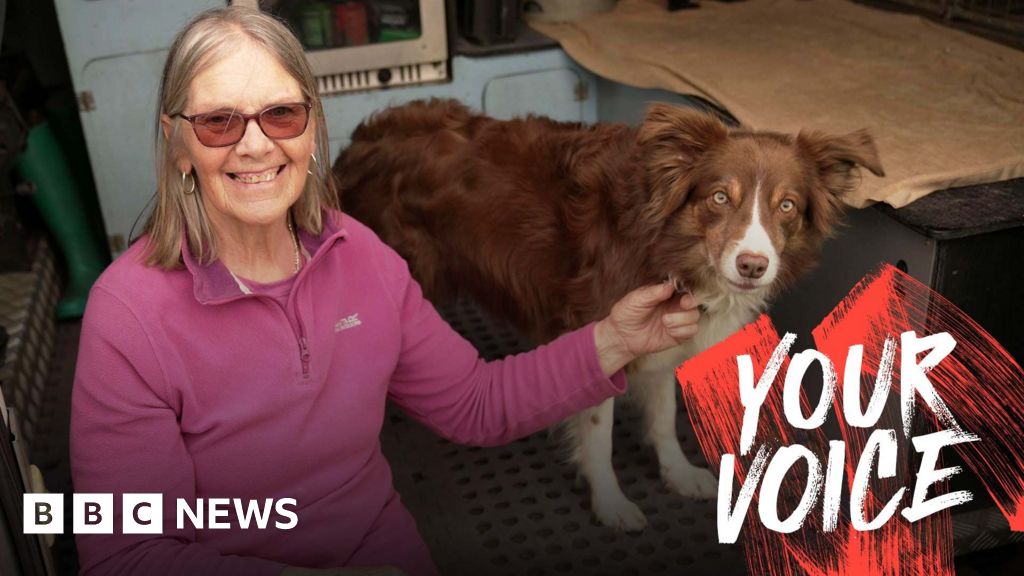
Tesco Pet Insurance, who provided the cover, says “the cost of claims is one of a number of factors that can affect the price of a policy at renewal” and also noted Tilly’s age had been reflected in the quote. It says the couple had a more comprehensive policy, which typically costs more than basic levels of cover, and that alternative options were presented to Fawcett and Neild.
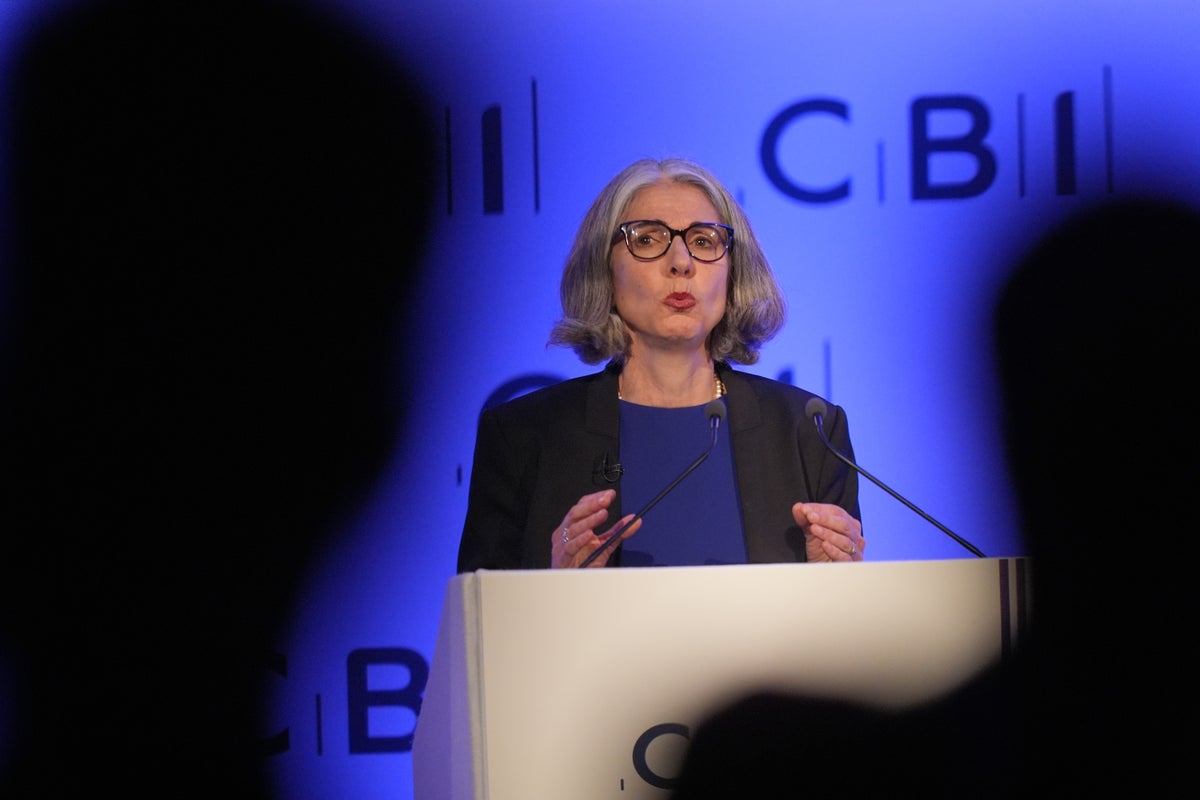
The UK must not “cut ourselves off” from trade opportunities in China despite security and business risks, the head of the Confederation for British Industry has warned.
CBI chief Rain Newton-Smith highlighted that British businesses see increased trade with Chinese firms as an opportunity to drive growth.
Her remarks came as business leaders were questioned by MPs on Parliament’s Business and Trade Select Committee regarding the UK’s economic relationship with China.
Last December, Prime Minister Sir Keir Starmer admitted China poses security threats to the UK but urged for greater business ties.
Ms Newton-Smith, chief executive of one of the UK’s largest business groups, was positive about the Government’s engagement with China.
“You can’t have a growth strategy without a strategy for China,” she said.
“China has the biggest contribution to global growth, is the third largest trading partner, and the world’s largest consumer market.
“The UK is second largest exporter of trade and services.
“We are mindful as all businesses are of security risks but it is really important that we have a strategy towards China.
“This Government has increased the economic engagement with China and including business within this does help us as a country.”
She added: “If we think about the future economy, there is a huge market in China and I think we mustn’t cut ourselves off from some of the opportunities there, even if in some areas there are difficult conversations and negotiations that need to be had.”
Peter Burnett, chief executive of the China-Britain Business Council, told the committee: “There are risks associated with technology advancement, AI, industrial development that they need to assess.
“Increasingly you will find them saying that they need to engage more in China to understand those risks and to develop some of the technologies along some of those risks themselves.”
Business
Trump says he’d be disappointed if Fed pick doesn’t cut rates; Warsh vows to be ‘independent actor’ – The Times of India
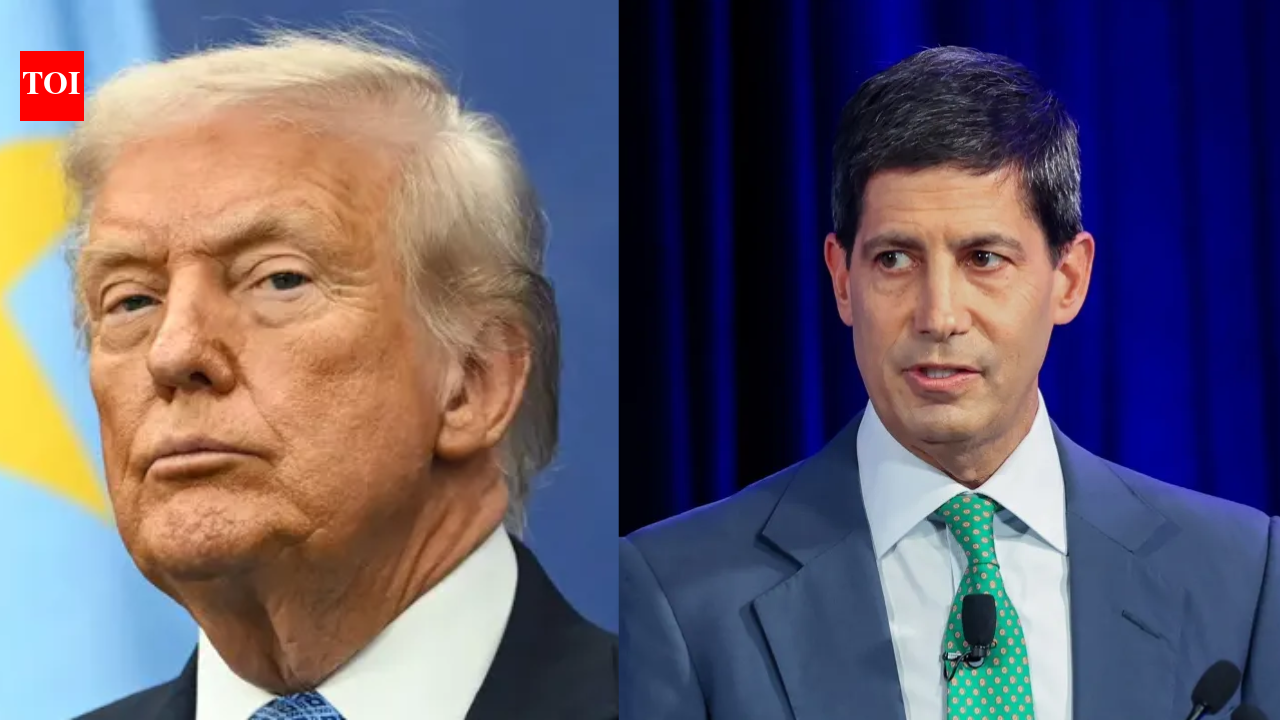
US President Donald Trump on Tuesday said he would be disappointed if his nominee for Federal Reserve chair, Kevin Warsh, does not cut interest rates right away after taking office if confirmed by the Senate. Trump, during an interview with CNBC’s “Squawk Box,” also said “we have to find out” about the construction costs of the new Federal Reserve building.Warsh, a former Federal Reserve official and financier, is currently facing Senate confirmation hearings where he has stressed his independence from political pressure.“The president never once asked me to commit to any particular interest rate decision, and nor would I agree to it if he had,” Kevin Warsh said under questioning by the Senate Banking Committee, as quoted by LA Times. “I will be an independent actor if confirmed as chair of the Federal Reserve.”Warsh told lawmakers that fighting inflation would be one of his main priorities if confirmed.“Congress tasked the Fed with the mission to ensure price stability, without excuse or equivocation, argument or anguish,” Warsh said. “Inflation is a choice, and the Fed must take responsibility for it.”The comments come as investors closely watch his confirmation hearing, with inflation remaining at 3.3% annually and global tensions, including the war in Iran pushing up gas prices, adding pressure on the economy. Higher inflation typically leads the Federal Reserve to keep interest rates steady or raise them rather than cut them, as rate changes affect mortgages, auto loans, and business borrowing.Democrats on the Senate Banking Committee accused Warsh of shifting his stance on interest rates over time, supporting higher rates under Democratic presidents and lower rates during Trump’s presidency.Warsh, if confirmed, would take over at a time when inflation pressures make it difficult for the Federal Reserve to cut rates, even as Trump continues to push for lower borrowing costs. Trump has repeatedly urged rate cuts and has long clashed with current Fed chair Jerome Powell over monetary policy. Powell has also been the subject of a Department of Justice criminal probe after refusing Trump’s requests for faster rate cuts. Trump told CNBC that he does not plan to pressure the Justice Department to end that probe.


Trump repeats call for Congress to rein in college sports

Eli Manning fires back amid debate comparing ex-Giants star to Falcons great Matt Ryan
I was left with an £8,000 vet bill when my insurer cancelled my pet policy

-

 Fashion6 days ago
France’s LVMH Q1 revenue falls 6%, shows resilience amid Iran war
-

 Sports1 week ago
The case for Man United’s Fernandes as Premier League’s best
-

 Entertainment1 week ago
Palace left in shock as Prince William cancels grand ceremony
-
 Business1 week ago
UK could adopt EU single market rules under new legislation
-

 Entertainment6 days ago
Is Claude down? Here’s why users are seeing errors
-

 Fashion1 week ago
Energy emerges as biggest cost driver in textile margins
-
 Business1 week ago
Delta Air Lines unveils first new Delta One suite in premium cabin arms race
-
 Fashion1 week ago
Asia claims largest share of markets on Kearney FDI Confidence Index