

Business
Wall Street braced for a private credit meltdown. The risk of one is rising


The sudden collapse last fall of a string of American companies backed by private credit has thrust a fast-growing and opaque corner of Wall Street lending into the spotlight.
Private credit, also known as direct lending, is a catch-all term for lending done by nonbank institutions. The practice has been around for decades but surged in popularity after post-2008 financial crisis regulations discouraged banks from serving riskier borrowers.
That growth — from $3.4 trillion in 2025 to an estimated $4.9 trillion by 2029 — and the September bankruptcies of auto-industry firms Tricolor and First Brands have emboldened some prominent Wall Street figures to raise alarms about the asset class.
JPMorgan Chase CEO Jamie Dimon warned in October that problems in credit are rarely isolated: “When you see one cockroach, there are probably more.” Billionaire bond investor Jeffrey Gundlach a month later accused private lenders of making “garbage loans” and predicted that the next financial crisis will come from private credit.
While fears about private credit have subsided in recent weeks in the absence of more high-profile bankruptcies or losses disclosed by banks, they haven’t lifted completely.
Companies that are most linked to the asset class, such as Blue Owl Capital, as well as alternative asset giants Blackstone and KKR, still trade well below their recent highs.
The rise of private credit
Private credit is “lightly regulated, less transparent, opaque, and it’s growing really fast, which doesn’t necessarily mean there’s a problem in the financial system, but it is a necessary condition for one,” Moody’s Analytics chief economist Mark Zandi said in an interview.
Private credit’s boosters, such as Apollo co-founder Marc Rowan, have said that the rise of private credit has fueled American economic growth by filling the gap left by banks, served investors with good returns and made the broader financial system more resilient.
Big investors including pensions and insurance companies with long-term liabilities are seen as better sources of capital for multiyear corporate loans than banks funded by short-term deposits, which can be flighty, private credit operators told CNBC.
But concerns about private credit — which tend to come from the sector’s competitors in public debt — are understandable given its attributes.
After all, it’s the asset managers making private credit loans that are the ones valuing them, and they can be motivated to delay the recognition of potential borrower problems.
“The double-edged sword of private credit” is that the lenders have “really strong incentives to monitor for problems,” said Duke Law professor Elisabeth de Fontenay.
“But by the same token … they do in fact have incentives to try to disguise risk, if they think or hope that there might be some way out of it down the road,” she said.
De Fontenay, who has studied the impact of private equity and debt on corporate America, said her biggest concern is that it’s difficult to know if private lenders are accurately marking their loans, she said.
“This is a market that is extraordinarily large and that is reaching more and more businesses, and yet it’s not a public market,” she said. “We’re not entirely sure if the valuations are correct.”
In the November collapse of home improvement firm Renovo, for instance, BlackRock and other private lenders deemed its debt to be worth 100 cents on the dollar until shortly before marking it down to zero.
Defaults among private loans are expected to rise this year, especially as signs of stress among less creditworthy borrowers emerge, according to a Kroll Bond Rating Agency report.
And private credit borrowers are increasingly relying on payment-in-kind options to forestall defaulting on loans, according to Bloomberg, which cited valuation firm Lincoln International and its own data analysis.
Ironically, while they are competitors, part of the private credit boom has been funded by banks themselves.
Finance frenemies
After investment bank Jefferies, JPMorgan and Fifth Third disclosed losses tied to the auto industry bankruptcies in the fall, investors learned the extent of this form of lending. Bank loans to non-depository financial institutions, or NDFIs, reached $1.14 trillion last year, per the Federal Reserve Bank of St. Louis.
On Jan. 13, JPMorgan disclosed for the first time its lending to nonbank financial firms as part of its fourth-quarter earnings presentation. The category tripled to about $160 billion in loans in 2025 from about $50 billion in 2018.
Banks are now “back in the game” because deregulation under the Trump administration will free up capital for them to expand lending, Moody’s Zandi said. That, combined with newer entrants in private credit, might lead to lower loan underwriting standards, he said.
“You’re seeing a lot of competition now for the same type of lending,” Zandi said. “If history is any guide, that’s a concern … because it probably argues for a weakening in underwriting and ultimately bigger credit problems down the road.”
While neither Zandi nor de Fontenay said they saw an imminent collapse in the sector, as private credit continues to grow, so will its importance to the U.S. financial system.
When banks hit turbulence because of the loans they made, there is an established regulatory playbook, but future problems in the private realm might be harder to resolve, according to de Fontenay.
“It raises broader questions from the perspective of the safety and soundness of the overall system,” de Fontenay said. “Are we going to know enough to know when there are signs of problems before they actually occur?”


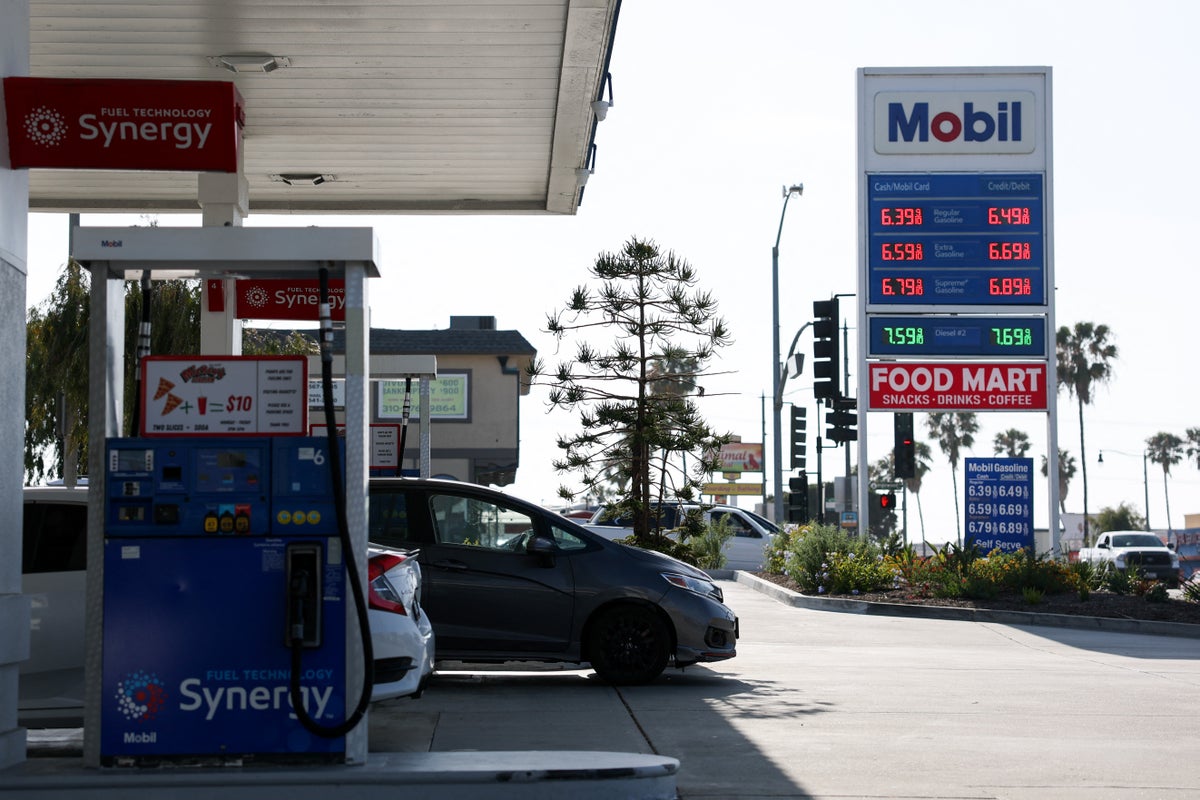
Oil prices held steady after US president Donald Trump said the US would help ships leave the Strait of Hormuz, starting on Monday.
Iran has rejected the plan, but Mr Trump also said talks with Iran could lead to positive outcomes.
A statement from the US Central Command said support would include guided-missile destroyers, over 100 land- and sea-based aircraft and 15,000 service members. A report from Axios later claimed the Navy would not necessarily escort ships through the strait.
Iran earlier said the US had responded to its 14-point proposal via Pakistan and it was reviewing the response, though Trump said it was unlikely to be acceptable.
Investors decided to reserve judgement and left Brent crude futures little changed at $108.35 per barrel, having recovered from an initial drop of more than two per cent, while US crude eased 0.1 per cent to $101.85.
Dealers noted a bulk carrier had reported being attacked by multiple small craft while transiting past Sirik in Iran on Sunday, though it was not clear how many ships would try to run through the Strait of Hormuz even with Navy protection.
A holiday in Japan made for thin trading conditions, leaving Nikkei futures up only modestly at 59,880 versus a cash close of 59,513.
MSCI’s broadest index of Asia-Pacific shares outside Japan gained 2.8 per cent, led by tech-heavy South Korean stocks which returned from holiday with a jump of 4.05 per cent. Chinese blue chips were off 0.06 per cent.
Eurotoxx 50 futures and Dax futures each added 0.3 per cent. S&P 500 futures gained 0.1 per cent and Nasdaq futures rose 0.3 per cent, as markets braced for more than 100 earnings reports this week.
Companies reporting include Advanced Micro Devices, Super Micro Computer, Palantir, Walt Disney and McDonald’s.
The S&P 500 EPS growth rate was running at 25 per cent and accounting for one-off gains at a still brisk 16 per cent, said analysts at Goldman Sachs in a note.
“Despite elevated energy prices and geopolitical uncertainty, corporate guidance and analyst estimate revisions have remained strong so far this quarter,” they said. “However, the reward for EPS beats has been unusually small.”
Concerns remained about the scale of artificial intelligence capex investment which was now at $751bn for 2026, $80bn above estimates at the start of the earnings season and 83 per cent above 2025 spending.

The threat of oil-driven inflation had also lifted bond yields in a challenge to equity valuations, while several major central banks had turned hawkish on policy.
Markets implied just 2 basis points of easing from the Federal Reserve by the end of the year compared with 11 basis points a week ago. Expectations for the European Central Bank had climbed to 76 basis points of hikes, with the Bank of England at 63 basis points.
Australia’s central bank meets on Tuesday and is considered likely to hike its cash rate for a third time running as it battles stubborn inflationary pressures.
The outlook for Fed policy could be budged by a raft of data this week which includes the payrolls report for April on Friday. Median forecasts are for a rise of 60,000 in jobs following March’s outsized 178,000 gain, though problems with seasonal adjustment make for much uncertainty.
Analysts at Citi, for instance, are predicting a 15,000 drop in payrolls and a rise in unemployment to 4.3 per cent.
In currency markets, the dollar was a shade softer as investors waited for more developments in the Middle East and, crucially, whether the Strait of Hormuz could be opened.
The dollar was steady at 157.21 yen, still smarting from last week’s Japanese intervention which analysts thought could have amounted to around $35bn.
The euro was flat at $1.1726, while the pound held at $1.3584 ahead of local elections in Britain which could see heavy losses for the ruling Labour Party.
In commodity markets, gold was 0.2 per cent lower at $4,603 an ounce, and well within recent trading ranges.
Business
Gold price prediction today: Where are gold prices headed? Key levels to watch out for May 4, 2026 week – The Times of India

Gold price prediction today: Gold prices are seeing consolidation, according to Manav Modi, Senior Analyst, Commodity Research at Motilal Oswal Financial Services Ltd.Gold prices extended last week’s decline, hovering near one-month lows as a stronger US dollar and a sharp surge in crude oil continued to pressure sentiment. The rally in oil, which is driven by escalating US-Iran tensions and ongoing disruptions in the Strait of Hormuz, has heightened fears of an energy-led inflation shock, reinforcing expectations of a prolonged higher interest rate environment.Major central banks, including the Fed, ECB, BOE, and BOJ, signalled a cautious to hawkish stance, weighing bullion. While intermittent optimism around diplomatic talks between the US and Iran offered limited support, uncertainty remains elevated as negotiations stay fragile.Looking ahead, markets will closely track global PMI releases and US labor market data for further direction on inflation and policy outlook.Gold is showing signs of consolidation after a sharp corrective decline, with prices stabilizing near the lower half of the Bollinger Band structure. The recent rebound from the lower band around 138,000–140,000 indicates strong buying interest at lower levels, while inability to reclaim the middle band near 152,200 suggests the broader trend remains neutral to mildly bearish.Bollinger Bands are gradually narrowing, pointing toward a potential range-bound phase before a breakout. Immediate resistance is placed at 152,200–155,000 (mid to upper band zone), with a stronger ceiling near 170,000. On the downside, support is seen at 149,200, followed by a key base around 145,000 and major support near 139,000. A sustained move above the middle band could shift momentum higher, while rejection may keep prices confined within current range this week.(Disclaimer: Recommendations and views on the stock market, other asset classes or personal finance management tips given by experts are their own. These opinions do not represent the views of The Times of India.)
Poll
What do you think will happen to gold prices in the next week?
Business
Top stocks to buy: Stock recommendations for May 4, 2026 week – check list – The Times of India

Stock market recommendations: Granules, and UltraTech Cement have been picked as the top stock recommendations from the week starting May 4, 2026 by Motilal Oswal Wealth Management Research Desk. Let’s take a look:
GranulesGranules India reported in-line revenue with a ~6% beat at the EBITDA and PAT level, driven by strong growth in FDF and APIs, while complex generics contribution increased to 46% (vs ~39% YoY), supporting margin expansion. Europe business saw strong scale-up (+49% YoY ex-Senn Chemicals), led by new launches and pipeline expansion, indicating improving geographic diversification.CDMO segment is gaining traction with Senn Chemicals achieving EBITDA break-even, while growth in peptides and controlled substances adds to future visibility. We expect ~15% CAGR in FDF over FY26–28, driven by strong base growth in formulations (74% of revenue), along with improving product mix. We expect ~27% PAT CAGR over FY26–28, supported by margin expansion from the peptide CDMO business, benefits of integrated R&D capabilities across Switzerland and India, & continued shift towards high-value complex generics & specialty products.UltraTech CementUltraTech Cement delivered a strong 4QFY26 result with revenue, EBITDA and adjusted PAT rising ~12%, ~21% and ~20% YoY respectively. The key positive was better cost control and operating efficiency, which helped margins improve despite a volatile input cost environment. The company crossed 200mtpa domestic grey cement capacity, the largest in any country excluding China, and has completed the integration of India Cements and Kesoram ahead of schedule.With acquired assets turning more efficient and utilisation levels healthy, UltraTech remains well placed to benefit from expected industry demand growth led by infrastructure, rural demand and housing. Management has guided annual capex of rupees 80 to 100bn, with plans to add ~37mtpa capacity to reach nearly 240mtpa by FY28E, while targeting net debt to EBITDA below 1x. We expect consol. Revenue/EBITDA/ PAT to grow at a CAGR of 13%/15%/18% respectively over FY26-28, supported by cost savings, expansion benefits and improving profitability.(Disclaimer: Recommendations and views on the stock market, other asset classes or personal finance management tips given by experts are their own. These opinions do not represent the views of The Times of India.)


US GDP grows 2% in Q1 2026, driven by investment & exports

Australian wool prices edge higher, quality gap weighs on market

Kim Kardashian delights fans with pregnancy pic ahead of Met Gala: ‘Loading’

-

 Tech7 days ago
A Brain Implant for Depression Is About to Be Tested in Humans
-

 Tech1 week ago
Almost 90% of women leave tech industry within 10 years | Computer Weekly
-
 Business1 week ago
Pakistan’s oil market is fuelling the crisis | The Express Tribune
-
 Business6 days ago
‘I had £20,000 stolen and had to fight a 13-month fraud reporting rule to get it back’
-

 Sports6 days ago
Pro wrestling star Steph De Lander reveals how colleague’s advice helped lead her to title triumph at ACW
-

 Entertainment7 days ago
Norway joins Type 26 Frigate Programme to boost NATO naval power
-

 Entertainment7 days ago
Melania Trump says ABC should ‘take a stand’ on late-night host Kimmel
-

 Tech6 days ago
This Ambitious Laptop Doesn’t Leave Much Room for Your Hands