

Business
Wall Street braced for a private credit meltdown. The risk of one is rising


The sudden collapse last fall of a string of American companies backed by private credit has thrust a fast-growing and opaque corner of Wall Street lending into the spotlight.
Private credit, also known as direct lending, is a catch-all term for lending done by nonbank institutions. The practice has been around for decades but surged in popularity after post-2008 financial crisis regulations discouraged banks from serving riskier borrowers.
That growth — from $3.4 trillion in 2025 to an estimated $4.9 trillion by 2029 — and the September bankruptcies of auto-industry firms Tricolor and First Brands have emboldened some prominent Wall Street figures to raise alarms about the asset class.
JPMorgan Chase CEO Jamie Dimon warned in October that problems in credit are rarely isolated: “When you see one cockroach, there are probably more.” Billionaire bond investor Jeffrey Gundlach a month later accused private lenders of making “garbage loans” and predicted that the next financial crisis will come from private credit.
While fears about private credit have subsided in recent weeks in the absence of more high-profile bankruptcies or losses disclosed by banks, they haven’t lifted completely.
Companies that are most linked to the asset class, such as Blue Owl Capital, as well as alternative asset giants Blackstone and KKR, still trade well below their recent highs.
The rise of private credit
Private credit is “lightly regulated, less transparent, opaque, and it’s growing really fast, which doesn’t necessarily mean there’s a problem in the financial system, but it is a necessary condition for one,” Moody’s Analytics chief economist Mark Zandi said in an interview.
Private credit’s boosters, such as Apollo co-founder Marc Rowan, have said that the rise of private credit has fueled American economic growth by filling the gap left by banks, served investors with good returns and made the broader financial system more resilient.
Big investors including pensions and insurance companies with long-term liabilities are seen as better sources of capital for multiyear corporate loans than banks funded by short-term deposits, which can be flighty, private credit operators told CNBC.
But concerns about private credit — which tend to come from the sector’s competitors in public debt — are understandable given its attributes.
After all, it’s the asset managers making private credit loans that are the ones valuing them, and they can be motivated to delay the recognition of potential borrower problems.
“The double-edged sword of private credit” is that the lenders have “really strong incentives to monitor for problems,” said Duke Law professor Elisabeth de Fontenay.
“But by the same token … they do in fact have incentives to try to disguise risk, if they think or hope that there might be some way out of it down the road,” she said.
De Fontenay, who has studied the impact of private equity and debt on corporate America, said her biggest concern is that it’s difficult to know if private lenders are accurately marking their loans, she said.
“This is a market that is extraordinarily large and that is reaching more and more businesses, and yet it’s not a public market,” she said. “We’re not entirely sure if the valuations are correct.”
In the November collapse of home improvement firm Renovo, for instance, BlackRock and other private lenders deemed its debt to be worth 100 cents on the dollar until shortly before marking it down to zero.
Defaults among private loans are expected to rise this year, especially as signs of stress among less creditworthy borrowers emerge, according to a Kroll Bond Rating Agency report.
And private credit borrowers are increasingly relying on payment-in-kind options to forestall defaulting on loans, according to Bloomberg, which cited valuation firm Lincoln International and its own data analysis.
Ironically, while they are competitors, part of the private credit boom has been funded by banks themselves.
Finance frenemies
After investment bank Jefferies, JPMorgan and Fifth Third disclosed losses tied to the auto industry bankruptcies in the fall, investors learned the extent of this form of lending. Bank loans to non-depository financial institutions, or NDFIs, reached $1.14 trillion last year, per the Federal Reserve Bank of St. Louis.
On Jan. 13, JPMorgan disclosed for the first time its lending to nonbank financial firms as part of its fourth-quarter earnings presentation. The category tripled to about $160 billion in loans in 2025 from about $50 billion in 2018.
Banks are now “back in the game” because deregulation under the Trump administration will free up capital for them to expand lending, Moody’s Zandi said. That, combined with newer entrants in private credit, might lead to lower loan underwriting standards, he said.
“You’re seeing a lot of competition now for the same type of lending,” Zandi said. “If history is any guide, that’s a concern … because it probably argues for a weakening in underwriting and ultimately bigger credit problems down the road.”
While neither Zandi nor de Fontenay said they saw an imminent collapse in the sector, as private credit continues to grow, so will its importance to the U.S. financial system.
When banks hit turbulence because of the loans they made, there is an established regulatory playbook, but future problems in the private realm might be harder to resolve, according to de Fontenay.
“It raises broader questions from the perspective of the safety and soundness of the overall system,” de Fontenay said. “Are we going to know enough to know when there are signs of problems before they actually occur?”


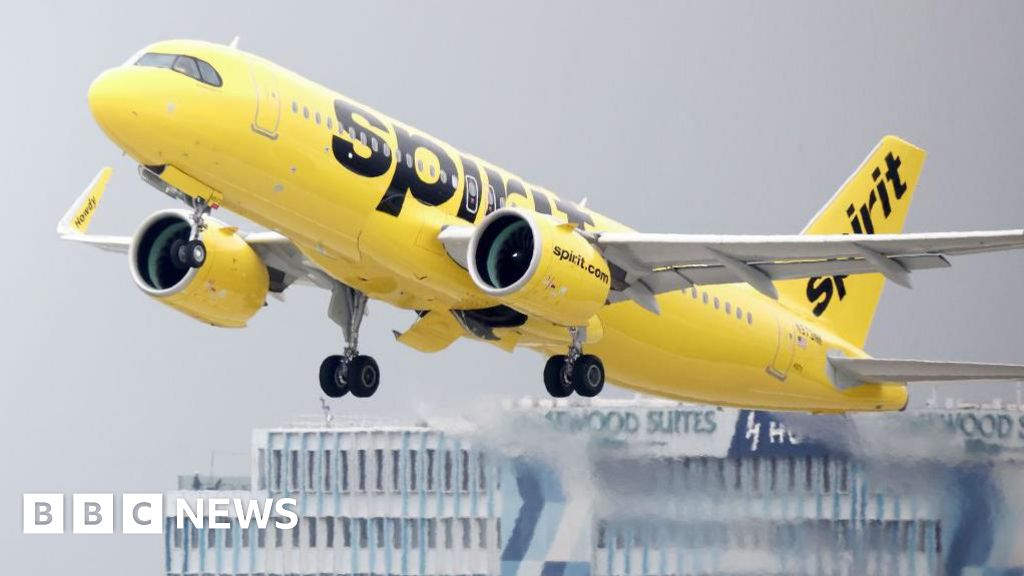
The earlier plan, which would have seen the US government take effective ownership of as much as 90% of the airline, faced stiff opposition from Wall Street, Capitol Hill and even a member of Trump’s own cabinet. Transportation Secretary Sean Duffy told Reuters a rescue would amount to tossing “good money after bad”.

Spirit Airlines check-in Kiosks sit idle at Oakland International Airport on August 13, 2025 in Oakland, California.
Justin Sullivan | Getty Images
Spirit Airlines could shut down as early as 3 a.m. ET Saturday, according to people familiar with the matter. The carrier has failed to secure a financial lifeline to continue operating, though it hasn’t commented on the potential shutdown or its plans.
About 290 Spirit flights are scheduled for Saturday, according to aviation site Flightradar24. Another 381 are scheduled for Sunday.
Travelers with Spirit tickets could be understandably rattled. While there have been some U.S. airlines to shut down in recent years, the budget carrier is larger than most recent airline failures and links major cities like New York, Miami, Detroit and Los Angles — and many others in between — with its Airbus jets.
Here’s what travelers need to know:
You have a Spirit ticket. What should you do?
Immediately? Nothing.
Travelers who are booked on a Spirit flight, like this CNBC reporter is for later this month, are likely to receive a refund if they purchased tickets with a credit card.
If the ticket was bought with a debit card or with loyalty points, however, the chances of recovering funds are slim to none, said Henry Harteveldt, founder of Atmosphere Research Group, a travel consulting firm.
“If you’re holding a reservation for a flight on Spirit don’t proactively cancel it. Wait for the airline to announce it is shutting down,” he said.
Would Spirit be able to help you at the airport?
Don’t count on it.
Spirit has declined to comment on a potential shutdown. If it confirms an end to operations, the carrier will most likely have information on its website about travelers’ next steps.
Harteveldt said travelers shouldn’t go to the airport expecting to find Spirit staff in the event the airline ceases operations. Call centers are likely to be overwhelmed if they are still staffed.
That could leave passengers with fewer answers than they’d like, but other airlines are likely to help assist affected customers.
Airlines that offer last-minute fares, likely with some discounts, will be available to travelers at airport ticket counters.
How can another airline help?
United Airlines, JetBlue Airways, Frontier Airlines and American Airlines are among the carriers that have said they are ready to assist Spirit customers and crews if the carrier shuts down.
That could mean scheduling additional flights to carry the stranded passengers, similar to what they do during a hurricane or other natural disaster.
Why could Spirit shut down?
Spirit, known for bright yellow planes, low fares and fees for everything else, had been successful for years, but this week it’s been on the brink of liquidation after failing to reach a deal with bondholders for a $500 million government bailout from the Trump administration.
Last year Spirit filed for its second bankruptcy in less than a year, though it’s had a host of problems even before then.
A plan to be acquired by JetBlue was blocked. Rising costs upended its business model. An engine defect grounded dozens of its planes. And, more broadly, upscale travel became more popular with consumers, driving airline profits.
At the same time, big, legacy airlines were selling their own basic economy fares that were similar to what Spirit was offering, but with bigger networks.
What does this mean for travel going forward?
Airlines have been adding flights since Spirit’s bankruptcy filing last year on some of its routes and at major airports. They’re likely to keep doing so.
Experts have said they expect fares to rise, at least in some markets, if the discounter goes away, even though the carrier has shrunk substantially.
Business
Middle East crisis: Air India to make food optional, help cut price of tickets – The Times of India
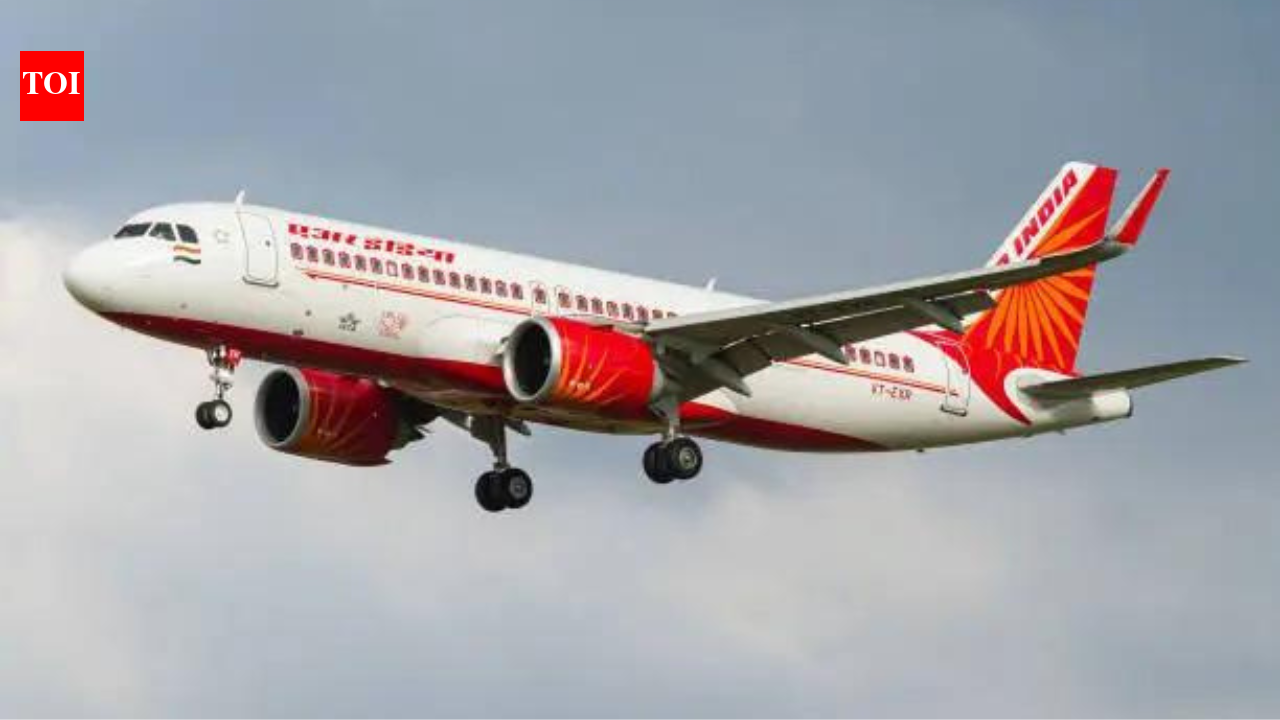
NEW DELHI: Desperate times call for desperate measures. Full service Air India is planning to make meals optional on its domestic and short international (under two hour) flights. Once this “unbundling” rolls out in the next month or two, passengers opting out of meals could have upwards of Rs 250 shaved off their ticket price. While this move, say people in the know, is “on the anvil,” the airline is looking at several other unprecedented measures to fly through the severe cost-revenue turbulence caused by the unending West Asia war.While not opting for meals could lead to slightly cheaper economy tickets, AI is looking at unbundling lounge access for business class passengers because those opting out of this, could get their tickets cheaper. On an average, lounge operators charge Rs 1,100-1,400 per user at metro airports and Rs 600-700 at non metros.The average spend is about Rs 1,000 per lounge. Many business class flyers are frequent travellers who just make it to airports in time for their flight and do not head to the lounge. If unbundled, this could be a saving in their ticket cost. Banks have been reducing lounge access for credit card users for the same reason to cut their costs.“From Day One, Air India has had meals bundled in its ticket price. Now the way aviation turbine fuel (ATF) price is rising and the rupee crashing since Feb 28, ticket prices are going up. India is a price-sensitive market and raising fares beyond a point leads to a fall in traffic with many opting to travel by train or road. This has led to the rethinking to unbundle meals on some flights. Other steps are also being considered,” said people in the know.Several airlines globally have over the past few years unbundled their onboard offerings. Many international full service airlines offer a basic meal in economy while giving the option of buying gourmet meals at an additional cost. Ditto for alcoholic beverages, with cheaper beer and wines being given at no extra cost while the others being charged for. “For passengers, the distinction between full service and low cost airlines is blurring very fast,” said an industry old-timer.


Harry Styles, Zoe Kravitz in major wedding planning mode after big step

what happens to stranded passengers now?

US awards $488m F-16 radar support contract for Pakistan, other countries

-

 Tech5 days ago
A Brain Implant for Depression Is About to Be Tested in Humans
-

 Tech1 week ago
They Wanted to Join Raya. They’ve Been on the Waiting List for Years
-

 Tech5 days ago
Almost 90% of women leave tech industry within 10 years | Computer Weekly
-

 Tech1 week ago
Why Do I Like Dyson’s PencilVac So Much?
-

 Fashion1 week ago
North India cotton yarn steady despite continued push by spinners
-

 Entertainment1 week ago
Anne Hathaway makes shocking confession about Taylor Swift’s music
-

 Sports1 week ago
US says Iran can play in Fifa World Cup but IRGC-linked individuals won’t be allowed
-

 Entertainment5 days ago
Norway joins Type 26 Frigate Programme to boost NATO naval power