

Business
Disney signals its next CEO will take over a company with strong momentum


Walt Disney Company CEO Bob Iger looks on prior to the game between the Philadelphia Eagles and the Green Bay Packers at Lambeau Field on November 10, 2025 in Green Bay, Wisconsin.
Michael Reaves | Getty Images Sport | Getty Images
Disney is ready for its next CEO.
On Monday, the company’s leadership outlined its recent successes during its quarterly earnings report. CEO Bob Iger made the case that when his soon-to-be-named successor picks up the baton, Disney will be primed to seize the momentum.
“I’m incredibly proud of all that we’ve accomplished over the past three years to set Disney on the path to continued growth. I’m inspired and energized by the opportunities ahead for this wonderful company,” Iger told investors on Monday.
Iger reclaimed the CEO role in late 2022 after a failed succession plan involving former parks boss Bob Chapek. Disney picked Chapek to succeed Iger in 2020 only to fire him 2½ years later and undo many of the changes he’d implemented.
Now, Disney is counting on a smoother handover the second time around, cushioned by a path to growth.
The Disney board is meeting this week and is expected to vote on its next CEO, according to people familiar with the matter who spoke on the condition of anonymity about internal matters. The company previously said it would announce a replacement for Iger in the first quarter of this year.
“I think what is noteworthy is that when I came back three years ago, I had a tremendous amount that needed fixing,” Iger said on Monday’s call. “But anyone who runs a company also knows that it can’t just be about fixing. It has to be preparing a company for its future … but taking steps to create opportunities for growth.”
On Monday, Disney topped Wall Street expectations for both revenue and earnings for its fiscal first quarter.
The company’s experiences division, which includes theme parks, resorts and cruises, notched more than $10 billion in quarterly revenue for the first time. Chairman of Disney Experiences Josh D’Amaro is among the front-runners to be named as the next CEO.
Industry insiders and Disney sources expect D’Amaro to be appointed Iger’s successor, though the decision ultimately lies with the Disney board and won’t be final until directors vote.
“The board has not yet selected the next CEO of The Walt Disney Company and once that decision is made, we will announce it,” a Disney spokesperson said in a statement, declining to comment on the timing of the next board meeting.
Iger said Monday he was “very, very bullish” on the parks business and its ability to grow. Disney is now planning to develop a theme park and resort in Abu Dhabi, United Arab Emirates, has been launching more cruise ships, and is in the midst of a previously announced investment of $60 billion into its theme parks over the next decade.
Meanwhile, Disney’s entertainment segment — the unit that houses its TV networks, streaming and theatrical releases, and arguably needed the biggest turnaround in recent years — saw revenue rise 7% in the period. Disney stopped breaking out streaming subscriber growth this quarter, but offered guidance that showed Disney is confident it will continue to grow and offset traditional TV declines.
While theme parks, resorts and cruises have been the profit driver for Disney, its TV, streaming and film business is often in focus. Following underwhelming years at the box office, Disney dominated in 2025, and on Monday its leadership touted its slate ahead.
“Looking back just a few years when our movie business was suffering from Covid and the streaming business was obviously not in an acceptable place, it’s clear that the future of both of those businesses, or let’s call it our entertainment business, is also bright and it’s going to grow,” Iger said on the company’s earnings call.
Disney’s co-chairman of Entertainment, Dana Walden, is also among the Iger lieutenants vying for the CEO seat, CNBC previously reported.
Former Morgan Stanley CEO James Gorman has been running the process to select a successor. Given the focus on theme parks in recent years, speculation has recently swung in D’Amaro’s favor.
“In a world that changes as much as it does … trying to preserve the status quo was a mistake,” Iger said Monday addressing Disney’s last leadership transition.
“And I’m certain that my successor will not do that,” he said. “They’ll be handed, I think, a good hand in terms of the strength of the company, a number of opportunities to grow and also the expectation that in a world that changes, you also have to continue to change and evolve as well.”
— CNBC’s Julia Boorstin contributed to this report.
Correction: This story has been updated to correct the spelling of Morgan Stanley.






Indians sharply cut back on overseas travel spending in March, with remittances for foreign trips dropping by more than $212 million from the previous month, according to Reserve Bank of India data. The fall in outbound travel expenditure came amid rising oil prices linked to the Middle East conflict and persistent pressure on rupee, even as travel remained the single largest component of outward remittances under the Liberalised Remittance Scheme (LRS).In March, travel-related remittances fell to $1.09 billion from $1.3 billion in February and $1.65 billion in January. The decline came at a time when the West Asia conflict pushed oil prices higher and weakened rupee to record lows. Amid the situation, Prime Minister Narendra Modi urged citizens to cut down on foreign travel and adopt measures such as carpooling. Lower overseas travel spending could reduce foreign exchange outflows and help ease pressure on rupee.According to the RBI’s data on outward remittances by resident individuals, travel continued to account for the largest share of money sent abroad under the LRS in March. Total remittances during the month stood at $2.59 billion.The RBI tracks overseas spending across categories including travel, studies abroad, maintenance of close relatives, overseas investments, and property purchases. Under the LRS framework, resident individuals, including minors, can remit up to $250,000 in a financial year for permitted current or capital account transactions.Within the travel segment, the biggest component remained the ‘other travel’ category, which covers holiday spending and international credit card settlements. Indians spent $623.05 million under this category in March, accounting for nearly 57 per cent of total travel-related remittances during the month.Expenditure linked to education travel, including hostel and fee payments, stood at $450.16 million. Business travel, pilgrimage, and overseas medical treatment together accounted for $21.39 million.The data also showed a rise in remittances meant for the maintenance of close relatives abroad. Such transfers increased to $389.78 million in March from $266.18 million in February.At the same time, spending under the ‘studies abroad’ category declined. This category includes payments made for educational services accessed remotely without travelling overseas, such as correspondence courses. Remittances under this head stood at $151.71 million in March, compared to $175.68 million in February and $267.42 million in January.For the financial year 2024-25, Indians remitted a total of $29.56 billion under the LRS. Travel made up the largest portion of this amount at $16.96 billion.The RBI figures further showed that investments by Indians in overseas equity and debt instruments rose significantly to $440.22 million in March from $265.99 million in February.Meanwhile, outward remittances for the purchase of immovable property overseas declined to $38.68 million in March, down from $51.36 million a month earlier.
Business
Stock market this week: Middle East tensions, oil prices, FII flows & more — what will guide Dalal Street

Dalal Street is heading into the new trading week with global uncertainty firmly in focus, as investors keep a close watch on the evolving situation in the Middle East, fluctuations in crude oil prices and the behaviour of foreign investors. Analysts said that sentiment is likely to remain fragile and heavily influenced by developments in negotiations between the United States and Iran, while movements in the rupee, global equities and the US dollar are also expected to shape market direction in the days ahead.Trading activity during the week is also expected to be shaped by the rupee’s movement against the US dollar, while investors continue to assess the impact of global uncertainty on risk appetite. Markets will remain closed on Thursday for Bakri Id.A key trigger for sentiment emerged over the weekend after US Secretary of State Marco Rubio said negotiations between Washington and Tehran had shown some progress, raising expectations that the ongoing conflict in West Asia could move closer to resolution.Ajit Mishra, SVP, Research at Religare Broking Ltd, said investors would closely track developments tied to crude oil, global currencies and bond markets. “This week is expected to remain highly sensitive to global macroeconomic developments and currency movements. Investors will also monitor crude oil prices, developments in US-Iran negotiations, and the trajectory of the US dollar and bond yields, all of which are expected to influence foreign flows and overall risk appetite,” he said.Apart from geopolitical developments, the Reserve Bank’s decision to transfer a record Rs 2.87 lakh crore dividend to the government for the year ended March 2026 is also expected to remain in focus. The announcement comes at a time when rising import costs and supply chain pressures linked to the West Asia conflict continue to weigh on the economy.According to Mishra, market participants are expected to evaluate how the RBI payout could affect liquidity conditions, fiscal flexibility and government spending in the months ahead.Ponmudi R, CEO of Enrich Money, said market behaviour in the coming sessions is expected to remain sensitive to fresh headlines surrounding diplomatic negotiations and oil prices. “Markets are expected to remain volatile and heavily headline-driven in the coming week, with investor attention firmly focused on developments surrounding the US–Iran situation, broader diplomatic negotiations and movements in crude oil prices,” he said.“While hopes of a diplomatic breakthrough and easing geopolitical tensions have improved sentiment modestly, investors continue to remain cautious as uncertainty surrounding the final outcome of the negotiations remains elevated,” Ponmudi added.He further said investors are expected to watch institutional flows, global equity trends, macroeconomic indicators and the rupee for further market cues. “With global uncertainty still elevated, market participants are likely to remain selective and cautious despite the recent improvement in sentiment,” he said.Vinod Nair, Head of Research at Geojit Investments Limited, said markets would require stronger support factors to build a more constructive setup. According to him, a meaningful decline in crude oil prices, steady foreign institutional investor flows and stable Q1FY27 earnings expectations without major downgrades would be important for sustained momentum.In the previous week, the BSE benchmark index rose 177.36 points, or 0.23%, while the NSE Nifty advanced 75.8 points, or 0.32%.
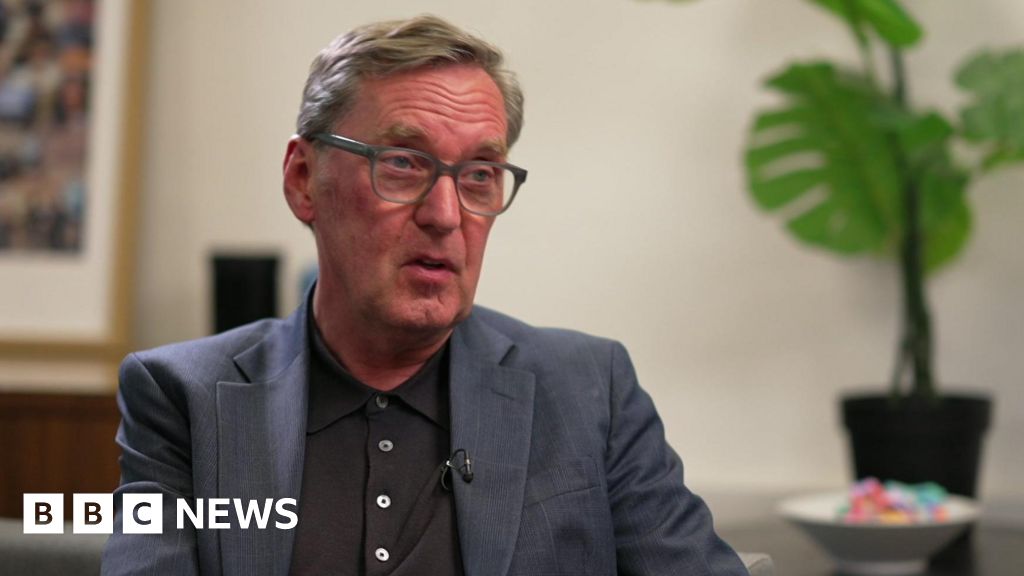
Reforms are needed of the welfare system to tackle the high numbers of young people not in work or education, says Alan Milburn.
Source link


Christopher Nolan’s ‘The Odyssey’ trailer sparks major backlash online

2026 NASCAR Odds: Denny Hamlin Favored At Coca-Cola 600, Tyler Reddick Second

5/24: Sunday Morning

-

 Entertainment1 week ago
Where Pete Davidson, Elsie Hewitt stand after breakup: Details revealed
-

 Politics1 week ago
Rising diesel costs from Iran war strain US school budgets
-

 Tech1 week ago
Why Is Your Grill So Dumb? The Best Grills Set Temp Like an Oven
-
 Fashion1 week ago
RMG trade bodies seek policy support from Bangladesh PM
-

 Tech1 week ago
This Solar-Powered Smart Sprinkler Keeps My Lawn Watered Without Any Power Cables
-
 Fashion1 week ago
India calls for aligning standards, customs procedures with Africa
-

 Fashion6 days ago
Nigeria Kwara Garment Factory, KWS Garment Production Village ink pact
-

 Fashion7 days ago
India’s Pearl Global’s FY26 revenue crosses $521 mn milestone