

Business
OPEC+ mulls larger oil output boost | The Express Tribune

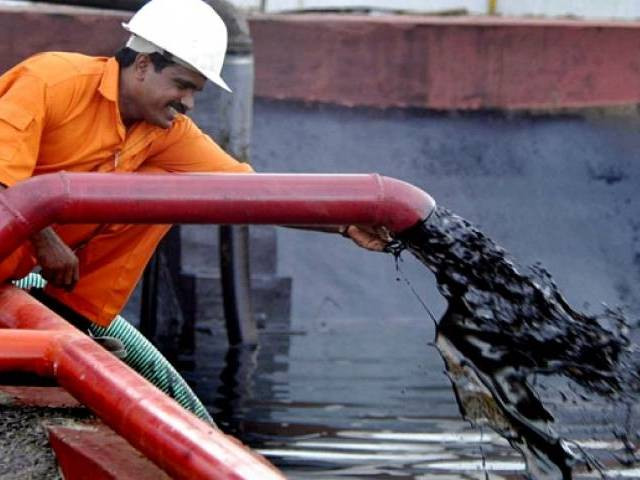
Sources say KSA, UAE have already raised exports; oil majors, traders have suspended shipments via Hormuz
This comes after Saudi last month agreed to a surprise output cut of oil cartel OPEC, the first in eight years. PHOTO: AFP
LONDON/MOSCOW:
OPEC+ may consider a larger-than-planned output increase of 411,000 barrels per day at a meeting on Sunday, two sources close to the talks said, after Saudi Arabia and the UAE raised exports in anticipation of possible disruption to oil markets from US-Israeli strikes on Iran carried out on Saturday.
Eight members of OPEC+, which groups the Organisation of the Petroleum Exporting Countries and allies — Saudi Arabia, Russia, the UAE, Kazakhstan, Kuwait, Iraq, Algeria and Oman — were already scheduled to meet on Sunday at 1100 GMT. Despite expectations that oversupply would weigh on the market, oil prices have risen this year on fears that a conflict between Iran and the US would disrupt Middle East supply through the Strait of Hormuz. Oil hit $73 a barrel on Friday, the highest level since July.
Delegates had earlier said the eight countries would likely agree to a modest increase of 137,000 barrels per day in oil output for April, as the group readies for summer demand, led by the US driving season, and as crude prices had already risen on expectations of a US attack on Iran.
An April increase would end a three-month pause in output hikes.
Both sources, who declined to be identified by name, said an increase of 411,000 bpd — three times the volume initially floated – was now being considered. One of them said it could be even larger, at 548,000 bpd.
Output increase already under way
Evidence has mounted that the biggest Middle East producers had already boosted exports as concern built that the US would strike Iran, raising the risk of disruption of oil exports.
UAE oil producer Abu Dhabi is set to export more of its flagship Murban crude in April, two trade sources said on Friday. Saudi Arabia, the leading OPEC producer, has increased its oil production and exports as part of a contingency plan, sources told Reuters this week.
The eight OPEC+ members raised production quotas by about 2.9 million bpd from April through December 2025, roughly 3% of global demand, before pausing further increases for January to March 2026 due to seasonal weakness.
Oil, gas majors suspend shipments via Hormuz
Some oil majors and top trading houses have suspended crude oil, fuel and liquefied natural gas (LNG) shipments via the Strait of Hormuz as the US and Israel attack Iran and Tehran retaliates, four trading sources said on Saturday. “Our ships will stay put for several days,” one top executive at a major trading desk said.
The tanker association INTERTANKO said the US Navy had warned against navigation in the operations area — the whole of the Gulf, Gulf of Oman, North Arabian Sea, and the Strait of Hormuz — saying it could not guarantee the safety of neutral or merchant shipping.
Eleven LNG tankers in ballast have so far shown signs of slowing down, U-turning or stopping in or around the Strait, said Laura Page, Kpler’s insight manager, LNG and natural gas.
“This number will likely rise over the coming days and could pose risks to Qatari LNG supply to the international market,” she said.
Florence Schmit, energy strategist at Rabobank, said: “If Qatar, which plays a disproportionate role in balancing both Asian and European LNG markets, is unable to export cargoes because of infrastructure damage or shipping impairments, the effect on global gas prices would be dramatic.”
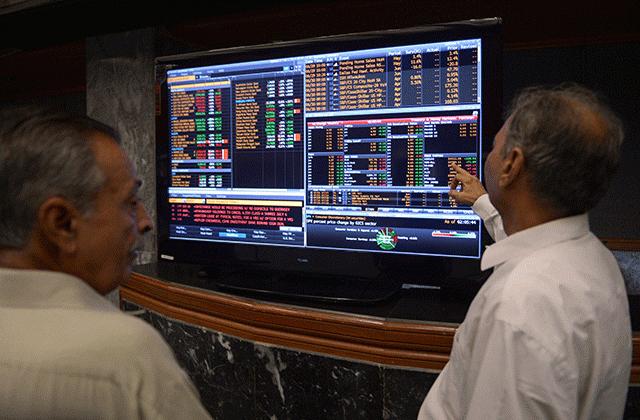





Gold prices in Pakistan have risen again at the start of the business week after several days of decline, according to the All Pakistan Bullion Market.
The price of gold per tola increased by Rs 800, reaching Rs 493,962.
Similarly, the price of 10 grams of gold rose by Rs 686 to Rs 423,492.
In the global market, gold also recorded an increase of $8 per ounce, reaching $4,716.
Experts say global economic uncertainty, currency fluctuations, and investor preference for safe-haven assets are driving the upward trend in gold prices.
They add that changes in international markets directly impact Pakistan’s local bullion rates, leading to continued fluctuations in domestic prices.

Now one of the biggest sportswear firms, Anta’s rise follows a playbook adopted by many Chinese giants.
Source link
Business
Gold price prediction today: Will gold prices continue to be volatile? Key levels to watch out for April 27, 2026 week – The Times of India

Gold price prediction today: Gold prices will closely track movements on the rate decisions by several central banks, including the US Federal Reserve, this week, says Manav Modi, Senior Analyst, Commodity Research at Motilal Oswal Financial Services Ltd.Gold is currently consolidating after sharp swings in a broad range, indicating a pause rather than a reversal. Price action shows a higher-high structure intact, but the recent sideways movement suggests indecision near the upper supply zone around 158,000–160,000. The formation resembles a short-term flag/triangle continuation pattern, where a breakout on either side will define the next directional move. Volume has tapered slightly, reinforcing the consolidation narrative.Gold prices recently moved from the upper band toward the mid-band (20 DMA), and are now attempting to stabilize. The bands have started to contract, signaling a potential volatility expansion ahead. Sustaining above the mid-band (~150,500–151,000 zone) keeps bullish bias intact, while a breakdown below this could trigger a deeper mean reversion toward the lower band.For the week, immediate support for gold prices is placed at around Rs 150,500, which is followed by stronger support near Rs 148,500. On the upside, the resistance stands at around Rs 155,500, and after that the key supply zone is at Rs 158,000. A decisive close for gold above Rs 158,000 levels can then resume the broader uptrend. However, a break in gold prices below levels of Rs 148,500 may shift the momentum to bearish in the near term.The economic docket is filled with data points and events this week as the focus will be on FED, BOJ, ECB and ECB policy meetings. US consumer confidence, GDP, inflation and durable goods orders data will also be in radar.(Disclaimer: Recommendations and views on the stock market, other asset classes or personal finance management tips given by experts are their own. These opinions do not represent the views of The Times of India)


SBP raises policy rate by 100bps to 11.5% as inflation risks mount

Finalise Bangladesh’s textile-RMG circular economy strategy: Experts
Gold prices rise rebound in Pakistan after recent decline – SUCH TV

-

 Sports1 week ago
WWE WrestleMania 42 Night 2: Live match results and analysis
-

 Sports1 week ago
NCAA men’s gymnastics championship: All-time winners list
-

 Fashion1 week ago
UK’s Sosandar returns to profitability amid robust FY26 performance
-

 Politics6 days ago
UK’s Starmer seeks to deflect blame over Mandelson appointment
-

 Entertainment7 days ago
Lee Anderson, Zarah Sultana kicked out of UK Parliament for calling PM ‘liar’
-
 Business1 week ago
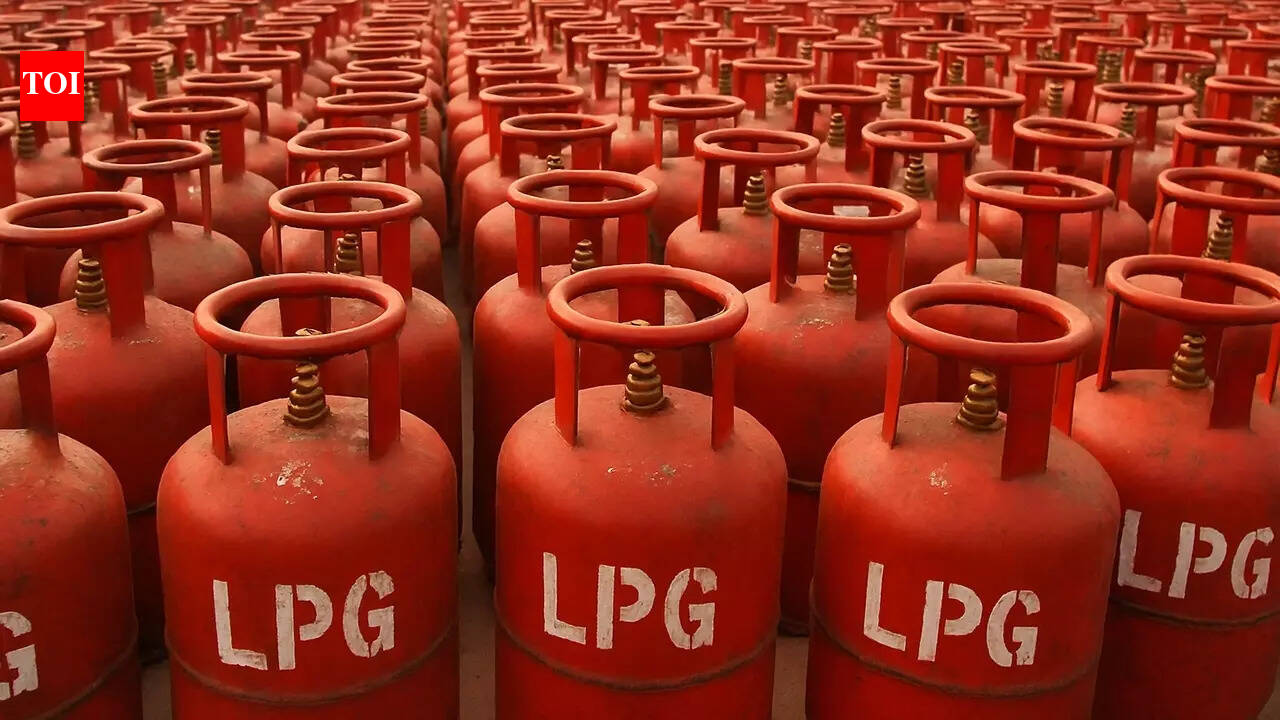
No fuel shortage: Govt assures 100% domestic LPG, PNG, CNG supply amid Hormuz energy crunch – The Times of India
-
 Business7 days ago
How Trump’s psychedelics executive order could unlock stalled cannabis reform
-
 Business1 week ago
Exercise to test response to offshore energy threat involving vessels and drones