

Politics
US Embassy in Riyadh damaged Trump warns of ‘big wave’ of attacks


According to the US State Department, the Embassy in Riyadh was hit by two unmanned aerial vehicles (UAVs). “Embassy Riyadh has been struck by two UAVs that hit the roof and the perimeter of the chancery. Post is sheltering in place and reported no injuries.” the State Department said.
The attack by two drones early Tuesday on the US embassy in Riyadh sparked a fire, a Saudi defence ministry spokesman said in a statement, while Iran pressed on with retaliatory strikes across the Gulf.
The growing war began on Saturday after joint US-Israeli strikes on Iran that Tehran said killed dozens of civilians and the country’s supreme leader.
“The US Embassy in Riyadh was attacked by two drones, according to initial assessments. The attack resulted in a limited fire and minor material damage to the building,” the statement said.
Two witnesses told AFP they saw fire engines around the embassy.
Earlier, witnesses said they had seen smoke over the building housing the US mission and heard loud explosions in the diplomatic quarter, home to foreign embassies in the Saudi capital.
A source close to the Saudi army, speaking on condition of anonymity to discuss the sensitive issue, told AFP that Saudi air defences intercepted four drones targeting Riyadh’s diplomatic quarter in the attack.
In the aftermath, the US embassy issued shelter in place notifications for Jeddah, Riyadh and Dhahran and limited non-essential travel to any military installations in the region.
Later on Tuesday, the Saudi defence ministry said it had intercepted more than half a dozen drones near capital Riyadh and the city of Al-Kharj. “Eight drones were intercepted and destroyed near the cities of Riyadh and Al-Kharj,” said defence ministry spokesman Major General Turki al-Malki on X.
The attacks in Saudi coincided with a wave of missiles and drones launched at Gulf states with the UAE defence ministry saying it was dealing with a barrage of ballistic missiles coming from Iran.
In Qatar, the military intercepted two ballistic missiles early Tuesday morning, the country’s defence ministry said in a statement.
Iran’s salvos have hit ports, airports, residential buildings and hotels along with military sites across the wealthy region of oil giants.
On Monday smoke poured out of Kuwait City’s US embassy, an AFP correspondent saw. Later, a Kuwait-based diplomat and a Western diplomat, speaking on condition of anonymity, told AFP the embassy had been damaged by several drones, while a second Kuwait-based diplomat said the building had been struck directly.
Trump warns of longer war
US President Donald Trump warned that his attack on Iran could extend longer than a month, as the war spread Tuesday with Israel bombarding Lebanon and Tehran targeting US allies in the Gulf.
Shortly after the United States urged Americans to flee all Middle Eastern nations from Egypt eastward, smoke rose above the US embassy in Riyadh after it was hit by two drones, a Saudi defence spokesman said, although there were no immediate reports of injuries.
New powerful explosions also shook windows in Tehran as fighter jets flew over the Iranian capital, AFP journalists witnessed, as the Pentagon boasted that it had achieved air superiority over the country ruled since 1979 by Islamic clerics virulently opposed to the United States.
Trump said that the war, which began Saturday with a strike that killed Iran’s supreme leader, Ayatollah Ali Khamenei, was going “substantially” ahead of schedule but that the United States was equipped for a prolonged conflict.
“From the beginning we projected four to five weeks, but we have capability to go far longer than that,” Trump said at the White House.
He also for the first time laid out objectives — destroying Iran’s missiles, navy and nuclear programme and stopping its support for armed groups across the region. The goals notably did not include toppling the Islamic republic, even though on Saturday Trump had urged the people of Iran to rise up and overthrow their government.
Secretary of State Marco Rubio presented a strikingly new narrative of how the conflict started, saying that the United States, which built up its military to levels not seen since the 2003 Iraq invasion, attacked only after learning that ally Israel was set to strike Iran.
Iran had been ready to strike US forces in the region in response to Israel, so Trump decided to intervene “pre-emptively” alongside Israel, Rubio asserted.
“The imminent threat was that we knew that if Iran was attacked — and we believed they would be attacked — that they would immediately come after us,” Rubio told reporters before briefing lawmakers.
Rival Democrats voiced disbelief, with Senator Mark Warner saying it was “unchartered territory” for the United States to be triggered into action by Israel’s perception of a threat.
Iran has responded to the attack by unleashing missiles and drones across the Middle East, threatening explicitly to drive up energy costs, which could wreak havoc on the global economy.
“We will burn any ship that tries to pass through the Strait of Hormuz,” Revolutionary Guards General Sardar Jabbari said of the strategic waterway to the Gulf through which about 20 percent of global seaborne oil travels.
European natural gas prices surged more than 39 percent after Qatar’s state-run energy firm said it had halted liquefied natural gas production following Iranian attacks.
Qatar, which had comparatively good relations with Iran before the war, said it shot down two Iranian bombers, the first time a Gulf Arab country has hit planes from their giant neighbour.
US doesn’t rule out troops
Trump warned that the United States had more firepower in store, saying, “The big wave hasn’t even happened.”
In an interview with the New York Post, Trump — who campaigned on promises to end US involvement in wars — refused to rule out deploying US ground troops to Iran “if they were necessary.”
Defense Secretary Pete Hegseth also signaled Monday that deploying troops inside Iran had not been ruled out.
In a combative public appearance, he rejected “stupid rules of engagement” that would constrain the United States and said, “We’ll go as far as we need to go.”
Ali Larijani, the head of Iran’s Supreme National Security Council, vowed that Iran would defend itself “regardless of the costs and will make the enemies sorry for their miscalculation.”
Tehran had the air of a ghost town on Monday, and many residents seemed to have left. Some, suitcases and luggage in hand, were preparing to do the same, AFP journalists saw.
Many residents were torn between fear of the bombings and hope that the government’s days might now be numbered.
“Every time we hear the noises, we get scared for just a second. But we experience some joy and excitement every time we hear a hit,” a 45-year-old lawyer said in a voice message to Europe.
Israel responds to latest missile strikes
Just after midnight local time Tuesday, Israel’s military said it was working to intercept a large wave of missiles launched from Iran targeting multiple locations, including Jerusalem.
“A short while ago, the IDF identified missiles launched from Iran toward the territory of the State of Israel. Defensive systems are operating to intercept the threat,” the military said.
Netanyahu: no ‘endless war’
Israeli Prime Minister Benjamin Netanyahu said in a Fox News interview Monday that the US-Israeli operation against Iran would be “a quick and decisive action,” later adding: “It may take some time, but it’s not going to take years.
New Israel strikes on Hezbollah
Israel’s military said Tuesday that it had launched strikes on Hezbollah targets including “command centres and weapons storage facilities” in Lebanon’s capital Beirut, after warning it would press ahead with its campaign against the Iran-backed group.
The Lebanese militant group said just after midnight that its rocket and drone attack on Israel was a “defensive act” after more than a year of Israeli strikes despite a ceasefire.
US warns citizens in Middle East to ‘depart now’
The US State Department urged Americans to leave much of the Middle East, including Egypt and Gulf states, due to the US-Israeli war on Iran.
The State Department “urges Americans to DEPART NOW from the countries below using available commercial transportation, due to serious safety risks,” wrote Mora Namdar, the assistant secretary of state for consular affairs, in a social media post.
The countries or territories included in the warning were Bahrain, Egypt, Iran, Iraq, Israel and the Palestinian territories, Jordan, Kuwait, Lebanon, Oman, Qatar, Saudi Arabia, Syria, the United Arab Emirates and Yemen.
Iran state broadcaster headquarters ‘struck and dismantled’
Israel’s military claimed it had “struck and dismantled” the headquarters of Iran’s state radio and television broadcaster, the Islamic Republic of Iran Broadcasting (IRIB), saying it had “called for the destruction of the State of Israel and for the use of nuclear weapons.”
The IRIB wrote on Telegram there had been explosions near its headquarters in Tehran but that there was no disruption to its operations.
NGO new Iran death toll
The US-based Human Rights Activists News Agency (HRANA) on Tuesday said there were 101 casualties inside Iran on the third day of the war, including “85 civilian deaths and 11 military personnel killed.”
Iran ‘will burn any ship’ in Hormuz
A general in Iran’s Revolutionary Guards threatened to “burn any ship” seeking to navigate the Strait of Hormuz, a vital route for oil and gas shipments.
“We will also attack oil pipelines and will not allow a single drop of oil to leave the region.
Oil price will reach $200 in the coming days,” General Sardar Jabbari said in a post on the Guards’ Telegram channel.
Israel was about to strike Iran, says Rubio
The United States attacked Iran after learning that ally Israel was going to strike, which would have meant retaliation against US forces, Secretary of State Marco Rubio said.
“We knew that if we didn’t preemptively go after them before they launched those attacks, we would suffer higher casualties,” Rubio told reporters.
US says hit 1,250 targets so far
The United States hit more than 1,250 targets in the first 48 hours of the war against Iran, the US military said.
Targets struck included command-and-control centers, ballistic missile sites, Iranian navy ships and submarines, and anti-ship missile sites, according to a fact sheet released by the US Central Command, which is responsible for American forces in the region.
Australia Middle East HQ hit
Australian Defence Minister Richard Marles said he could confirm reports that its military headquarters, the Al Minhad Air Base located just 24 kilometres (15 miles) south of Dubai in the UAE, had been hit over the weekend.
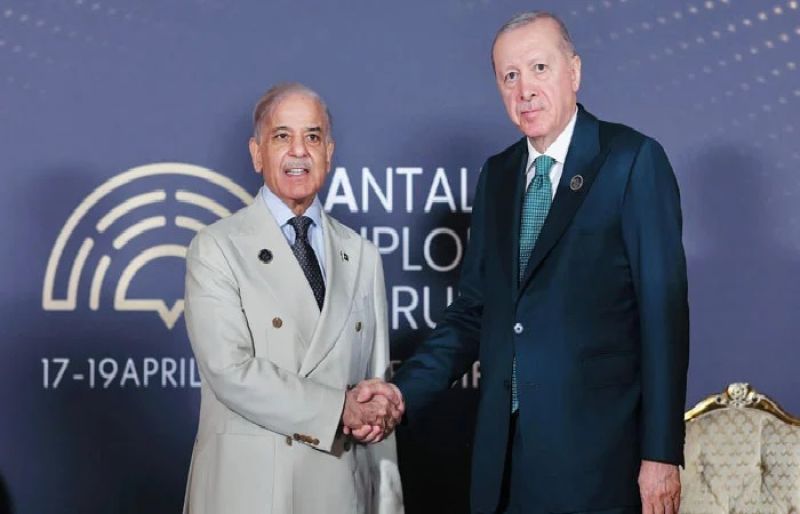
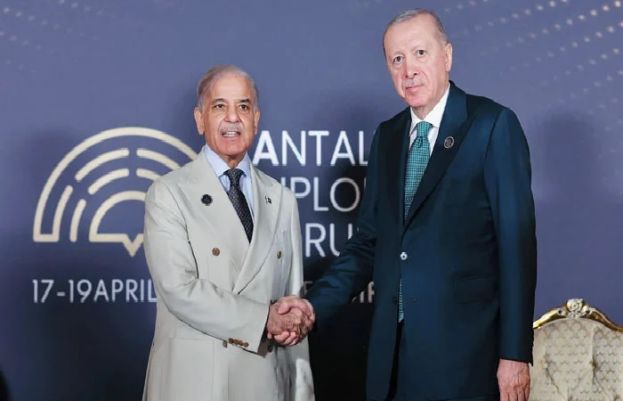
Prime Minister Shehbaz Sharif on Friday held a bilateral meeting with Turkish President Recep Tayyip Erdogan on the sidelines of the 5th Antalya Diplomacy Forum.
According to a statement released by the Prime Minister’s Office, during the warm and cordial meeting, President Erdogan welcomed PM Shehbaz to Turkiye and thanked him for attending the Antalya Diplomacy Forum.
The meeting comes a day after the premier reached Turkiye on the third leg of his tri-nation tour after concluding visits to Saudi Arabia and Qatar.
During his visit to Riyadh and Doha, PM Shehbaz held meetings with Saudi Crown Prince Mohammed bin Salman and Qatar’s Emir Sheikh Tamim bin Hamad Al Thani.
The Turkish president, during the meeting with PM Shehbaz on the sidelines of the diplomacy forum earlier today, praised the prime minister’s peace efforts and said Turkiye would continue to support Pakistan’s diplomatic initiative to bring peace to the region.
The prime minister thanked President Erdogan for his warm invitation and traditional Turkish hospitality extended to him and his delegation during his stay in Antalya.
He congratulated the Turkish president on the success of the Antalya Diplomacy Forum, which he said had transformed into an important global event.
The two leaders exchanged views on recent regional developments, particularly the evolving situation in the Middle East. PM Shehbaz thanked Erdogan for his strong support and encouragement of Pakistan’s peace efforts and shared with him the updates on how to extend the ceasefire and resume talks so that a peace agreement could be reached.
The two leaders also emphasised the importance of effectively utilising the current window of opportunity to advance a durable and lasting regional peace.
While reaffirming the deep-rooted, historic, and brotherly ties between Pakistan and Turkiye, both leaders expressed satisfaction at the positive trajectory of bilateral relations. They agreed to convene the 8th High-Level Strategic Cooperation Council (HLSCC) meeting in Ankara later this year.
The two leaders emphasised the importance of expediting the implementation of ongoing initiatives and exploring new opportunities to further deepen economic engagement.
The meeting concluded with both leaders reaffirming their resolve to further strengthen the strategic partnership between Pakistan and Türkiye, building on fraternal ties and a shared vision for peace and prosperity.
The meeting was attended by Deputy Prime Minister and Foreign Minister Ishaq Dar, Minister for Information Ataullah Tarar and other senior officials.
Turkish Foreign Minister Hakan Fidan and other senior Turkish officials were also present.
PM meets world leaders on sidelines of diplomacy forum
Prime Minister Shehbaz Sharif held a series of meetings with world leaders on the sidelines of the Antalya Diplomacy Forum.
During the interactions, the prime minister met Qatar’s Emir Sheikh Tamim bin Hamad Al Thani, Kazakhstan’s President Kassym-Jomart Tokayev, Azerbaijan’s President Ilham Aliyev, and Syria’s President Ahmed al-Sharaa.
He also held meetings with Qatar’s Prime Minister and Foreign Minister Sheikh Mohammed bin Abdulrahman bin Jassim Al Thani, as well as former Kosovo president Vjosa Osmani.
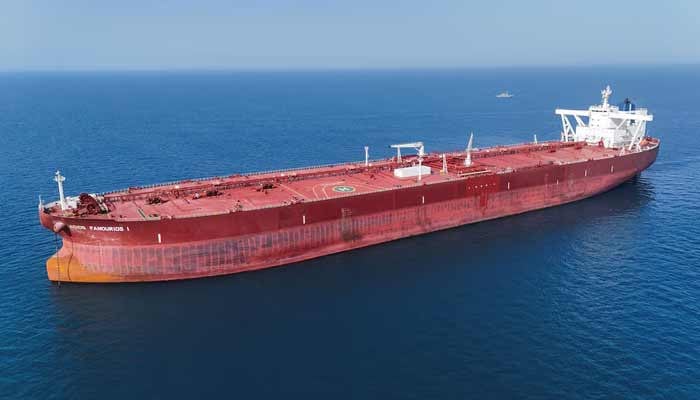
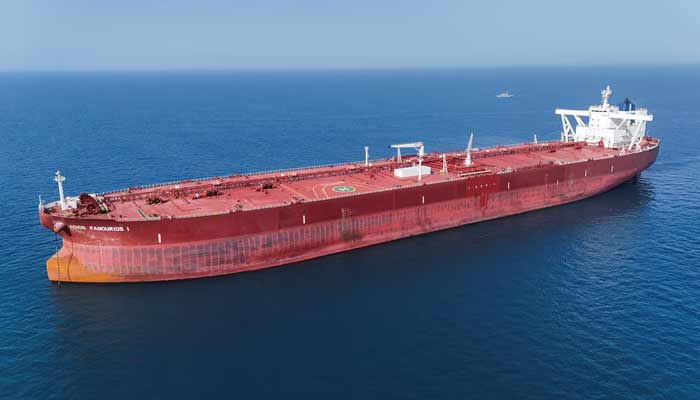
The world has lost over $50 billion worth of crude oil that has not been produced since the Iran war began nearly 50 days ago and the aftershock of the crisis will be felt for months and even years to come, according to analysts and Reuters calculations.
Iranian Foreign Minister Abbas Araghchi said on Friday the Strait of Hormuz was open following a ceasefire accord agreed in Lebanon, while US President Donald Trump said he believed a deal to end the Iran war would come “soon”, though the timing remains unclear.
Since the crisis began at the end of February, more than 500 million barrels of crude and condensate have been knocked out of the global market, according to Kpler data — the largest energy supply disruption in modern history.
Put differently, 500 million barrels of oil lost to the market is equivalent to:
Curtailing aviation demand globally for 10 weeks; no road travel by any vehicle globally for 11 days; or no oil for the global economy for five days, said Iain Mowat, principal analyst at Wood Mackenzie.
Nearly a month of oil demand in the United States, or more than a month of oil for all of Europe, according to Reuters estimates.
Roughly six years of fuel consumption for the US military, based on annual usage of about 80 million barrels from fiscal year 2021.
Enough fuel to run the world’s international shipping industry for around four months.
Key facts:
Gulf Arab countries lost about 8 million barrels per day of crude production in March, nearly equivalent to the combined production of Exxon Mobil and Chevron, two of the biggest oil companies in the world.
Jet fuel exports from Saudi Arabia, Qatar, the United Arab Emirates, Kuwait, Bahrain and Oman fell from about 19.6 million barrels in February, to just 4.1 million barrels for March and April so far combined, according to Kpler data.
The loss in exports would have been enough for around 20,000 round-trip flights between New York’s JFK airport and London Heathrow, according to Reuters estimates.
With crude prices averaging around $100 a barrel since the conflict began, those missing volumes represent roughly $50 billion in lost revenues, said Johannes Rauball, a senior crude analyst at Kpler. That equates to a 1% cut in Germany’s annual gross domestic product, or roughly the entire GDP of smaller countries such as Latvia or Estonia.
Full restoration could take years
Even as Iranian Foreign Minister Araghchi said the Strait of Hormuz was open, recovery of output and flows is expected to be slow.
Global onshore crude inventories have fallen by about 45 million barrels so far in April, according to Kpler. Since late March, production outages have reached roughly 12 million bpd.
Heavier crude fields in Kuwait and Iraq could take four to five months to return to normal operating levels, extending stock draws through the summer, Rauball said. Damage to refining capacity and Qatar’s Ras Laffan LNG complex means full restoration of regional energy infrastructure could take years.
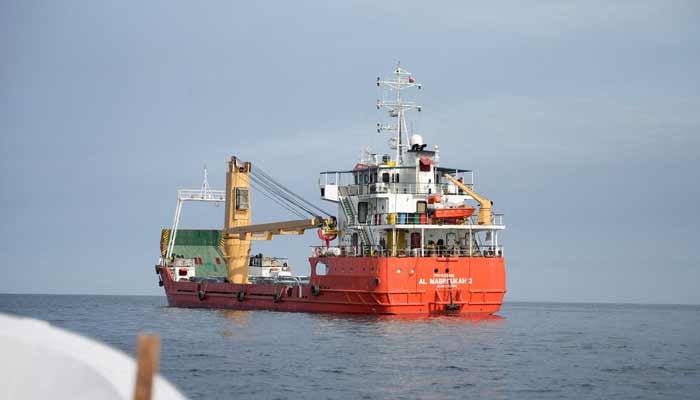
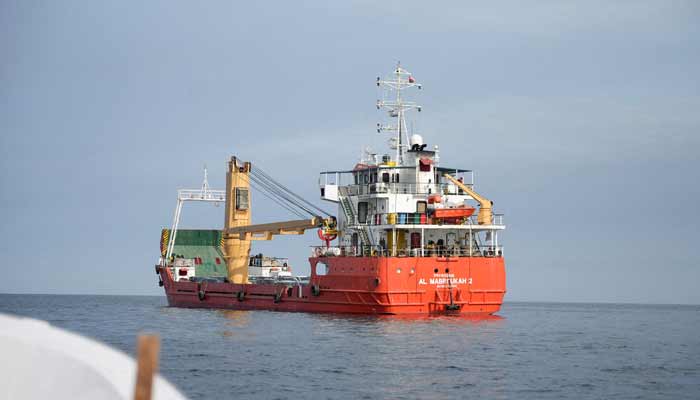
Shipping industry figures gave a cautious welcome on Friday to Iran’s announcement that it was reopening the crucial Strait of Hormuz trade route to commercial freight after nearly seven weeks closed.
Iranian forces’ closure of the strait has trapped hundreds of ships in the Gulf and driven up the costs of shipping goods, with captains avoiding the region for fear of attacks or mines.
A spokesman for German transportation giant Hapag-Lloyd, which has ships stuck in the Gulf, told AFP by phone that the reopening was “in general… good news”.
But he cautioned that shippers still needed details of what route vessels could take and in what order, citing fears of sea mines.
“One thousand ships cannot just go now to the entrance of the strait, that will be chaos. They (the Iranians) need to give clear orders,” said the spokesman, Nils Haupt.
“We would be ready to go very soon if some of these open questions can be solved within the weekend.”
Bloomberg data indicated there were about 770 vessels used for carrying commodities sending transponder signals inside the Gulf on Thursday, of which about 360 were oil and gas carriers.
Before the war, average daily crossings of the strait overall numbered about 120, according to industry journal Lloyd’s List.
‘Inaccurate’
Afer Iran’s announcement on Friday, US President Donald Trump said the Islamic republic had declared the waterway “fully open and ready for full passage”.
Jakob Larsen, chief security officer of major shipping association Bimco, said in a statement emailed to AFP that this claim was “inaccurate”.
“The status of mine threats in (Iran’s maritime) traffic separation scheme is unclear, and Bimco believes shipping companies should consider avoiding the area,” he said.
The secretary general of leading industry lobby the International Chamber of Shipping, Thomas Kazakos, said the announcement was “a positive step (but) there is still much uncertainty around what it means in practice”.
In a statement sent to AFP, he said it offered “a cautious measure of reassurance to” shippers and the thousands of seafarers stuck in the Gulf by the Middle East war for nearly seven weeks.
“It is essential that it marks the beginning of a broader and more durable return, beyond the current ceasefire, to freedom of navigation in one of the world’s most critical maritime corridors,” he said.


US renews Russian oil waiver amid Iran war-driven price shocks

Iran war causing staycation spike – Suffolk holiday firms

Top Vietnamese, Chinese leaders hold talks on advancing cooperation

-

 Politics1 week ago
Indian airlines hit hardest after Dubai limits foreign flights until May 31
-

 Tech1 week ago
This AI Button Wearable From Ex-Apple Engineers Looks Like an iPod Shuffle
-

 Politics1 week ago
Chinese, Taiwanese will unite, Xi tells Taiwan opposition leader
-

 Sports5 days ago
The case for Man United’s Fernandes as Premier League’s best
-

 Entertainment5 days ago
Palace left in shock as Prince William cancels grand ceremony
-

 Entertainment7 days ago
Dua Lipa hits major career high ahead of wedding with Callum Turner
-

 Sports1 week ago
Documents: NC State trainer initiated ‘unwelcome,’ ‘sexual’ contact
-
 Business5 days ago
UK could adopt EU single market rules under new legislation