

Politics
Turkish President Erdogan hails PM Shehbaz’s Mideast peace efforts at diplomacy forum

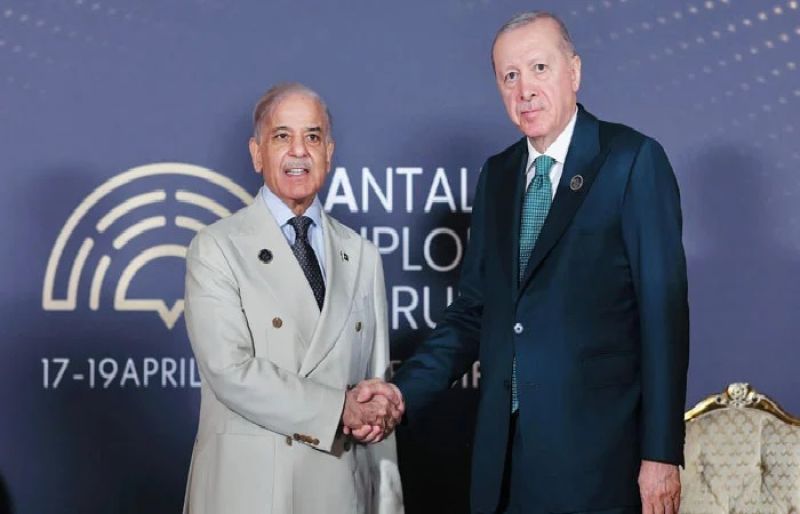
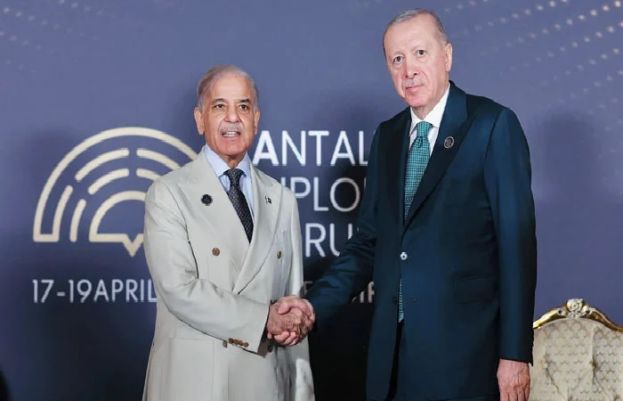
Prime Minister Shehbaz Sharif on Friday held a bilateral meeting with Turkish President Recep Tayyip Erdogan on the sidelines of the 5th Antalya Diplomacy Forum.
According to a statement released by the Prime Minister’s Office, during the warm and cordial meeting, President Erdogan welcomed PM Shehbaz to Turkiye and thanked him for attending the Antalya Diplomacy Forum.
The meeting comes a day after the premier reached Turkiye on the third leg of his tri-nation tour after concluding visits to Saudi Arabia and Qatar.
During his visit to Riyadh and Doha, PM Shehbaz held meetings with Saudi Crown Prince Mohammed bin Salman and Qatar’s Emir Sheikh Tamim bin Hamad Al Thani.
The Turkish president, during the meeting with PM Shehbaz on the sidelines of the diplomacy forum earlier today, praised the prime minister’s peace efforts and said Turkiye would continue to support Pakistan’s diplomatic initiative to bring peace to the region.
The prime minister thanked President Erdogan for his warm invitation and traditional Turkish hospitality extended to him and his delegation during his stay in Antalya.
He congratulated the Turkish president on the success of the Antalya Diplomacy Forum, which he said had transformed into an important global event.
The two leaders exchanged views on recent regional developments, particularly the evolving situation in the Middle East. PM Shehbaz thanked Erdogan for his strong support and encouragement of Pakistan’s peace efforts and shared with him the updates on how to extend the ceasefire and resume talks so that a peace agreement could be reached.
The two leaders also emphasised the importance of effectively utilising the current window of opportunity to advance a durable and lasting regional peace.
While reaffirming the deep-rooted, historic, and brotherly ties between Pakistan and Turkiye, both leaders expressed satisfaction at the positive trajectory of bilateral relations. They agreed to convene the 8th High-Level Strategic Cooperation Council (HLSCC) meeting in Ankara later this year.
The two leaders emphasised the importance of expediting the implementation of ongoing initiatives and exploring new opportunities to further deepen economic engagement.
The meeting concluded with both leaders reaffirming their resolve to further strengthen the strategic partnership between Pakistan and Türkiye, building on fraternal ties and a shared vision for peace and prosperity.
The meeting was attended by Deputy Prime Minister and Foreign Minister Ishaq Dar, Minister for Information Ataullah Tarar and other senior officials.
Turkish Foreign Minister Hakan Fidan and other senior Turkish officials were also present.
PM meets world leaders on sidelines of diplomacy forum
Prime Minister Shehbaz Sharif held a series of meetings with world leaders on the sidelines of the Antalya Diplomacy Forum.
During the interactions, the prime minister met Qatar’s Emir Sheikh Tamim bin Hamad Al Thani, Kazakhstan’s President Kassym-Jomart Tokayev, Azerbaijan’s President Ilham Aliyev, and Syria’s President Ahmed al-Sharaa.
He also held meetings with Qatar’s Prime Minister and Foreign Minister Sheikh Mohammed bin Abdulrahman bin Jassim Al Thani, as well as former Kosovo president Vjosa Osmani.
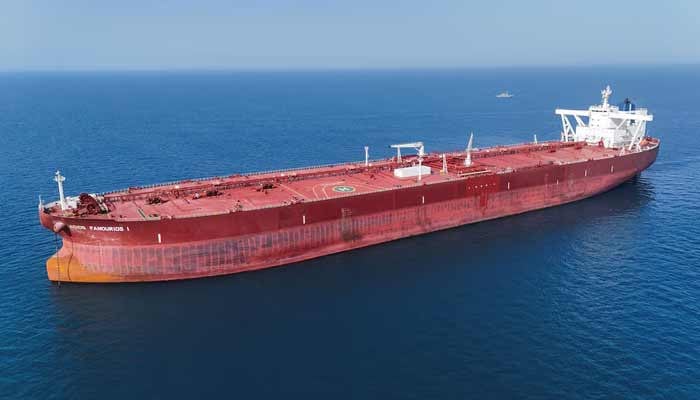
The world has lost over $50 billion worth of crude oil that has not been produced since the Iran war began nearly 50 days ago and the aftershock of the crisis will be felt for months and even years to come, according to analysts and Reuters calculations.
Iranian Foreign Minister Abbas Araghchi said on Friday the Strait of Hormuz was open following a ceasefire accord agreed in Lebanon, while US President Donald Trump said he believed a deal to end the Iran war would come “soon”, though the timing remains unclear.
Since the crisis began at the end of February, more than 500 million barrels of crude and condensate have been knocked out of the global market, according to Kpler data — the largest energy supply disruption in modern history.
Put differently, 500 million barrels of oil lost to the market is equivalent to:
Curtailing aviation demand globally for 10 weeks; no road travel by any vehicle globally for 11 days; or no oil for the global economy for five days, said Iain Mowat, principal analyst at Wood Mackenzie.
Nearly a month of oil demand in the United States, or more than a month of oil for all of Europe, according to Reuters estimates.
Roughly six years of fuel consumption for the US military, based on annual usage of about 80 million barrels from fiscal year 2021.
Enough fuel to run the world’s international shipping industry for around four months.
Key facts:
Gulf Arab countries lost about 8 million barrels per day of crude production in March, nearly equivalent to the combined production of Exxon Mobil and Chevron, two of the biggest oil companies in the world.
Jet fuel exports from Saudi Arabia, Qatar, the United Arab Emirates, Kuwait, Bahrain and Oman fell from about 19.6 million barrels in February, to just 4.1 million barrels for March and April so far combined, according to Kpler data.
The loss in exports would have been enough for around 20,000 round-trip flights between New York’s JFK airport and London Heathrow, according to Reuters estimates.
With crude prices averaging around $100 a barrel since the conflict began, those missing volumes represent roughly $50 billion in lost revenues, said Johannes Rauball, a senior crude analyst at Kpler. That equates to a 1% cut in Germany’s annual gross domestic product, or roughly the entire GDP of smaller countries such as Latvia or Estonia.
Full restoration could take years
Even as Iranian Foreign Minister Araghchi said the Strait of Hormuz was open, recovery of output and flows is expected to be slow.
Global onshore crude inventories have fallen by about 45 million barrels so far in April, according to Kpler. Since late March, production outages have reached roughly 12 million bpd.
Heavier crude fields in Kuwait and Iraq could take four to five months to return to normal operating levels, extending stock draws through the summer, Rauball said. Damage to refining capacity and Qatar’s Ras Laffan LNG complex means full restoration of regional energy infrastructure could take years.
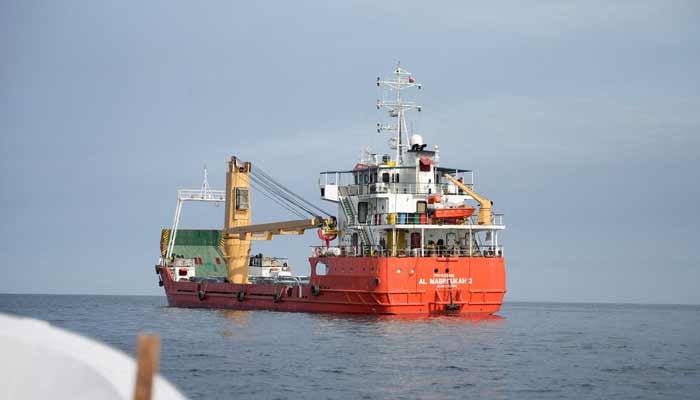
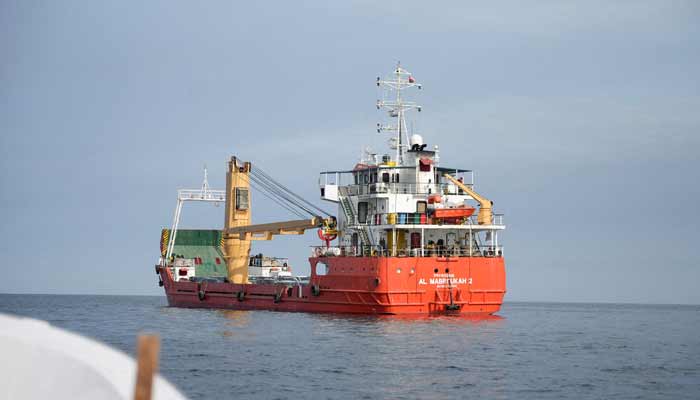
Shipping industry figures gave a cautious welcome on Friday to Iran’s announcement that it was reopening the crucial Strait of Hormuz trade route to commercial freight after nearly seven weeks closed.
Iranian forces’ closure of the strait has trapped hundreds of ships in the Gulf and driven up the costs of shipping goods, with captains avoiding the region for fear of attacks or mines.
A spokesman for German transportation giant Hapag-Lloyd, which has ships stuck in the Gulf, told AFP by phone that the reopening was “in general… good news”.
But he cautioned that shippers still needed details of what route vessels could take and in what order, citing fears of sea mines.
“One thousand ships cannot just go now to the entrance of the strait, that will be chaos. They (the Iranians) need to give clear orders,” said the spokesman, Nils Haupt.
“We would be ready to go very soon if some of these open questions can be solved within the weekend.”
Bloomberg data indicated there were about 770 vessels used for carrying commodities sending transponder signals inside the Gulf on Thursday, of which about 360 were oil and gas carriers.
Before the war, average daily crossings of the strait overall numbered about 120, according to industry journal Lloyd’s List.
‘Inaccurate’
Afer Iran’s announcement on Friday, US President Donald Trump said the Islamic republic had declared the waterway “fully open and ready for full passage”.
Jakob Larsen, chief security officer of major shipping association Bimco, said in a statement emailed to AFP that this claim was “inaccurate”.
“The status of mine threats in (Iran’s maritime) traffic separation scheme is unclear, and Bimco believes shipping companies should consider avoiding the area,” he said.
The secretary general of leading industry lobby the International Chamber of Shipping, Thomas Kazakos, said the announcement was “a positive step (but) there is still much uncertainty around what it means in practice”.
In a statement sent to AFP, he said it offered “a cautious measure of reassurance to” shippers and the thousands of seafarers stuck in the Gulf by the Middle East war for nearly seven weeks.
“It is essential that it marks the beginning of a broader and more durable return, beyond the current ceasefire, to freedom of navigation in one of the world’s most critical maritime corridors,” he said.
- Rahul Gandhi says amendment bill has fallen.
- Currently, House doesn’t have reserve seats for women.
- 298 lawmakers voted in favour, 230 against bill.
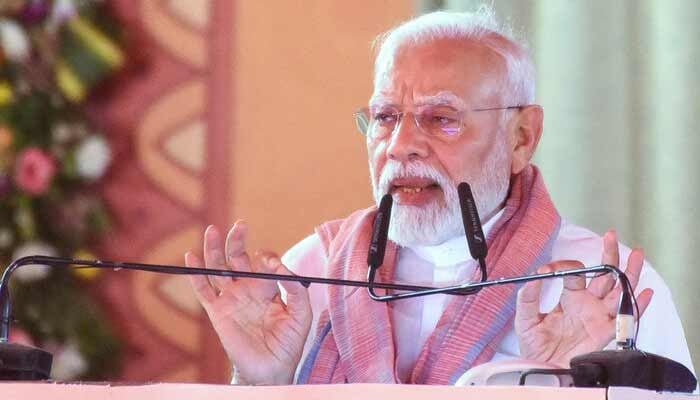
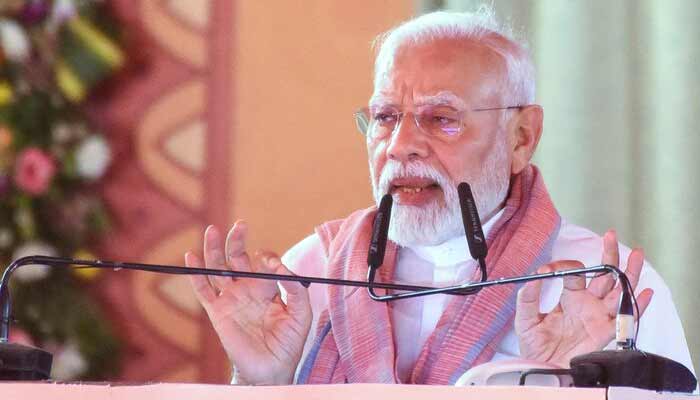
An Indian government bill to expand assemblies that would have brought forward plans to reserve a third of the seats for women did not get enough votes to get through parliament on Friday, in a rare defeat for Prime Minister Narendra Modi.
Opposition groups said while they were in favour of quotas for women legislators, the linking of the plan to a mass redrawing of constituency boundaries was a government bid to manipulate the system and get more votes.
“The amendment bill has fallen. They used an unconstitutional trick in the name of women to break the Constitution,” Opposition Leader Rahul Gandhi said in a post on X, minutes after the bill failed to get through.
The government dismissed that accusation and said it would continue to campaign for women’s quotas. “The women of this country will not forgive you,” Interior Minister Amit Shah said in parliament, before the bill was put to a vote.
The government had argued the constituency changes were needed to reflect shifts in the population since seats were last fixed after a 1971 census.
The bill would have increased the number of lawmakers in the lower house by around 55% to 850 by the next parliamentary elections, due in 2029 — with a similar expansion of regional assemblies.
On Friday in parliament’s lower house, 298 lawmakers voted in favour and 230 against – far from the two-thirds majority needed for a bill that would have changed the constitution.
A one-third reservation for women had been agreed in legislation passed in 2023, but was then linked to the next census, which is still underway and would have taken the changes beyond the 2029 election.
India’s parliament does not currently reserve any seats for women, who constitute only 14% of the lawmakers in the lower house and 17% in the upper house.
About 10% of the lawmakers in the country’s state legislatures are women.


Frank Lampard’s Coventry City promoted to Premier League

WWE star Danhausen says Mets ‘curse’ isn’t exactly lifted as team drops ninth straight game

Ice Spice slapped at McDonald’s by fan: Here’s what actually happened

-

 Politics1 week ago
Indian airlines hit hardest after Dubai limits foreign flights until May 31
-

 Tech1 week ago
This AI Button Wearable From Ex-Apple Engineers Looks Like an iPod Shuffle
-

 Politics1 week ago
Chinese, Taiwanese will unite, Xi tells Taiwan opposition leader
-

 Entertainment5 days ago
Palace left in shock as Prince William cancels grand ceremony
-

 Sports5 days ago
The case for Man United’s Fernandes as Premier League’s best
-

 Entertainment7 days ago
Dua Lipa hits major career high ahead of wedding with Callum Turner
-
 Business5 days ago
UK could adopt EU single market rules under new legislation
-
 Business1 week ago
He paid $248 in illegal tariffs for this coat. Will he ever get it back?