

Business
Blue chips falter as FTSE outshone by European peers

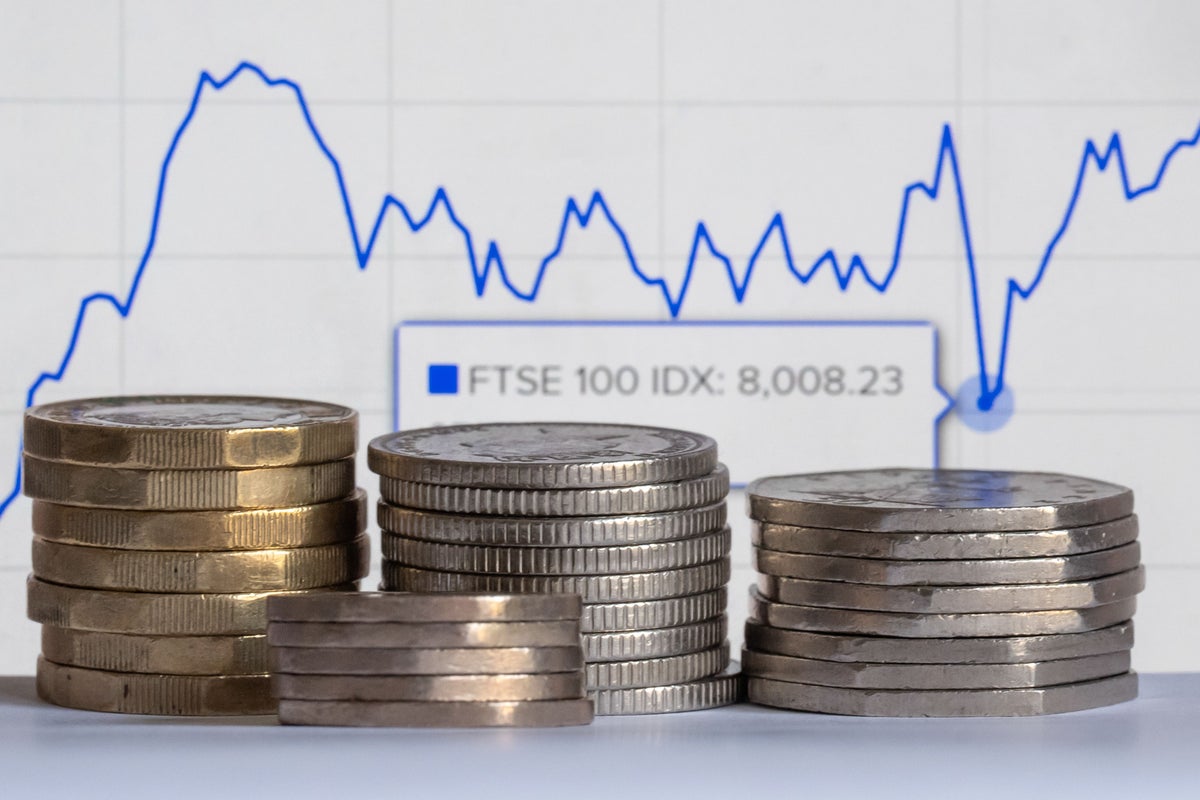
The FTSE 100 closed lower on Thursday, despite gains elsewhere in Europe, held back by a number of stocks trading ex-dividend.
The FTSE 100 index closed down 38.68 points, 0.4%, at 9,216.82. The FTSE 250 ended 60.63 points lower, 0.3%, at 21,744.40 and the AIM All-Share finished down 1.16 points, 0.2%, at 761.21.
On the FTSE 100, insurer Aviva topped the fallers, 3.1% lower as it traded ex-dividend, while LondonMetric Property, down 2.0% and Auto Trader, down 1.6%, also lost ground as they traded without entitlement to their payouts.
Among the risers was sports retailer JD Sports Fashion, up a further 2.8%, building on Wednesday’s gains which followed a well received trading update.
Berenberg raised its share price target to 155 pence from 128p.
“We believe that the 8.5x PE valuation fails to reflect the company’s potential for moderate growth, margin recovery and strong free cash flow,” the broker said in a research note.
In New York, the Dow Jones Industrial Average fell 0.3%, the S&P 500 was 0.1% lower, while the Nasdaq Composite was up 0.1%.
Nvidia was down 1.1% in New York at the time of the London close as concerns over China took some of the gloss off strong results and guidance.
The chip maker has not included any sales from China in its guidance as it grapples with the fallout from its trade war with the US.
Chief executive Jensen Huang said Nvidia is talking to the Trump administration about the “importance of American companies to be able to address the Chinese market”.
Data showed the US economy grew at a stronger pace than expected in the second quarter of the year.
According to the latest reading from the Bureau of Economic Analysis, the US economy rose 3.3% quarter-on-quarter on an annualised basis in the three months to June, upwardly revised from the first estimate which showed 3.0% growth.
The first quarter saw the US economy shrink 0.5%.
The annualised calculation shows how much the economy would expand if that quarterly pace of growth continued for a whole year, according to the BEA.
Friday sees the release of the monthly personal consumption expenditures inflationary gauge. An acceleration in the annual growth rate of core PCE prices to 2.9% is expected for July, from 2.8% in June, according to consensus cited by FactSet.
The yield on the US 10-year Treasury was at 4.22%, trimmed from 4.26% on Wednesday. The yield on the US 30-year Treasury was 4.89%, narrowed from 4.91%.
The pound climbed to 1.3513 dollars late on Thursday afternoon in London, compared to 1.3469 at the equities close on Wednesday. The euro rose to 1.1668 dollars.
In Europe, the Cac 40 in Paris ended up 0.2%, while the Dax 40 in Frankfurt closed little changed.
Back in London, Drax fell 7.5% as it said the UK’s financial regulator had started a probe over the UK energy company’s sourcing for biomass pellets.
The Yorkshire-based power generator said it was notified on Tuesday that the Financial Conduct Authority has commenced an investigation into the company covering the period January 2022 to March 2024.
In a brief statement, Drax said the probe relates to certain historical statements regarding biomass sourcing and the compliance of Drax’s 2021, 2022 and 2023 annual reports with the listing rules and disclosure guidance and transparency rules.
Drax said it will co-operate with the FCA as part of their investigation.
In August 2024, Drax paid £25 million after industry regulator Ofgem found there was an absence of adequate data governance and controls in place that had contributed to the firm misreporting data in relation to the period April 2021 to March 2022.
Elsewhere, Hunting fell 2.9% as it reported increased revenue but lower profit in the first half of 2025 against a “volatile” market backdrop.
Looking ahead, Hunting said oil and gas demand has remained “steady and is likely to remain at a consistent level in the medium to long term”.
But in the near term, the geopolitical and macro-economic outlook remains “choppy”, it added.
PPHE Hotel shares sank 16% as the hotelier lowered full-year earnings guidance, alongside half year results.
The Amsterdam-based operator of Park Plaza and Art’otel hotels, among other brands, expects its full-year earnings before interest, tax, depreciation and amortisation to be “similar” to that of 2024.
A barrel of Brent traded at 67.51 dollars late Thursday afternoon, down slightly from 67.55 on Wednesday. Gold pushed higher to 3,407.04 dollars an ounce against 3,387.91 on Wednesday.
The biggest risers on the FTSE 100 were Anglo American, up 64.00 pence at 2,265.00p, JD Sports Fashion, up 2.74p at 100.10p, Weir, up 42.00p at 2,496.00p, Rio Tinto, up 67.00p at 4,637.00p and DCC, up 56.00p at 4,696.00p.
The biggest fallers on the FTSE 100 were Aviva, down 21.00p at 656.20p, Land Securities, down 12.50p at 559.00p, Endeavour Mining, down 52.00p at 2,492.00p, Relx, down 70.00p at 2,492.00p and LondonMetric Property, down 3.70p at 186.40p.
There are no major events scheduled in Friday’s local corporate calendar.
The global economic calendar on Friday has US personal consumption expenditures data, Canadian GDP numbers, German retail sales figures and CPI prints in France and Germany.
– Contributed by Alliance News

Now one of the biggest sportswear firms, Anta’s rise follows a playbook adopted by many Chinese giants.
Source link
Business
Gold price prediction today: Will gold prices continue to be volatile? Key levels to watch out for April 27, 2026 week – The Times of India

Gold price prediction today: Gold prices will closely track movements on the rate decisions by several central banks, including the US Federal Reserve, this week, says Manav Modi, Senior Analyst, Commodity Research at Motilal Oswal Financial Services Ltd.Gold is currently consolidating after sharp swings in a broad range, indicating a pause rather than a reversal. Price action shows a higher-high structure intact, but the recent sideways movement suggests indecision near the upper supply zone around 158,000–160,000. The formation resembles a short-term flag/triangle continuation pattern, where a breakout on either side will define the next directional move. Volume has tapered slightly, reinforcing the consolidation narrative.Gold prices recently moved from the upper band toward the mid-band (20 DMA), and are now attempting to stabilize. The bands have started to contract, signaling a potential volatility expansion ahead. Sustaining above the mid-band (~150,500–151,000 zone) keeps bullish bias intact, while a breakdown below this could trigger a deeper mean reversion toward the lower band.For the week, immediate support for gold prices is placed at around Rs 150,500, which is followed by stronger support near Rs 148,500. On the upside, the resistance stands at around Rs 155,500, and after that the key supply zone is at Rs 158,000. A decisive close for gold above Rs 158,000 levels can then resume the broader uptrend. However, a break in gold prices below levels of Rs 148,500 may shift the momentum to bearish in the near term.The economic docket is filled with data points and events this week as the focus will be on FED, BOJ, ECB and ECB policy meetings. US consumer confidence, GDP, inflation and durable goods orders data will also be in radar.(Disclaimer: Recommendations and views on the stock market, other asset classes or personal finance management tips given by experts are their own. These opinions do not represent the views of The Times of India)

British families tell BBC Panorama how the Iran war is affecting their monthly budgets.
Source link


UNCTAD, Maritime and Port Authority of Singapore launch partnership

Lexie Brown denies Klay Thompson cheated on Megan Thee Stallion with her

Strait of Hormuz disruption ‘systemic shock’ threatening SE Asia: ERIA

-

 Sports1 week ago
WWE WrestleMania 42 Night 2: Live match results and analysis
-

 Sports1 week ago
NCAA men’s gymnastics championship: All-time winners list
-

 Fashion1 week ago
UK’s Sosandar returns to profitability amid robust FY26 performance
-

 Politics6 days ago
UK’s Starmer seeks to deflect blame over Mandelson appointment
-

 Entertainment1 week ago
Ruby Rose old essay resurfaces detailing night of alleged Katy Perry assault
-

 Entertainment7 days ago
Lee Anderson, Zarah Sultana kicked out of UK Parliament for calling PM ‘liar’
-
 Business1 week ago
No fuel shortage: Govt assures 100% domestic LPG, PNG, CNG supply amid Hormuz energy crunch – The Times of India
-
 Business7 days ago
How Trump’s psychedelics executive order could unlock stalled cannabis reform